Compress PDF for Heptabase: Keep Whiteboards, Cards, and Research Files Lighter
To compress a PDF for Heptabase, upload the final paper, report, scan, or workbook to LifetimePDF's Compress PDF tool, start with Medium compression, and keep the smaller copy only if highlights, diagrams, and small text still look clean when you reopen it in your actual workspace.
For most Heptabase libraries, aim for under 5MB for ordinary text-heavy PDFs and roughly 5MB to 15MB for longer reports, slide decks, or scan-heavy files that still need comfortable zooming and reference use.
Heptabase works best when your source files support thinking instead of slowing it down. A PDF that is heavier than it needs to be creates friction in all the boring places: slower imports, bulkier sync folders, more storage drag across devices, and more hesitation about keeping useful source material attached to the cards and boards where you actually work. The goal is not to crush every file into mush. The goal is to make the PDF lighter while preserving the pages that are still worth revisiting.
Fastest path: run the PDF through LifetimePDF's Compress PDF tool on Medium, then test one real highlight, one diagram page, and one zoomed-in paragraph before you replace the original copy in Heptabase.
Need the short version? Jump to Quick start: compress a PDF for Heptabase in under 2 minutes.
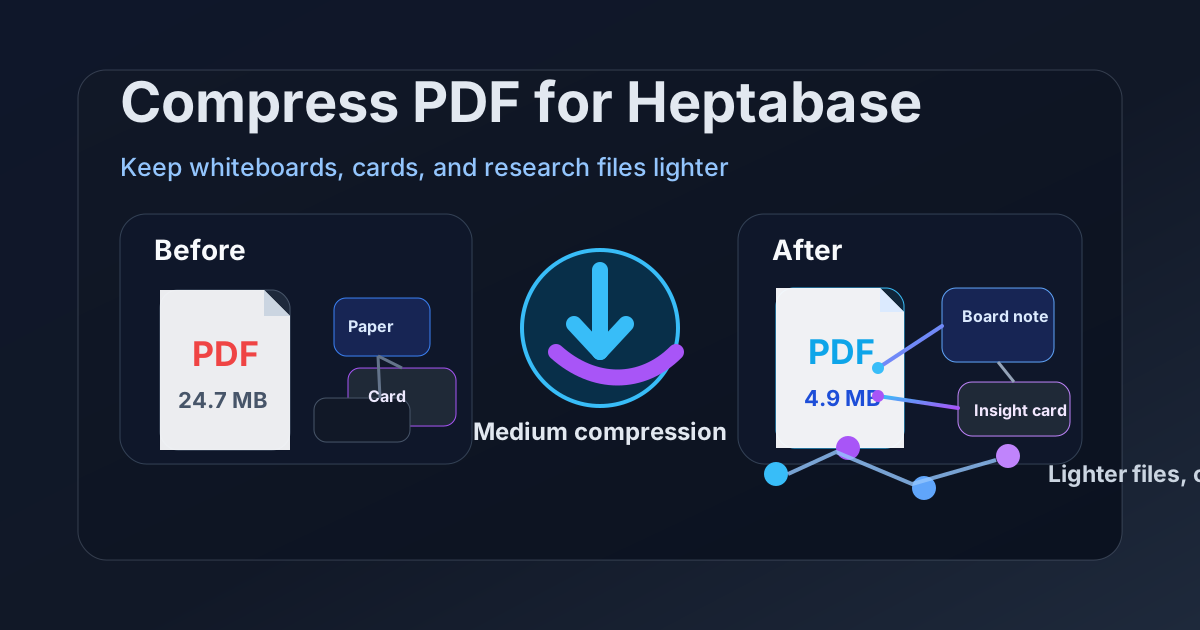
Table of contents
- Quick start: compress a PDF for Heptabase in under 2 minutes
- Why smaller PDFs help in Heptabase
- When to keep the full PDF and when to trim it
- What file size should you aim for?
- Which compression level should you choose?
- Step-by-step: shrink a Heptabase PDF with LifetimePDF
- Best strategy for common Heptabase file types
- What if the PDF is still too large?
- How to protect highlights, diagrams, and daily workflow
- Related LifetimePDF tools and useful internal links
- FAQ (People Also Ask)
Quick start: compress a PDF for Heptabase in under 2 minutes
If your real goal is simply make this source PDF lighter before it lives in my workspace, this workflow is usually enough:
- Open Compress PDF.
- Upload the final paper, report, white paper, scan, slide deck, or workbook you actually plan to keep.
- Choose Medium compression first.
- Download the smaller copy and compare the new file size with the original.
- Open it where you actually use it and test one highlight, one small paragraph, and one figure or diagram page.
- If the file is still too heavy, use Extract Pages, Split PDF, or Crop PDF before trying stronger compression.
Why smaller PDFs help in Heptabase
Heptabase is at its best when your source material feels easy to move around mentally and technically. The thinking is already hard enough. You do not need the files making it harder. Large PDFs add weight in places that do not create value: slower imports, heavier backups, more sync friction, and more clutter when one workspace quietly accumulates papers, reports, scanned chapters, and slide decks over time.
Why lighter PDFs usually work better inside a visual research workspace
- Faster file handling: lighter PDFs are easier to import, reopen, and keep around as supporting material.
- Less storage drag: dozens of oversized files quietly turn a focused workspace into a file-management problem.
- Smoother multi-device use: smaller files are easier to keep in sync when your workflow spans laptop and tablet reading.
- Cleaner board organization: a PDF should support the card or concept it belongs to, not dominate the workspace with unnecessary weight.
- Better long-term upkeep: lighter source files make it easier to keep research collections practical instead of bloated.
- Less hesitation about saving useful references: when PDFs stay reasonably sized, you can keep what matters without turning everything into digital ballast.
Compression is not only about shrinking storage. It is about keeping the source file quiet enough that your attention stays on the connection between ideas rather than on attachment management.
When to keep the full PDF and when to trim it
Not every file deserves to stay intact forever. Sometimes the smartest move is keeping the whole source. Sometimes it is only keeping the pages you will actually return to.
| Keep the full PDF when… | Trim or extract pages when… |
|---|---|
| You need the original pagination, appendix, figures, citations, or full structure of the document. | You only need one chapter, one section, one case study, or one appendix and the rest is just file weight. |
| The PDF works as a reusable reference you expect to revisit multiple times. | The document is a huge packet but your notes only point to a small portion of it. |
| The visual layout matters, such as diagrams, tables, slides, forms, or research formatting. | The file includes dead pages, giant covers, repeated material, or scanner waste you will never use. |
In practice, the cleanest Heptabase workflow is often not save everything exactly as it arrived. It is keep the useful source in the most practical shape. Compression helps, but structure matters too.
What file size should you aim for?
There is no perfect universal number because a 12-page paper behaves very differently from a 180-page report or a low-quality scan. Still, useful ranges help. The point is to make the file light enough that it stops feeling wasteful while keeping the pages comfortable to revisit.
| Heptabase PDF type | Comfortable target | Notes |
|---|---|---|
| Text-heavy paper, memo, or article PDF | 1MB to 5MB | Usually small enough to feel efficient while keeping normal reading and highlighting comfortable. |
| Report, workbook, or mixed text-plus-figure PDF | 5MB to 12MB | Still practical if diagrams, captions, and small labels remain easy to inspect. |
| Scan-heavy handout, chapter, or packet | 8MB to 20MB | These often benefit more from cropping, OCR, and page extraction than from aggressive compression alone. |
| Slide deck, manual, or image-rich reference | 10MB to 20MB | If visuals carry the meaning, preserve clarity over chasing the smallest possible number. |
File-size targets are a guide, not a contest. A slightly larger PDF that still reads well is usually better than a tiny one that makes diagrams fuzzy or highlighting frustrating.
Which compression level should you choose?
Most people do not need a complicated decision tree here. The safest answer is usually based on what kind of detail you still need to trust after the file gets smaller.
Low compression
Use Low when the PDF contains fine chart labels, dense tables, formulas, or diagrams where even small quality loss would be annoying. You will save less space, but the document gets more room to stay visually reliable.
Medium compression
Use Medium as your default. It is the best starting point for most Heptabase files because it reduces size enough to matter while usually preserving readable text, stable highlights, and usable diagrams.
High compression
Use High only when the original file is wildly oversized and you can tolerate some quality loss. High can work for one-off references, but it deserves a real test before you trust it for close reading or visual detail.
Step-by-step: shrink a Heptabase PDF with LifetimePDF
Here is the practical workflow that fits most visual research setups without creating more work than it saves.
- Start with the exact final PDF. Use the same file you actually plan to keep as source material, not a rough export or placeholder copy.
- Open Compress PDF. Upload the file and choose Medium first.
- Compare the new file size. If the reduction is meaningful, keep going. If almost nothing changed, the document may need trimming or a cleaner source export more than stronger compression.
- Open the lighter copy in your real workflow. Test the file where you actually read or reference it instead of assuming the download step tells the whole story.
- Check one real pain point. Highlight a sentence, zoom into a diagram, and inspect one small-label page you expect to revisit later.
- Escalate only if needed. If the file is still too bulky, try Extract Pages, Split PDF, Crop PDF, or OCR PDF before using harsher compression.
That last step matters because many bloated PDFs are bulky for structural reasons: dead appendices, repeated pages, scan borders, or a sloppy source export. Fixing the structure often beats squeezing the whole file harder.
Best strategy for common Heptabase file types
Research papers and journal articles
These are usually the easiest wins. Start on Medium, then test references, footnotes, chart captions, and any formulas. If the file is mostly text, you can often shrink it substantially without hurting the parts you actually need.
Reports, white papers, and workbooks
These often carry more visual elements, title pages, branded sections, and appendix material than a plain paper. Compression helps, but removing dead pages or keeping only the relevant section can be even more effective.
Scanned handouts, chapters, and packets
Scans are where aggressive compression gets punished fastest. If the text is already faint, squeezing it harder can make the file miserable to use. In these cases, OCR PDF and Crop PDF usually help more than simply forcing the quality lower.
Slide decks and diagram-heavy references
If the PDF is visual by nature, protect the visuals. A smaller file is not a win if the graph, flowchart, or slide annotation becomes harder to interpret when you zoom in.
Huge source packets with only one useful section
When a card or board only depends on a small portion of the document, Extract Pages is often a better move than carrying a giant packet just because one section inside it matters.
What if the PDF is still too large?
If you already tried Medium compression and the file still feels too heavy, do not assume the only answer is harsher compression. Usually one of these fixes works better:
- Keep only the useful pages: use Extract Pages when you only need one chapter, section, or appendix.
- Split a giant file: use Split PDF if the source would be more usable as smaller parts.
- Remove scanner waste: use Crop PDF to cut useless borders and blank space.
- Make the file searchable: use OCR PDF when the source is image-based and you want cleaner search and highlighting.
- Delete junk pages: remove giant covers, duplicates, title sheets, or filler you will never return to.
- Re-export from the source: if the file came from a poor print-to-PDF or scanner preset, a cleaner source export can beat heavy post-processing.
The best Heptabase workspace is usually not the most compressed workspace. It is the cleanest one: relevant files, readable pages, and source material sized to the job it is actually doing.
How to protect highlights, diagrams, and daily workflow
Compression only helps if the lighter PDF still behaves well when you actually use it. A few habits make that much more likely:
- Test one real highlight before you commit. Selection problems show up quickly when the PDF was over-compressed or the original scan was already weak.
- Check the smallest meaningful detail. That might be a footnote, a chart label, a formula, or a narrow table column.
- Think about future-you, not just today-you. A PDF that looks barely acceptable now may feel much worse when you come back to it later and need one precise detail fast.
- Keep the original when the file matters. If the source is heavily annotated, cited, or otherwise important, save a backup before you replace anything.
- Use sensible filenames. A smaller file is only helpful if you can still tell what it is six weeks from now.
- Prefer usability over purity. A 7MB file that stays readable is more useful than a 2MB file that makes every figure feel suspect.
There is no prize for having the tiniest PDF in the workspace. There is only the practical question: does this lighter file still support the way you think and refer back to sources?
Related LifetimePDF tools and useful internal links
If you are building a cleaner Heptabase workflow around research files, these are the most useful next steps:
- Compress PDF for the first size reduction.
- Extract Pages when you only need the relevant chapter or section.
- Split PDF for oversized reports, packets, or source bundles.
- Crop PDF to remove scanner waste and oversized margins.
- OCR PDF when a scanned document needs searchable text.
If your workflow overlaps with nearby note-taking and research tools, these guides are close companions: Compress PDF for Readwise Reader, Compress PDF for Logseq, Compress PDF for Obsidian, Compress PDF for MarginNote, and Compress PDF for LiquidText.
Bottom line: if the PDF is worth keeping in Heptabase, make it lighter on Medium, test one real highlight and one real diagram, then trim the file structure before you sacrifice readability.
FAQ (People Also Ask)
How do I compress a PDF for Heptabase?
Upload the final PDF to a compressor, start with Medium compression, and keep the smaller copy only if text, highlights, diagrams, and small details still look clean in your actual Heptabase workflow. Medium is usually the safest first step because it reduces file size without making the document frustrating to read or reference later.
What PDF size should I aim for in Heptabase?
Under 5MB is a strong target for ordinary text-heavy papers and notes. Bigger reports, slide decks, and scan-heavy files often land in the 5MB to 15MB range and can still feel practical if highlights, zooming, and diagrams remain comfortable to use.
Will compression ruin highlights or annotations in Heptabase?
Usually not if you begin with Medium compression and the source file is already clean, but always test one highlight, one small paragraph, and one figure or diagram page before you trust the lighter copy. Weak scans and blurry screenshots are where trouble shows up fastest.
Should I keep the full PDF or only the relevant pages?
Keep the whole PDF when original pagination, figures, citations, or document structure matter. If you only need one chapter, section, or appendix, extracting the useful pages is often cleaner than carrying a bloated source file forever.
Which LifetimePDF tools pair best with Heptabase?
Compress PDF is the main starting point. Extract Pages, Split PDF, Crop PDF, OCR PDF, and Delete Pages are the most useful companion tools when you want lighter source files and a calmer workspace.
Published by LifetimePDF - Pay once. Use forever.