Compress PDF for Logseq: Keep Graph Attachments Lighter, Easier to Sync, and Faster to Reopen
To compress a PDF for Logseq, upload the final paper, manual, scan, or reference file to LifetimePDF's Compress PDF tool, start with Medium compression, and keep the smaller copy only if text, diagrams, and scan detail still look clean when you reopen it from your graph.
For most Logseq setups, aim for under 5MB for ordinary text-heavy PDFs and roughly 5MB to 15MB for larger manuals, research packs, or scan-heavy files that still need full-page readability.
Logseq works best when attachments support your thinking instead of quietly becoming the heaviest part of the graph. Oversized PDFs make mobile sync slower, local folders bulkier, and everyday reopen-and-reference moments more annoying than they need to be. The goal is not to crush every document to the smallest possible size. The goal is to keep the file light enough that it behaves well while still preserving the details that made you keep the PDF in the first place.
Fastest path: compress the final PDF on Medium, save the smaller copy in the actual Logseq assets folder, then reopen it once and check the smallest paragraph, diagram, or scan detail that matters.
Need the short version? Jump to Quick start: compress a PDF for Logseq in under 2 minutes.
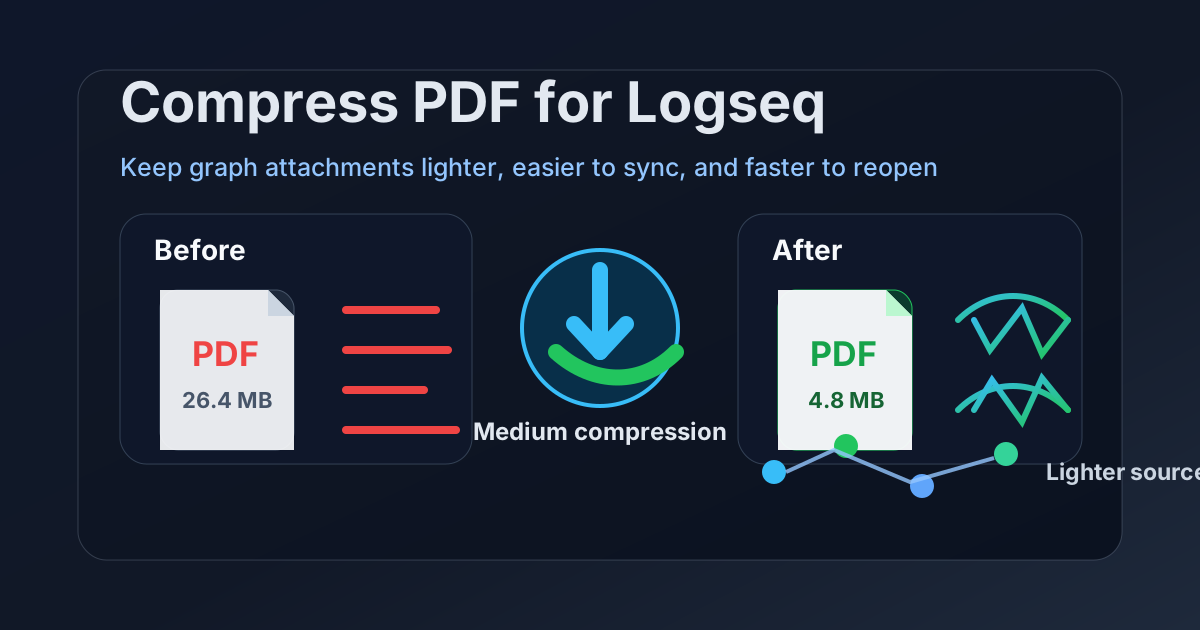
Table of contents
- Quick start: compress a PDF for Logseq in under 2 minutes
- Why smaller PDFs help in Logseq
- When a PDF should stay a PDF and when notes should carry the real value
- What file size should you aim for?
- Which compression level should you choose?
- Step-by-step: shrink a Logseq PDF with LifetimePDF
- Best strategy for common Logseq PDF types
- What if the PDF is still too large?
- How to keep sync, storage, and graph cleanup manageable
- Related LifetimePDF tools and useful internal links
- FAQ (People Also Ask)
Quick start: compress a PDF for Logseq in under 2 minutes
If your real goal is simply make this PDF lighter before it lives in my graph, this workflow is usually enough:
- Open Compress PDF.
- Upload the final research paper, handbook, scan, worksheet, meeting packet, or reference PDF you actually plan to keep.
- Choose Medium compression first.
- Download the smaller copy and compare the file size with the original.
- Save it in the actual Logseq graph folder or assets directory you use every day.
- Open it once through your real Logseq workflow and check the details that matter most: tiny text, diagrams, citations, screenshots, or scan clarity.
- If the file still feels bulky, use Extract Pages, Split PDF, or Crop PDF before trying stronger compression.
Why smaller PDFs help in Logseq
Logseq is not only a place to store files. It is a thinking tool where attachments are supposed to serve notes, references, and links between ideas. When PDFs get heavier than necessary, the cost shows up in practical places: slower sync, larger backups, noisier file folders, clumsier mobile access, and more hesitation when you just want to reopen a source quickly.
Why lighter PDFs usually behave better in a Logseq graph
- Less sync drag: smaller attachments are friendlier to the local-first setups people often use with Logseq.
- Cleaner assets folders: a lighter file is easier to keep around without feeling like dead weight.
- Better mobile comfort: heavy PDFs are especially annoying when you revisit notes from a phone or tablet.
- Calmer backups and storage: research PDFs pile up fast across projects and journals.
- Easier reuse later: a smaller PDF is easier to email, share, archive, or move into another workflow when a note turns into a deliverable.
- More intentional note-making: trimming the file often forces a useful question: do I need this whole PDF, or only the parts that actually support the graph?
In other words, compression is not just about saving space. It helps keep the graph practical. A right-sized attachment makes it easier to keep the note itself at the center of the workflow.
When a PDF should stay a PDF and when notes should carry the real value
This is the Logseq-specific question that matters more than most people admit. Sometimes the best move is not merely compressing the PDF. Sometimes it is realizing the attachment should stop doing all the work.
Keep the PDF when
- page layout, figures, signatures, forms, or exact formatting matter
- you need the original document for reference, proof, review, or archival reasons
- the PDF contains diagrams, tables, or visual structure that would lose too much value as plain text
- you expect to reopen the source exactly as it was shared
Let notes carry the real value when
- your goal is linking ideas, quoting passages, building arguments, or making reusable blocks
- the PDF is mostly plain text and you keep reopening it only to pull out the same ideas again
- the attachment feels heavier than the value it adds to the graph
- you would benefit more from extracted text and summaries than from page-faithful storage
Often the best answer is both: keep a lighter original PDF for reference, then move the important concepts into Logseq pages or blocks. If that sounds closer to your workflow, Convert PDF to Markdown may help more than endlessly shaving megabytes off a file you barely want to open.
What file size should you aim for?
There is no perfect number because a short article behaves very differently from a scan-heavy binder or a graph-rich technical manual. Still, practical targets help. The goal is to make the PDF light enough that it stops feeling like a burden while preserving the details you actually care about.
| Logseq PDF type | Comfortable target | Notes |
|---|---|---|
| Text-heavy papers, handouts, and lightweight references | Under 5MB | Usually small enough to store and reopen comfortably while keeping text readable. |
| Research packs, manuals, slide decks, and figure-mixed PDFs | 5MB to 15MB | Still practical if diagrams, figures, and citations remain clear when reopened. |
| Scan-heavy notes, archives, and document bundles | 10MB to 25MB | These often benefit more from cropping, OCR, and splitting than from aggressive compression alone. |
| Very large books or mixed-topic packets | Split into parts if possible | One giant attachment is rarely the cleanest long-term graph workflow. |
If the file stays slightly larger but still feels easy to sync and pleasant to reopen, that is fine. The goal is not to win a smallest-file contest. The goal is to keep the graph usable.
Which compression level should you choose?
For Logseq attachments, the safest answer is simple: start with Medium and only go harder if the file still feels heavier than the role it plays in your graph.
Low compression
Use Low when the PDF already looks clean and you only want a modest reduction without risking diagrams, tiny citations, or sharp screenshots. It is a good choice for visual-heavy documents and papers where small details matter.
Medium compression
Medium is the best default for most Logseq jobs. It usually cuts enough weight to matter while keeping ordinary reading, zooming, and reference use comfortable. If you do not have a strong reason to choose something else, start here.
High compression
Use High only when the file is still annoyingly bulky after smarter cleanup or when the original PDF is much larger than your actual note-taking task requires. High can be fine for casual reference copies, but it deserves a quick quality check afterward. Tiny footnotes, pale scan marks, and small table text are where problems show up first.
Step-by-step: shrink a Logseq PDF with LifetimePDF
- Start with the final file. Use the exact PDF you plan to keep in the graph, not an earlier export or rough scan.
- Open Compress PDF.
- Choose Medium compression first. This is usually the safest balance for graph attachments.
- Download the smaller copy. Compare the new size with the original so you know whether the change was meaningful.
- Save it in the real graph location. Put it where it will actually live so you are testing the same file that will sync and stay linked from notes.
- Review the real pain points. Check a dense paragraph, a citation-heavy section, a diagram, a scan edge, or any page where clarity matters.
- Adjust only if necessary. If the file is still too heavy, split it, crop blank margins, remove unused pages, or OCR the scan before trying stronger compression.
- Move the key ideas into notes. If the PDF is mostly there for reference, let the concepts live in pages or blocks so the graph remains more valuable than the attachment.
Best strategy for common Logseq PDF types
Not every Logseq attachment deserves the same treatment. The best workflow depends on what the document actually is.
Research papers and journal articles
These usually compress well. Prioritize readability of abstracts, figures, citations, and any page screenshots you might reference later. If the paper is mostly for literature notes, a smaller PDF plus block-level summaries is often better than a pristine but oversized attachment.
Scanned notes and archival documents
Scans are often the real troublemakers. Compression helps, but the bigger win usually comes from cropping scanner borders, removing blank pages, and running OCR PDF so the file behaves more like a searchable source inside the graph.
Manuals, playbooks, and technical references
These are worth keeping as PDFs when layout, tables, screenshots, or exact wording matter. Compress them conservatively, then consider splitting giant references by chapter or topic if you keep revisiting only a few sections.
Slide decks and visual documents
Be careful with aggressive compression. A slightly larger file is often better than muddy charts or blurry screenshots, especially if you rely on visual references while building notes or presentations.
Meeting packets, syllabi, and admin PDFs
If the PDF is mostly a record, compression is useful as long as dates, checkboxes, signatures, and small print stay readable. If the real value is the extracted information, create or expand a Logseq note that carries the summary and next actions rather than making the attachment do all the work.
What if the PDF is still too large?
If one compression pass was not enough, do not immediately jump to the harshest setting. First ask what is making the file heavy. Very often the answer is too many pages, scanner waste, or a document that should have been split into smaller pieces.
- Use Extract Pages when you only need part of the PDF in the graph.
- Use Delete Pages to remove title sheets, blank scans, duplicates, or irrelevant appendices.
- Use Split PDF for giant packets that would behave better as topic-based files.
- Use Crop PDF if empty margins or scanner waste are inflating the file.
- Use OCR PDF if the real problem is a scan that needs better searchability, not just a smaller size.
- Use Convert PDF to Markdown if the graph would be more useful with extracted text and notes than with a giant attachment.
In many real workflows, a cleaner PDF beats a more aggressively compressed PDF. Logseq benefits from better structure just as much as it benefits from raw size reduction.
How to keep sync, storage, and graph cleanup manageable
Compression only counts as a win if the attachment still feels good to use. After you create the smaller copy, take 30 seconds to review the places where quality problems actually show up.
Check these before you keep the smaller file
- Dense text: zoom into the smallest paragraph on the page.
- Figures and screenshots: make sure labels and callouts still read clearly.
- Scan quality: confirm pale print, handwriting, or edges have not become muddy.
- Search behavior: if you expect to search inside the file later, OCR may matter more than stronger compression.
- Folder reality: if the file still feels awkwardly heavy, split it or summarize it instead of compressing it into oblivion.
- Note reality: if the PDF supports a page or block, make sure the note still contains the real insight so the attachment stays a source, not a crutch.
Also remember that Logseq often sits inside a wider workflow. The same PDF may travel through email, cloud storage, mobile devices, backups, Git, or shared folders. A smaller copy is easier to handle everywhere else too. That is one reason this cleanup step is usually worth doing before the document spreads across your system.
Related LifetimePDF tools and useful internal links
If you want a smoother Logseq setup, these are the most useful companion tools and guides:
- Compress PDF for the main size reduction step.
- Split PDF for giant references that should become smaller topic files.
- Extract Pages when you only need selected sections.
- OCR PDF if you want scanned sources to behave more like searchable research material.
- Crop PDF to trim scanner waste before compressing.
- Convert PDF to Markdown when the real goal is extractable text and linked ideas rather than a page-faithful archive.
- Compress PDF for Obsidian if your source material also lives in a Markdown vault workflow.
- Compress PDF for Readwise Reader if the same source also lives in a reading queue outside your graph.
Simple rule of thumb: shrink the PDF just enough that your graph feels smoother, then stop. If the file is still awkward, change the structure of the workflow instead of endlessly squeezing the attachment.
FAQ: Compress PDF for Logseq
How do I compress a PDF for Logseq?
Upload the final PDF to a compressor, start with Medium compression, and keep the smaller copy only if text, diagrams, citations, and scan details still look clean after you place it in your Logseq graph. For most graph workflows, Medium is the safest first step because it reduces size without making the attachment rough or irritating to reopen later.
What PDF size should I aim for in Logseq?
Under 5MB is a strong target for ordinary text-heavy papers and lightweight references. Larger research packets, manuals, or scan-heavy notes often land in the 5MB to 15MB range and can still feel perfectly practical if they stay readable and do not make syncing feel sluggish.
Should I keep the PDF in Logseq or turn it into notes?
Keep the PDF when exact layout, figures, forms, or original formatting matter. Let notes carry more of the value when your real goal is linking ideas, quoting passages, building summaries, and turning source material into a reusable graph.
Will compression ruin OCR or readability in Logseq?
Usually not if you start with Medium compression and the source PDF is already clean. Trouble normally appears when the original scan is poor or the compression setting is harsher than the document really needs. Always zoom into one dense paragraph, figure, or scan detail once before you keep the lighter copy.
Which LifetimePDF tools pair best with Logseq?
Compress PDF is the main starting point. Extract Pages, Split PDF, OCR PDF, Crop PDF, and Convert PDF to Markdown are the most useful companion workflows when you want lighter attachments and cleaner note-making around source material.
Published by LifetimePDF - Pay once. Use forever.