Compress PDF for Google Drive: Keep Shared Docs, Scans, and Team Files Small Without Losing Readability
To compress a PDF for Google Drive, upload the file to LifetimePDF's Compress PDF tool, start with Medium compression, and keep the smaller copy only if text, signatures, chart labels, and preview details still look clear.
For most Google Drive workflows, under 2MB is a strong target for quick sharing and mobile access, while scan-heavy reports, forms, and team files usually feel best around 2MB to 5MB after light cleanup.
Google Drive can store large PDFs without complaining, but that does not mean large PDFs are pleasant to work with. They upload slower, preview less smoothly, feel heavier on phones, and create unnecessary friction every time someone opens a shared link. The real goal is not crushing every file into the smallest possible number. It is creating a Google Drive-ready PDF that is lighter to upload, easier to share, and still trustworthy when someone actually reads it.
Fastest path: run the Google Drive PDF through LifetimePDF's Compress PDF tool on Medium, then do one quick readability check before you upload, sync, or share the smaller version.
In a hurry? Jump to Quick start: compress a Google Drive PDF in about 2 minutes.
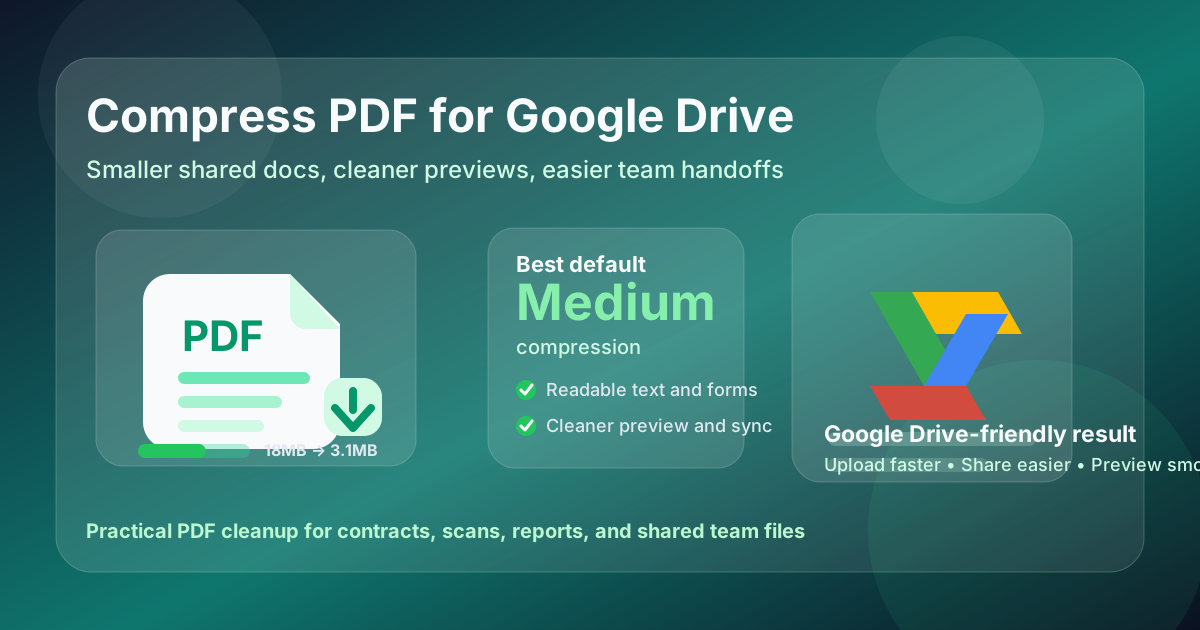
Table of contents
- Quick start: compress a Google Drive PDF in about 2 minutes
- Why smaller PDFs help in Google Drive workflows
- What file size should you aim for?
- Which compression level should you choose?
- Step-by-step: shrink a Google Drive PDF with LifetimePDF
- Best approach for common Google Drive PDF types
- What if the PDF is still too large?
- How to check quality before you share it
- Workflow habits that keep Google Drive cleaner
- Related LifetimePDF tools and useful reading
- FAQ (People Also Ask)
Quick start: compress a Google Drive PDF in about 2 minutes
If your real goal is simply make this Google Drive PDF smaller so it is easier to upload, preview, sync, and share, this workflow is usually enough:
- Open Compress PDF.
- Upload the PDF you actually plan to share, such as a scan packet, report, contract, handbook, policy file, or client deliverable.
- Choose Medium compression first.
- Download the smaller result and compare the new size with the original.
- Preview the weak points once: signatures, small text, chart labels, screenshot notes, page numbers, and the busiest page in the file.
- If the PDF still feels bulky, split the appendix, extract only the needed pages, or crop scanner waste before trying stronger compression.
Why smaller PDFs help in Google Drive workflows
Google Drive is rarely where the PDF begins. It is where the PDF keeps circulating. A document gets uploaded for a team review, linked in a client folder, reopened on a phone, copied into another workspace, and quietly becomes part of the long-term archive. That means file size is not just a storage question. It is a friction question.
Heavy PDFs slow that whole loop down. They take longer to upload, feel clumsier in preview, and create hesitation every time someone needs the file on a weaker connection. Compression helps, but the real win is keeping the PDF small enough to move comfortably without making it look cheap, blurry, or unreliable.
Why compression usually pays off in Google Drive
- Faster uploads and sync: especially useful on travel Wi-Fi, home connections, and mobile hotspots.
- Smoother previews: lighter PDFs usually feel less sluggish when opened from a Drive link.
- Better mobile access: smaller downloads are easier on phones and tablets.
- Cleaner team sharing: people get the file faster and are less likely to delay opening it.
- Less scan bloat: Google Drive folders often collect image-heavy scans, copied printouts, and mixed-source PDFs that are larger than they need to be.
- Easier reuse elsewhere: once the file is lighter, it is usually easier to email, attach in chat, or upload into another platform too.
What file size should you aim for?
There is no single magic number for every Google Drive PDF, but practical ranges help you avoid compressing harder than necessary:
| PDF type | Practical target | Why it works |
|---|---|---|
| Simple forms, invoices, and text-heavy docs | Under 2MB | Light enough for quick previews, easy downloads, and painless mobile viewing. |
| Reports, policies, and normal team PDFs | 2MB to 5MB | Usually preserves text, charts, signatures, and screenshots without over-compressing the file. |
| Scan bundles and image-heavy packets | 3MB to 8MB after cleanup | These often need a little more room because each page carries image data instead of mostly text. |
| Huge appendix files | Split them if possible | One oversized all-in-one PDF is often a packaging problem, not just a compression problem. |
If the PDF will mainly be opened from shared links, keeping it under about 5MB is a strong everyday goal. If it is a short text-first file, you can often go much smaller without hurting readability.
Which compression level should you choose?
For most Google Drive work, the safest answer is Medium. It usually removes enough weight to make the file more comfortable to share while keeping text, forms, signatures, charts, and ordinary graphics readable.
| Level | Best for | Watch out for |
|---|---|---|
| Low | Files that are already close to the right size or need to stay visually polished | The reduction may be too small to matter much. |
| Medium | Most Google Drive contracts, scans, reports, forms, and team files | Still review the smallest useful text before you replace the original. |
| High | Last-resort cleanup for very bulky or scan-heavy files | Image detail, faint signatures, tiny table text, and screenshot labels can soften too much. |
Step-by-step: shrink a Google Drive PDF with LifetimePDF
- Start with the final version. Use the PDF you actually plan to upload or share, not the bloated working copy with backup pages or repeated exports.
- Open Compress PDF.
- Upload the file. This could be a proposal, scan packet, signed form, onboarding document, internal report, policy update, or shared reference PDF.
- Select Medium compression. That is the best first-pass balance for most Google Drive use cases.
- Download the result. Compare the original size with the smaller copy so you know whether the reduction was worth it.
- Preview the result once. Check signatures, chart labels, screenshot notes, page numbers, footnotes, and the smallest meaningful text.
- Trim more only if needed. If the file is still too heavy, extract key pages, split the appendix, delete repeated sections, crop borders, or run OCR before trying a stronger setting.
That last preview step matters more than people expect. It takes seconds and prevents the most common mistake: replacing the original with a smaller file that technically works but feels worse the moment someone reads it closely.
Best approach for common Google Drive PDF types
| File type | What matters most | Best move |
|---|---|---|
| Contracts and signed forms | Readable signatures, dates, initials, and form fields | Use Medium compression and check the signature pages once before sharing. |
| Reports and team briefs | Chart labels, tables, and key takeaways | Compress first, then extract or split appendices if the file still feels heavy. |
| Scan bundles | Legible small text, straight pages, and reduced border waste | Crop and clean the scan before forcing stronger compression. |
| Client handoff PDFs | Easy downloads and clear mobile viewing | Keep the main file focused and send the proof appendix separately when possible. |
If one Google Drive PDF is trying to serve three audiences at once, the document is often the problem. A lighter main file plus a separate appendix usually works better than one giant everything-file that nobody wants to open.
What if the PDF is still too large?
If Medium compression did not cut enough weight, do not assume the only answer is stronger compression. Google Drive PDFs often shrink better when you remove waste first.
- Extract only the pages people actually need: use Extract Pages for focused sharing.
- Split oversized packets: use Split PDF for summary-versus-appendix workflows.
- Delete repeated or blank pages: use Delete Pages when the file carries export clutter.
- Crop scanner borders: use Crop PDF if empty margins and dark edges are inflating the file.
- Run OCR on image-only files: use OCR PDF so the final copy is searchable as well as smaller.
- Only then try stronger compression: once the structure is cleaner, a second pass makes more sense.
How to check quality before you share it
Before you replace the original file in Google Drive, review the spots most likely to show quality loss. Do not just open the first page. Check the page that is visually busiest or the page that carries the smallest useful detail.
Check these details
- Signatures, initials, and date fields
- Small table text, totals, or reference numbers
- Chart labels, axes, and annotations
- Screenshot callouts and proof notes
- Page numbers, footer text, and small disclaimers
- The densest scan page in the entire file
If any of those feel annoying to read, the PDF is probably compressed too hard for its real job. Go one step lighter or clean the structure instead.
Workflow habits that keep Google Drive cleaner
Better Google Drive PDFs usually start before compression. A few practical habits reduce file bloat and make shared folders easier to live with:
- Keep a master file and a shared file: archive the high-quality original only when you actually need it.
- Name the smaller file clearly: labels like
shared,compressed, orclient-copyreduce confusion. - Extract before you share: do not send a 70-page binder if the next person needs 6 pages.
- Separate summary from appendix: that usually lowers file size and improves the reading experience.
- Clean scans early: crop borders and straighten pages before the PDF gets copied into five other places.
- Protect or redact before broader sharing: handle privacy first, then compress the version you actually plan to distribute.
Related LifetimePDF tools and useful reading
Google Drive PDF cleanup often turns into a few small follow-on tasks. These tools and related articles are the most useful companions:
- Compress PDF for the first size-reduction pass.
- Extract Pages when only part of the PDF needs to go out.
- Split PDF for summary-versus-appendix sharing.
- Crop PDF to remove scan borders and empty margins.
- OCR PDF for searchable scanned files.
- Redact PDF before sending sensitive documents outside a trusted team.
- Compress PDF for Google Drive: Upload and Share Files Faster for the broader Google Drive workflow guide.
- Compress PDF for Google Drive Without Monthly Fees if avoiding recurring subscription costs is the main concern.
- Compress PDF for Dropbox and Compress PDF for OneDrive if you work across multiple cloud storage tools.
- Lifetime access if PDF cleanup is a regular part of your workflow.
FAQ (People Also Ask)
How do I compress a PDF for Google Drive?
Upload the PDF to a PDF compressor, start with Medium compression, and preview the smaller result before replacing the original. For most Google Drive workflows, Medium is the safest first pass because it cuts file size while keeping text, forms, signatures, and normal graphics readable.
What file size should I aim for in Google Drive?
Under 2MB works well for very lightweight sharing and quick mobile access. Everyday reports, scans, forms, and team files often sit best around 2MB to 5MB as long as the smallest useful details still look clear.
Will compression make Google Drive previews blurry?
It can if you compress too aggressively, especially with scan-heavy or image-heavy PDFs. That is why Medium compression is usually the best place to start. Always check signatures, chart labels, small text, screenshot notes, and page numbers before keeping the smaller file.
Is it better to split a large Google Drive PDF instead of compressing it harder?
Often, yes. If one PDF mixes the summary, appendix, screenshots, and backup material for different readers, splitting it usually works better than forcing stronger compression across the whole document.
What should I do if a scanned PDF is still too large for Google Drive after compression?
Crop empty borders, delete duplicate pages, extract only the useful pages, split bulky packets, or run OCR on image-only documents. In many cases, the real problem is unnecessary scan weight or too many pages in one file, not a lack of compression.
Ready to shrink it? Start with Medium compression, keep the details readable, and only split or clean further if the PDF is still heavier than it should be.