Compress PDF for GeoRanker: Keep Local Rank Tracking Reports, SERP Snapshots, and Client PDFs Small Without Losing the Details
To compress a PDF for GeoRanker, export the final GeoRanker file, upload it to LifetimePDF's Compress PDF tool, start with Medium compression, and keep the smaller copy only if ranking rows, location labels, screenshots, and notes still read clearly.
For most GeoRanker PDFs, under 2MB is a strong target for focused local rank updates and one-location summaries, while broader SERP snapshots, location comparisons, and client-ready recaps usually feel best around 2MB to 5MB after light cleanup.
GeoRanker PDFs usually show up at the handoff stage. Someone has already done the tracking, found the movement, and pulled together the proof. Now the file needs to travel through email, a CRM, a shared drive, or a client portal without feeling heavier than the insight inside it. That is where compression helps. The goal is not the tiniest file possible. The goal is a lighter PDF that still keeps the ranking context, location labels, screenshots, and action notes easy to trust when the next person opens it.
Fastest path: run the GeoRanker export through LifetimePDF's Compress PDF tool on Medium, then do one quick readability check before you email, upload, archive, or attach the smaller copy to a client update.
Want the shortest version? Jump to Quick start: compress a GeoRanker PDF in about 2 minutes.
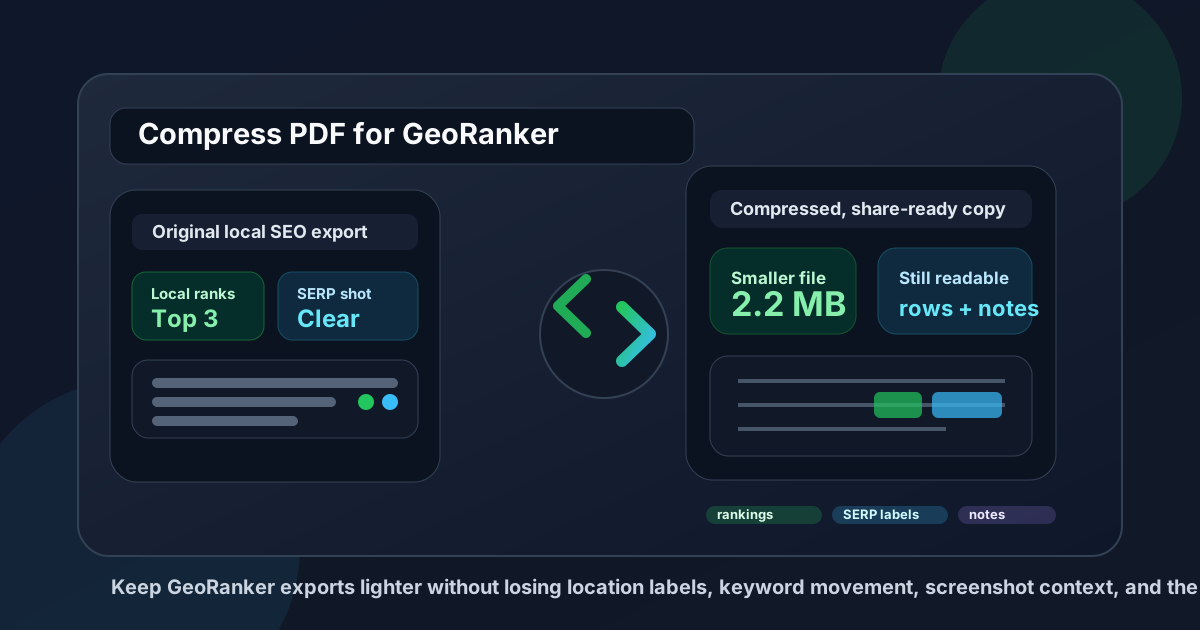
Table of contents
- Quick start: compress a GeoRanker PDF in about 2 minutes
- Why GeoRanker PDFs get heavy so quickly
- What file size should you aim for?
- Which compression level should you choose?
- Step-by-step: shrink a GeoRanker PDF with LifetimePDF
- Best strategy for common GeoRanker PDF types
- When to split instead of compressing harder
- How to protect rankings, labels, and screenshot evidence
- Workflow habits that keep GeoRanker exports cleaner
- Related LifetimePDF tools and useful reading
- FAQ (People Also Ask)
Quick start: compress a GeoRanker PDF in about 2 minutes
If your real goal is simply make this GeoRanker PDF smaller so it is easier to send, review, and archive, this workflow is usually enough:
- Open Compress PDF.
- Upload the exact GeoRanker file you plan to share, such as a local rank tracking report, a SERP snapshot, a location comparison, or a client recap.
- Choose Medium compression first.
- Download the smaller result and compare the new size with the original.
- Open it once and check the weak spots: ranking positions, location labels, screenshot callouts, date ranges, and summary notes.
- If the PDF is still bulkier than it should be, extract the summary pages, split the appendix, or crop wasted margins before you try stronger compression.
Why GeoRanker PDFs get heavy so quickly
GeoRanker PDFs often become oversized because one file starts doing too many jobs at once. It becomes a ranking report, a screenshot archive, a location comparison, a client update, and an internal reference in the same document. Once several locations, proof screenshots, historical sections, and commentary pages stack together, the file grows faster than the next reader's actual needs.
The issue is rarely just compression. It is packaging. Local SEO reporting is image-heavy by nature, and the useful details inside those images are often small. That means aggressive compression can save space but also damage the rows, labels, and notes that make the PDF worth sharing. A cleaner document plus balanced compression usually works better than maximum shrinkage alone.
What usually adds the most weight
- Screenshot-heavy proof pages: SERP captures and comparison screenshots add size quickly.
- Several locations in one file: one export for every market can get bulky fast.
- Historical comparisons: multiple date ranges and repeated tables quietly increase weight.
- Summary plus appendix in one document: decision-makers and specialists rarely need the same depth.
- Oversized margins and blank space: print-style exports often carry visual waste nobody needs.
What file size should you aim for?
There is no single perfect number because a one-location update behaves differently from a screenshot-heavy multi-location pack. Still, a few practical ranges make it easier to know when to stop compressing.
| GeoRanker PDF type | Practical target | What you should protect |
|---|---|---|
| Focused local rank updates and one-location summaries | < 2MB | Ranking positions, location labels, and short action notes |
| SERP snapshots, client recaps, and screenshot-backed proofs | 2MB to 5MB | Screenshot callouts, date ranges, comparisons, and context |
| Multi-location packs and appendix-heavy handoffs | 5MB+ | Usability first; often a signal to split the file |
If you can only hit a lower size by making location labels, date ranges, or ranking rows hard to read, you went too far. The next reader needs to trust the evidence at normal zoom.
Which compression level should you choose?
For most GeoRanker workflows, the compression level matters less than people think. The real decision is whether you are protecting small local SEO details or simply trying to make delivery easier.
Light compression
Use this when the PDF already feels close to manageable and you mainly want a safer first pass. It is a good fit for files with tiny labels, dense tables, or screenshots with small annotations.
Medium compression
This is usually the best default. It gives you a meaningful size reduction while still preserving ranking rows, labels, screenshots, summary notes, and date comparisons well enough for normal review.
Strong compression
Save this for situations where the file is still too large after cleanup and the PDF is mostly for quick viewing rather than close inspection. If the file includes small labels or dense screenshot proof, strong compression can push it past the point where it is comfortable to use.
Step-by-step: shrink a GeoRanker PDF with LifetimePDF
- Export the final file: use the actual GeoRanker PDF you plan to send, not a giant working archive with every spare proof page.
- Open Compress PDF: upload the file and begin with Medium compression.
- Download the smaller version: compare the new file size to the original so you can judge whether the reduction is worth keeping.
- Review the smallest important details: ranking positions, location names, screenshot labels, date ranges, summary notes, and recommendations.
- Trim the document if needed: use Extract Pages, Delete Pages, or Crop PDF before forcing heavier compression.
- Share the focused copy: the best handoff is usually the smallest useful file, not the most comprehensive archive.
Best strategy for common GeoRanker PDF types
1) Focused local rank updates
These are often the easiest to shrink. Medium compression is usually enough because the file is small to begin with and the goal is just to make it easier to email or attach to a task. Review the table rows and notes once, then move on.
2) SERP snapshot packs
Screenshot-backed exports are more sensitive to blur. Use Medium compression first and pay attention to labels, callouts, and the details people will actually point at in a meeting. If those get soft, keep the slightly larger version.
3) Multi-location comparison PDFs
These get heavy faster because they combine several locations, screenshots, and commentary pages. Instead of compressing harder, consider splitting the file by market, client, or audience. The account manager may only need the summary pages, while the SEO lead keeps the full proof pack.
4) Client-ready monthly recaps
Client PDFs often include covers, summaries, screenshots, and appendix pages. If the document feels bulky, extract the executive summary into a standalone PDF and keep the deeper proof as a separate attachment. That usually creates a better reading experience than crushing one large file harder.
When to split instead of compressing harder
Compression is not always the best fix. Sometimes the problem is simply that one PDF is trying to serve too many readers at once.
- Split the file when it contains an executive summary plus many proof pages that only some readers need.
- Extract pages when the important story lives in three or four screenshots and the rest is backup.
- Delete duplicate pages when you printed several versions of essentially the same comparison or snapshot.
- Crop first when browser-print margins or oversized screenshot borders are inflating the file.
If the next reader only needs a tight summary, splitting will often create a smaller and more useful result than stronger compression.
How to protect rankings, labels, and screenshot evidence
The biggest risk with GeoRanker PDFs is not the file staying a bit large. It is losing the details that explain what changed in local search.
- Check small text at normal zoom: if the ranking rows or location labels feel uncomfortable to read, the compression was too aggressive.
- Review screenshots and annotations: callouts, comparison notes, and evidence pages need to stay clear.
- Watch screenshot-heavy pages first: those usually degrade before text-heavy summary pages do.
- Keep one clean master copy: if you need a lighter send-out version, keep the original export archived separately.
- Compare versions when in doubt: use Compare PDFs if you want to verify that trimming or revisions did not remove something important.
Workflow habits that keep GeoRanker exports cleaner
- Export only the sections the next reader needs: focused PDFs are easier to compress and easier to act on.
- Separate the summary from the proof: a short decision document and a deeper appendix often work better than one giant file.
- Remove repeated captures: duplicate screenshots quietly add size without adding much insight.
- Keep presentation extras light: polished covers are fine, but repeated design pages increase weight fast.
- Clean metadata before delivery: use PDF Metadata Editor when the final client-facing file should look tidy and intentional.
- Archive the original separately: your send-out PDF and your internal reference copy do not need to be the same file.
These habits often improve delivery more than compression alone. A tidy GeoRanker packet is faster to share, easier to scan, and easier to trust later.
Related LifetimePDF tools and useful reading
Compressing a PDF for GeoRanker is usually one step inside a broader reporting or client-handoff workflow. These tools pair especially well with it:
- Compress PDF - shrink reports, snapshots, and proof packs for easier delivery
- Split PDF - break one oversized GeoRanker packet into focused files
- Extract Pages - isolate the exact screenshots or summary pages a reader needs
- Delete Pages - remove blanks, duplicates, or stale appendix pages
- Crop PDF - trim wasted margins and oversized screenshot borders
- PDF Metadata Editor - clean hidden title, author, and keyword fields before delivery
- Compare PDFs - useful when report packs change between review rounds
Suggested internal blog links
- Compress PDF for GeoRanker Without Monthly Fees
- Compress PDF for GeoRanker: Share Smaller Local Rank Tracking Reports, SERP Snapshots, and Client PDFs Faster
- Compress PDF for Localo
- Compress PDF for BrightLocal
- Compress PDF for Local Falcon
- Compress PDF for Rank Ranger
- How to Reduce PDF File Size for Email
- Compare PDF Versions Online
- Browse all LifetimePDF articles
FAQ (People Also Ask)
1) How do I compress a PDF for GeoRanker?
Export the GeoRanker report as a PDF, upload it to a PDF compressor, start with medium compression, and preview it before sharing it. For most GeoRanker workflows, Medium compression is the safest first pass because it reduces size while keeping ranking rows, labels, screenshots, and notes readable.
2) What file size should I aim for before sharing a GeoRanker report?
A practical target is under 2MB for short local rank updates, one-location summaries, and quick stakeholder checks. For broader SERP snapshots, screenshot-heavy comparisons, and multi-location recaps, somewhere in the 2MB to 5MB range is often more realistic as long as the smallest important labels stay clear.
3) Will compressing a PDF make GeoRanker screenshots or labels blurry?
It can if you compress too aggressively. That is why Medium compression is usually the best place to start. Always review ranking rows, location labels, screenshot callouts, and summary notes before you keep the compressed copy.
4) Should I split a large GeoRanker report instead of compressing it harder?
Often, yes. If one PDF includes the summary, screenshots, multi-location evidence, commentary, and appendix pages for different audiences, splitting it usually works better than forcing strong compression across the full document.
5) Which LifetimePDF tools pair best with GeoRanker exports?
Compress PDF is the main starting point. Split PDF, Extract Pages, Delete Pages, Crop PDF, PDF Metadata Editor, and Compare PDFs all help when you need smaller, cleaner, client-ready GeoRanker PDFs.
Ready to shrink your GeoRanker PDF?
Best workflow: Export the GeoRanker PDF - Compress - Review - Split or trim if needed - Share or archive.
Published by LifetimePDF - Pay once. Use forever.