Compress PDF for Dixa: Keep Support Attachments, Escalation PDFs, and Customer Docs Small Without Slowing Down Replies
To compress a PDF for Dixa, upload the final support attachment, escalation summary, refund document, order issue evidence file, or customer-facing PDF to LifetimePDF's Compress PDF tool, start with Medium compression, and keep the smaller copy only if screenshots, order numbers, labels, and instructions still look clear.
For most Dixa workflows, aim for under 2MB for short text-first PDFs and roughly 2MB to 5MB for screenshot-heavy, scan-heavy, or mixed support packets that still need to feel easy to trust.
Dixa PDFs usually show up when someone needs context quickly. That might be a handoff summary, a return instruction sheet, a refund approval packet, a troubleshooting guide, a customer-facing policy extract, or a scan somebody must review on mobile. The real goal is not to win a file-size contest. The goal is to make the document easier to send, easier to reopen, and still dependable when the next person needs the details fast.
Fastest path: run the Dixa PDF through LifetimePDF's Compress PDF tool on Medium, then do one quick readability check before you attach, forward, or reuse the smaller copy.
Need the short version? Jump to Quick start: compress a PDF for Dixa in under 2 minutes.
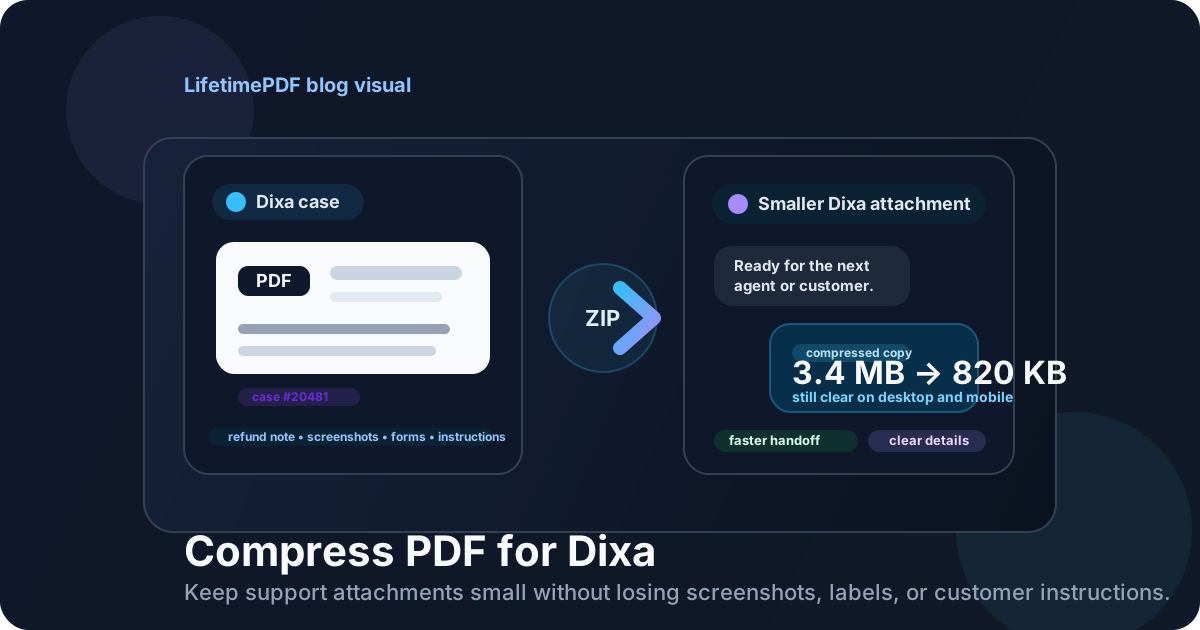
Table of contents
- Quick start: compress a PDF for Dixa in under 2 minutes
- Why smaller PDFs help in Dixa workflows
- What file size should you aim for?
- Which compression level should you choose?
- Best strategy for common Dixa PDF types
- Step-by-step: shrink a Dixa PDF with LifetimePDF
- What to clean up before compressing harder
- How to keep support replies moving
- Privacy and support hygiene before sharing
- Related LifetimePDF tools and internal links
- FAQ (People Also Ask)
Quick start: compress a PDF for Dixa in under 2 minutes
If your real goal is simply make this Dixa PDF smaller so it is easier to attach, review, or forward, this workflow is usually enough:
- Open Compress PDF.
- Upload the support attachment, escalation summary, return document, invoice backup, or scanned file you actually plan to use.
- Choose Medium compression first.
- Download the smaller result and compare the new size with the original.
- Open it once and check the details that matter most: screenshots, case references, order numbers, refund amounts, signatures, dates, and customer instructions.
- If the file is still bulky, use Extract Pages, Delete Pages, or Crop PDF before trying stronger compression.
Why smaller PDFs help in Dixa workflows
Support workflows depend on momentum. If a teammate is reviewing an escalation, if a customer is waiting on return instructions, or if finance needs a refund packet right now, a bulky PDF adds friction at exactly the wrong moment. It uploads slower, downloads slower, opens slower on mobile, and makes ordinary handoffs feel heavier than they need to be.
Compression helps because it reduces that weight, but the bigger win is smoother handling. A smaller PDF is easier to attach inside a support workflow, easier for another teammate to reopen later, and easier for a customer to review without wrestling with an oversized file. That matters whether the document is a troubleshooting guide, a return form, an invoice copy, a policy PDF, a claim packet, or a short escalation summary.
Why smaller PDFs work better in Dixa
- Faster handoffs: lighter files are easier for the next agent or specialist to review.
- Better mobile experience: many customer-facing PDFs are opened on a phone, not a big desktop screen.
- Cleaner escalations: smaller evidence packets are less annoying to attach, reopen, and compare.
- Easier reuse: the same smaller file can move into follow-up email, internal notes, or another workflow with less friction.
- Less attachment fatigue: a focused compact PDF feels more intentional than one giant everything-bundle.
What file size should you aim for?
There is no one permanent file-size rule for every Dixa workflow, so practical targets matter more than chasing the tiniest possible number. The right target depends on whether the PDF is mostly text, mostly screenshots, or a scan-based document with forms and signatures.
| File type | Practical target | Why it works |
|---|---|---|
| Short support note, simple instruction sheet, policy excerpt, one-page form | Under 2MB | Usually enough for text-first PDFs that should open quickly on any device. |
| Screenshot-heavy troubleshooting guide or issue evidence | About 2MB to 5MB | Leaves room for visuals while still feeling reasonable to attach and reopen. |
| Scanned claim packet, signed approval, or customer paperwork | About 3MB to 8MB | Scans are naturally heavier, but they still benefit from cleanup before stronger compression. |
| Anything over 10MB | Usually needs cleanup | At that point, extracting pages, cropping borders, or splitting the packet often helps more than harsher compression alone. |
Which compression level should you choose?
The best setting depends on what the next person needs to read. A one-page refund note behaves differently from a screenshot-heavy troubleshooting guide or a scan-based claim packet.
Low compression
Good when you need to protect fine detail. Use it for PDFs with tiny labels, dense screenshots, barcodes, signatures, or documents where someone may zoom in on small visual clues.
Medium compression
This is the safest starting point for most Dixa PDFs. It usually reduces file size enough to make the document easier to send while keeping screenshots, order references, timestamps, labels, signatures, and support instructions comfortably readable. If you do not want to overthink it, start here.
High compression
Use this only when the file still feels too heavy after sensible cleanup. High compression can be fine for plain text notes and simple forms, but it is riskier for screenshot-rich guides, dense tables, scan-based paperwork, and any page where clarity affects trust.
Best strategy for common Dixa PDF types
Different support files deserve different treatment. The right strategy depends on what the document is actually trying to help another human do.
Troubleshooting guide or issue-evidence pack
Keep screenshots readable and tightly cropped. If the file contains repeated screens, old notes, or oversized full-window captures, cut the duplicates before pushing compression harder.
Refund summary, return sheet, or warranty document
Be careful with order numbers, dates, signatures, labels, and deadlines. Compression is useful, but it should never make the file harder to review or act on.
Invoice, receipt, or payment proof
These are often easy wins. The important parts are names, amounts, dates, reference numbers, tax lines, and payment terms. A smaller PDF is fine as long as every number is still unmistakable.
Escalation summary or internal handoff packet
Keep only the parts another teammate actually needs. Long appendices, repeated screenshots, and pasted notes often add more weight than value. A shorter handoff packet is usually easier to trust and faster to act on.
Scanned ID, signed approval, or customer paperwork
Crop empty borders first, then compress. Scan-heavy pages often lose readability quickly under aggressive compression, especially if the file includes tiny handwritten notes or low-contrast stamps.
Step-by-step: shrink a Dixa PDF with LifetimePDF
- Choose the final customer-facing or teammate-facing file, not a bloated working draft.
- Open Compress PDF.
- Upload the support guide, refund note, invoice copy, escalation packet, scanned form, or evidence PDF.
- Start with Medium compression.
- Download the smaller copy and compare the size reduction.
- Open the new file and inspect the smallest meaningful details: order IDs, labels, timestamps, signatures, line items, screenshots, and field names.
- If the file still feels heavy, use Extract Pages, Delete Pages, or Crop PDF before trying a stronger setting.
- If the document contains personal data, internal comments, or information unrelated to the next step, run Redact PDF before sending it anywhere.
What to clean up before compressing harder
If the PDF still feels too big after a reasonable first pass, stronger compression is not always the smartest next move. Often the better fix is reducing unnecessary weight at the document level.
Extract only the useful pages
If the customer or teammate only needs pages 2 through 4, sending a twelve-page PDF is needless friction. Smaller, role-specific packets are easier to open and easier to understand.
Crop empty scan borders
Phone scans and exported paperwork often carry oversized margins and dead space. Trimming those borders can reduce visual bulk and sometimes reduce file size too.
Remove duplicate screenshots or appendix pages
Support teams often reuse old templates and notes. Duplicate pages, repeated screenshots, or outdated appendix pages make the PDF heavier without making the answer better.
Redact what should not travel
If a PDF includes personal data, internal comments, or information unrelated to the issue, remove or redact it before you optimize the file any further. Privacy problems matter more than file-size problems.
How to keep support replies moving
The best Dixa attachment is not just smaller. It is also easier for the next person to act on. Good file hygiene makes support feel faster even when the document itself does not change much.
- Send one clear file per task: a return form or escalation note should not also be an internal archive.
- Name files clearly: short, specific names reduce confusion during follow-up and escalation.
- Check mobile readability: if the customer is likely on a phone, zoom once before you send.
- Keep screenshots purposeful: crop to the exact field, error, or step that matters.
- Prefer focused attachments over giant packets: shorter files keep the workflow moving.
Privacy and support hygiene before sharing
Compression is also a good moment to check what you are about to share. Support teams reuse templates, exports, and prior-case files constantly. That is efficient, but it also creates easy opportunities for accidental oversharing.
Check for visible sensitive information
Old customer names, email addresses, order references, payment details, addresses, or internal notes should be removed or redacted before sharing. If the information is visible on the page, only redaction solves the real problem.
Check metadata too
Some PDFs still carry old author names, internal tags, export labels, or system names in metadata. That is not always dangerous, but it can look sloppy or reveal context the customer does not need.
Keep the packet audience-specific
Do not send a broad internal archive when the next person only needs one clean instruction sheet or short evidence pack. Privacy gets easier when each PDF only contains the minimum useful information.
Related LifetimePDF tools and internal links
Dixa-ready PDFs usually improve fastest when you combine compression with one or two cleanup steps:
- Compress PDF for the first size reduction.
- Extract Pages if only part of the document needs to travel.
- Delete Pages to cut dead weight before compressing harder.
- Crop PDF to trim empty borders around scans and screenshots.
- Redact PDF for safer sharing.
- PDF Metadata Editor to remove stale file details.
- Compress PDF for Gorgias for adjacent support-ticket workflows.
- Compress PDF for Zendesk if your PDFs also move through helpdesk tickets.
- Compress PDF for Intercom for another customer-conversation workflow.
- Compress PDF for LiveChat if you also send attachments during real-time support conversations.
Want the simplest workflow? compress the final file on Medium, review it once, then only extract, crop, delete, or redact if the customer-facing result still needs cleanup.
FAQ (People Also Ask)
How do I compress a PDF for Dixa?
Upload the PDF to a compressor, start with Medium compression, and keep the smaller copy only if screenshots, order numbers, labels, and instructions still look clear. Medium is usually the safest first pass because it reduces size without making the attachment frustrating to review.
What file size should I aim for before sharing a PDF in Dixa?
Under 2MB is a strong target for short text-heavy support PDFs. Screenshot-heavy guides, escalation packs, and scanned paperwork often work well around 2MB to 5MB, or a bit higher if readability still matters more than hitting the smallest possible number.
Will compression ruin screenshots or labels in a Dixa attachment?
It can if you compress too aggressively. Start with Medium, then review small labels, callouts, timestamps, order references, signatures, and screenshot text. If the file is still large, shorten or crop the document before pushing harder compression.
Should I split a large support PDF instead of compressing it harder?
Often, yes. If one PDF mixes customer-facing instructions, internal notes, repeated evidence, and long appendices, splitting it usually works better than forcing a stronger compression setting across the whole file.
How do I remove private information before sharing a Dixa PDF?
Use metadata cleanup if the file still shows stale author or system details, and use redaction if customer information, payment details, addresses, or internal notes are visible on the page. Visible information needs redaction, not just metadata editing.