Compress PDF for Autotask PSA: Keep Ticket Attachments, Contracts, and MSP Docs Small Without Losing Clarity
To compress a PDF for Autotask PSA, upload the final ticket attachment, contract, quote PDF, invoice backup, project handoff, or customer-facing support file to LifetimePDF's Compress PDF tool, start with Medium compression, and keep the smaller copy only if screenshots, line items, timestamps, signatures, and service notes still read clearly.
For most Autotask PSA workflows, under 2MB is a strong target for short text-heavy attachments, while screenshot-heavy, scan-heavy, and mixed MSP packets usually land better around 2MB to 5MB after light cleanup.
Autotask PSA PDFs rarely stay with one person. A technician adds evidence to a ticket, an account manager sends a quote, finance reviews invoice backup, procurement checks a vendor file, or a client opens the document on a phone. The real goal is not the tiniest file possible. It is a smaller PDF that still feels dependable when the next person opens it under time pressure.
Fastest path: run the Autotask PSA PDF through LifetimePDF's Compress PDF tool on Medium, then do one quick readability check before you attach, send, or archive the smaller copy.
Need the short version? Jump to Quick start: compress a PDF for Autotask PSA in under 2 minutes.
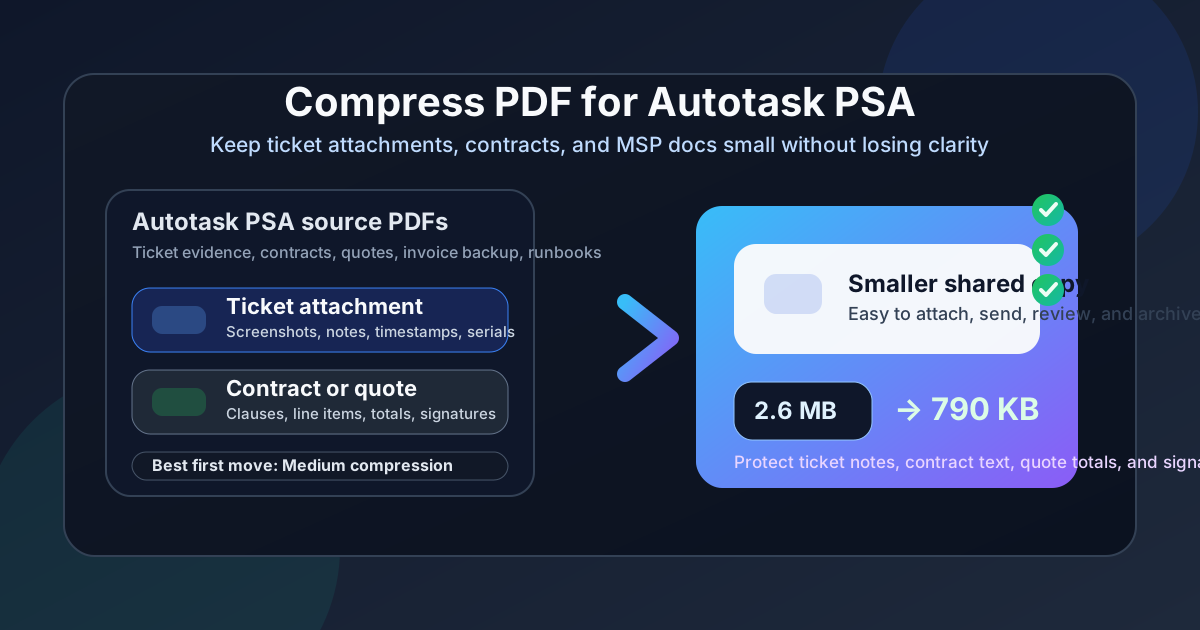
Table of contents
- Quick start: compress a PDF for Autotask PSA in under 2 minutes
- Why smaller PDFs help in Autotask PSA workflows
- What file size should you aim for?
- Which compression level should you choose?
- Step-by-step: shrink an Autotask PSA PDF with LifetimePDF
- Best strategy for common Autotask PSA PDF types
- What if the PDF is still too large?
- How to keep MSP details readable
- Workflow habits that reduce PDF bloat
- Related LifetimePDF tools and useful reading
- FAQ (People Also Ask)
Quick start: compress a PDF for Autotask PSA in under 2 minutes
If your real goal is simply make this Autotask PSA PDF smaller so it is easier to attach, review, invoice against, or forward, this workflow is usually enough:
- Open Compress PDF.
- Upload the ticket attachment, contract, quote PDF, invoice backup, vendor document, onboarding packet, or customer handoff you actually plan to use.
- Choose Medium compression first.
- Download the smaller result and compare the new size with the original.
- Open it once and check the details that matter most: screenshot text, quote line items, dates, ticket notes, signatures, totals, and serial numbers.
If the PDF is still bulky after that first pass, do not immediately push harder compression. Most oversized Autotask PSA files shrink more cleanly when you remove duplicate appendix pages, crop scan borders, or split one oversized packet into the pieces each person actually needs.
Why smaller PDFs help in Autotask PSA workflows
Autotask PSA sits in the middle of real work, not just storage. The same PDF may be touched by service, dispatch, projects, account management, procurement, finance, and the client. A lighter file reduces friction for all of them.
Compression matters because many Autotask PSA PDFs are mixed documents. One file can combine screenshots, contract language, quote tables, signatures, serial numbers, invoice support, and notes pulled from several systems. That is exactly why the safest approach is to shrink the file without weakening the pieces people actually rely on.
Why smaller PDFs work better in Autotask PSA
- Faster ticket work: technicians can attach evidence and documentation without adding unnecessary upload friction.
- Cleaner handoffs: another technician, project coordinator, or dispatcher can review the same file faster during reassignment or escalation.
- Better customer experience: lighter PDFs are easier for clients to open on mobile devices or slower connections.
- Smoother commercial review: quotes, approvals, invoice backups, and contracts are easier to forward when they are not heavier than they need to be.
- Less repeat friction: if the same runbook, agreement, invoice packet, or onboarding guide gets reused often, trimming it once pays off every time.
What file size should you aim for?
There is no single perfect number because a one-page approval form behaves differently from a screenshot-heavy troubleshooting packet, a scanned contract, or a long billing support bundle. Still, practical targets make it much easier to decide whether the file is already fine or worth shrinking further.
| Use case | Recommended target | Why it works |
|---|---|---|
| Very lightweight ticket notes or client attachments | < 2MB | Best for quick previews, mobile viewing, and low-friction customer sharing |
| Everyday service, contract, project, and billing PDFs | 2MB-5MB | Usually the best balance between readability and convenience |
| Long, scan-heavy, or screenshot-heavy packets | 5MB-10MB | Still workable, but worth trimming if several people will reopen the file repeatedly |
| Over 10MB | Compress again or reduce page count | Often heavier than necessary for normal Autotask PSA collaboration |
Which compression level should you choose?
LifetimePDF keeps the decision simple: Low, Medium, or High. For Autotask PSA, simplicity is helpful because most people do not want to tune obscure export settings. They just want a file that is smaller and still trustworthy.
- Low compression: use it when tiny text, fine print, serial numbers, dense tables, or signatures matter more than aggressive size savings.
- Medium compression: the safest default for most Autotask PSA work because it usually shrinks screenshots, quotes, contracts, and support PDFs without making them annoying to review.
- High compression: useful for scan-heavy or image-heavy files when size matters more than perfect sharpness, but it needs a careful review afterwards.
In practice, Medium is where most teams should begin. It is usually strong enough to reduce weight meaningfully, but gentle enough to preserve quote totals, contract language, timestamps, screenshots, and support evidence.
Step-by-step: shrink an Autotask PSA PDF with LifetimePDF
- Export the final PDF. Use the version you genuinely plan to attach, send, or archive instead of compressing an early draft with extra appendix pages.
- Open Compress PDF.
- Choose Medium compression first. That is the best default for most ticket attachments, contract PDFs, quote packets, and billing support documents.
- Download the smaller copy. Compare the new file size with the original so you know whether the change was meaningful.
- Check the weakest details. Zoom in on screenshot text, contract clauses, quote tables, invoice totals, timestamps, and signatures.
- Only clean structure if needed. If the PDF is still too large, extract the useful pages, delete blanks, crop scan borders, or split the packet rather than crushing everything harder.
Useful combo: compress first, then use Extract Pages or Split PDF if one oversized packet is serving two audiences.
Best strategy for common Autotask PSA PDF types
Different document types fail in different ways. A quote packet is not judged the same way as a troubleshooting guide or a scanned approval form. These practical rules help you keep the right details readable.
1. Ticket attachments and troubleshooting evidence
Screenshots, timestamps, device names, and tiny interface labels matter more than decorative sharpness. Start with Medium compression and always inspect the smallest visible evidence before replacing the original.
2. Contracts, SOWs, and approval documents
Legal language, dates, initials, and signatures are the parts most likely to cause trouble if they become muddy. If the file is mostly text, Low or Medium compression is usually safer than forcing High.
3. Quotes and procurement support
The risky areas are line items, taxes, totals, part numbers, and notes hidden in dense tables. Compress gently, then zoom in on the narrowest columns before you keep the smaller version.
4. Invoice backup and billing PDFs
Finance usually needs fast review, not huge resolution. Keep the numbers crisp, but trim blank pages, repeated appendices, or overlong backup sections if they do not help the person reviewing the charge.
5. Project handoffs, onboarding packs, and runbooks
These files often grow because they mix client-facing instructions, internal notes, and repeated screenshots. If one packet keeps getting heavy, split it by audience rather than trying to make one giant PDF do everything.
What if the PDF is still too large?
When Medium compression is not enough, the best fix is usually structural cleanup rather than more aggressive compression. In other words, make the PDF smaller by making it smarter.
- Use Extract Pages if only part of the packet is relevant.
- Use Delete Pages to remove blanks, duplicates, or stale appendix pages.
- Use Crop PDF if scans carry oversized borders.
- Use Split PDF when one file is serving different teams or different stages of the workflow.
- Use OCR PDF if a scan needs better text handling before long-term reuse.
This matters in Autotask PSA because many PDFs become oversized for non-visual reasons. They are bloated because too many pages travel together, not because the useful pages are impossible to compress.
How to keep MSP details readable
The safest habit is to review the details most likely to break first. In Autotask PSA, that usually means the smallest useful evidence, not the large headline text.
- Zoom into the smallest screenshot labels and interface text.
- Check ticket references, timestamps, serial numbers, device names, and approval dates.
- Review quote line items, taxes, totals, and part numbers.
- Confirm signatures and initials still look natural.
- Make sure contract clauses and invoice figures stay sharp enough for quick review.
- Open the result on mobile if clients or field staff commonly read the document on phones.
If any of those details feel uncertain, keep the original or rerun the file with a lighter setting. A slightly larger PDF is better than a smaller one people cannot trust.
Workflow habits that reduce PDF bloat
The easiest way to keep Autotask PSA PDFs manageable is to avoid building oversized source files in the first place.
- Export the final version only: do not carry old drafts or repeated appendix pages into the shared copy.
- Keep one audience per PDF: customer instructions and internal notes often belong in separate files.
- Prefer focused evidence packs: attach the pages that solve the issue, not every related document.
- Clean scanner waste early: blank backs and giant borders add size without adding value.
- Remove hidden clutter: use PDF Metadata Editor if the file carries stale titles or document properties you do not want to pass along.
- Keep a master and a shared copy: that way you preserve the original without forcing every ticket, quote, contract, or billing review to carry the heavier version.
These habits help beyond Autotask PSA too. The same smaller PDF usually behaves better in email, customer approvals, procurement threads, internal chat, and archive storage.
Related LifetimePDF tools and useful reading
Autotask PSA document prep usually turns into a few follow-on tasks. These tools pair especially well with compression:
- Compress PDF for the first size-reduction pass.
- Extract Pages when only part of the packet needs to travel.
- Delete Pages to strip duplicate or blank pages.
- Split PDF when one file is serving two audiences.
- Crop PDF to trim dead scan borders.
- OCR PDF for scan-based forms and legacy paperwork.
- Redact PDF to remove sensitive information before sharing.
If you want adjacent reading, these guides fit the same workflow family: upload-focused Autotask PSA guide, Compress PDF for Datto RMM, Compress PDF for ConnectWise Manage, Compress PDF for HaloPSA, Compress PDF for NinjaOne, and Compress PDF for Freshservice.
Bottom line: if the Autotask PSA PDF is too large, start with Medium compression, protect the details that matter, and clean the packet structure before you force the file any harder.
FAQ (People Also Ask)
How do I compress a PDF for Autotask PSA?
Upload the Autotask PSA-ready PDF to a PDF compressor, start with Medium compression, and keep the smaller copy only after checking screenshots, line items, signatures, timestamps, and ticket notes. For most MSP workflows, Medium is the safest starting point because it reduces file size without weakening review clarity.
What file size should I aim for before using a PDF in Autotask PSA?
Short text-heavy ticket notes, approvals, and internal summaries often work well under 2MB. Screenshot-heavy guides, quote packets, invoice backup, contracts, and mixed MSP PDFs usually land better around 2MB to 5MB as long as the smallest useful details remain easy to read.
Will compression make Autotask PSA screenshots or contract details blurry?
It can if you compress too aggressively. That is why Medium compression is usually the best first move. Always review the smallest screenshot text, contract clauses, quote totals, ticket references, signatures, and invoice figures before you keep the smaller file.
Should I split a large Autotask PSA PDF instead of compressing it harder?
Often, yes. If one PDF mixes customer instructions, internal notes, repeated evidence, billing backup, approvals, and long appendices, splitting it usually works better than forcing stronger compression across the whole document.
Which LifetimePDF tools pair best with Autotask PSA workflows?
Compress PDF is the main starting point. Extract Pages, Delete Pages, Split PDF, Crop PDF, OCR PDF, PDF Metadata Editor, and Redact PDF are especially useful when you want smaller, cleaner MSP documents without carrying extra pages, scan waste, or hidden document details forward.