How to Verify a PDF Signature on Chromebook: Check a Signed PDF Before You Trust It
To verify a PDF signature on Chromebook, open the original signed file from Files, Gmail, Google Drive, or Downloads in Chrome and run it through a real signature verification workflow so you can check whether the signature is valid before you trust, file, or forward the document.
If the PDF shows a warning or invalid result, stop there and review the signer details or ask for a clean resend instead of trusting the visible signature box, the ChromeOS preview, or the Gmail attachment card alone.
That is the short answer. The useful part is knowing when a Chromebook preview is enough to read the file but not enough to trust it, how to handle signed attachments from Gmail or shared Drive folders, and what warning messages actually mean before you approve, archive, or share the document.
Fastest path: save or open the signed PDF from Gmail, Files, Google Drive, or Downloads, verify the original file in Chrome, then read the status before you do anything else with it.
In a hurry? Jump to Quick start: verify a signed PDF on Chromebook in a few minutes.
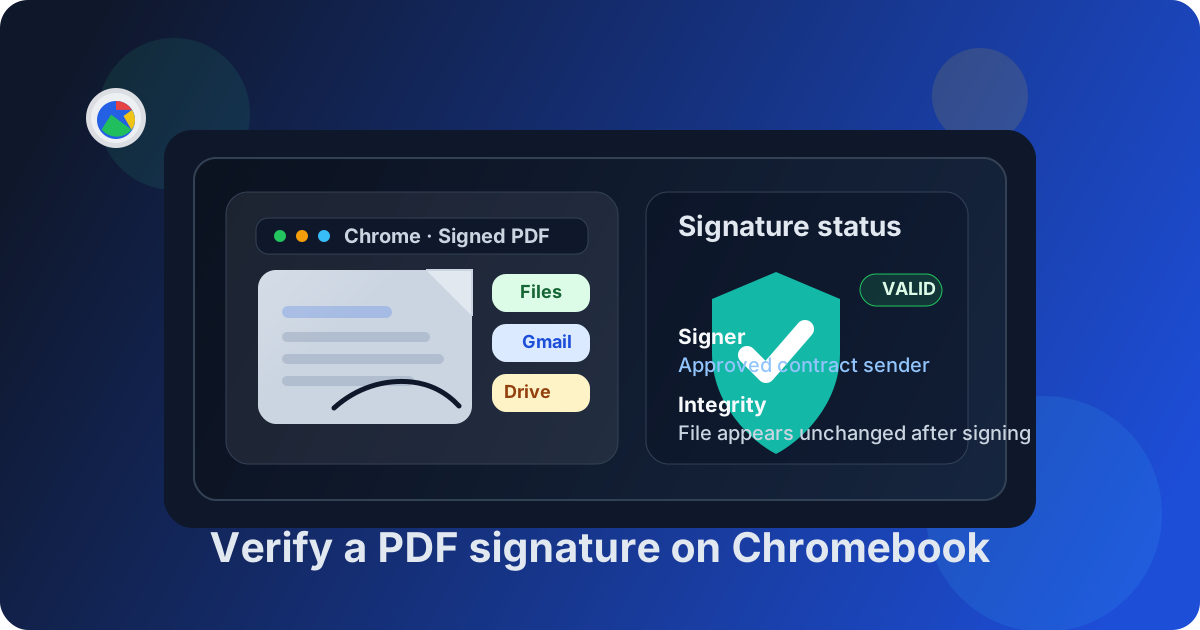
Table of contents
- Quick start: verify a signed PDF on Chromebook in a few minutes
- The easiest Chromebook workflow for checking signed PDFs
- ChromeOS preview, Gmail, Google Drive, and real verification
- Step-by-step: how to verify a PDF signature on Chromebook
- What valid, warning, and invalid results usually mean
- What to check before you trust the document
- Why screenshots, printouts, and rescans are not enough
- What to do if a signed PDF looks suspicious on Chromebook
- Related LifetimePDF tools and guides
- FAQ (People Also Ask)
Quick start: verify a signed PDF on Chromebook in a few minutes
If the document is already on your Chromebook and you just need to know whether the signature is trustworthy, use this workflow:
- Start with the original signed PDF from Gmail, Downloads, Files, Google Drive, or a school or work portal download.
- Open the file in Chrome and use a proper signature verification workflow rather than relying only on the built-in preview.
- Read whether the result is valid, warning, or invalid.
- Check the signer name, signing time, and whether the file appears unchanged after signing.
- If anything feels off, compare versions or ask the sender for a fresh signed PDF before you trust it.
The easiest Chromebook workflow for checking signed PDFs
On Chromebook, signed PDFs usually arrive as a Gmail attachment, a Google Drive share, a portal download in Chrome, or a file dropped into Downloads with a name that looks almost identical to two other versions. That is why verification is less about a hidden ChromeOS setting and more about making sure you are checking the right file in the right place.
The cleanest path is usually Chrome plus the Files app. Open the actual signed PDF, run it through a verification workflow that can inspect the signature data, and then decide what the result means before the file goes into a reply, approval folder, student record, HR archive, or client handoff. That beats glancing at a normal-looking preview and assuming the visible signature box proves more than it really does.
| Chromebook view | Good for | Where it falls short |
|---|---|---|
| Gmail attachment preview | Opening the file quickly and checking you received the expected document | Seeing the document is not the same as verifying whether the signature is technically valid |
| Files app or Google Drive preview | Saving the original copy, checking the filename, and keeping versions organized | Still not a substitute for deliberate signature validation |
| Verification workflow in Chrome | Checking validity, signer details, and document integrity | You still need judgment if the result shows a warning |
In short: Chromebook previews help you open the file. A verification workflow helps you decide whether to trust the file.
ChromeOS preview, Gmail, Google Drive, and real verification
This is where a lot of confusion starts. A PDF can look completely normal in a Gmail attachment preview, a Chrome tab, or a Google Drive viewer. It can even show a visible signature area. That still does not tell you enough.
A visible signature on a PDF is only one layer of the story. What actually matters is whether the signature data checks out, whether the file changed after signing, and whether the signer details make sense for the transaction you are handling.
- Gmail preview is great for opening the attachment fast.
- Files and Google Drive are useful for saving the original file and making sure you are not comparing the wrong version later.
- Chrome verification is the step where you ask whether the signature is valid enough to trust.
Step-by-step: how to verify a PDF signature on Chromebook
Here is the practical workflow most people actually need.
1) Start with the real signed PDF
If the document is still sitting in Gmail, Files, Google Drive, Classroom, or another app, that is fine. Just make sure you are using the actual attachment or downloaded PDF. If you only have a screenshot, printout, or rescanned version, you are no longer holding the same digital object that was originally signed.
2) Open a real verification workflow in Chrome
Use Chrome on your Chromebook to run the file through a proper verification process that checks signature data rather than only appearance. If you need a broader refresher first, start with the Verify PDF Signature guide so you know what a clean result should look like.
3) Upload the file from Files, Gmail, Google Drive, or Downloads
Choose the signed PDF from Downloads, Files, Google Drive, or a saved Gmail attachment. If there are multiple versions with similar names, pause long enough to choose the one that is supposed to be the signed final copy.
4) Read the status first
Do not jump straight into technical details. Start with the main result: valid, warning, or invalid. That one signal tells you whether this is probably a routine check or something that deserves more caution.
5) Review the signer details and context
Confirm the signer name, signing time, and any certificate or integrity details the verification view shows. A signature can be technically present and still feel wrong in context if the signer is unexpected, the time is odd, or the file history does not make sense.
6) Stop if the document is not clearly trustworthy
If the file shows warnings, looks different from what you expected, or arrived through a messy forwarding chain, slow down. That is where Compare PDFs or a fresh resend from the sender can save you from trusting the wrong version.
Need the shortest possible route? Use the original signed PDF, check the status first, then confirm who signed it and whether the file stayed unchanged.
What valid, warning, and invalid results usually mean
Different tools phrase the result a little differently, but the practical meaning is usually close to this:
| Status | What it usually means | What to do next |
|---|---|---|
| Valid | The signature data checks out and the PDF does not appear to have changed after signing. | Continue, but still confirm the signer and situation make sense. |
| Warning | The file may still be legitimate, but something needs review such as trust settings, certificate context, or post-signing changes. | Slow down and understand the warning before you trust the document. |
| Invalid | The signature failed validation, the file may have changed after signing, or the signature cannot be trusted as presented. | Stop the workflow and ask for clarification or a fresh signed copy. |
The biggest mistake is treating a warning like a green light because the document is urgent. If the PDF matters enough to act on, it matters enough to verify patiently.
What to check before you trust the document
Even on Chromebook, a good verification habit is simple. You are really checking five things:
- Are you looking at the original signed PDF?
- Does the result come back valid or at least explainable?
- Does the signer match the real-world transaction?
- Does the signing time make sense?
- Does anything suggest the document changed after signing?
Check the signer identity
A signed vendor PDF should come from the right vendor. A permission form should come from the right school or department. A contract approval should come from the person or organization expected to approve it. If the identity feels mismatched, do not wave it through just because the status looked tidy at first glance.
Check the signing time
If the timeline feels strange, trust that instinct long enough to investigate. A timestamp that does not fit the surrounding events is not automatic proof of a problem, but it absolutely deserves explanation.
Check whether the file changed
This is the core integrity question. If the file was modified after signing, that can change how much trust the signature deserves.
Why screenshots, printouts, and rescans are not enough
This matters more on Chromebook than people expect because users often save a screenshot to Google Drive, print a file from a browser tab, or upload a rescanned copy back into a portal and then assume the evidence still works the same way.
Once the original PDF turns into a screenshot, printout, or rescanned copy, you usually lose the original signature data that a verifier needs. The page may still look signed, but you are no longer checking the same digital record.
- A screenshot shows appearance, not signature integrity.
- A printed copy can preserve content, but not the same verification signal.
- A rescan gives you a new PDF image of the old document, not the original signed file.
If real verification matters, get the original signed PDF from the sender rather than trying to validate a flattened or photographed version.
What to do if a signed PDF looks suspicious on Chromebook
Suspicion usually shows up in one of four ways: the status is invalid, the document shows a warning you do not understand, the signer details do not match the transaction, or the file content feels different from what you expected.
If the warning is unclear
Do not guess. Pause and ask whether the sender can explain the signing workflow or resend the document cleanly.
If two copies seem to exist
Use Compare PDFs to see whether anything important changed between them. That is often the fastest way to figure out whether the signed file and the current file are actually the same thing.
If you are on the sending side instead
Make a fresh clean file with Sign PDF or check the broader verification guidance in Verify Digital Signature in PDF so the recipient gets a clearer document.
If the PDF was edited after signing
That is one of the most common reasons a signature stops being trustworthy. If that sounds like your situation, read PDF Signature Invalid After Editing before you rely on the file.
Need to review a signed PDF from your Chromebook before you reply or approve it?
Use the original file, verify the signature status, then confirm the signer details before the document moves any further.
Related LifetimePDF tools and guides
Signature verification usually sits inside a bigger document workflow. These pages are the most useful companions:
- Verify PDF Signature — broader guide to signed PDF trust checks.
- Compare PDFs — inspect what changed between two document versions.
- Sign PDF — useful when you are the person sending the signed file.
- Verify Digital Signature in PDF — deeper explanation of certificate validation.
- How to Sign a PDF on Chromebook — the right companion when you need to sign instead of verify.
- PDF Signature Invalid After Editing — what usually breaks and what to do next.
FAQ (People Also Ask)
How do I verify a PDF signature on Chromebook?
Open the original signed PDF in Chrome on your Chromebook using a real signature verification workflow, upload it from Files, Gmail, Google Drive, or Downloads, read whether the signature is valid, and then confirm the signer details before you trust the document.
Can the Chromebook PDF viewer, Gmail preview, or Google Drive preview tell me whether a PDF signature is valid?
They help you open the attachment and confirm you have the right file, but preview alone is not the same as real verification. Use a deliberate workflow to inspect the status and integrity of the original PDF.
What if a signed PDF shows a warning on Chromebook?
Pause the workflow, review the signer details, check whether the file changed after signing, and request a clean resend or compare versions if the warning is not easy to explain.
Can I verify a scanned or printed copy of a signed PDF on Chromebook?
Not in the same meaningful way. Screenshots, printed copies, and rescanned PDFs usually lose the original signature data, so you need the real signed PDF to verify authenticity properly.
What should I do if a signed PDF looks suspicious on Chromebook?
Do not trust it automatically. Confirm the sender, compare it against another version if you have one, and ask for a fresh signed copy if the status or document context does not make sense.
Published by LifetimePDF — Pay once. Use forever.