How to Fill Out a PDF Form in Vivaldi: Complete Forms from Downloads, Gmail, and Drive Without Tab Stack Mix-Ups
To fill out a PDF form in Vivaldi, open LifetimePDF's PDF Form Filler in Vivaldi, upload the real PDF from Downloads, a saved Gmail attachment, Google Drive, or another folder, complete the fields, then download the finished copy.
If the form will not let you type, it is usually scanned, flattened, or locked, so use a workflow that can place text manually, then sign or flatten only after the answers are complete.
That is the short answer. The part that usually creates trouble in Vivaldi is not entering the answers. It is keeping the right version straight when you still have a Workspace tab open, a saved Session nearby, and a numbered download copy sitting inside the same folder.
Fastest path: confirm the exact PDF you need, open PDF Form Filler in Vivaldi, fill the form, add a signature if required, then save one clearly named final copy before you upload or email it back.
In a hurry? Jump to Quick start: fill a PDF form in Vivaldi in a few minutes.
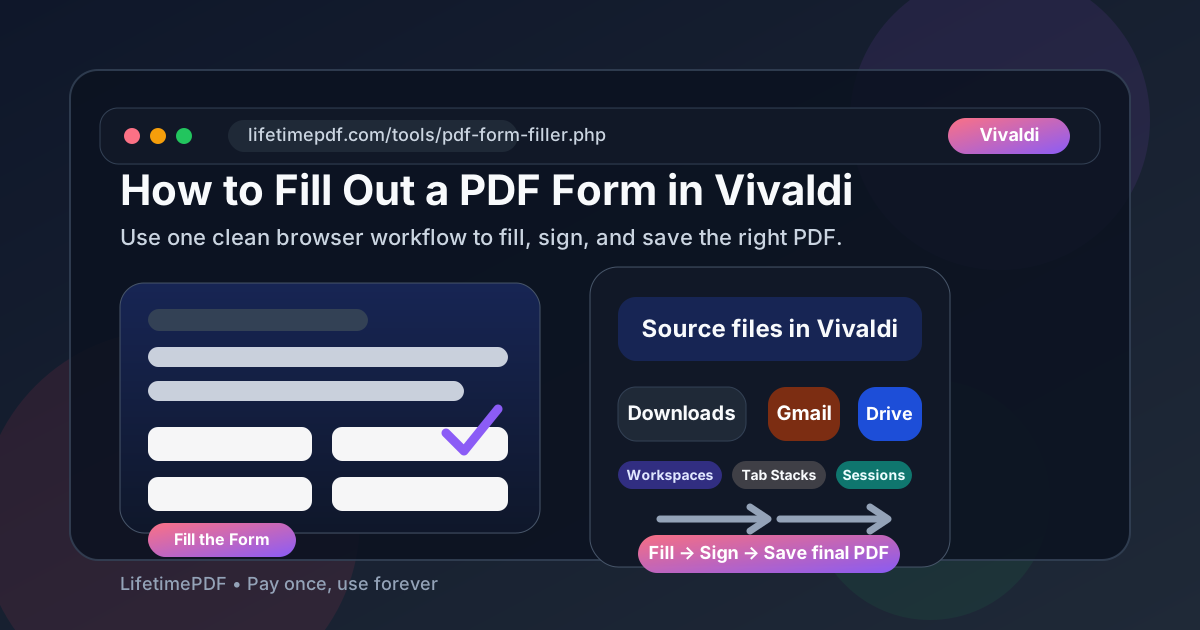
Table of contents
- Quick start: fill a PDF form in Vivaldi in a few minutes
- Why this Vivaldi workflow works well
- Step-by-step: fill the form in Vivaldi
- Fillable vs scanned vs locked PDF forms
- Vivaldi's PDF viewer, Workspaces, Tab Stacks, and Sessions
- How to sign, save, flatten, and submit the final PDF
- Common Vivaldi mistakes and quick fixes
- Best Vivaldi use cases for PDF forms
- Related LifetimePDF tools and guides
- FAQ
Quick start: fill a PDF form in Vivaldi in a few minutes
If you want the shortest route from incoming form to finished file, use this order:
- Open PDF Form Filler in Vivaldi.
- Choose the real PDF from Downloads, a saved Gmail attachment, Google Drive, or another folder.
- Type into the existing fields if the PDF is truly fillable.
- If the form is scanned or flattened, place text manually where each answer belongs.
- Add a signature with Sign PDF if the form requires it.
- Download the completed PDF, review it once, and only then email it back or upload it.
Why this Vivaldi workflow works well
Vivaldi is already where many PDF forms begin. A school packet opens from Gmail. A client shares a form through Google Drive. A portal launches a PDF in a browser tab before you have even decided where the real file should live. In that sense, Vivaldi is not the obstacle. It is the staging area.
That makes Vivaldi a strong starting point, but not always the best finishing tool by itself. Vivaldi's built-in PDF viewer is useful for reading and sanity-checking a form, yet real-world forms often need more than basic viewing. You may need to type into fields, place text on top of a scanned page, add initials, insert a signature, flatten the result for a portal, or save a polished final copy that does not get mixed up with the original preview.
A dedicated browser-based form filler keeps that whole workflow in one place without forcing you to print, handwrite, rescan, or switch into desktop software for a one-off task.
| Workflow piece | What Vivaldi helps with | What the dedicated tool handles better |
|---|---|---|
| Opening the form | Fast previews from Gmail, Google Drive, downloads, and portal tabs | Uploading the exact file you want to complete |
| Typing answers | Basic readability and quick review | Field entry, manual text placement, checkmarks, and cleaner output |
| Finishing the file | Easy re-open and visual check across Workspaces or Sessions | Signing, flattening, unlocking when authorized, and saving one final version |
Step-by-step: fill the form in Vivaldi
Here is the practical workflow that avoids most of the usual confusion.
Step 1: Identify the real source file before you start typing
A lot of PDF form mistakes have nothing to do with the form fields themselves. They happen because the wrong copy was opened. Before you answer anything, decide whether the real source is the Gmail attachment, the file you already downloaded, the synced copy in Google Drive, or the PDF inside a portal workflow.
If the filename is generic like form.pdf, application.pdf, or document.pdf, rename the finished copy later with something clearer. That one habit saves a surprising amount of follow-up stress.
Step 2: Open PDF Form Filler in Vivaldi
Open LifetimePDF PDF Form Filler in Vivaldi and upload the exact file you plan to return. If the PDF came from Gmail or Google Drive, you do not need to overcomplicate the process. Just make sure you are working on the final source, not a preview or saved Session you will forget to refresh.
Step 3: Fill true fields first, then place text manually if needed
Some PDFs are built properly, which means the fields accept typing immediately. Others only look like forms but are really scanned pages, flattened exports, or converted files with no working fields underneath. In those cases, a form filler that can place text manually is the calmer option.
- Fillable PDF: click the field, type, move on.
- Scanned or flattened PDF: place text where the answer belongs.
- Checkbox-heavy forms: review alignment before saving so ticks or marks sit where they should.
- Date and initials fields: zoom in enough to keep placement clean instead of guessing at default scale.
Step 4: Add signatures after the answers are complete
If the document requires a signature, finish the rest of the form first. That way you do not have to redo the signature because a line of text moved, a checkbox was missed, or the signer date needed to change.
Use Sign PDF for that last step. It is usually cleaner than trying to squeeze a signature into the workflow too early.
Step 5: Save the completed copy with a name that makes sense
This is where Vivaldi users avoid the Tab Stack trap. Save the finished PDF with a filename that clearly distinguishes it from the original, such as intake-form-completed.pdf or school-packet-signed-final.pdf. If you leave the name unchanged, there is a good chance you will later upload the original blank form by mistake.
Fillable vs scanned vs locked PDF forms
Not every PDF form behaves the same way, and your Vivaldi workflow should change depending on the type of file you received.
| Form type | What it looks like | Best move in Vivaldi |
|---|---|---|
| Fillable PDF | Real input fields, tab order, clickable boxes | Upload it into PDF Form Filler, type into the fields, then save the final copy |
| Scanned PDF | Looks like a paper form turned into an image | Place text manually on top of the page and review spacing before saving |
| Flattened PDF | Looks crisp but fields are no longer interactive | Treat it like a static page and place the answers manually where needed |
| Locked PDF | Editing or form actions are restricted | Only use Unlock PDF if you are authorized to edit the file |
The useful mindset is simple: if you cannot type, it does not mean the form is impossible. It usually just means the PDF was built in a less helpful way than you hoped.
Vivaldi's PDF viewer, Workspaces, Tab Stacks, and Sessions
Vivaldi's built-in viewer is genuinely useful. It opens quickly, it is already where many web-based PDFs land, and it makes quick page checks easy. If all you need is a short read-through, it does its job well.
The trouble starts when you want a clean start-to-finish form workflow. If the file came from Gmail, Google Drive, a portal preview, or a browser download queue, the built-in viewer can leave you doing version-management work instead of actually finishing the form.
Vivaldi also adds browser-specific wrinkles: Workspaces, Tab Stacks, and saved Sessions. They are great for keeping related tasks open, but they also make it easy to leave an outdated preview alive in another stack or restore an older document later without noticing. If a trusted PDF tool stalls, an extension or privacy setting in that tab can sometimes be part of the problem too.
| Method | Best for | Where it struggles |
|---|---|---|
| Vivaldi PDF viewer | Opening, reading, and checking a PDF quickly | Scanned forms, manual text placement, consistent signing, and portal-friendly finishing |
| Gmail, Drive, Workspace, or Session previews | Fast visual checks before you choose the right source file | Easy to confuse with saved attachments, downloaded copies, or older versions with nearly the same name |
| LifetimePDF PDF Form Filler | Typing, placing text, signing, and saving polished forms from one browser workflow | You still need a final review pass before sending |
In other words, Vivaldi is a great doorway. The dedicated form filler is what actually gets the document over the finish line cleanly.
How to sign, save, flatten, and submit the final PDF
Once the answers are in place, most people still have one more step. They need to sign the form, upload it to a portal, or email it back without sending a messy version.
- Need a signature? Use Sign PDF after the form content is complete.
- Portal rejects interactive fields? Run the finished file through Flatten PDF so the visible answers stay fixed.
- File is too large? Use Compress PDF after the content is finalized.
- Contains private data? Consider Protect PDF before storing or sharing the final copy.
Common Vivaldi mistakes and quick fixes
I filled the form in a preview, then lost my answers
This usually happens when someone edits a browser preview mentally instead of treating the file like a real final document. Save or upload the actual PDF into the form filler first, then save the finished output clearly.
I have three copies from Gmail, Drive, and Downloads
Pause long enough to choose one source of truth. Open each copy only if necessary, confirm which version is newest, then finish the form on that file and give the final PDF a more specific name before sharing it.
The form will not let me type anywhere
The PDF is probably scanned, flattened, or badly built. Use a tool that can place text manually instead of assuming the file is broken beyond repair.
The file is locked
If you are allowed to edit it, use Unlock PDF. If you are not authorized, stop there and ask for an editable version rather than forcing the wrong workflow.
Vivaldi restored the wrong PDF from a Session or Tab Stack
Treat the visible tab as a clue, not the source of truth. Check the filename and folder before you start. Vivaldi is excellent at keeping related work together, but that also means it can keep stale copies together.
An extension or privacy setting blocked the upload
If a trusted PDF tool stalls, try pausing the extension or relaxing the content blocking for that tab only. Finish the form workflow, then restore your normal setup afterward.
The portal rejected the completed file
Try flattening the form after you finish it. Many upload systems behave better with one stable, non-interactive final PDF.
I uploaded the blank form instead of the completed one
Rename the finished file immediately and store it where you can identify it at a glance. Vivaldi, Gmail, and Drive are all helpful right up until they give you several nearly identical filenames to choose from.
Best Vivaldi use cases for PDF forms
Filling out a PDF form in Vivaldi is especially practical when the document already reached you through a browser-first workflow.
- School and childcare paperwork: complete consent forms, applications, and enrollment packets from Gmail or shared Drive folders.
- Client intake packets: answer forms, sign them, and send them back without printing anything.
- Insurance, rental, or onboarding documents: finish the official PDF, then flatten the final copy if the upload system is strict.
- Remote team workflows: handle shared PDFs from Google Drive or portals without bouncing between several apps.
- Personal admin tasks: complete tax, health, contractor, or account paperwork from one browser session without losing track of the right file.
In each case, the benefit is speed without sacrificing clarity. You stay in Vivaldi, but you still finish with a proper completed PDF instead of a loose collection of previews and guesswork.
Related LifetimePDF tools and guides
Filling the form is usually part of a larger PDF workflow. These tools and guides pair well with it:
- PDF Form Filler — complete fillable, scanned, and awkward PDFs in one browser workflow.
- Sign PDF — add the signature after the form answers are complete.
- Unlock PDF — remove editing restrictions if you are authorized to do so.
- Flatten PDF — lock the visible answers into a more portal-friendly final copy.
- Compress PDF — reduce file size after the form is finished.
- How to Sign a PDF in Vivaldi — the next step when a completed form still needs a signature.
- How to Add Text to a PDF in Vivaldi — useful when the PDF is scanned or badly built.
- How to Flatten a PDF in Vivaldi — helpful when upload systems want a more stable final file.
- How to Compare PDFs in Vivaldi — useful when you suspect the file changed between previews and downloads.
- How to Fill Out a PDF Form on Windows — broader device guidance when your Vivaldi workflow continues on a desktop.
Quick decision: use PDF Form Filler for the answers, Sign PDF for the signature, Unlock PDF only when you are allowed to edit the file, and Flatten PDF when the portal needs a steadier final copy.
FAQ: How to fill out a PDF form in Vivaldi
Can I fill out a PDF form directly in Vivaldi?
Vivaldi is great for opening PDFs, but a browser-based PDF form filler inside Vivaldi is usually the easiest way to type, place text, sign, save, and finish the file cleanly.
How do I fill out a PDF form from Gmail or Google Drive in Vivaldi?
Open or save the PDF from Gmail or Google Drive, confirm which copy is the real one you need to return, upload that file into a PDF form filler in Vivaldi, complete the answers, save the finished PDF, and review it once before sending it back.
What if the PDF form will not let me type in Vivaldi?
The PDF is usually scanned, flattened, or permission-restricted. Use a form filler that can place text manually, or unlock the file first if you are authorized to edit it.
Do Vivaldi Workspaces and Tab Stacks make PDF forms harder to track?
They can. Workspaces and Tab Stacks are useful for keeping related tasks open, but they also make it easy to leave an older preview or duplicate download nearby. For important forms, confirm the exact source file before you start editing.
What if Vivaldi extensions or privacy settings interfere with a trusted PDF workflow?
If a trusted PDF tool stalls while uploading or downloading, check whether an extension or aggressive privacy setting is interfering in that tab. Relax it for the trusted page, finish the task, and then restore your normal setup afterward.
Published by LifetimePDF — Pay once. Use forever.