How to Extract Pages from PDF on Chromebook: Use Chrome, Files & Save a Smaller Copy
To extract pages from PDF on Chromebook, open a browser-based Extract Pages tool in Chrome, choose the file from Files, Downloads, Gmail, or Google Drive, enter the pages you want to keep, and save the new smaller PDF.
If you only need a signature page, assignment section, invoice range, exhibit, or a few report pages, that is usually faster and cleaner than keeping the whole file and deleting everything else later.
That is the short answer. The useful part is knowing how ChromeOS file handling changes the workflow, how to avoid version mix-ups in Downloads and Drive, and when to use Extract Pages, Split PDF, or Delete Pages so you finish with one tidy PDF instead of three confusing copies. Chromebook is absolutely capable of this job. The trick is treating page extraction as a quick browser workflow, not as a print trick or a screenshot hack.
Fastest path: save the original PDF somewhere easy to find, open LifetimePDF's Extract Pages tool in Chrome, keep only the pages you need, and rename the result clearly before you upload or share it.
In a hurry? Jump to Quick start: extract PDF pages on Chromebook in 3 minutes.
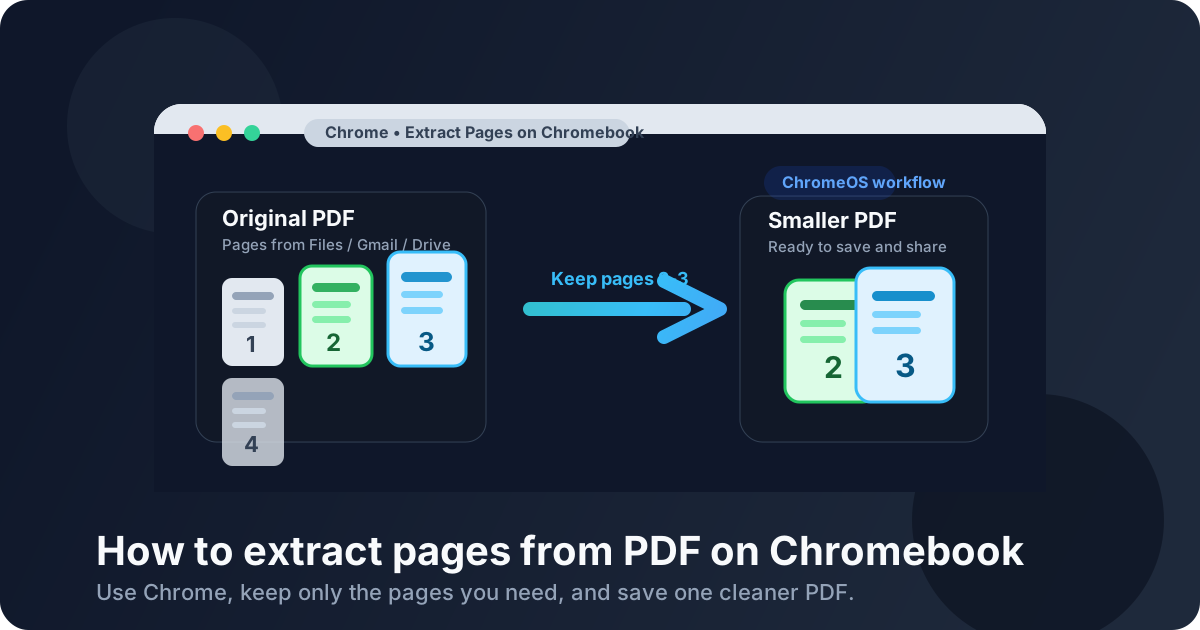
Table of contents
- Quick start: extract PDF pages on Chromebook in 3 minutes
- The easiest Chromebook workflow for extracting pages
- Step-by-step: keep only the pages you need
- Extract pages vs split PDF vs delete pages on Chromebook
- Working with Files, Downloads, Gmail, and Google Drive
- Best Chromebook use cases for selected-page PDFs
- Common Chromebook problems and quick fixes
- Quality, privacy, and file-handling tips
- Related LifetimePDF tools and guides
- FAQ (People Also Ask)
Quick start: extract PDF pages on Chromebook in 3 minutes
If you already know which pages matter, this is the fastest practical workflow:
- Open Extract Pages in Chrome.
- Choose the PDF from Files, Downloads, a saved Gmail attachment, or Google Drive.
- Enter the page numbers or ranges you want to keep, such as 2-4 or 1,3,7-9.
- Download the new PDF and save it with a name that makes the result obvious, such as lease-signature-pages.pdf or chapter-2-only.pdf.
- Open the smaller file once and confirm the right pages were kept before you email, upload, print, or submit it.
If you do not know the page numbers yet, use Split PDF first so you can work more visually. On Chromebook, that is often more comfortable than guessing ranges from memory and rerunning the job twice.
The easiest Chromebook workflow for extracting pages
The best Chromebook workflow is usually simple:
- Save the source PDF to a location you can find quickly.
- Open the extraction step in Chrome.
- Keep only the pages you need.
- Save the output with a new filename instead of leaving it to blend into the original.
- Open the new file once before sending it onward.
That sounds obvious, but most ChromeOS mistakes happen before or after extraction, not during it. People grab the wrong Gmail attachment, forget which copy in Downloads is the edited one, or upload the full original from Drive because both filenames look nearly identical. The PDF tool is not usually the weak point. The handoff is.
A clean Chromebook habit is to add a clear suffix such as -selected-pages, -signature-only, or -short-copy. That one naming step saves more frustration than any clever PDF shortcut.
Step-by-step: keep only the pages you need
1) Save the original somewhere easy to find
If the PDF came from Gmail, Classroom, a portal, Slack, or Google Drive, save it first when possible. The ChromeOS Files app is your friend here. Working from a clearly saved file is safer than bouncing between previews and temporary downloads.
Good places for quick Chromebook PDF work include:
- Downloads if this is a one-off task you will finish right away
- Files folders if you want a tidier local workflow
- Google Drive if the smaller extracted PDF needs to appear on another device afterward
2) Open Extract Pages in Chrome
Open LifetimePDF Extract Pages in Chrome. On Chromebook, this is almost always cleaner than trying to print a few pages into a new file or improvising with screenshots. You want a proper selected-page PDF, not a workaround that creates more cleanup later.
3) Enter only the pages you want to keep
This is the main difference between extraction and trimming. You are not telling the tool what to remove. You are telling it what should survive into the new smaller PDF.
Common examples:
- 5 for one signature or approval page
- 2-6 for a continuous section from a packet
- 1,4,8-10 for scattered pages from a report or school document
If you are unsure because the PDF has a cover page, appendix labels, or Roman numerals in the footer, keep the original open in another tab or window while you check. Chromebook makes that easy enough, and it prevents the most common page-number mistake.
4) Save the result with a clearer name than the original
Avoid vague names like document-final-new.pdf. Use filenames that tell you what changed, such as:
- invoice-pages-2-3.pdf
- assignment-section-b.pdf
- lease-signature-page.pdf
- report-exhibit-a.pdf
5) Open the smaller PDF once before sending it
This last check matters. Confirm the pages are correct, the order still makes sense, and you are about to share the smaller copy rather than the full original. On Chromebook, that quick review in Chrome or Files catches the mistakes that cause the biggest embarrassment later.
Need to keep only the important pages right now?
Extract pages vs split PDF vs delete pages on Chromebook
These tools sound similar, but they solve different problems:
| Goal | Best tool | Why it fits Chromebook well |
|---|---|---|
| Keep only a few pages | Extract Pages | Fast when you already know the page numbers and want one smaller PDF. |
| Choose pages visually or create multiple outputs | Split PDF | Helpful when page thumbnails are easier than typing ranges on ChromeOS. |
| Remove a few unwanted pages but keep most of the file | Delete Pages | Better when the original is almost correct and only needs a light trim. |
In plain English: if you can describe the result as keep these pages, use extraction. If you need thumbnails or multiple smaller outputs, split the file. If you are mostly keeping the original and only want to remove a couple of pages, delete pages instead.
Working with Files, Downloads, Gmail, and Google Drive
Gmail attachments
Save the attachment first instead of working from a preview tab if the file matters. Preview is fine for checking content, but a saved copy is much easier to extract, rename, review, and attach again without confusion.
Google Drive
Drive is useful when the smaller PDF needs to appear on another device later. Just make sure the new extracted file has a distinct name so you do not confuse it with the synced original. If the folder is shared, clarity matters even more.
Downloads and Files habits that save time
- Keep the original and extracted copy clearly named.
- Do not leave five similar downloads sitting next to each other without labels.
- Open the exact file you plan to send, not the one you think you edited earlier.
- If you do PDF work often, make one simple working folder instead of using random downloads every time.
Chromebook feels clean when the workflow stays small. One source file, one edited result, one quick review, then share. Most PDF stress on ChromeOS comes from version confusion, not from the extraction itself.
Handling sensitive pages? After you extract the right pages, protect the final smaller PDF before you send it out.
Best Chromebook use cases for selected-page PDFs
Extracting pages on Chromebook is especially useful when you need a lighter, more focused file without rebuilding the whole document.
Common examples include:
- Sending only the signature page from a long lease or agreement
- Keeping just the worksheet or chapter pages from a larger class packet
- Pulling one receipt range or invoice section from a bigger admin PDF
- Sending only the appendix, exhibit, or summary pages from a report
- Creating a smaller client-facing excerpt from a longer internal PDF
- Separating the exact pages a portal requires instead of uploading the entire packet
In all of those cases, the goal is not only to reduce file size. It is to reduce confusion. A smaller targeted PDF is easier for the other person to understand, easier to upload, and less likely to expose extra pages that never needed to leave your Chromebook.
Common Chromebook problems and quick fixes
I extracted the wrong pages
This usually happens because the visible page number in the footer does not match the PDF page count in the viewer. Reopen the original, verify the actual page positions, and run the extraction again.
I cannot find the new file
Check Downloads first, then review your recent files in ChromeOS Files. If this happens often, save the output into a dedicated folder before you start the job.
I sent the original full PDF instead of the smaller one
This is one of the most common ChromeOS mistakes. Rename the extracted file immediately after saving it, then attach only the renamed copy. Clear naming beats good intentions every time.
The document is too confusing to select by page number
Use Split PDF or preview the original first. Large scanned packets, reports, and school documents are often easier to handle visually than numerically.
I actually need to remove pages from a nearly finished file
Use Delete Pages instead. Extraction is for creating a new subset. Deletion is for trimming an almost-correct full document.
Quality, privacy, and file-handling tips
Extracting pages usually preserves the original page quality, which is one reason it is better than using screenshots. If the source PDF is sharp, the smaller extracted copy should normally stay sharp too.
On the privacy side, selected-page extraction is also a simple way to share less. If someone only needs three pages, do not send thirty. That reduces clutter and lowers the chance that extra names, addresses, pricing, notes, or attachments leave your machine unnecessarily.
If the pages you are keeping still contain sensitive information, extraction is not the same thing as redaction. In that case, redact first, then create or protect the final smaller copy if needed.
Related LifetimePDF tools and guides
If extracting pages is only one part of the job, these tools and guides usually pair well with the workflow:
- Extract Pages for keeping only the pages you need
- Split PDF for visual page selection or multiple output files
- Delete Pages for trimming a near-finished file
- Merge PDF if you later need to recombine selected pages with another file
- Scan to PDF on Chromebook if you are starting from paper pages rather than an existing PDF
- How to OCR a PDF on Chromebook if the extracted pages still need searchable text
- How to Sign a PDF on Chromebook if the selected pages still need signatures
- How to Password Protect a PDF on Chromebook if the final smaller PDF should be locked before sending
- Extract Pages From PDF for the broader guide beyond Chromebook-specific workflow
If you do this task often, the real win is building a repeatable habit: save the source, keep only what matters, name the result clearly, and send the smaller copy instead of the full packet. That is the Chromebook workflow that stays fast even when the documents get messy.
Ready to keep only the pages that matter? Use LifetimePDF to create a smaller, cleaner PDF before you upload, print, or send it.
FAQ (People Also Ask)
How do I extract pages from PDF on Chromebook without installing an app?
Open a browser-based Extract Pages tool in Chrome, choose the PDF from Files, Downloads, Gmail, or Google Drive, enter the pages you want to keep, download the new PDF, and save it with a clear name. That is usually the fastest no-app workflow on Chromebook.
Can I extract non-consecutive PDF pages on Chromebook?
Yes. Most page-range workflows let you keep scattered pages such as 1,4,7-9 in one smaller PDF. That is useful when the important content is spread across a longer report, packet, or school file.
What is the difference between extract pages and split PDF on Chromebook?
Extract pages creates one new PDF containing only the pages you choose. Split PDF is better when you want multiple outputs or when thumbnail-based page picking is easier than typing ranges.
Will extracting pages reduce PDF quality on Chromebook?
Usually no. Extraction normally preserves the original page quality because the selected pages are copied into a new PDF instead of being turned into screenshots.
Can I extract pages from a PDF that came from Gmail or Google Drive on Chromebook?
Yes. Save the file from Gmail if needed or choose it from Drive, create the extracted copy in Chrome, then rename the result clearly so you do not accidentally send the original full file.
Published by LifetimePDF - Pay once. Use forever.