How to Delete Pages from a PDF in Edge: Remove Extras from Downloads, Outlook, and OneDrive Without Sending the Wrong Version
To delete pages from a PDF in Edge, open LifetimePDF's Delete Pages tool in Microsoft Edge, upload the file from Downloads, an Outlook attachment, OneDrive, SharePoint, or a local folder, remove the pages you do not want, and save the cleaned PDF before sharing it.
If you only want to keep a small section from a larger document, Extract Pages is usually faster than deleting most of the file one page range at a time.
That is the short answer. The part that actually saves time in Edge is avoiding Outlook preview mix-ups, OneDrive duplicates, SharePoint version confusion, and the classic mistake of cleaning one PDF while attaching another one five minutes later.
Fastest path: confirm the exact source file first, open LifetimePDF's Delete Pages tool in Edge, remove the extra pages in one pass, then save the cleaned copy with a filename that makes the result obvious.
In a hurry? Jump to Quick start: delete PDF pages in Edge in a few minutes.
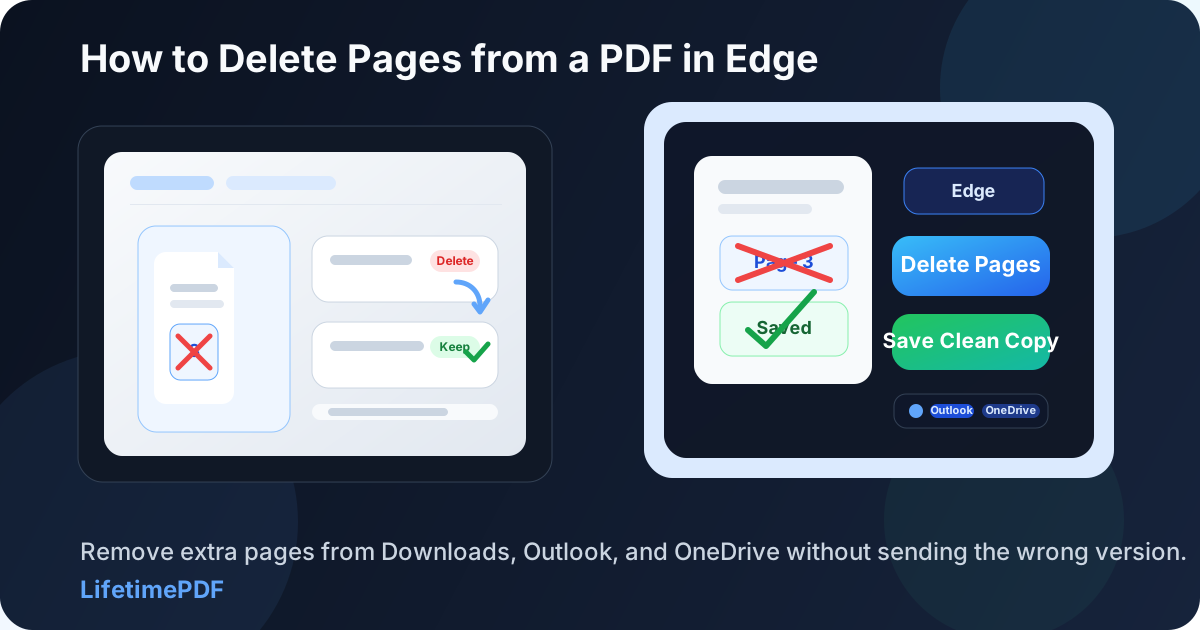
Table of contents
- Quick start: delete PDF pages in Edge in a few minutes
- Why Edge is useful for PDF cleanup but not page removal by itself
- Step-by-step: how to delete pages from a PDF in Edge
- Delete Pages vs Extract Pages vs Split PDF in Edge
- How to handle Outlook attachments, OneDrive files, SharePoint links, and Downloads without cleaning the wrong copy
- Best Edge use cases for deleting PDF pages
- Common Edge mistakes and quick fixes
- Quality, privacy, and final-file tips
- Related LifetimePDF tools and guides
- FAQ
Quick start: delete PDF pages in Edge in a few minutes
If you already know which pages should go, this is the cleanest Edge workflow for most people:
- Open Delete Pages in Edge.
- Choose the PDF from Downloads, a saved Outlook attachment, OneDrive, SharePoint, or another folder.
- Check the real PDF page index before removing anything.
- Delete the unwanted pages or ranges in one pass.
- Download the cleaned PDF, save it with a clear name, and open it once to confirm the result.
The most important part is not the click. It is making sure you clean up the right file. Edge makes it very easy to keep an Outlook preview, a SharePoint tab, and a downloaded local copy open at the same time.
Why Edge is useful for PDF cleanup but not page removal by itself
Edge is where a lot of Windows users already meet their PDFs. An invoice opens from Outlook. A contract lives in OneDrive. A team packet sits in SharePoint. A portal export lands in Downloads. That makes Edge a convenient place to review the file and decide what should stay.
The limit is simple: Edge can preview a PDF, but the built-in viewer does not actually remove pages from the file. You still need a dedicated page-removal workflow. The easiest pattern is to use Edge as the workspace and a browser-based Delete Pages tool for the actual cleanup step.
In practice, the safe sequence is short:
- identify the exact PDF you plan to keep,
- delete the pages you do not want,
- save the cleaned copy with a distinct name,
- open the result once before sending it anywhere.
That routine prevents most of the avoidable mistakes people make when they move quickly between Outlook previews, cloud tabs, local downloads, and browser windows with almost identical filenames.
| Situation | Best Edge-friendly move | Why it works better |
|---|---|---|
| The PDF is mostly correct and only a few pages need to go | Delete Pages | You keep the rest of the original document intact and remove only the parts that do not belong. |
| You only want one section from a much larger PDF | Extract Pages | Creating a smaller keep-only file is usually calmer than deleting most of the document. |
| You need several separate output files | Split PDF | Split is better when one document needs to become several PDFs instead of one cleaned version. |
| The final PDF is still too large | Compress it after cleanup | You reduce size on the exact file you are actually planning to upload or email. |
Step-by-step: how to delete pages from a PDF in Edge
Here is the practical browser workflow most people actually need.
1. Confirm the real source PDF first
If the file came from Outlook, OneDrive, SharePoint, Teams, a portal, or a local folder, pause long enough to confirm which copy is supposed to be the source. An Outlook preview tab, a SharePoint browser view, and a downloaded local copy can look interchangeable when they are not.
2. Open Delete Pages in Edge
Go to Delete Pages in Edge. Keeping the whole cleanup workflow inside the same browser session is usually the least annoying way to move from a preview or download into a real edit.
3. Upload the PDF from Downloads, Outlook, OneDrive, SharePoint, or another folder
Choose the version you actually intend to keep after cleanup. If there are duplicate files with names like proposal.pdf, proposal (1).pdf, and proposal-final.pdf, this is the moment to slow down before you remove anything.
4. Check the actual PDF page index
This is the step that prevents most delete-page mistakes. The printed number inside the document footer may not match the PDF file index. A cover sheet, title page, scanned separator, or appendix can shift everything by one or more pages.
Example: the sheet labeled page 1 inside the document might really be page 3 in the file if two unnumbered pages came first.
5. Remove the unwanted pages in one pass
Delete the exact pages or ranges that do not belong. This works especially well for common Edge cleanup jobs such as blank scan pages, duplicate pages in a combined packet, outdated appendices, internal notes, or extra forms that should not be shared outside the team.
6. Save the cleaned PDF with a clear filename
Good naming saves real time later. A name like lease-cleaned.pdf, application-without-appendix.pdf, or packet-pages-removed.pdf is much more helpful than document-final-2.pdf.
7. Open the result once before you share it
In Edge, one quick review pass prevents a lot of avoidable embarrassment. Make sure the pages you wanted gone are actually gone, the pages you kept are still in the right order, and you did not remove a page with a signature, deadline, price table, or instruction someone still needs.
Useful habit: keep the original untouched until the task is finished. Edit the copy, review the copy, then send the copy.
Delete Pages vs Extract Pages vs Split PDF in Edge
These workflows sound similar, but they solve different problems. Picking the right one saves time and reduces file clutter.
| Tool | Best when | Typical Edge use case |
|---|---|---|
| Delete Pages | The PDF is mostly correct and you only need to remove a few unwanted pages. | Remove a blank scan page, an outdated cover, or one appendix before sharing. |
| Extract Pages | You only want to keep a small section of the document. | Keep pages 4-6 from a longer packet and ignore everything else. |
| Split PDF | You want several smaller files instead of one cleaned version. | Break a combined packet into separate PDFs for different upload steps or recipients. |
A simple rule helps here: if you are thinking remove these few pages, use Delete Pages. If you are thinking keep only these few pages, use Extract Pages. If you are thinking turn this one file into several files, use Split PDF.
How to handle Outlook attachments, OneDrive files, SharePoint links, and Downloads without cleaning the wrong copy
Outlook attachments
Outlook preview is useful for confirming you have the right attachment, but it is not the best place to trust your memory about file versions. If the document matters, save the real attachment or make sure you know exactly which Edge tab is tied to the source you want to edit.
OneDrive files
OneDrive is convenient, but it can blur the line between the cloud copy, a synced local file, and a downloaded duplicate. If the PDF may have changed recently, confirm which copy is supposed to be final before you delete pages from anything.
SharePoint links
SharePoint adds another layer of confusion because browser previews, version history, and re-uploaded files can all coexist. If the file belongs to a team workflow, save the cleaned version with a name that makes the final state obvious before you replace or re-share it.
Downloads in Edge
Downloads is often the easiest place to work from, but it is also where duplicates pile up. If you see several similarly named files, check the modified date and open the exact one you intend to clean up.
Rule of thumb: if you are not completely sure which copy is current, stop and identify the source file before you remove any pages.
Best Edge use cases for deleting PDF pages
Deleting pages from a PDF in Edge is most useful when the document is technically fine but practically too broad.
- Scanned packets: remove blank separator pages or duplicate scans before archiving or sending.
- Contracts and proposals: drop outdated exhibits, internal pricing pages, or review notes before forwarding the file.
- HR and onboarding paperwork: remove pages that do not apply before uploading or emailing the final packet.
- Client deliverables: trim support material, notes pages, or internal instructions before sharing the final PDF.
- Portal uploads: send only the pages the portal actually expects instead of a bloated packet.
- Privacy cleanup: avoid sharing unrelated signatures, addresses, financial details, or internal comments that never needed to leave the file.
In all of those cases, the value is not just tidiness. It is clarity, smaller file clutter, and less risk that the wrong information travels with the document.
Common Edge mistakes and quick fixes
The page numbers did not match what I expected
This is the most common mistake. Ignore assumptions and check the actual PDF page position before deleting anything. Covers, blank pages, and scanner inserts shift the file index more often than people expect.
I removed too much because the packet was long
That is usually a sign you really wanted Extract Pages, not Delete Pages. If the final file should only contain a small subset, extraction is calmer than removing most of the document manually.
I cleaned the wrong version
This is classic Edge behavior when an Outlook preview, a SharePoint tab, and a local download all stay visible. Save the cleaned output with a distinct name and close the older tab once you confirm the final file.
The PDF is still too large after deleting pages
Deleting a few pages can help, but not always enough. If the file still needs to fit an email or upload limit, run the cleaned version through Compress PDF after the content is correct.
I only need one signed page or one invoice page
That is usually an extraction job. Use Extract Pages if the real goal is to keep only one approval page, one invoice page, or one signed section.
Quality, privacy, and final-file tips
Deleting pages usually preserves the quality of the pages you keep, which is one reason it is better than taking screenshots or rebuilding the document from images. A few habits make the final result safer and cleaner:
- Review the final file once: especially if it contains signatures, dates, totals, or deadlines.
- Keep the original until the task is complete: it is your safety net if you remove the wrong page.
- Use clear filenames: this matters more than people think when Edge, Outlook, OneDrive, and SharePoint all hold lookalike copies.
- Compress after cleanup, not before: get the content right first, then reduce size only if needed.
- Protect sensitive PDFs when appropriate: if the cleaned file still contains private information, use Protect PDF before storing or sending it.
Related LifetimePDF tools and guides
Deleting pages is usually part of a bigger Edge-based PDF workflow. These tools and articles pair well with it:
- Delete Pages — remove the pages that do not belong.
- Extract Pages — keep only the pages that matter.
- Split PDF — create several smaller PDFs from one larger file.
- Compress PDF — reduce size after cleanup if the final file is still too large.
- Protect PDF — secure the cleaned copy before sharing it onward.
- Delete Pages from PDF — broader guidance for the overall workflow.
- How to Delete Pages from a PDF on Windows — useful if Edge is just one part of your Windows workflow.
Quick decision: remove a few pages with Delete Pages, keep only a few with Extract Pages, or turn one file into several with Split PDF.
FAQ: How to delete pages from a PDF in Edge
Can Microsoft Edge delete pages from a PDF by itself?
Not by itself. Edge is great for previewing PDFs, but a browser-based Delete Pages tool is the part that actually removes pages from the file.
What is the easiest way to delete pages from a PDF in Edge?
Open a Delete Pages tool in Edge, upload the source PDF from Downloads, Outlook, OneDrive, SharePoint, or another folder, remove the pages you do not want, save the cleaned copy, and review it once before sharing.
When should I use Extract Pages instead of Delete Pages in Edge?
Use Extract Pages when you only want to keep a small section from a larger PDF. Use Delete Pages when the document is mostly correct and you only need to remove a few unwanted pages.
Can I delete pages from a PDF opened from Outlook or OneDrive?
Yes, but confirm which copy is the real source first. Outlook previews, OneDrive sync folders, SharePoint versions, and local downloads can look similar even when they are not the same file.
What if the cleaned PDF still contains sensitive information or is too large?
Compress the final file after cleanup if it is still too large, and protect the cleaned copy before sharing if it still contains private information.
Published by LifetimePDF — Pay once. Use forever.