Table of contents
- Quick start: compare PDFs in Brave in a few minutes
- Why Brave is a practical place to compare PDFs
- Brave tabs or a dedicated Compare PDFs tool?
- Step-by-step: compare the right files the right way
- Scanned, protected, or oversized PDFs: what to do first
- Best Brave use cases for PDF comparison
- Common Brave comparison problems and quick fixes
- Privacy, accuracy, and file-handling tips
- Related LifetimePDF tools and guides
- FAQ
Quick start: compare PDFs in Brave in a few minutes
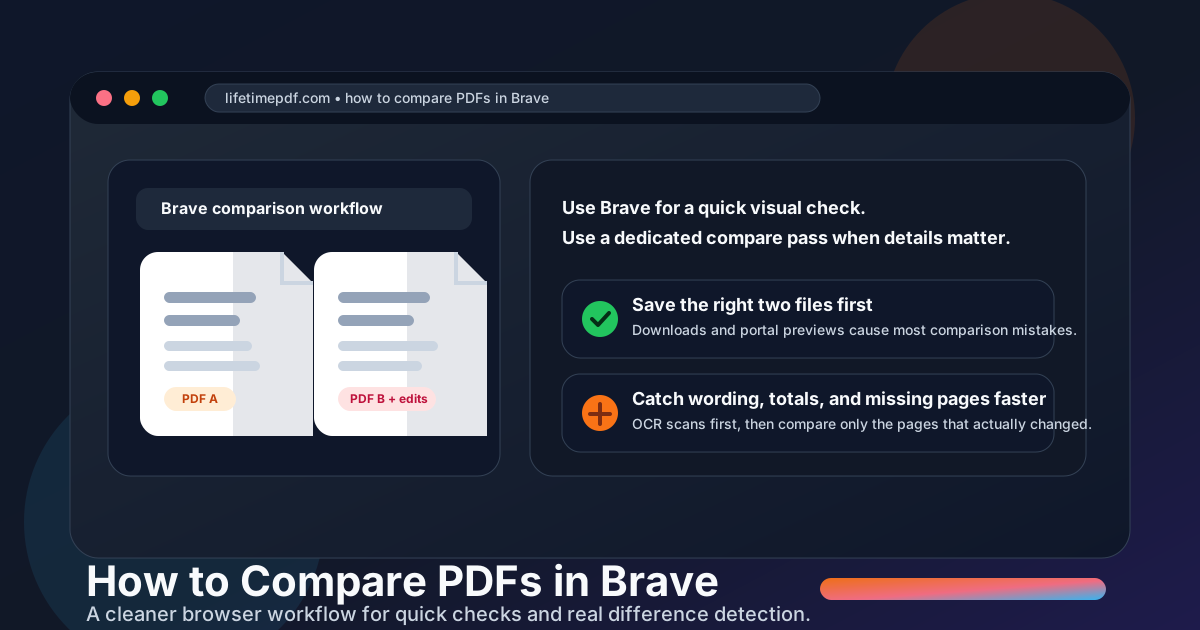
If you already know which two PDFs should be reviewed, this is the fastest Brave workflow:
- Save the older PDF and the revised PDF with clear names in one folder.
- Open Compare PDFs if you want faster difference detection, or open both files in separate Brave tabs if the edits are obvious and the job is small.
- Run OCR PDF first if either file is scanned.
- Unlock the file first if permissions block a normal review.
- Check dates, amounts, names, clauses, page counts, and deleted pages before you worry about minor layout shifts.
Why Brave is a practical place to compare PDFs
Brave is already where many PDF revisions show up first. A client portal opens an updated proposal in a tab. A Google Drive or Dropbox link loads a revised file inline. A downloaded statement lands in your browser before you move it anywhere else. That makes Brave a natural starting point for comparison work because the file often arrives there before it reaches a neat working folder.
The catch is that browser convenience can create version confusion. One tab may be showing the fresh portal preview, another may hold a local copy from yesterday, and the Downloads folder may quietly fill up with names like contract.pdf, contract (1).pdf, and contract-final.pdf. The comparison only feels difficult because the file handling got messy first.
The smoothest Brave workflow uses each part of the setup for what it does best:
- Brave tabs, portal previews, and downloads are where the revised PDF often appears first.
- Your working folder is where you keep the baseline and revised versions clearly named.
- Brave's built-in PDF viewer is useful for a quick human review when the differences are large and easy to notice.
- Compare PDFs is better when you want changed wording, revised figures, or missing pages to surface faster.
That order matters. Most Brave comparison frustration is not technical. It comes from comparing the wrong pair, working from a scan that should have been OCRed first, or reviewing a long mixed packet when only one section actually changed.
Brave tabs or a dedicated Compare PDFs tool?
Both options help, but they solve different problems.
| Method | Best when | Where it struggles |
|---|---|---|
| Brave tabs and the built-in PDF viewer | You want a quick visual side-by-side review and the changes are easy to notice. | Subtle wording edits, changed totals, and missing pages are easier to miss in longer PDFs. |
| Compare PDFs | You want faster change detection across text, page differences, and layout shifts. | Scanned or restricted files still need OCR or unlocking first for the cleanest result. |
| Extract Pages first, then compare | Only one section changed and the rest of the packet would add noise. | It adds one extra step, but often saves more time than reviewing a full document. |
A simple way to choose: if you are thinking I just need to glance at these two short files, Brave tabs may be enough. If you are thinking I need to catch every meaningful change before I send, sign, or approve this, use Compare PDFs.
Step-by-step: compare the right files the right way
Here is the most dependable Brave workflow when accuracy matters more than speed alone.
1. Save both versions with names that still make sense tomorrow
Avoid comparing final.pdf against final-new.pdf if you can help it. Use names like policy-v1.pdf and policy-v2-approved-edits.pdf, or quote-original.pdf and quote-revised.pdf. Clear names prevent the most common Brave comparison mistake: reviewing the wrong pair after bouncing between portal tabs, downloads, and local files.
2. Decide whether Brave tabs are enough or you need a real comparison pass
Brave's viewer works when the job is small and the differences are obvious, such as a missing page, a visibly revised cover sheet, or a short document with clear layout changes. If the edits may be subtle, open Compare PDFs instead. That is usually the safer move for contracts, pricing, policy revisions, approvals, and anything where a small wording change could matter later.
3. Clean up the inputs before you trust the output
If either PDF is a scan, use OCR PDF first so the file has real searchable text. If the file is protected and you are authorized to review it, use Unlock PDF before comparing. If the packet is huge but only one section changed, trim the comparison to the relevant range with Extract Pages.
4. Review the high-risk changes before the cosmetic ones
The changes that deserve your attention first are usually not tiny layout shifts. Start with:
- dates and deadlines,
- totals, rates, or quantities,
- names, addresses, and legal entities,
- deleted or added pages,
- approval wording, signature blocks, and obligations.
Once those are clear, you can decide whether the remaining differences matter or are just normal document noise.
5. Keep the original and revised copy until the decision is final
In browser-based workflows, it is easy to overwrite a file or redownload a fresh copy once you think the review is done. Do not rush that step. Keep the baseline and revised copies untouched until the contract is approved, the invoice is sent, or the final PDF is archived.
Useful habit: compare only the versions you would actually send, sign, or approve. If the file still needs OCR, unlocking, or page cleanup, do that before the final review.
Scanned, protected, or oversized PDFs: what to do first
A comparison result is only as clean as the files you feed into it. Three issues create most of the noise in Brave workflows: scans, restrictions, and long mixed-content packets.
Scanned PDFs
If text selection does not work, you are probably looking at image-based pages. OCR adds a searchable text layer and usually makes the comparison far more useful. Without OCR, the review can lean too heavily on image-level differences instead of the text you actually care about.
Password-protected or restricted PDFs
If you are allowed to work with the file but the PDF blocks normal comparison, remove the restriction first with Unlock PDF. That is often the missing step when one version opens normally and the other behaves like it is hiding behind permission friction.
Huge packets with one small change
Comparing an entire long packet when only one appendix changed is a waste of attention. Extract the relevant pages and compare the smaller section first. It is faster, calmer, and far easier to verify on a laptop screen.
Best Brave use cases for PDF comparison
Comparing PDFs in Brave is most useful when rereading both files from top to bottom would be slow, error-prone, or just unnecessary.
- Contract revisions: catch changed clauses, deleted paragraphs, and new signature requirements before approval.
- Invoices and quotes: confirm whether totals, rates, dates, or billing terms changed.
- Client proofs and project PDFs: check the right pages, labels, or text blocks changed before you send the new version out.
- Policy and compliance documents: see exactly what changed between review versions without scanning every page manually.
- Portal-downloaded files: review updated PDFs from SaaS dashboards, vendor portals, and shared drives before you treat the new version as final.
In each case, the goal is not just speed. It is confidence. You want to know what changed before you rely on the newer version.
Common Brave comparison problems and quick fixes
I have too many similar Brave tabs open
Stop and fix the file naming first. Save both versions locally and rename them clearly before you compare anything. Ten seconds of cleanup is better than reviewing the wrong version for ten minutes.
One file came from a portal preview and I am not sure it matches the downloaded copy
Save both PDFs into one folder before you start. Comparing local copies in one place is calmer than bouncing between browser previews, portal tabs, and stale downloads.
The files look different, but I cannot tell what actually changed
That is where a dedicated comparison pass helps. Switch from Brave tabs to Compare PDFs so the review depends less on your eyes catching every small change.
One of the PDFs is a scan from a printer or phone
Run OCR PDF first. If the scan is skewed, shadowed, or blurry, expect extra noise and focus on the most important pages first.
I opened one file in a regular window and another from a private or separate browser session
Save the exact two files to the same local folder before you review them. When the windows are different, your eyes can make you feel organized even when the files are not.
The comparison is cluttered by pages that do not matter
Extract the changed section and compare only that range. This is common with proposals, contract packets, financial reports, and scanned binders where most pages stayed exactly the same.
Privacy, accuracy, and file-handling tips
PDF comparison is not only about finding edits. It is also a quality-control step before you send sensitive information, sign a revised agreement, or archive a final version.
- Keep the original untouched until the decision is final.
- Compare the exact files that will be used, not older drafts that happen to be nearby.
- OCR scans before relying on the result whenever text selection does not work.
- Trim to the relevant page range when a full-packet review would create noise.
- Review meaningful edits first so dates, money, names, and clauses do not get buried under cosmetic changes.
The cleanest Brave comparison workflow is not the one with the most steps. It is the one that removes the confusing steps before they waste your attention.
Related LifetimePDF tools and guides
Comparison jobs usually connect to one or two other tools. These are the most useful companions:
- Compare PDFs — faster Brave review when differences need to stand out.
- OCR PDF — turn scans into searchable PDFs before comparison.
- Unlock PDF — remove restrictions when a protected file blocks normal review.
- Extract Pages — compare only the section that actually changed.
- Compare PDF Versions — useful if your real job is reviewing draft changes before approval.
- Compare Two PDF Files — useful if you want a broader comparison workflow too.
- How to edit a PDF in Brave — useful when the reviewed file still needs clean edits.
- How to watermark a PDF in Brave — useful when the final reviewed copy needs a draft or confidential label.
- How to compare PDFs on Mac — useful if your wider file workflow happens outside the browser too.
Practical sequence: save the right two versions locally, OCR or unlock if needed, compare only the pages that matter, and review the risky changes before you send, sign, or approve the revised PDF.
FAQ: How to compare PDFs in Brave
How do I compare PDFs in Brave?
Save both versions in one folder, open them in Brave for a quick visual review or use a dedicated Compare PDFs tool when you want differences to surface faster, then review the important changes first.
Can Brave itself compare two PDFs?
Brave can help you review two PDFs side by side, but it does not automatically highlight every changed word or number. It is best for simpler visual checks, not deeper comparison work.
What should I do if one PDF is scanned?
Run OCR first so the scanned file has searchable text. That usually produces cleaner comparison results and makes it easier to tell whether the wording changed or only the scan quality changed.
Why does comparing PDFs in Brave feel confusing sometimes?
Confusion usually comes from tab mix-ups, older downloads, portal previews, scans, or comparing too many pages at once. Save the right two files locally, clean them up first, and compare only the relevant page range when possible.
Can I compare password-protected PDFs in Brave?
Yes, if you are authorized to access them. Unlock the files first, then compare them so the content can be reviewed normally.
Published by LifetimePDF — Pay once. Use forever.