How to Check PDF Bookmarks on iPad: Files, Split View, and Navigation Checks Before You Share
To check PDF bookmarks on iPad, save the real PDF in Files, open it in a workflow that exposes the bookmark or table-of-contents panel, and tap the main entries to confirm the labels and jump targets still match the document.
If the outline is missing, vague, or landing in the wrong spot after a merge or export, fix it before you share the PDF so readers are not forced to hunt through the file by hand.
That is the fast answer. The useful iPad answer is that bookmark problems often hide behind a perfectly calm preview. The PDF opens in Files, Mail, Messages, Safari, or a cloud app and looks finished on the screen. Then somebody opens the outline on a larger display, tries to jump to pricing, exhibits, appendices, or signatures, and discovers the navigation still reflects an older draft. A short bookmark review on iPad catches that before the file leaves your tablet.
Fastest practical path: save the exact iPad copy, open the bookmark panel, scan the top-level outline, tap the entries people will actually use, compare them with the visible headings in Split View, then rebuild stale navigation before you send the PDF onward.
In a hurry? Jump to quick start: check PDF bookmarks on iPad in about 5 minutes.
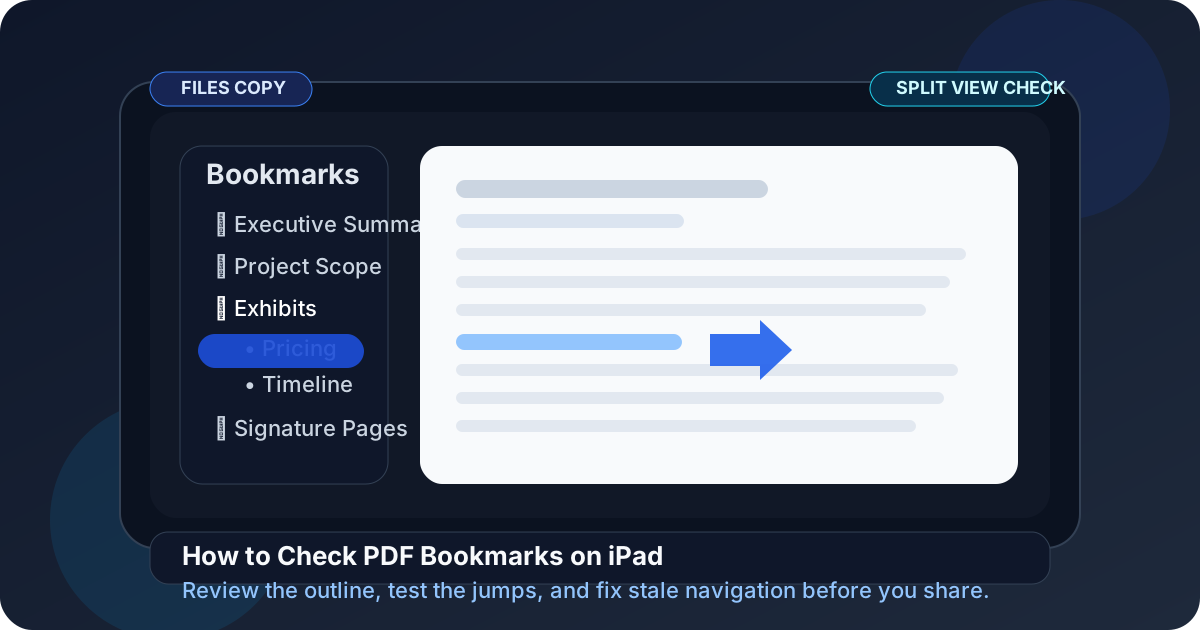
Table of contents
- Quick start: check PDF bookmarks on iPad in about 5 minutes
- What iPad users should verify first
- Where iPad hides bookmark problems
- Step-by-step: practical iPad bookmark workflow
- Common iPad bookmark failures
- When to rebuild the outline instead of patching it
- Final checklist before you share or upload the PDF
- Related LifetimePDF tools and guides
- FAQ
Quick start: check PDF bookmarks on iPad in about 5 minutes
If your real goal is simply tell me whether this iPad PDF is easy to navigate before I send it, use this order:
- Save the exact PDF you plan to email, upload, AirDrop, archive, or share into a normal Files folder.
- Open that saved file, not only a Mail preview, Messages attachment, Safari preview, or cloud thumbnail.
- Use a workflow that clearly exposes the bookmark or table-of-contents panel.
- Check the top-level labels first so you can see whether the major sections sound like the real document.
- Tap the high-value entries such as the summary, chapters, appendices, exhibits, pricing section, or signature pages.
- If anything feels stale, compare the outline with the visible headings in Split View and fix the navigation before the PDF leaves your iPad.
What iPad users should verify first
On iPad, the most useful bookmark check is not “does this PDF have a sidebar somewhere.” It is does the sidebar still describe the final document accurately. A bookmark tree can exist and still be bad. It can carry old section names, point at the wrong pages after a merge, or bury the useful navigation under too much detail.
Start with three simple questions. Do the main bookmark labels sound like the visible headings? Do the important jumps land on the right sections? Does the hierarchy help someone move through the PDF faster instead of turning the sidebar into more clutter? If the answer to any of those is no, the file still needs cleanup.
| What you are checking | What it tells you | What it does not guarantee |
|---|---|---|
| Top-level bookmark labels | Whether the PDF immediately sounds organized to a reader | That the deeper bookmark destinations are also correct |
| Tapped destinations | Whether the important outline entries still target the right pages after edits, merges, or OCR | That every minor child entry is equally useful |
| Hierarchy depth | Whether the sidebar helps navigation instead of burying it | That the labels themselves are clear enough |
| Match with headings or TOC | Whether the sidebar and visible document structure tell the same story | That the PDF is ready if the names still feel vague or stale |
Where iPad hides bookmark problems
iPad gives you several quick ways to open a PDF, but those paths do not prove the same thing. Some are good for confirming you saved the right file. Fewer are good for proving the navigation still works.
Files preview
Useful for checking the right file, but not enough to trust the outline by itself. A calm preview can hide stale bookmarks completely.
Mail or Messages preview
Helpful for a quick glance, but risky when the outgoing file may differ from the attachment preview or an earlier download.
Safari or cloud preview
Fine for confirming the document opens, but you still need a bookmark-aware workflow if the navigation matters.
Split View plus bookmark panel
Best path when you need to compare the outline with visible headings, a table of contents, or the real page you just jumped to.
Bookmark trouble shows up most often after an iPad workflow includes receiving a revised attachment, downloading a second version from a portal, merging files elsewhere, or forwarding a PDF that was exported quickly from another device. The file still opens normally, so nobody notices that the sidebar is now one page off, still uses pre-merge section names, or is missing an appendix the visible file clearly contains.
Common false assumption
If the first bookmark works, many people assume the rest of the outline is fine. On iPad, that is exactly how broken bookmark trees survive into proposals, reports, packets, manuals, and contracts. Test the entries people will actually revisit, not only the first one that happened to land correctly.
Step-by-step: practical iPad bookmark workflow
This workflow is quick enough for everyday document QA and strong enough for the PDFs people actually complain about later.
1) Start with the exact outgoing iPad copy
Do not inspect only a preview if another saved file is the one truly headed to a client, portal, archive, or teammate.
2) Open a bookmark-aware workflow
Use a workflow that clearly exposes the bookmark panel so you can test labels and destinations instead of guessing from page one alone.
3) Scan the top layer before tapping everything
Ask whether the main entries sound like a finished document: summary, chapters, appendices, exhibits, schedules, policies, or signature materials.
4) Tap the high-value jumps first
Prioritize the sections readers actually revisit. A pricing appendix matters more than a minor child bookmark three levels deep.
5) Compare the outline with the visible document in Split View
Keep the headings, divider pages, or visible table of contents in view so stale names and bad jumps become obvious quickly.
6) Clean the outline, then test the final copy once more
Rename vague entries, remove dead jumps, add missing top-level sections, or rebuild the tree completely when the structure has drifted too far from the final iPad PDF.
Reliable sequence: open the final iPad file → show the bookmark panel → scan the top level → tap the important jumps → compare with headings or TOC in Split View → rebuild stale navigation before sharing.
Common iPad bookmark failures
Most bookmark problems repeat the same patterns. Once you know them, you can diagnose a messy sidebar in minutes instead of treating the whole PDF like a mystery.
| What you notice | What it usually means | Best next move |
|---|---|---|
| The bookmark names feel generic or old | The outline still reflects draft language, imported section titles, or older export labels | Rename the top-level entries so they match the final reader-facing headings |
| The jump lands one page early or late | Pages were inserted, removed, or merged after the outline was built | Retarget the affected entries and retest the high-value sections |
| Major sections are missing from the sidebar | The PDF was exported without a complete outline or the bookmarks were never finished | Add the missing top-level structure before sharing a long file |
| The visible TOC and bookmark panel disagree | One navigation layer was updated and the other was not | Repair both so readers do not get two different maps of the same PDF |
| The sidebar is a dense wall of entries | The hierarchy is technically detailed but practically hard to use | Simplify the top layer and keep deeper branches only where they genuinely help navigation |
The PDF came from a merge
Assume the outline needs testing. Merged packets are where old bookmark names and shifted destinations survive most often.
The PDF came from OCR or scan cleanup
Search may improve, but the navigation may still be stale. OCR does not automatically produce a clean, reader-friendly bookmark tree.
Readers only revisit a few sections
Those are the entries to test first. If pricing, exhibits, or signatures fail, the PDF feels broken no matter how nice the cover page looks.
The file looks polished on screen
That visual polish creates false confidence. A tidy first page says nothing about whether the bookmark tree still reflects the final page order.
When to rebuild the outline instead of patching it
Sometimes one or two renamed bookmarks are enough. Sometimes the cleanest move is to rebuild the whole outline deliberately. The tipping point is not perfectionism. It is whether the current tree still gives readers a reliable mental map of the file.
- Patch the existing outline when only a few labels are vague, one appendix moved, or two or three entries need retargeting.
- Rebuild the top layer when the major sections changed names or order during revisions, but the deeper content is still close enough to reuse.
- Rebuild the full tree when the PDF was merged from several sources, converted from scans, or revised so heavily that the current hierarchy feels like a map of a different document.
- Trim the outline aggressively when the sidebar contains too much micro-detail and readers would navigate faster with fewer, clearer entries.
- Leave it alone when the outline is accurate, readable, and proportionate to the document. Not every healthy PDF needs more layers.
Practical next tools: clean the navigation structure first, then pair it with links or a visible contents page only when the document truly benefits from both.
Final checklist before you share or upload the PDF
Before the file leaves your iPad, make sure these boxes are effectively checked:
- You reviewed the exact outgoing file, not only a preview or older download.
- You opened the bookmark panel in a workflow that actually exposes the outline clearly.
- You tested the sections readers are most likely to revisit, not just the first bookmark in the list.
- You compared the outline with the visible headings, appendix labels, or table of contents in Split View.
- You renamed, removed, or rebuilt stale entries instead of hoping readers will work around them.
- You reopened the final saved copy once so the corrected iPad PDF is the one you actually send.
That final recheck matters. A surprising number of bookmark problems are version problems rather than strategy problems. Someone fixes one file, sends another, and then wonders why the recipient says the navigation still feels broken.
FAQ
How do I check PDF bookmarks on iPad?
Save the PDF in Files, open it in a workflow that shows the bookmark or table-of-contents panel, scan the outline, and tap the most important entries to confirm the labels, hierarchy, and jump targets still match the document.
Can Files or Split View help me review bookmarks on iPad?
Yes. Files helps you confirm you are inspecting the real saved copy, and Split View helps you compare the outline with the visible headings or table of contents. You still need a bookmark-aware view to judge the actual outline quality.
What if the bookmark panel is missing on iPad?
A missing or empty panel usually means the PDF has no usable bookmarks, or that the current preview is hiding them. Compare the same file in a fuller PDF workflow before deciding the file has none.
Why do PDF bookmarks break after merging files?
Merging files, inserting pages, deleting sections, or OCR-cleaning scans can shift destinations and leave old labels behind. The outline may still exist, but it no longer describes the final page order accurately.
Should PDF bookmarks match the table of contents and headings?
Usually yes. The bookmark panel, visible headings, and table of contents should tell the same story so readers can trust the navigation however they move through the document.
Make the sidebar as trustworthy as the document itself.
On iPad, the cleanest bookmark workflow is simple: review the exact file, test the important jumps, fix stale labels or destinations, and reopen the final copy once before you send it onward.
Published by LifetimePDF — Pay once. Use forever.