Table of contents
- Quick start: add bookmarks to a PDF in Chrome in about 7 minutes
- What Chrome helps with and what actually creates the bookmarks
- Choose the best route for the file you have
- Step-by-step: when the original editable source still exists
- Step-by-step: when the PDF is all you have
- Scanned files in Chrome: OCR first or waste time later
- What makes PDF bookmarks actually useful
- How to check the outline before you upload or share the file
- Related LifetimePDF tools and guides
- FAQ
Quick start: add bookmarks to a PDF in Chrome in about 7 minutes
If your goal is simply make this PDF easier to move through without turning it into a giant side quest, use this order:
- Open the file in Chrome and decide whether your best source is a Google Docs file, a Word document, an HTML page, or just the finished PDF.
- If the editable source still exists, fix the major headings there instead of forcing structure into a frozen PDF.
- If the PDF is all you have, run PDF to Word so you can rebuild the hierarchy properly.
- If the file is scanned and text selection does not work, run OCR PDF before you do anything else.
- Export a clean new PDF with Word to PDF or HTML to PDF.
- Open the finished file and test the major sections so the outline is actually useful before you upload it to Drive, email it, or hand it back to someone else.
What Chrome helps with and what actually creates the bookmarks
Chrome is often where PDF work begins. A file opens from Gmail, Google Drive, a portal download, or a browser tab someone told you to check five minutes before a meeting. That makes Chrome a great starting point for bookmark work.
The part worth being honest about is this: Chrome is very good at getting you to the right file, checking whether the document is the right version, and helping you review the result. It is not usually the best place to invent a clean bookmark structure out of a messy finished PDF. Real bookmarks come from real structure.
In practice, the workflow is cleaner when you split the job like this:
| Situation | Best Chrome-friendly route | Why it works better |
|---|---|---|
| You have the source in Docs, Word, or HTML | Fix the heading hierarchy there, then export a new PDF | Real structure produces clearer bookmark labels and better outline depth. |
| You only have a finished PDF | Convert with PDF to Word, rebuild the sections, then export again | It is easier to repair navigation in an editable file than inside a fixed layout. |
| The PDF is scanned or image-only | Run OCR first | Text recognition gives you something usable to organize instead of a stack of page pictures. |
| You want to confirm the result before sharing | Open the final PDF and test the important sections | A bookmark list that looks fine can still jump to the wrong place or use weak labels. |
In plain English: Chrome is the front door. The actual bookmark quality comes from fixing the structure upstream.
Choose the best route for the file you have
The right answer depends less on Chrome itself and more on what kind of document is sitting behind the tab. That distinction saves a lot of time.
- Google Docs or Word still exists: this is the easy version. Use real heading levels there, then export a fresh PDF.
- Only the PDF remains: recover an editable version first so you can rebuild the outline in something that behaves like a document.
- Scanned packet from Drive or email: OCR comes first. Otherwise the pages look readable but act like images.
- HTML or web content: clean H1, H2, and H3 structure travels better into a bookmarked PDF than ad hoc styling.
My practical take: if a document still has a sane source file, stay there as long as possible. The later you wait to repair structure, the more annoying the job becomes.
Step-by-step: when the original editable source still exists
This is the version of the job Chrome users should prefer whenever they can. Maybe the file started in Google Docs, maybe someone exported it from Word, or maybe you have an HTML page that still has real headings. Great. Use that advantage.
- Open the source from Chrome. If the document lives in Drive, Docs, SharePoint, or a web app, open the real editable version instead of the already-exported PDF.
- Clean the heading hierarchy. Make sure the major sections use real heading levels instead of bigger bold text pretending to be structure.
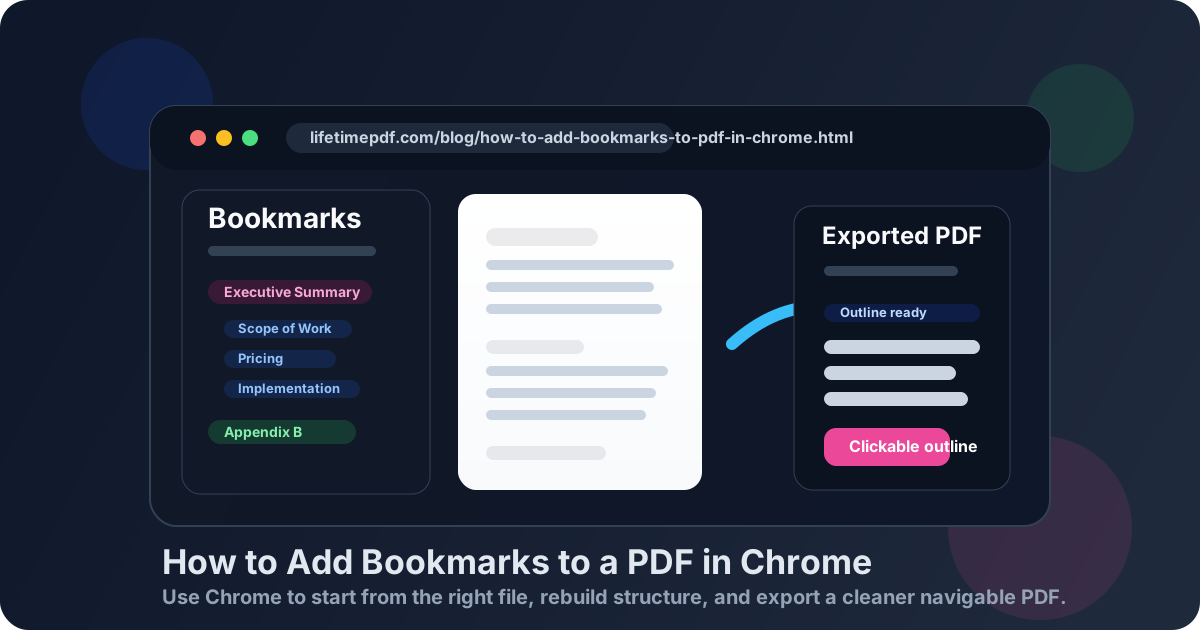
- Rename vague section titles. Bookmark labels should make sense on their own. Pricing, Scope of Work, and Appendix B are useful. Stuff and Notes are not.
- Trim noise. Not every subheading deserves a bookmark. A bookmark outline should help a rushed reader, not recreate the entire document as a tiny collapsing tree.
- Export once the structure feels honest. Use Word to PDF or HTML to PDF when the hierarchy is ready.
This route works especially well for proposals, handbooks, policies, onboarding guides, board packets, technical manuals, and any PDF people will keep reopening instead of reading once and forgetting.
Best-case workflow: repair the structure once in the source file, export once, then do a short click-through instead of spending the afternoon patching navigation in a finished PDF.
Step-by-step: when the PDF is all you have
This is the more common real-world scenario: the original file is gone, the PDF is already circulating, and someone still wants a cleaner outline before the day ends. In that case, do not romanticize editing the final PDF directly. Recover something editable first.
- Convert the file with PDF to Word.
- Repair the section structure so the document has clear top-level headings and sensible subsections.
- Rename weak headings that would make bad bookmark labels, such as Section 1, More, or Other.
- If the packet is too messy, break it apart with Split PDF, fix the sections, and rebuild the final version afterward.
- Export the improved document back to PDF, then review the outline before you share it.
It may feel indirect, but it is usually faster than trying to force deep navigation changes into a fixed layout. A repaired source gives you better bookmarks, better labels, and a file that feels less improvised when the next person opens it.
Scanned files in Chrome: OCR first or waste time later
If the PDF came from a scanner, copier, camera, or old records archive, the text you can see may not be real text at all. It may just be page images. That matters because bookmarks work best when the document has recognizable structure instead of a pile of pictures that happen to look like pages.
Signs the file needs OCR
- You cannot select text normally in the PDF.
- Search does not find words that are clearly visible on the page.
- The document came from scans, faxes, or photographed pages.
- Copying text out of the file gives you nothing useful.
The right order for scanned PDFs
- Run OCR PDF.
- Check whether the recognized text is accurate enough to work with.
- Convert to Word if you need to rebuild headings or clean up the structure.
- Export the repaired file back to PDF only after the hierarchy makes sense.
- Review the final outline before the file goes back to Drive, email, or your downloads folder.
Do not skip OCR and hope the bookmark problem sorts itself out. Trying to organize an image-only PDF is like trying to alphabetize a filing cabinet where every folder tab is painted shut.
What makes PDF bookmarks actually useful
Plenty of PDFs technically have bookmarks and still feel annoying to use. Useful bookmarks are not just present. They are clear, selective, and trustworthy.
Use names people can scan quickly
Good bookmark labels answer a rushed reader's silent question: where do I click for the thing I need? Clear section names beat cryptic shorthand every time.
Keep the hierarchy shallow enough to understand
Two or three levels is enough for most documents. If the outline turns into a forest of tiny entries, people stop trusting it and start scrolling instead.
Bookmark the sections that save real time
Executive summaries, scope, pricing, appendices, signatures, chapters, reference tables, and forms people revisit often are worth bookmarking. Every minor paragraph is not.
Make the visible headings and bookmark labels agree
If the page says Appendix D but the sidebar still says Appendix C, the file feels stale immediately. Navigation quality is a trust signal, even when people cannot explain why it bothers them.
How to check the outline before you upload or share the file
Before the PDF leaves Chrome and lands in someone else's inbox or drive folder, run this short QA pass:
- Do the top-level bookmarks match the real major sections of the document?
- Would the labels make sense to someone who did not create the file?
- Does the first major bookmark land on the right page?
- Does one middle section still jump correctly after any recent merges or page deletions?
- Does the appendix, pricing section, or signature page still point where it should?
If the answer is yes across those checks, the navigation layer is probably doing its job. That is also the moment to decide whether the document needs a few finishing steps before delivery, like page numbers, compression, or password protection.
Calm final sequence: repair structure → export the PDF → test key jumps → then handle extras like page numbers, compression, or protection.
FAQ: How to add bookmarks to a PDF in Chrome
Can I add bookmarks to a PDF directly in Chrome?
Chrome is excellent for opening the file and checking the result, but the cleanest way to create real PDF bookmarks is usually to fix the document structure first in Word, Google Docs, or another editable source, then export a fresh PDF.
What is the easiest way to add PDF bookmarks from Google Drive or Google Docs?
Open the source in Chrome, make sure the headings are real headings, and export a new PDF only after the structure is clean. Good headings produce much better bookmark labels than visual formatting tricks.
What if the PDF is scanned or image-only?
Run OCR first. If text cannot be selected or searched, the document needs recognition before you try to rebuild structure or create a useful outline.
How do I know the bookmarks worked?
Test the first major section, one middle section, and the appendix or signature area. The labels should make sense and the jumps should land exactly where a hurried reader expects.
Are PDF bookmarks the same as links inside the page?
No. Bookmarks usually live in a sidebar or outline panel and help people move through the document structure. Links are clickable items placed directly inside the page content.
Published by LifetimePDF — Pay once. Use forever.