Password Protect PDF for Hushmail: Add File-Level Privacy Before You Send
To password protect a PDF for Hushmail, finish the document first, compress it if needed, add the password to the final copy, test it once, and then attach that protected file in Hushmail.
If the PDF matters, send the password through a different channel instead of the same message thread.
That sounds simple, and it is, but Hushmail users often send documents that actually matter: signed forms, client packets, medical paperwork, ID scans, contracts, financial records, or files with details that should not travel casually. A cleaner Hushmail workflow prevents the usual mistakes before the attachment leaves your hands: protecting a draft, attaching the wrong version, or assuming the mailbox alone means the PDF no longer needs its own protection after download.
Fastest path: finish the PDF, reduce size if needed, protect the final copy, open it once to confirm the password prompt, then attach that file in Hushmail.
In a hurry? Jump to Quick start: protect a PDF for Hushmail in under 4 minutes.
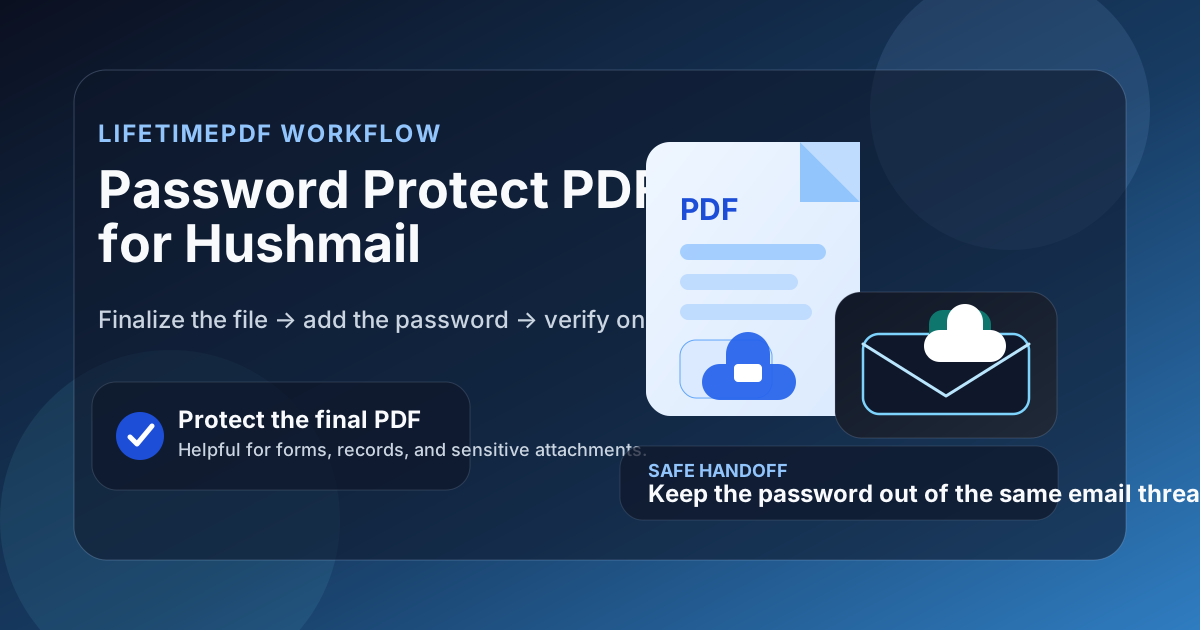
Table of contents
- Quick start: protect a PDF for Hushmail in under 4 minutes
- Why Hushmail still benefits from file-level PDF protection
- Step-by-step: how to password protect a PDF for Hushmail
- How to handle sensitive forms, records, and scans
- What to remove or finish before you add the password
- How to share the password more safely
- Common Hushmail mistakes and quick fixes
- Hushmail on the web vs mobile
- Related LifetimePDF tools and guides
- FAQ
Quick start: protect a PDF for Hushmail in under 4 minutes
If the document is finished and you simply need to send it through Hushmail without leaving it wide open, use this order:
- Confirm that the PDF is the final version you actually plan to send.
- If size might be a problem, use Compress PDF or remove unnecessary pages first.
- Open PDF Protect and add the password to that final version.
- Download the protected copy and open it once to confirm the password prompt works.
- Rename it clearly, then attach the protected file in Hushmail.
- Send the password separately when practical.
Why Hushmail still benefits from file-level PDF protection
Password protecting a PDF feels like a document task, but Hushmail is the moment where the file actually leaves your control. That is where practical mistakes happen: the wrong attachment gets selected, a draft goes out before cleanup is finished, or a recipient later downloads the file and stores it outside the original email context.
Inbox privacy and file privacy are not exactly the same thing. A careful mailbox workflow is helpful, but a PDF can still be downloaded, saved to a desktop, moved into a shared folder, or forwarded later. If the document includes medical details, legal intake notes, identity documents, account information, or signed records, a file-level password gives the PDF its own extra boundary after it leaves the message itself.
| Situation | Best move | Why it helps |
|---|---|---|
| The PDF is final and small enough | Protect it, test it, attach it | Keeps the workflow short and avoids duplicate versions |
| The PDF may be downloaded or forwarded later | Add file-level protection before you send | Gives the document its own layer of control after it leaves the message |
| The file is larger than you want to send | Compress or trim it before protection | You only create one final protected file instead of repeating the work |
| The PDF contains content the recipient should never see | Redact first, then protect | A password limits access; it does not erase visible content |
Step-by-step: how to password protect a PDF for Hushmail
Here is the clean Hushmail workflow in the order that usually creates the fewest problems.
1) Confirm the PDF is actually final
If the file still needs signatures, form entries, page cleanup, or last-minute edits, handle that first. The cleanest workflow protects the final version rather than a draft that will later need to be rebuilt.
2) Reduce size first if sending will be easier with a lighter file
If the PDF is large because of scans, photos, or unnecessary pages, deal with that before the protection step. Use Compress PDF, Extract Pages, or Delete Pages so the file you protect is already the file you actually mean to send.
3) Add the password to the final file
Open PDF Protect, upload the PDF, enter the password carefully, and download the protected copy. Use something strong enough to protect the file but practical enough that you can retrieve it later without drama.
4) Rename the protected copy clearly
This tiny step saves real people from real mistakes. It is easy to have the original PDF, a cleaned version, and a protected version sitting side by side. Rename the protected one so it is unmistakable before you open Hushmail.
5) Test the protected PDF once
Open the downloaded file immediately and confirm that it asks for the password. That quick check catches the common failures: wrong version, mistyped password, failed download, or attaching the original instead of the protected copy.
6) Attach the protected copy in Hushmail
Compose your Hushmail message and attach the renamed protected PDF. Slow down long enough to confirm that the attached version is the protected final copy rather than the original sitting in the same folder.
7) Send the password separately
When the PDF matters, do not undo your own work by dropping the password into the same message thread. A text message, chat message, or quick call is usually better.
Best Hushmail workflow: finalize → shrink if needed → protect → rename → test → attach → send password separately.
How to handle sensitive forms, records, and scans
Hushmail often gets used when the attachment is not just another casual PDF. The file may contain health information, legal intake notes, identity documents, tax records, contracts, or forms with a lot of personal detail. That means your biggest risk is usually not just access. It is oversharing the wrong pages or sending a messy draft that exposes more than intended.
When the file is mostly scanned pages
Large scans create both privacy and attachment-size problems. Compress the PDF first, and if the recipient does not need every page, split the packet down before you protect it. Smaller, cleaner files are easier to review and less likely to be mishandled.
When the recipient only needs part of the packet
Do not lock and send the entire file if only three pages matter. Use Extract Pages or Delete Pages first. It lowers the file size and reduces the chance of sharing details that never needed to go out.
When the file includes private information the recipient should never have
Do not treat the password as a substitute for cleanup. If part of the document should never be seen, remove it with Redact PDF before you protect the file. Password protection controls access. It does not erase what is inside.
What to remove or finish before you add the password
A password is useful, but it is not a substitute for cleaning the document. Before you protect the file, ask whether the recipient should receive everything inside it.
Remove extra pages
Extra pages create two problems at once: larger attachments and more information exposure. If only one section matters, isolate it before protecting the final PDF.
Redact content they should never see
If addresses, IDs, account details, internal notes, or case references should never reach the recipient, remove them permanently with Redact PDF before the password step. A password controls access. It does not make visible information disappear.
Finish signatures and form work first
If the PDF still needs a signature or a final form fill, do that before you lock it. Password protection works best as the last document-prep step before delivery, not the first step in a longer editing chain.
How to share the password more safely
Most practical protection failures happen because the file and the password travel together. If both live in the same message thread, one forwarded email or copied inbox can reveal everything at once.
- Best default: send the PDF in Hushmail and send the password by text message, chat, or phone call.
- Good habit: mention in the email that the password will arrive separately so the recipient knows the process is intentional.
- Avoid convenience drift: do not send the password in the next reply just because it is easy.
- Store it somewhere safe: if you may need the file later, keep the password in a place you can actually retrieve.
This is not about theatrical secrecy. It is about not weakening your own protection step with one lazy follow-up message.
Common Hushmail mistakes and quick fixes
I protected the PDF but attached the original from Downloads or Files
Rename the protected copy immediately and attach from that clearly named file. If the wrong one already went out, create the corrected protected file and resend it with a brief clarification.
I assumed the mailbox was enough and skipped file-level protection
If the PDF may be downloaded, stored elsewhere, or forwarded later, a document password still adds value. Go back to the final file, protect it, and use that version for future sends.
The recipient says the password does not work
This is usually a typing problem, not a mysterious PDF problem. Test the file yourself before sending, and if needed, resend the password carefully with a note about capitalization and spacing.
The file is still too large even after compression
Remove unnecessary pages or split the packet into smaller sections. Sending only the relevant portion is often better than forcing one oversized file through email.
The file includes private content the recipient should not have
Go back and redact it properly. Do not assume the password makes overshared content acceptable.
Hushmail on the web vs mobile
The core workflow is the same everywhere, but each version creates slightly different traps.
Hushmail on the web
The biggest risk is attaching the wrong desktop file when the original, cleaned copy, and protected version are all sitting in the same folder.
Hushmail on mobile
The biggest risk is speed. Smaller screens make it easier to tap the first similar filename you see without previewing the protected copy first.
In both cases, the fix is the same: rename the protected file clearly, preview it once, and keep the password out of the message thread.
Related LifetimePDF tools and guides
Hushmail attachment problems usually sit inside a larger document workflow. These tools and related articles cover the steps that matter most before and after the password is added.
- PDF Protect - add the password to the final PDF before attaching it in Hushmail.
- Compress PDF - reduce size when a large attachment slows down the handoff.
- Extract Pages - send only the pages the recipient actually needs.
- Delete Pages - remove extra pages before you create the protected copy.
- Redact PDF - remove sensitive content before sharing the file externally.
- PDF Unlock - remove the password later when you are authorized and need an editable copy again.
Useful related articles
- Password Protect PDF for Proton Mail
- Password Protect PDF for Tutanota
- Password Protect PDF for Fastmail
- Password Protect PDF for Gmail
- How to Password Protect a PDF File
Protect the right file once, then send it with confidence.
Hushmail works better when the PDF is already finished, already the right size, and already the protected version you intend to share.
FAQ
How do I password protect a PDF for Hushmail?
Finalize the file, reduce size first if needed, add the password to the final copy, test the protected PDF once, attach that version in Hushmail, and send the password separately when possible.
Do I still need a PDF password if I use Hushmail?
Often yes. A careful mailbox workflow is helpful, but a PDF password gives the document its own layer of protection after the file is downloaded, stored somewhere else, or forwarded outside the original message context.
Should I compress the PDF before or after password protecting it for Hushmail?
Usually before. If the PDF is already larger than you want to send, shrink it first so you only create one final protected file.
Is it a good idea to send the PDF password in the same Hushmail message?
It is better to use a different channel such as text message, chat, or a phone call. If the password and file travel together, the practical value of the protection drops a lot.
Does password protecting a PDF remove private information inside it?
No. Password protection helps control access, but it does not remove visible content. If the recipient should never see certain details, redact them before you protect and send the file.
Published by LifetimePDF — Pay once. Use forever.