Compress PDF for Yext Without Monthly Fees: Shrink Listing Reports, Location Performance Summaries, and Client PDFs Without Another Subscription
If you need to compress a PDF for Yext without monthly fees, export the file, upload it to LifetimePDF's Compress PDF tool, start with Medium compression, and keep the smaller copy only if charts, screenshots, listing details, and notes still look clear.
For most Yext listing reports, location performance summaries, review snapshots, and client-ready PDFs, that is enough to reduce file size without adding another recurring subscription to a workflow that already has enough software in it.
Yext already handles the listings, location visibility, and local search work. The PDF step should stay simple. Usually the real goal is just making the export light enough that a client, account manager, franchise lead, or local marketing teammate can open it quickly and act on what matters. That is where a pay-once PDF workflow makes more sense than one more monthly bill for a tiny finishing task.
Fastest path: run the Yext PDF through LifetimePDF's Compress PDF tool at Medium, then split or extract pages only if the smaller copy still feels heavier than the next reader needs.
In a hurry? Jump to Quick start: compress a Yext PDF in under 2 minutes.
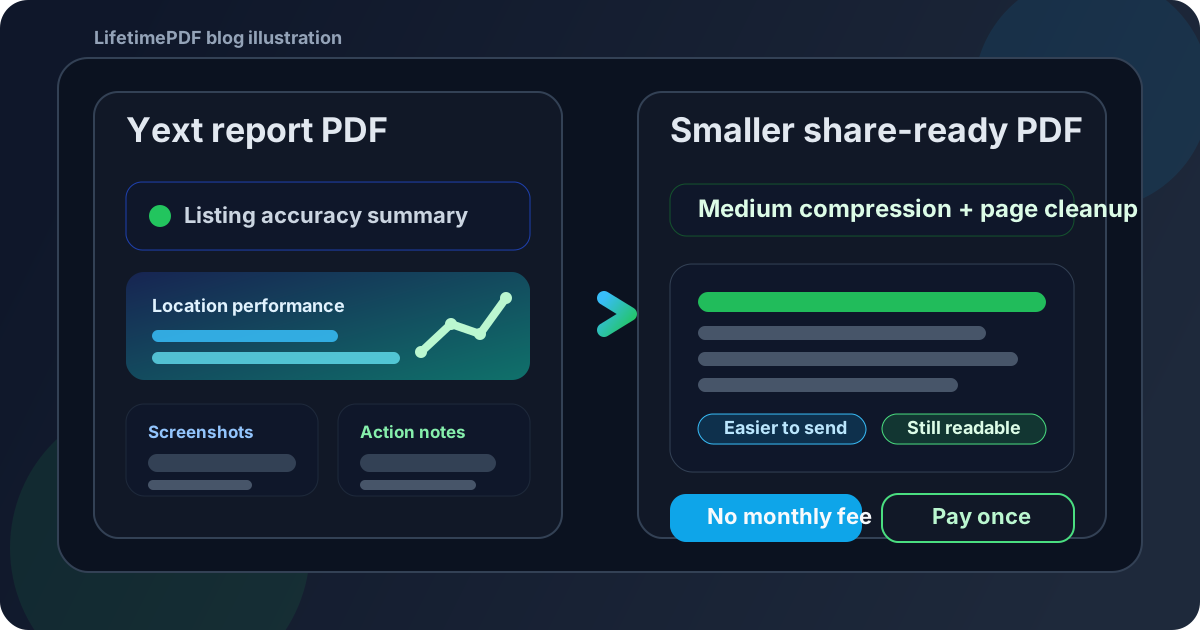
Table of contents
- Quick start: compress a Yext PDF in under 2 minutes
- Why "without monthly fees" matters for Yext PDFs
- Why smaller PDFs work better in Yext workflows
- What file size should a Yext PDF be?
- Which compression level should you choose?
- Step-by-step: use LifetimePDF to shrink the file
- Best approach for common Yext PDFs
- What to do if the PDF is still too large
- How to keep listings, screenshots, and charts readable
- Workflow habits that reduce PDF bloat
- Related LifetimePDF tools and useful reading
- FAQ (People Also Ask)
Quick start: compress a Yext PDF in under 2 minutes
If your real goal is simply make this Yext PDF smaller so it is easier to send, this workflow is usually enough:
- Export the Yext file you actually plan to share, whether that is a listing report, location performance summary, review snapshot, store update, or client-ready local SEO recap.
- Open Compress PDF.
- Upload the file and choose Medium compression first.
- Download the smaller result and compare the new size.
- Preview the details that matter most: store names, charts, listing fields, screenshots, sync statuses, and next-step notes.
- If the file is still bulky, use Extract Pages, Delete Pages, or Split PDF before forcing stronger compression across the whole report.
Why "without monthly fees" matters for Yext PDFs
This is usually finish-line work. The real value already came from managing listings, checking location data, reviewing visibility, and packaging a summary that someone else can act on. Paying forever just to make that PDF smaller is hard to justify.
A pay-once PDF workflow fits the job better because the need is predictable and repetitive. Teams do not need a giant document platform every time they export a Yext report. They need a reliable way to reduce file size, keep the details readable, and get the file out the door.
That matters even more for agencies and multi-location brands. Once a process repeats across dozens or hundreds of locations, one extra subscription stops feeling small. Keeping PDF cleanup simple protects margin and makes the workflow easier to standardize.
Why smaller PDFs work better in Yext workflows
Yext exports often end up in client emails, internal recaps, franchise reporting packs, shared drives, and approval threads. Heavy files slow all of that down. They take longer to upload, longer to forward, and longer to open on laptops or phones.
Smaller PDFs remove friction without changing the meaning of the report. A lighter file is easier to attach to a monthly update, easier to drop into project software, and less annoying for people who only need the top-line insight. The key is shrinking the file without damaging the pieces that make the PDF useful in the first place.
For Yext specifically, those pieces usually include location names, listing status details, sync notes, charts, screenshots, and the action summary. If those stay readable, the PDF still does its job.
What file size should a Yext PDF be?
There is no universal perfect number, but practical targets help:
- Under 2MB: usually ideal for short listing summaries, single-location updates, and focused review snapshots.
- 2MB to 5MB: realistic for multi-location packs, screenshot-heavy recaps, or broader client PDFs with more visual detail.
- Over 5MB: often a sign that the file includes extra pages, repeated screenshots, oversized margins, or more reporting than one reader actually needs.
The right target depends on the audience. A store manager reading one location update does not need the same file structure as an agency lead archiving a larger reporting pack. Aim for the smallest version that still feels dependable at normal zoom.
Which compression level should you choose?
Start with Medium almost every time. It is usually the best balance for Yext PDFs because it cuts size without wrecking charts, screenshots, or small labels.
- Low compression: best when the PDF contains lots of screenshots or very small listing details you cannot risk softening.
- Medium compression: the safest default for most listing reports, location scorecards, and client-ready recaps.
- High compression: useful only when size matters more than polish, and only after you confirm the smallest text still reads clearly.
If Medium does not get the file small enough, the next best move is often removing pages rather than crushing the entire report harder.
Step-by-step: use LifetimePDF to shrink the file
- Export or print the final Yext view as PDF.
- Open Compress PDF.
- Upload the report and choose Medium.
- Download the compressed version.
- Check the pages with the smallest text first, especially listing rows, chart labels, sync details, and screenshot annotations.
- Keep the compressed file only if it still reads cleanly at ordinary zoom.
- If it is still too large, remove unnecessary pages or split the report by audience.
Best approach for common Yext PDFs
Different exports benefit from slightly different handling:
- Listing reports: start with Medium compression and check sync status labels, addresses, and listing fields.
- Location performance summaries: protect small chart labels, date ranges, and summary metrics by reviewing at normal zoom before sending.
- Multi-location recaps: split by region, brand, or owner when one PDF becomes too wide for a single audience.
- Screenshot-heavy client decks: delete repeated pages or appendix screenshots before jumping to stronger compression.
- Internal summary packs: extract only the pages that the next teammate actually needs to review or archive.
The goal is not to preserve every possible page forever. The goal is to deliver the right version of the report to the right person with less friction.
What to do if the PDF is still too large
If the compressed PDF is still bulkier than you want, do not treat harder compression as the only option. Yext exports often shrink more cleanly when you simplify the document instead.
- Use Extract Pages to pull out only the decision-making pages.
- Use Split PDF for multi-location or appendix-heavy reporting packs.
- Use Delete Pages to remove duplicate screenshots, cover pages, or archive sections.
- Use Crop PDF if oversized margins or white space are inflating the file.
In a lot of real workflows, sharing less PDF is smarter than compressing the same oversized file into mush.
How to keep listings, screenshots, and charts readable
Before you send the smaller version, check the parts that matter most:
- store names, addresses, and listing statuses
- trend chart labels and date ranges
- screenshots that prove the issue or improvement
- summary notes, recommendations, and next actions
- location-specific details that someone may need to verify later
A compressed PDF is only useful if it still supports the conversation it was created for. If the smallest meaningful detail looks fuzzy, roll back and use a lighter setting or a cleaner page set.
Workflow habits that reduce PDF bloat
Good habits reduce the need for aggressive compression later:
- export only the date range and locations you actually need
- avoid stacking several audiences into one master PDF
- remove repeated screenshots before final export
- keep appendix material in a separate file when possible
- finalize the PDF once instead of saving several generations into one giant pack
Those small decisions usually save more file size than people expect. They also make the report easier to read, which is the real point.
Related LifetimePDF tools and useful reading
Yext exports often need more than one finishing step. These tools pair well with compression:
- Compress PDF for the fastest size reduction
- Split PDF for large multi-location packs
- Extract Pages for summary-only handoffs
- Delete Pages for repeated screenshots or archive sections
- Crop PDF for wasted margins
If you work with similar local-marketing exports, you may also find these guides useful: Compress PDF for BrightLocal Without Monthly Fees, Compress PDF for Moz Local Without Monthly Fees, Compress PDF for Whitespark Without Monthly Fees, and Compress PDF for Uberall.
FAQ (People Also Ask)
How do I compress a PDF for Yext without monthly fees?
Upload the Yext export to a pay-once PDF tool like LifetimePDF, start with Medium compression, and review the smaller result before sending it. If the file is still large, extract or split the pages the next reader actually needs instead of repeatedly compressing the whole report.
Why look for a Yext PDF workflow without monthly fees?
Because shrinking exported PDFs is routine finishing work, not something most teams want to rent forever. If you already pay for local listings or local SEO software, a pay-once PDF workflow usually makes more practical sense.
What file size should I aim for with Yext PDFs?
Under 2MB is a strong target for short listing recaps and single-location updates. Larger screenshot-heavy client packs and multi-location reports usually work better around 2MB to 5MB as long as the smallest useful text still looks clear.
Will compression make Yext screenshots or charts blurry?
It can if you compress too aggressively. Medium compression is usually the safest first pass. Always check charts, screenshots, listing details, and action notes before keeping the smaller copy.
Should I split a large Yext report instead of compressing it harder?
Often, yes. If one PDF combines several locations, appendix pages, screenshots, and sections meant for different readers, splitting it usually works better than forcing stronger compression across the whole file.
Ready to shrink the file? Start with Yext's exported PDF, compress it once, and keep the version that stays readable without the extra recurring cost.
Published by LifetimePDF - Pay once. Use forever.