Compress PDF for Wrike: Keep Task Attachments, Proofing Files, and Project Docs Small Without Losing Review Clarity
To compress a PDF for Wrike, upload the file to LifetimePDF's Compress PDF tool, start with Medium compression, and keep the smaller copy only if comments, screenshot labels, signatures, and task-ready details still look clear.
For most Wrike workflows, under 2MB is a strong target for routine briefs and approvals, while 2MB to 5MB is usually more realistic for proofing PDFs, screenshot-heavy reports, and scanned support files.
Wrike is built for moving work, reviews, and approvals forward. Oversized PDFs slow that down. Heavy files take longer to upload, feel clumsier to reopen during review, and make ordinary project documents look harder to manage than they really are. The goal is not to squeeze every PDF into the tiniest possible number. The goal is a smaller file that still feels trustworthy when a teammate, approver, or client opens it later.
Fastest path: run the Wrike file through LifetimePDF's Compress PDF tool at Medium, then trim extra pages, split long packets, or crop scan waste only if the result is still heavier than the task actually needs.
Need the short version? Jump to Quick start: compress a Wrike PDF in about 2 minutes.
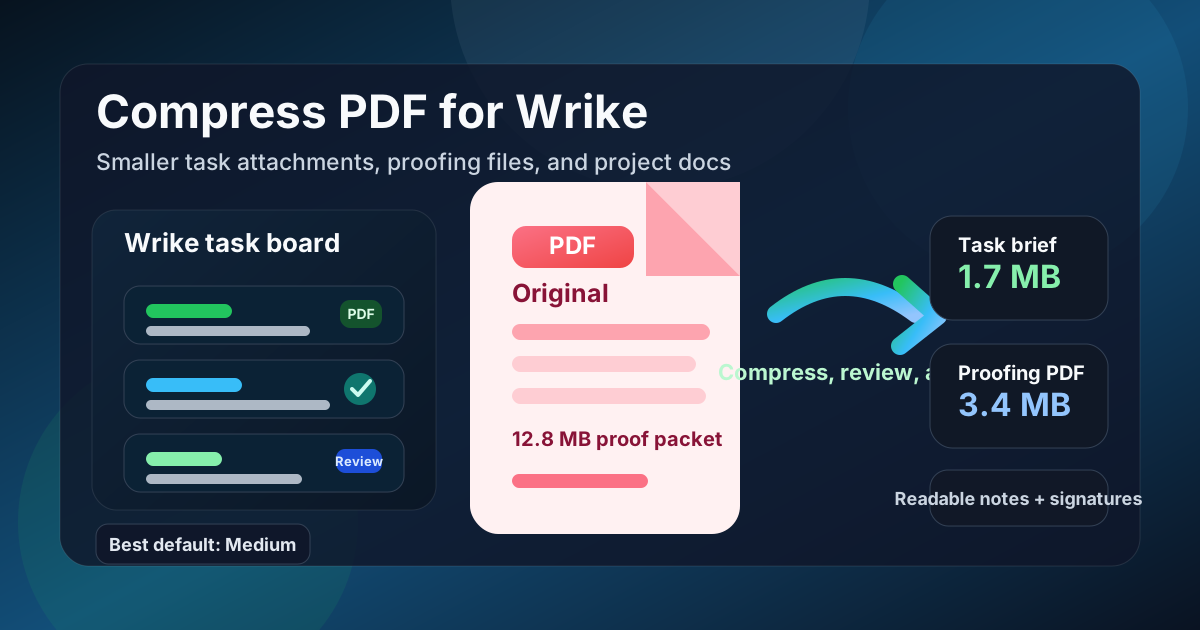
Table of contents
- Quick start: compress a Wrike PDF in about 2 minutes
- Why smaller PDFs help in Wrike workflows
- What file size should you aim for?
- Which compression level should you choose?
- Step-by-step: shrink a Wrike PDF with LifetimePDF
- Best approach for common Wrike PDF types
- What if the PDF is still too large?
- How to protect review clarity and privacy
- Workflow habits that reduce PDF bloat
- Related LifetimePDF tools and useful reading
- FAQ (People Also Ask)
Quick start: compress a Wrike PDF in about 2 minutes
If your real goal is simply make this attachment lighter so it is easier to use in Wrike, this workflow is usually enough:
- Open Compress PDF.
- Upload the exact brief, proofing PDF, approval packet, contract, report, SOP, or scanned support file you actually plan to attach.
- Choose Medium compression first.
- Download the smaller result and compare the new size with the original.
- Open it once and check the weak points: comment callouts, screenshot labels, table headings, dates, signatures, and any faint scan detail.
- If the PDF is still bulkier than you want, use Extract Pages, Delete Pages, or Crop PDF before you try stronger compression.
Why smaller PDFs help in Wrike workflows
Wrike PDFs usually support active work, not passive storage. Someone is trying to review a deliverable, approve a file, compare a revision, check a scope note, read a handoff, or open supporting paperwork in the middle of something else. When the attachment is heavier than it needs to be, every one of those moments becomes slightly slower and slightly more annoying.
Compression is not only about saving space. It is a collaboration habit. Smaller PDFs upload faster, feel easier to reopen later, and create less friction for people reading on laptops, tablets, or phones. That matters even more when the same document also moves into email, cloud storage, or another project tool after it leaves Wrike.
Why Wrike PDFs often get bigger than they should
- Proofing files collect screenshots and markups: useful details get mixed with unnecessary image weight.
- Project packets carry backup material: appendices, old versions, or just-in-case pages stay bundled into the same file.
- Scanned support documents behave like images: borders, shadows, and empty margins inflate size quickly.
- Reports and dashboards export larger than normal reading needs: especially when only a few charts or sections matter.
- Task attachments get reused repeatedly: every oversized file becomes a recurring inconvenience instead of a one-time one.
What file size should you aim for?
There is no single perfect number for every Wrike document, but practical ranges help you avoid compressing harder than necessary:
| Type of PDF | Good target | What to protect |
|---|---|---|
| Briefs, approvals, SOPs, contracts, short reports | Under 2MB | Headings, dates, signatures, tables, and any fine print |
| Proofing PDFs, screenshot-heavy updates, client-ready review files | 2MB to 5MB | Labels, markup notes, callouts, chart legends, and small screenshot text |
| Scanned forms, mixed handoff packets, appendix-heavy support files | 3MB to 6MB if needed | Faint scan text, initials, stamps, signatures, and page order |
| Anything above 6MB for routine task use | Usually worth more cleanup | Quality first, but remove waste before you keep attaching the full packet |
These are comfort targets, not platform rules. If the file opens easily, supports the review or approval step, and keeps the smallest useful details readable, you are in the right range.
Which compression level should you choose?
Most Wrike PDFs do best when you begin with Medium compression. It usually removes enough weight to make the document easier to upload and review without causing obvious damage.
Low compression
- Best when visual polish matters more than aggressive size reduction.
- Useful for polished client deliverables, design proofs, and PDFs that are already close to a comfortable size.
- Less helpful when the file is clearly oversized.
Medium compression
- Best first choice for most Wrike workflows.
- Usually cuts enough size while keeping comments, tables, screenshot text, signatures, and headings readable.
- Good for briefs, approval packets, SOPs, reports, contracts, and normal scanned paperwork.
High compression
- Useful when the file is still too heavy after smarter cleanup.
- More likely to soften screenshot detail, chart labels, tiny notes, and faint scan text.
- Best used after extracting pages or removing waste, not as the first move.
Step-by-step: shrink a Wrike PDF with LifetimePDF
- Start with the final file you really want to attach. Remove obvious draft-only pages before you compress anything.
- Open Compress PDF. Upload the brief, proof, approval file, report, contract, or support document.
- Choose Medium compression. That is the safest default for most Wrike use.
- Download the smaller copy. Compare the new size with the original so you know whether the change was meaningful.
- Do a readability pass. Check the busiest page, the smallest labels, signatures, dates, comments, table values, and any page references.
- Clean the structure if needed. Use Extract Pages, Split PDF, Delete Pages, or Crop PDF before you try stronger compression.
- Keep the right version for the right job. The archive copy can stay fuller if needed; the Wrike-facing copy should stay focused and easy to open.
The most common mistake is forcing every task to carry the entire working packet. Often the better Wrike attachment is not the original file compressed harder. It is the right subset of the document, compressed sensibly.
Best approach for common Wrike PDF types
Project briefs and internal plans
These are usually text-heavy and compress well. Medium compression is often enough. What matters most is keeping headings, deadlines, ownership notes, table structure, and any small reference text easy to read.
Proofing PDFs and review files
These need a little more care. The weak points are screenshot labels, annotations, callout arrows, and tiny visual details people may be reviewing on a deadline. A proof that is slightly larger but still readable is better than one more compressed pass that makes the review harder.
Approvals, contracts, and signoff packets
These usually respond well to Low or Medium compression. Just check signatures, initials, dates, fine print, and any highlighted clauses before you replace the original. If the file includes backup paperwork, separate that from the main approval copy instead of crushing both together.
Status reports and client updates
These often grow because they mix charts, screenshots, tables, and a lot of “just in case” context. Medium compression is a good starting point, but trimming repeated appendix pages or old screenshots can do more for the final file than stronger compression alone.
Scanned forms and support documents
These are the most likely to stay bulky. They also punish aggressive compression fastest. Crop empty borders, delete blank backsides, rotate crooked pages, and use OCR PDF if searchable text would make the file more usable later.
What if the PDF is still too large?
If Medium compression does not get you where you want, do not assume the only answer is stronger compression. In Wrike workflows, the better answer is often to remove unnecessary document weight first.
Try these fixes before pushing harder
- Extract only the pages the task really needs: perfect when somebody only needs one section or a short review set.
- Split the appendix away from the main file: keep the working PDF lean and move backup material into a second attachment.
- Delete repeated exports or blank pages: they add size without helping the next reader.
- Crop scanner waste: thick borders and shadows inflate file size with no real benefit.
- Compare versions: use Compare PDFs if you want to confirm that a trimmed copy still preserves the right changes.
If the file is still too heavy after cleanup, then stronger compression makes more sense. But use it on the cleaned version, not the original oversized packet. That usually produces a better-looking result.
How to protect review clarity and privacy
A smaller PDF is only better if it still works and still shares only what you intended to share. Before you attach the compressed file in Wrike, check the details most likely to fail:
- comments, annotations, and proofing callouts
- screenshot labels, chart legends, and tiny table text
- signatures, initials, dates, totals, and clause references
- the faintest scanned text or stamp on the busiest page
- page order and whether the task really needs the whole packet
Then do one more privacy check. Project attachments often include more than the next reader actually needs. If the file contains sensitive notes, private data, or sections that should not travel with the main document, remove or redact them before compression instead of trusting the project workspace alone to solve that problem.
Useful order: trim pages, compress, then protect or redact the final shareable copy if needed.
Workflow habits that reduce PDF bloat
The easiest PDF to compress is the one that was prepared with the real sharing moment in mind. A few habits make Wrike attachments easier to shrink and easier to use later:
- Attach the final shareable version, not every draft bundled together.
- Separate main context from backup context. The next reviewer usually does not need the whole packet.
- Remove repeated screenshots and duplicate scans early.
- Clean scanner borders and blank pages before the file becomes a recurring problem.
- Use clear names for archive and shared copies.
- Default to Medium compression for recurring project workflows.
Compression works best as the last tidy step, not as the rescue plan for a file that tried to do too many jobs at once.
Related LifetimePDF tools and useful reading
If you work with Wrike PDFs regularly, these tools and guides pair well with this workflow:
- Compress PDF for the first size-reduction pass.
- Extract Pages when the task only needs part of the document.
- Split PDF for long packets with a main brief and backup appendix.
- Delete Pages to remove duplicate or unnecessary sections.
- Crop PDF to clean scan waste and oversized margins.
- OCR PDF when scans also need searchable text.
- Compress PDF for Wrike: Upload Smaller Task Attachments and Project Docs Faster
- Compress PDF for Wrike Without Monthly Fees
- Compress PDF for Asana, Compress PDF for ClickUp, and Compress PDF for Basecamp if your project files move across several collaboration tools.
Bottom line: for most Wrike PDFs, start with Medium compression, review the smallest useful details once, and remove document waste before using stronger compression.
FAQ (People Also Ask)
How do I compress a PDF for Wrike?
Upload the file to a PDF compressor, start with Medium compression, and keep the smaller copy only after checking the smallest important details once. Medium is usually the safest first pass because it reduces size without making project briefs, proofing files, or approvals frustrating to review.
What file size should I aim for with Wrike PDFs?
Under 2MB is a strong target for text-heavy briefs, approvals, SOPs, and status reports. Proofing PDFs, screenshot-heavy reports, and scan-heavier packets usually work best around 2MB to 5MB as long as labels, notes, signatures, and fine text still look clear.
Will compression make proofing files blurry in Wrike?
It can if you compress too aggressively, especially with screenshot-heavy or scan-heavy PDFs. That is why Medium compression is usually the best starting point. Always review comment callouts, screenshot labels, and the smallest important details before you keep the smaller copy.
Should I split a large Wrike PDF instead of compressing it harder?
Often, yes. If one file combines the main review document with backup pages, appendices, repeated exports, or support paperwork, splitting or extracting the needed section usually works better than pushing strong compression across the entire packet.
Which LifetimePDF tools pair best with Wrike attachments?
Compress PDF is the main starting point. Extract Pages, Split PDF, Delete Pages, Crop PDF, OCR PDF, Compare PDFs, Redact PDF, and PDF Metadata Editor are especially useful when you want smaller, cleaner, and more review-friendly Wrike files.