Compress PDF for Upwork: Keep Proposals, Portfolios, and Client Files Small Without Looking Cheap
To compress a PDF for Upwork, upload the proposal, portfolio, invoice, contract, resume, or client-facing PDF to LifetimePDF's Compress PDF tool, start with Medium compression, and keep the smaller copy only if body text, screenshots, captions, signatures, and layout still look clean.
For most Upwork workflows, under 2MB is a strong target for text-heavy PDFs, while image-led portfolios and case studies usually feel safer around 2MB to 5MB if you still want the work to look polished.
The goal is not to make your file absurdly tiny. The goal is to make it easier to send, easier for the client to open, and easier to skim without your samples, screenshots, or supporting details looking cheap. Upwork moves fast. A cleaner, lighter PDF reduces friction without turning a professional document into a fuzzy compromise.
Fastest path: save the exact PDF you plan to send, run it through LifetimePDF's Compress PDF tool on Medium, then trim extra pages or redact sensitive details only if the file still feels heavier than it should.
Need the short version? Jump to Quick start: compress a PDF for Upwork in about 2 minutes.
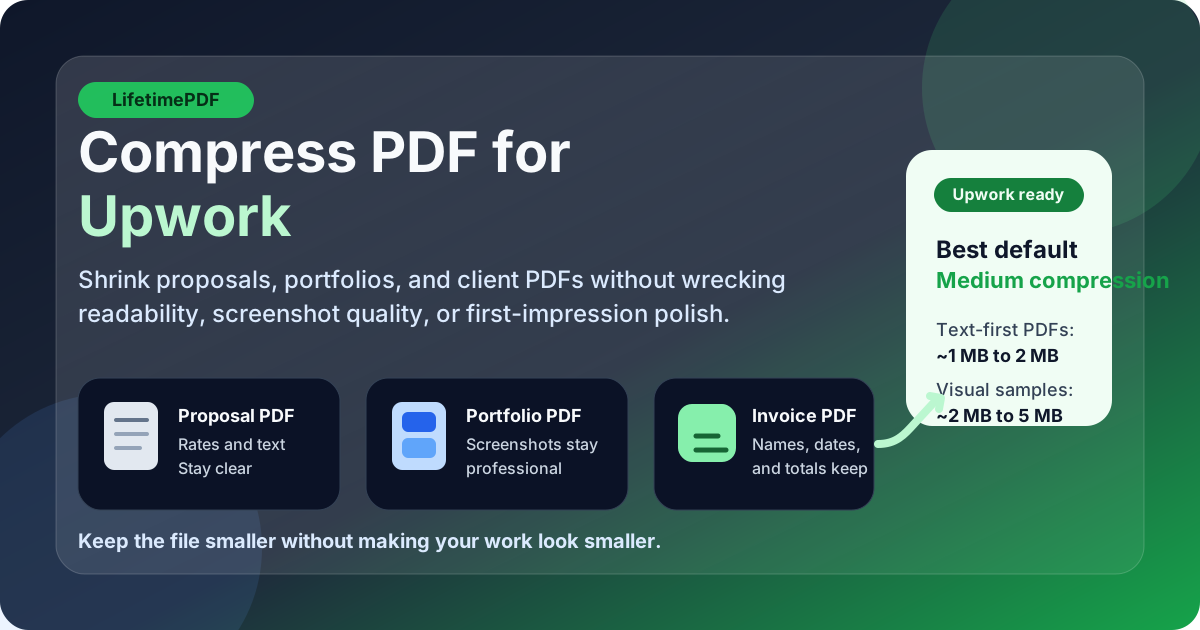
Table of contents
- Quick start: compress a PDF for Upwork in about 2 minutes
- Why Upwork PDFs get heavier than they need to be
- What file size should you aim for?
- Which compression level should you choose?
- Best approach by Upwork file type
- Step-by-step: shrink an Upwork PDF with LifetimePDF
- What to clean up before compressing harder
- How to keep your PDF professional after compression
- Privacy and client-safe document habits
- Related LifetimePDF tools and useful reading
- FAQ (People Also Ask)
Quick start: compress a PDF for Upwork in about 2 minutes
If your real goal is simply make this file smaller so I can send it on Upwork without drama, this workflow is usually enough:
- Start with the exact proposal, sample pack, invoice, contract, resume, or onboarding PDF you actually plan to send.
- Open Compress PDF.
- Choose Medium compression first.
- Download the smaller copy and compare the new size with the original.
- Open it once and check small text, portfolio captions, screenshot labels, pricing tables, and signature blocks.
- If the file is still bulky, remove extra pages, split one oversized packet, or crop wasted margins before trying a stronger setting.
Why Upwork PDFs get heavier than they need to be
A lot of Upwork PDFs are heavier than the work inside them. The proposal itself is short, but then the file carries full-page screenshots, oversized exported slides, duplicate sample pages, phone-camera scans, embedded branding from old clients, or blank filler pages from a quick merge. None of that helps a client decide whether to hire you.
Compression helps because it removes some of that weight, but the bigger win is usually clarity. A lighter PDF uploads more smoothly, opens faster on mobile, and feels more intentional. When a client is comparing several freelancers, smooth document handling is not everything, but it absolutely affects the overall impression.
Why smaller PDFs work better in Upwork workflows
- Faster uploads: useful when you are replying quickly to a fresh job post or sending a file from mobile.
- Cleaner client experience: smaller files open faster and feel less annoying to download or preview.
- Less resend friction: if you need to revise and reattach a file, leaner documents are easier to manage.
- Better skimming: compact, focused PDFs make it easier for clients to find the part that matters.
- Stronger presentation: a tight, readable PDF feels more deliberate than a bloated one stuffed with maybe-useful extras.
What file size should you aim for?
There is no single permanent file-size rule that covers every Upwork attachment context, so practical targets matter more than chasing the smallest possible number. The right target depends on whether the file is mostly text, mostly screenshots, or a hybrid document with samples and explanations.
| File type | Practical target | Why it works |
|---|---|---|
| Proposal, resume, invoice, one-pager | < 1MB to 2MB | Usually enough for text-first documents that should open quickly on any device |
| Contract, NDA, onboarding packet | ~1MB to 3MB | Keeps signatures, clauses, and filled fields readable without feeling bulky |
| Portfolio or case study PDF | 2MB to 5MB | Gives room for visuals while still feeling reasonable to send and review |
| Large image-heavy sample pack | Over 5MB usually needs cleanup | At that point, splitting the file or cutting duplicate visuals often helps more than harsher compression |
Which compression level should you choose?
The best setting depends on how visual the PDF is. A proposal letter behaves differently from a screenshot-heavy design case study.
Low compression
Good when you need to protect fine detail, typography, or design polish. Use it for premium visual portfolios, brand work, UI mockups, or any sample where a client may judge image sharpness quickly.
Medium compression
This is the safest starting point for most Upwork PDFs. It usually reduces file size enough to make the document easier to send while keeping text, screenshots, tables, captions, and signatures comfortably readable. If you do not want to overthink it, start here.
High compression
Use this only when the file still feels too heavy after sensible cleanup. High compression can be acceptable for plain text documents, but it is riskier for portfolios, annotated screenshots, contracts with tiny text, or samples where clarity affects trust.
Best approach by Upwork file type
Different documents deserve different treatment. The right strategy depends on what the client actually needs from the file.
Proposal PDF
Keep it text-first and lean. Most proposals should compress well without visible damage. If your proposal contains sample thumbnails, make sure those thumbnails still support the story instead of turning into decorative blur.
Portfolio or case study
This is where people over-compress and regret it. Use Medium compression first, then check screenshot legibility, small UI labels, before-and-after crops, and testimonial text. If the PDF is still too big, remove duplicate pages or split the file into narrower, role-specific samples.
Invoice or rate card
These are usually easy wins. The important parts are names, amounts, dates, payment terms, and line items. A smaller invoice PDF is fine as long as every number is still unmistakable.
Contract, NDA, or onboarding packet
Be careful with tiny text and signature blocks. Compression is useful, but readability matters more than shaving off a few extra kilobytes. Review the smallest clauses once before sending the compressed copy.
Resume plus samples bundle
If you are merging files, ask whether the client actually needs all of them in one PDF. A short resume plus one relevant sample often performs better than a merged packet stuffed with every decent thing you have made in the last three years.
Step-by-step: shrink an Upwork PDF with LifetimePDF
- Choose the final client-facing file, not a bloated master draft.
- Open Compress PDF.
- Upload the proposal, portfolio, invoice, contract, resume, or support PDF.
- Start with Medium compression.
- Download the smaller copy and compare size reduction.
- Open the new file and inspect the smallest meaningful details: screenshot text, rates, signatures, captions, comments, timestamps, testimonials, and tables.
- If the file still feels heavy, use Delete Pages, Split PDF, or Crop PDF before trying stronger compression.
- If the document contains private notes or unwanted client information, run Redact PDF before sending it anywhere.
What to clean up before compressing harder
If the PDF still feels too big after a reasonable first pass, stronger compression is not always the smartest next move. Often the better fix is reducing unnecessary weight at the document level.
Remove extra pages
Portfolio duplicates, version-history pages, appendix clutter, blank separators, and irrelevant screenshots add size without adding value.
Split giant packets
If one file tries to be a proposal, case study, onboarding guide, invoice, and company brochure at the same time, split it. Smaller focused PDFs are easier for clients to digest.
Crop wasted margins
Phone scans and slide exports often carry huge empty borders. Trimming those borders can reduce visual bulk and sometimes reduce file size too.
Replace weak screenshots
If a page contains giant screenshots just to prove a small point, recapture or recrop them more tightly instead of compressing the whole PDF into mush.
How to keep your PDF professional after compression
Upwork is not only about getting the file through the pipe. The file still needs to make you look capable. A compressed PDF should feel efficient, not cheap.
- Check first-page impact: the first page should still feel sharp and easy to scan.
- Review small text: portfolio captions, testimonial quotes, rate tables, and signatures matter more than decorative visuals.
- Protect screenshot clarity: if the work sample relies on UI details, code snippets, or dashboard labels, zoom in and confirm they still read cleanly.
- Prefer shorter sample packs: fewer excellent pages beat more mediocre pages almost every time.
- Keep naming clean: send files with obvious names like Jane-Doe-Upwork-Portfolio.pdf instead of version-chaos filenames.
Privacy and client-safe document habits
Compression is a good moment to double-check what you are about to send. Freelancers often reuse old decks, old proposals, and old case studies. That is efficient, but it also creates easy opportunities for accidental leaks.
Check for visible sensitive information
Old client names, emails, internal comments, confidential numbers, or irrelevant contract details should be removed or redacted before sending. If the information is visible on the page, only redaction solves the real problem.
Check metadata too
Some PDFs still carry old author names, company names, or legacy workflow tags in metadata. That is not always harmful, but it can look messy or reveal unnecessary context.
Keep the packet role-specific
Do not send a general-purpose archive when the client only needs one relevant sample. Privacy gets easier when each PDF only contains the minimum useful material.
Related LifetimePDF tools and useful reading
Upwork-ready PDFs usually improve fastest when you combine compression with one or two cleanup steps:
- Compress PDF for the first size reduction.
- Merge PDF if you want one clean proposal-and-samples packet.
- Delete Pages to cut dead weight before compressing harder.
- Split PDF if one portfolio is trying to do too many jobs.
- Redact PDF for client-safe sharing.
- Read the companion Upwork workflow article if you want a narrower guide focused specifically on sending proposals and portfolios faster.
Want the simplest workflow? compress the final file on Medium, review it once, then only merge, split, crop, or redact if the client-facing result still needs cleanup.
FAQ (People Also Ask)
How do I compress a PDF for Upwork?
Upload the PDF to a compressor, start with Medium compression, download the smaller copy, and keep it only if text, screenshots, captions, and signatures still look clean. Medium is usually the safest first pass because it reduces size without making the document feel cheap.
What file size should I aim for on Upwork?
Text-heavy proposals, invoices, and resumes usually feel comfortable under 2MB. Portfolios and case studies often work well around 2MB to 5MB if the visuals still read clearly and the document opens quickly.
Will compression ruin a portfolio PDF?
It can if you compress too aggressively. Start with Medium, then review screenshots, fine text, captions, and testimonials. If the file is still large, shorten or split the portfolio before pushing harder compression.
Should I send one merged PDF or several separate PDFs on Upwork?
Use one merged PDF when the client needs a single coherent packet, such as a proposal plus one or two relevant samples. Use separate PDFs when each file serves a different role, such as a resume, invoice, contract, and portfolio piece.
How do I remove private or outdated information before sending a PDF?
Use metadata cleanup if the PDF still shows an old author or company label, and use redaction if confidential names, comments, email addresses, or numbers are visible on the page. Visible information needs redaction, not just metadata editing.