Compress PDF for ThriveCart: Speed Up Checkout Bonuses, Course Downloads, and Customer Files
To compress a PDF for ThriveCart, upload the final file to LifetimePDF's Compress PDF tool, start with Medium compression, and replace the customer-facing copy only after it opens cleanly from your checkout follow-up, thank-you page, course area, or delivery email.
For most ThriveCart PDFs, under 3MB is a comfortable target for quick guides, bonuses, and short handouts, while workbooks, course manuals, and printable packs usually work best around 3MB to 6MB after light cleanup.
ThriveCart works best when the moment after purchase feels immediate. Someone buys, lands on the next step, opens the delivery email, or grabs a bonus expecting the file to feel polished and fast. If the PDF drags on mobile, feels bulkier than the offer around it, or looks like a raw export instead of a finished customer asset, the handoff suddenly feels less premium than the product itself. The goal is not the tiniest file possible. The goal is a lighter PDF that still feels worth opening right away.
Fastest path: run the ThriveCart PDF through LifetimePDF's Compress PDF tool on Medium, then test the smaller file from the exact customer path buyers actually use.
In a hurry? Jump to Quick start: compress a ThriveCart PDF in about 2 minutes.
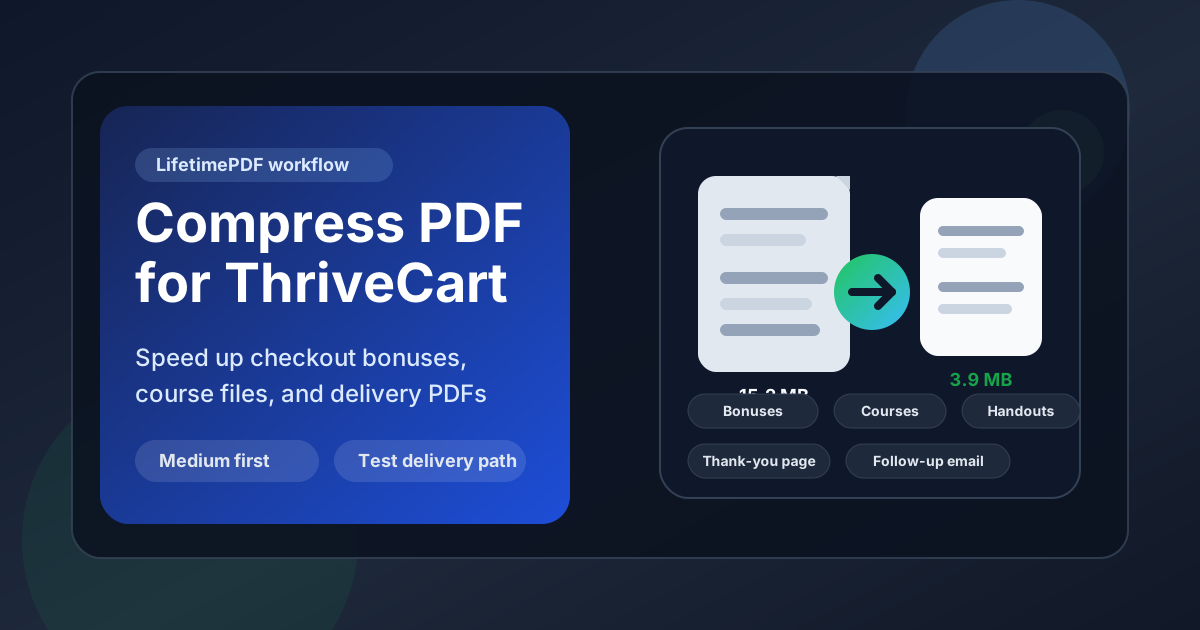
Table of contents
- Quick start: compress a ThriveCart PDF in about 2 minutes
- Why ThriveCart PDFs get heavy so quickly
- Where large PDFs create friction in ThriveCart flows
- What file size should you aim for?
- Which compression level should you choose?
- Step-by-step: shrink a ThriveCart PDF with LifetimePDF
- Best strategy for common ThriveCart PDF types
- What if the file is still too big?
- How to keep post-purchase files trustworthy
- Workflow habits that keep ThriveCart PDFs lighter
- Related LifetimePDF tools and useful internal reading
- FAQ (People Also Ask)
Quick start: compress a ThriveCart PDF in about 2 minutes
If your real goal is simply make this ThriveCart PDF lighter without making it feel worse for the customer, this workflow is usually enough:
- Start with the final ThriveCart file, not a bloated master export.
- Open Compress PDF.
- Choose Medium compression first.
- Download the smaller copy.
- Open the exact ThriveCart thank-you page, follow-up email, bonus delivery step, or course path buyers actually use.
- Keep the compressed version only if the smallest useful text, screenshots, worksheet lines, and printable details still feel easy to trust.
That last step matters more than the size reduction by itself. Saving another megabyte is not a win if the file now feels blurrier, less polished, or harder to use right after somebody pays.
Why ThriveCart PDFs get heavy so quickly
ThriveCart PDFs usually become oversized because one file starts doing too many jobs. A single document tries to be the welcome guide, the printable workbook, the upsell bonus, the customer reference PDF, and the archive copy all at once. That may feel convenient behind the scenes, but it often creates a heavier download than the buyer actually needs in that moment.
Another common issue is publishing the design export instead of the delivery copy. Full-size cover art, repeated divider pages, old screenshots, appendix sections, and revision leftovers survive into the live PDF even though the buyer only needs the clean finished resource. Compression helps, but better structure usually helps first.
- Checkout bonuses often include internal notes, duplicate pages, or alternate versions that should never reach customers.
- Customer handouts can combine several resources into one oversized PDF when separate files would feel easier to use.
- Course downloads usually carry screenshot-heavy steps that grow quickly if every image stays full size.
- Printable workbooks may include duplicate covers, filler sheets, or archive pages that add weight without adding value.
- Post-purchase resources sometimes repeat the same material across offers instead of linking it once elsewhere.
If the next buyer does not need part of the PDF to get the promised result, trim it, split it, or move it instead of asking compression to rescue everything.
Where large PDFs create friction in ThriveCart flows
A big PDF does not only affect storage or upload convenience. It changes how smooth the delivery feels when someone has just finished a purchase and expects the next step to work immediately.
| ThriveCart touchpoint | What the problem feels like | Most useful fix |
|---|---|---|
| Thank-you page download | The customer paid, but the first file still feels slower than the promise | Keep the file lean and compress before you publish the offer |
| Follow-up email link | The PDF opens like an archive instead of a fast next step | Use Medium compression and remove preview-only or archive-only pages |
| Checkout bonus or upsell resource | The add-on feels bulkier than the offer around it | Compress the final customer copy and split giant bundles when needed |
| Course or membership handout | Screenshot-heavy instructions feel heavier than the lesson itself | Trim stale images or repeated sections before stronger compression |
| Printable workbook | The file is slow and fine detail risks getting softened | Compress carefully, then test the busiest page before replacing the original |
Customers rarely describe it as a file-size problem. They just notice when a download opens fast, feels polished, and looks professionally delivered.
What file size should you aim for?
There is no universal perfect number, but practical ranges help you compress enough without damaging the resource itself.
- Under 3MB: a good target for quick-start guides, checklists, one-page bonuses, and short customer handouts.
- 3MB to 5MB: often a comfortable range for course manuals, mini-workbooks, and resources with a few screenshots or designed pages.
- 5MB to 6MB: still reasonable for screenshot-heavy onboarding packs or printable bundles if the smallest useful detail stays clear.
- Over 6MB: worth reviewing carefully to see whether the PDF should be trimmed or split instead of only compressed harder.
A better question than How tiny can I make this? is How small can I make this before a paying customer notices quality loss? That usually leads to better decisions.
Which compression level should you choose?
For ThriveCart, Medium compression is usually the safest starting point. It cuts file weight without being overly aggressive on body text, screenshots, worksheet lines, preview pages, and printable details.
- Low compression: useful when the PDF is already close to your target and only needs a gentle reduction.
- Medium compression: the best default for most ThriveCart PDFs.
- High compression: worth testing only after you trim extra pages, crop wasted margins, or split bundles that are doing too much.
The common mistake is reaching for the strongest setting before cleaning the structure. Usually, a cleaner file plus Medium compression beats brute force.
Step-by-step: shrink a ThriveCart PDF with LifetimePDF
- Start with the final customer-facing PDF. Use the exact file buyers should receive, not a master export full of internal extras.
- Open Compress PDF.
- Upload the file and choose Medium. That is usually the cleanest first pass for checkout bonuses, course downloads, and customer handouts.
- Download the smaller copy.
- Replace the real delivery file. Update the exact ThriveCart thank-you page, follow-up link, upsell bonus area, or course delivery path buyers actually reach.
- Test the real customer path. Open it once on desktop and once on a phone.
- Review the hardest page to preserve. Check the smallest text, busiest screenshot, faintest worksheet lines, QR codes, and any page with fine print or printable layouts.
- Only then keep or revise it. If the file still feels trustworthy, publish the smaller version. If not, clean up the PDF and try again.
Best practical sequence: compress first, test the live customer path second, trim or split third, and only then consider stronger compression.
Best strategy for common ThriveCart PDF types
Checkout bonuses and quick-start guides
These should feel fast and useful immediately. If the promise is a getting-started guide, download summary, or customer bonus, keep the file lean and move archive material elsewhere.
Course manuals and lesson downloads
Be careful here. Buyers need screenshots, labels, and step order to stay intact. Medium compression plus light cleanup is usually safer than aggressive shrinking, especially if the PDF includes interface callouts or multi-step diagrams.
Printable worksheets and planners
Customers need lines, boxes, contrast, and small labels to stay crisp enough for real use. Compress carefully and review the pages with the smallest captions, narrowest columns, and most detailed visuals before replacing the original.
Upsell resources and bundle files
These can carry a little more weight, but they still need to open cleanly. If the PDF combines the core resource, worksheets, templates, and older extras, splitting it often works better than forcing hard compression across the whole pack.
Reference libraries and companion packs
One giant PDF can feel tidy on the seller side but clumsy on the buyer side. If separate resources serve different moments, publish them as separate files instead of forcing everything into one oversized download.
What if the file is still too big?
If Medium compression helps but the PDF is still heavier than it should be, the file probably has a structure problem rather than just a compression problem.
- Remove repeated covers, stale appendix pages, and archive-only sections with Delete Pages.
- Split giant bundles with Split PDF.
- Pull only the buyer-facing section with Extract Pages.
- Trim wasted margins or oversized layouts with Crop PDF.
Very often, the fastest way to make a ThriveCart PDF feel lighter is not to compress harder. It is to stop making one file carry too many jobs.
How to keep post-purchase files trustworthy
Before you replace the original file, review the details most likely to break trust:
- small body text, captions, and callout notes
- screenshots with tiny interface labels
- worksheet lines, planner boxes, and printable areas
- tables, charts, and any narrow multi-column layout
- QR codes, links, and action pages that move the buyer to the next step
- the busiest page in the whole PDF, not only the cleanest one
If the smallest useful detail still feels easy to trust, the PDF is probably compressed enough. If not, back up, clean the structure, and try again.
Workflow habits that keep ThriveCart PDFs lighter
- Export a delivery copy and a master copy when the same PDF does not need to do both jobs.
- Compress after the final export so you optimize the exact file buyers will open.
- Test the real customer path after replacing the file instead of judging quality only from your local folder.
- Keep bonuses modular if extra pages make the main file feel bloated.
- Name versions clearly so old PDFs do not linger and get linked by mistake.
- Clean metadata before publishing with PDF Metadata Editor if you want the download title and properties to look polished.
- Match the file to the moment so a fast thank-you-page download does not have to carry the weight of a full archive pack.
Compression works best as final polish, not as a rescue plan for a PDF that was oversized long before it reached your customers.
Related LifetimePDF tools and useful internal reading
If ThriveCart is part of your normal digital-product workflow, these tools and articles pair well with this guide:
- Compress PDF for the first size-reduction pass.
- Split PDF for long manuals or bundle files that should become smaller downloads.
- Extract Pages when only the buyer-facing section should be published.
- Delete Pages to remove stale covers, appendix sections, or repeated guide pages.
- Crop PDF to trim wasted margins from printable layouts.
- PDF Metadata Editor for cleaner download properties.
- Compress PDF for SamCart.
- Compress PDF for Lemon Squeezy.
- Compress PDF for Hotmart.
- Compress PDF for Payhip.
- Compress PDF for Gumroad.
- Lifetime access if PDF cleanup is a recurring part of your product stack.
Bottom line: for most ThriveCart PDFs, start with Medium compression, test the real customer path, and trim page weight before you use stronger compression.
FAQ (People Also Ask)
How do I compress a PDF for ThriveCart?
Upload the final PDF to a compressor, start with Medium compression, download the smaller copy, and test the exact ThriveCart post-purchase path before replacing the original. Medium is usually the safest first pass because it lowers file size without making text, screenshots, worksheet lines, or printable details feel unreliable.
What file size should I aim for in ThriveCart?
For many ThriveCart checkout bonuses, quick guides, and short customer handouts, under 3MB is a comfortable target. Longer workbooks, course manuals, and printable packs often work best around 3MB to 6MB as long as the smallest useful text still reads clearly.
Should I compress the PDF before uploading it to ThriveCart?
Yes. It is usually cleaner to compress the final customer-facing copy before you attach it to a ThriveCart checkout flow, thank-you page, follow-up email, or course delivery path. That way you test the same file buyers will actually open.
Will PDF compression hurt checkout bonuses or printable customer files in ThriveCart?
It can if you compress too aggressively. That is why Medium compression is the best place to start. Always check small body text, screenshot labels, worksheet lines, QR codes, and the busiest page before you replace the original.
Should I split a long ThriveCart PDF instead of compressing it harder?
Often, yes. If one PDF combines the core guide, workbook pages, templates, bonus sections, and archive material for different moments, splitting it usually creates a cleaner buyer experience than forcing the whole file through aggressive compression.
Published by LifetimePDF - Pay once. Use forever.