Compress PDF for Taiga: Keep Issue Attachments, Sprint Docs, and Project PDFs Easy to Share
To compress a PDF for Taiga, upload the file to LifetimePDF's Compress PDF tool, start with Medium compression, and keep the smaller copy only if issue attachments, sprint docs, screenshots, and notes still read clearly.
If the document only partly matters to the story, task, epic, or wiki page, extract the needed pages first so teammates open less and get to the useful context faster.
Taiga usually holds working documents, not polished archive pieces. Bug evidence packs, user story briefs, sprint review PDFs, backlog exports, release notes, retrospective summaries, and project handoffs all end up around active collaboration. Oversized files do not just take longer to upload. They slow review, feel clumsy on mobile, and make routine project follow-up more annoying than it needs to be.
Fastest path: compress the real attachment on Medium, review the important details once, then extract or split pages only if the PDF is still bulkier than the Taiga story, task, or sprint thread really needs.
Want the quick version? Jump to Quick start: compress a PDF for Taiga in under 2 minutes.
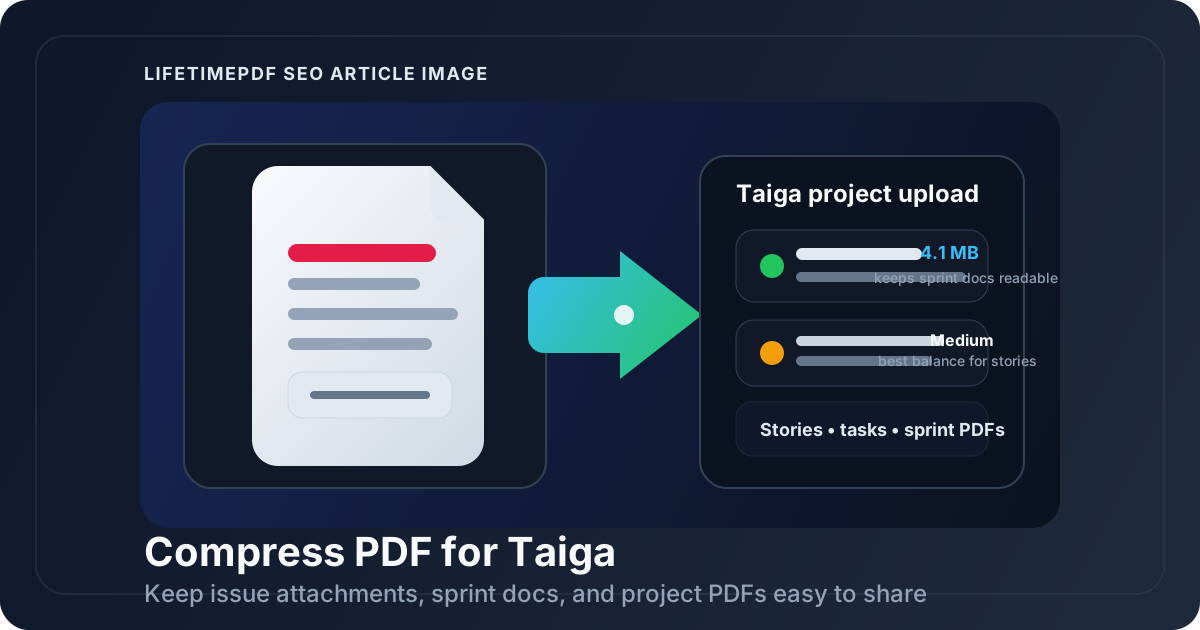
Table of contents
- Quick start: compress a PDF for Taiga in under 2 minutes
- Why smaller PDFs help in Taiga
- What file size should you aim for?
- Which compression level should you choose?
- Step-by-step: shrink a Taiga PDF with LifetimePDF
- Common Taiga PDFs that benefit from compression
- When splitting or extracting pages is smarter than more compression
- Readability checks before attaching the smaller file
- Workflow habits that keep Taiga files cleaner
- Related LifetimePDF tools and internal links
- FAQ (People Also Ask)
Quick start: compress a PDF for Taiga in under 2 minutes
If your goal is simply make this PDF easier to attach and review in Taiga, this workflow is usually enough:
- Open Compress PDF.
- Upload the issue attachment, user story brief, sprint review PDF, bug evidence pack, release note, or wiki export you actually plan to share.
- Choose Medium compression first.
- Download the smaller copy and compare the new size with the original.
- Open it once and check screenshots, labels, acceptance notes, tables, comments, and any detail another person must trust.
- If only part of the file matters, use Extract Pages or Split PDF instead of forcing harsher compression on the whole document.
- If the PDF is scan-heavy, use OCR PDF before you share it.
Why smaller PDFs help in Taiga
Taiga documents sit inside live project work. They are opened during backlog grooming, sprint planning, QA review, design follow-up, release prep, and team handoff. That means file weight matters more than people think. If the attachment feels heavy, people delay opening it, skim less carefully, or re-share it somewhere else with even more friction.
A lighter PDF uploads faster, opens faster, and behaves better when someone checks it from a phone or a slower connection. That matters when a product manager is reviewing a user story appendix, a developer is checking bug evidence, or a QA lead is confirming a signoff packet. The win is not just smaller storage. It is smoother project flow.
Why compression usually pays off in Taiga
- Faster review: smaller attachments are easier to open during standups, sprint reviews, and follow-up discussions.
- Cleaner collaboration: stories and tasks feel less cluttered when every attachment is not oversized.
- Better mobile access: teammates can check PDFs away from a desk without fighting a bloated file.
- Smoother reuse: once the file is lighter, it is easier to resend in chat, email, or documentation later.
- Less attachment fatigue: focused, readable PDFs are more likely to be opened and acted on quickly.
What file size should you aim for?
There is no universal perfect number because a one-page planning note behaves differently from a long screenshot pack, a retrospective export, or a scan-heavy vendor document attached to a project card. Still, practical targets help you avoid compressing harder than the workflow really requires.
| File size target | Best fit | What to watch |
|---|---|---|
| Under 2MB | Focused issue attachments, short user story PDFs, quick release notes, and lightweight planning updates. | Tiny labels and screenshots can soften first, so review them carefully. |
| 2MB to 5MB | Most everyday Taiga attachments, including sprint docs, bug evidence packs, and project summaries. | This is usually the safest range for readable sharing without unnecessary weight. |
| 5MB to 10MB | Long screenshot-heavy files, scan-based PDFs, or bundled evidence that genuinely needs more detail. | If the file stays above this range, page trimming often helps more than stronger compression. |
If the document is much larger than that, ask a blunt question: does every page belong in the story or task? Many oversized Taiga PDFs are not too large because compression failed. They are too large because the attachment includes appendix pages, repeated screenshots, or source material nobody needs in that work item.
Which compression level should you choose?
Low compression
Use Low when the file contains detailed diagrams, narrow table columns, dense UI screenshots, or other content that may need closer inspection. It trims size more gently and protects clarity better.
Medium compression
Medium is the best default for most Taiga workflows. It usually removes enough weight to make sharing easier while preserving screenshots, notes, charts, comments, and planning detail your team still needs.
High compression
Use High when the PDF is mainly scan-heavy or image-heavy and file size matters more than perfect visual polish. It can work well for archive-style evidence packs or long scans, but always check the result before replacing the original.
Step-by-step: shrink a Taiga PDF with LifetimePDF
- Start with the file you will actually attach. Avoid compressing an older draft when the real PDF has more pages, screenshots, or comments.
- Open Compress PDF.
- Choose Medium compression first. This is the most reliable first pass for mixed text-and-image documents.
- Download the smaller copy. Check the size reduction before doing anything else.
- Review the weakest details once. Look at screenshot labels, acceptance notes, table text, comments, signatures, page numbers, and any evidence another person may quote back later.
- Trim if needed. If the file is still bulky, use Extract Pages, Delete Pages, or Crop PDF before trying more aggressive compression.
- Attach the reviewed copy in Taiga. Keep the original only when you genuinely need a higher-detail source version elsewhere.
Common Taiga PDFs that benefit from compression
The most common Taiga attachments are also the ones that bloat fastest. Here are the usual suspects and the compression strategy that tends to work best.
Bug evidence packs
These often include screenshots, reproduction steps, comparison notes, and annotated exports. Start with Medium compression and review the smallest labels, especially if the team needs to read UI states or timestamps.
User story briefs and acceptance docs
These are usually text-heavy with a few images or diagrams. They often compress well, but split appendices if only the summary matters to the current story.
Sprint reviews, retrospectives, and release notes
These documents are opened quickly during coordination work. They usually shrink nicely with Medium compression, and they benefit even more when you remove repeated or low-value pages first.
Wiki exports and project handoffs
These may carry screenshots, charts, and layout-heavy sections that add weight fast. Compression helps, but focused page selection often helps even more.
Scanned forms, approvals, and outside documents
Scan-heavy PDFs need a little more caution. Compression is fine, but double-check signatures, initials, dates, and any small notes before you share the lighter copy.
Need the attachment-first angle? This companion guide goes deeper into smaller issue uploads and project docs inside Taiga.
When splitting or extracting pages is smarter than more compression
Compression reduces file weight. It does not decide which pages deserve to be there. That is why the cleanest fix is often page control, not more compression.
Split or extract pages when one PDF is trying to serve different audiences at once. A developer may only need the reproduction steps and screenshots. A product manager may only need the summary. A stakeholder may only need the release note section. Pushing all of that through harsher compression usually creates a worse file for everybody.
- Use Extract Pages when only one section belongs in the story or task.
- Use Split PDF when different readers need different chunks.
- Use Delete Pages when the file contains cover pages, blanks, duplicates, or repeated appendix screenshots.
Readability checks before attaching the smaller file
Before you replace the original, check the parts most likely to break first:
- tiny labels inside screenshots
- table headers and narrow columns
- comments, reviewer notes, and acceptance text
- signatures, initials, and date fields
- issue IDs, version numbers, and release references
- scan edges where dark borders or skew can hide text
If those details still read comfortably at normal zoom, the PDF is probably good enough. If you need to zoom deep just to confirm basic information, either back off the compression or trim the document instead.
Workflow habits that keep Taiga files cleaner
The easiest PDF to manage is the one that never bloats in the first place. A few habits make a real difference over time:
- Attach the relevant excerpt, not the whole source packet.
- Crop scan borders and blank margins before sharing.
- Merge only the pages that belong together for that story or task.
- Use OCR for scan-heavy files so they stay more searchable and reviewable.
- Keep one master original elsewhere if archive fidelity matters, then attach the lighter working copy in Taiga.
This is especially useful if your team uses Taiga for both day-to-day task work and broader sprint planning. Those threads stay cleaner when attachments are small, focused, and readable.
Related LifetimePDF tools and internal links
If you work in Taiga regularly, these tools usually pair best with compression:
- Compress PDF for the main size reduction step.
- Extract Pages when only part of the file belongs in the story or task.
- Split PDF for long review packs with mixed audiences.
- OCR PDF for scan-heavy documents.
- Crop PDF to remove wasted borders before compression.
- Redact PDF before sharing logs, customer details, or internal notes that should not travel with the attachment.
If you manage similar work in nearby tools, these guides may also help: Compress PDF for Jira, Compress PDF for YouTrack, Compress PDF for Redmine, and Compress PDF for OpenProject.
Ready to shrink a Taiga attachment? Start with the PDF you actually plan to share, use Medium compression, and keep the lighter copy only if the important details still read cleanly.
FAQ (People Also Ask)
How do I compress a PDF for Taiga?
Upload the PDF to a compressor, start with Medium compression, and keep the smaller copy only if screenshots, notes, tables, and small text still read clearly. If the file is still too large, extract only the relevant pages or split the document instead of forcing harder compression on the whole file.
What file size should I aim for in Taiga?
Under 5MB is a strong target for many everyday issue attachments, sprint docs, and project PDFs. Under 2MB is great for very quick review and mobile access, while screenshot-heavy or scan-heavy files may reasonably land higher if they still need clear detail.
Will compression make screenshots or tables blurry?
It can if you compress too aggressively. That is why Medium compression is usually the best first pass. Always review screenshots, labels, table text, comments, and small notes before replacing the original file.
When should I split a PDF instead of compressing it harder?
Split or extract pages when only one section matters to the story, task, epic, sprint review, or wiki update. A shorter, focused PDF usually works better than an over-compressed all-in-one file full of pages nobody needs right now.
Which LifetimePDF tools pair best with Taiga attachments?
Compress PDF is the main starting point. Extract Pages, Split PDF, Crop PDF, OCR PDF, Delete Pages, Redact PDF, and PDF Metadata Editor are especially useful when you want smaller, cleaner Taiga documents that teammates can still trust.