Compress PDF for TIBCO Spotfire Without Monthly Fees: Shrink Analysis Exports, Board Packs, and Dashboard PDFs Without Another Subscription
If you need to compress a PDF for TIBCO Spotfire without monthly fees, export the file, use LifetimePDF Compress PDF, start with Medium compression, and review the smaller copy once before sending it.
For most TIBCO Spotfire workflows, that is enough to shrink analysis exports, board packs, and dashboard PDFs without paying for one more recurring tool just to finish file cleanup.
This search usually appears at the very end of the workflow. The dashboard is already built. The analysis has already been reviewed. The meeting is already on the calendar. Now somebody just needs the PDF small enough to email, upload, archive, or drop into a board packet without friction. That is why the "without monthly fees" angle matters here. People are not shopping for another analytics platform. They are trying to finish the handoff cleanly.
Fastest path: export the Spotfire file as PDF, run it through LifetimePDF's Compress PDF tool at Medium, then split or extract pages only if the packet still feels heavier than the next reader needs.
In a hurry? Jump to Quick start: compress a TIBCO Spotfire PDF in under 2 minutes.
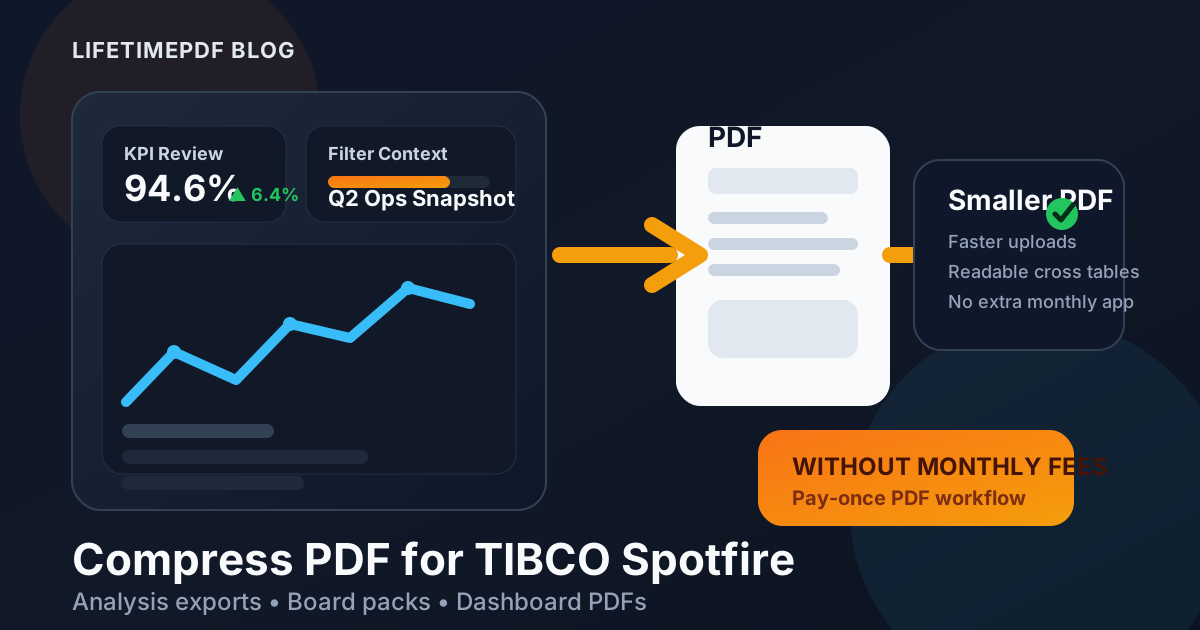
Table of contents
- Quick start: compress a TIBCO Spotfire PDF in under 2 minutes
- Why without monthly fees matters here
- Why smaller PDFs help in TIBCO Spotfire workflows
- What size should a TIBCO Spotfire PDF be?
- Which compression level should you choose?
- Step-by-step: use LifetimePDF to shrink the file
- Common TIBCO Spotfire PDFs that benefit from compression
- What to do if the PDF is still too large
- How to keep filters, cross tables, and notes readable
- Workflow habits that reduce PDF bloat
- Related LifetimePDF tools and internal links
- FAQ (People Also Ask)
Quick start: compress a TIBCO Spotfire PDF in under 2 minutes
If your real goal is simply make this TIBCO Spotfire PDF smaller so it is easier to send, use this workflow:
- Export the final analysis page, scheduled delivery, dashboard snapshot, KPI recap, or board pack first.
- Open Compress PDF.
- Upload the Spotfire PDF you actually plan to share.
- Choose Medium compression first.
- Download the smaller file and compare the new size.
- Preview the parts that matter most: page titles, filter context, legends, cross-table text, annotations, threshold colors, date ranges, and short commentary.
- If the file is still bulky, use Extract Pages, Split PDF, or Delete Pages before trying heavier compression.
Why without monthly fees matters here
Teams using TIBCO Spotfire usually already pay for data pipelines, dashboards, cloud infrastructure, operational reporting, or the surrounding business systems that feed the analysis. Once the remaining task is simply make this PDF smaller so it is easier to move around, another recurring bill feels like stack clutter more than value.
That matters because PDF cleanup is finish-line work. The reporting logic already exists. The calculations already ran. The charts already tell the story. What remains is a practical delivery problem: the file needs to upload faster, open faster, or fit into a review pack that people will actually reopen. A pay-once workflow fits that job better than a monthly add-on whose only role is shrinking the last file in the chain.
There is also a trust problem with many PDF tools. They look convenient until the final step, then the useful part gets trapped behind sign-up friction, a trial wall, or another recurring plan. When the task should take a couple of minutes, that friction feels bigger than the file-size problem it was supposed to solve.
Plain-English version: if your team already paid for the analytics stack that created the report, it probably does not want another monthly fee just to make the exported PDF smaller.
Why smaller PDFs help in TIBCO Spotfire workflows
TIBCO Spotfire exports tend to travel farther than the live dashboard. They get attached to leadership updates, sent into operations reviews, archived for audit trails, dropped into slide appendices, and passed to people who do not live inside the analytics workspace every day. That is where file size starts to matter.
Heavy PDFs slow down the boring but important parts of work. They take longer to upload, feel awkward in email, and are more likely to sit unopened when somebody only needs one answer from one page. The extra weight often comes from repeated appendix pages, screenshot-heavy evidence, wide margins, long cross-table sections, or one oversized packet trying to serve executives, analysts, and reviewers all at once. Good compression is not about chasing the tiniest possible number. It is about removing unnecessary weight while keeping the details people still rely on, like filter context, KPI callouts, chart legends, annotations, threshold colors, and summary notes.
Why compression usually helps
- Faster review cycles: lighter PDFs open more quickly when someone only needs the top-line findings or one page from a scheduled delivery.
- Smoother sharing: smaller files are easier to email, upload to document systems, or attach to meeting packets.
- Cleaner archive copies: monthly and quarterly exports are easier to store and revisit when they are not bloated with backup pages.
- Less meeting friction: if someone opens the PDF live during a review, a lighter file is simply less annoying.
What size should a TIBCO Spotfire PDF be?
There is no universal perfect number, but practical targets help. If the PDF is short and mostly summary-focused, aiming for under 2MB is usually reasonable. If it includes several pages, cross tables, commentary, appendix visuals, or scheduled-review context, 2MB to 5MB is often more realistic.
- Under 2MB: short dashboard snapshots, KPI recaps, and quick leadership updates.
- 2MB to 5MB: most board packs, analysis exports, and multi-page review documents with charts and notes.
- Over 5MB: often a sign that the file includes too many screenshots, repeated support pages, or appendix sections that could travel separately.
The better question is not How small can I make it? It is How small can I make it while the smallest useful text still feels clear at normal zoom? For TIBCO Spotfire PDFs, that usually means checking legends, cross-table rows, annotation text, thresholds, filter labels, and any page-level commentary someone may need later.
Which compression level should you choose?
Start with Medium unless you already know the file is massively oversized. It is usually the safest balance between file-size reduction and readability.
- Low compression: useful when the PDF is already fairly compact and only needs a modest reduction before sending.
- Medium compression: the best default for most TIBCO Spotfire exports because it keeps charts, cross tables, labels, and notes readable while still cutting noticeable weight.
- High compression: helpful when the file is extremely bulky, but it deserves a closer review because fine detail softens faster.
If the export includes dense tables, small threshold labels, or multi-column summary pages, treat high compression as a last step rather than the default. It is often better to remove extra pages first than to push the whole document harder.
Step-by-step: use LifetimePDF to shrink the file
- Export the final version first. Do not compress a draft if you already know the report will change. Finish the TIBCO Spotfire export, then shrink the copy you actually plan to share.
- Open LifetimePDF Compress PDF. Go straight to Compress PDF.
- Upload the Spotfire PDF. Use the analysis export, dashboard snapshot, board packet, scheduled review pack, or KPI summary you plan to send.
- Choose Medium compression. For most TIBCO Spotfire use cases, this is the most dependable first pass.
- Download the smaller copy. Compare the new file size with the original.
- Review the decision-critical details. Check chart labels, legends, cross-table rows, notes, page titles, thresholds, date ranges, and filter context.
- Trim the document if needed. If the file is still too heavy, remove appendix pages, split the packet by audience, or extract only the decision-ready pages before compressing harder.
Recommended tool stack: start with compression, then use page-level tools only if the export still feels bloated.
Common TIBCO Spotfire PDFs that benefit from compression
The same platform can generate very different kinds of PDFs, and each one picks up file weight in a slightly different way.
Board packs and executive reviews
These often combine headline KPIs, chart pages, commentary, and appendix detail in one polished deliverable. They are strong candidates for Medium compression, especially when the file needs to circulate quickly across leadership.
Scheduled operations or finance reports
Recurring exports need to stay easy to open every time. The risk is not only size, but repetition. If every weekly packet carries several support pages nobody checks, splitting or deleting that weight usually helps as much as stronger compression.
Analysis exports with cross tables
These deserve a closer readability check because compact rows, category labels, and thresholds can get harder to trust when the file is pushed too far. Compression helps, but clear tables matter more than a perfect size number.
Appendix-heavy review documents
These can pick up extra weight from repeated screenshots, backup pages, and low-value evidence sections. Compression helps, but deleting or splitting nonessential pages often helps just as much.
What to do if the PDF is still too large
If compression alone does not get the TIBCO Spotfire file where you want it, the next move is usually structural, not more aggressive compression.
- Extract only the pages the reviewer needs: use Extract Pages for a tighter deliverable.
- Split appendices away from the summary: use Split PDF when one oversized packet is trying to serve multiple audiences.
- Delete repeated covers or outdated sections: use Delete Pages to remove dead weight.
- Crop wasted space: if the PDF has oversized margins or screenshot pages with a lot of empty area, trimming that space can reduce weight before you compress again.
In many reporting workflows, the biggest win comes from sharing less PDF, not from forcing the entire packet through a stronger setting.
How to keep filters, cross tables, and notes readable
A compressed PDF is only useful if the people opening it can still trust what they see. For TIBCO Spotfire exports, readability usually depends on a handful of small details.
- Check chart labels and legends at normal zoom.
- Make sure cross-table rows and totals still feel effortless to scan.
- Review annotations and short commentary for softness.
- Look at date ranges, threshold colors, and filter context so nobody loses the meaning of the snapshot.
- Confirm branded covers, summary callouts, and section headings still feel presentation-ready.
If one of those details becomes annoying to read, you have probably gone a step too far. A slightly larger file that still feels dependable is better than a tiny file people have to squint at.
Workflow habits that reduce PDF bloat
The cleanest TIBCO Spotfire PDFs usually come from small workflow choices made before the export ever lands in a compressor.
- Build audience-specific versions: an executive summary and a data appendix do not always belong in the same PDF.
- Remove outdated pages before export: repeated title pages, stale comparisons, and old support tabs often survive longer than they should.
- Keep evidence screenshots separate: if raw proof pages are necessary, consider delivering them as a second document.
- Archive a master, share a lean copy: keep the full internal version if you need it, but send a lighter external or meeting-ready version.
Compression works best when it finishes a clean report, not when it is asked to rescue an overloaded one.
Related LifetimePDF tools and internal links
If you are cleaning up a TIBCO Spotfire export, these tools usually pair well with compression:
- Compress PDF for the first file-size reduction pass.
- Extract Pages to keep only the pages a reviewer actually needs.
- Split PDF for oversized board packs or appendix-heavy reports.
- Delete Pages to remove repeated sections, outdated covers, or low-value support pages.
- LifetimePDF lifetime access if you want the pay-once workflow this keyword is really asking for.
Helpful related reading
- Compress PDF for TIBCO Spotfire
- Compress PDF for Power BI Without Monthly Fees
- Compress PDF for Tableau Without Monthly Fees
- Compress PDF for Qlik Sense Without Monthly Fees
- Compress PDF for MicroStrategy Without Monthly Fees
- Compress PDF for IBM Cognos Analytics Without Monthly Fees
- Compress PDF for Klipfolio Without Monthly Fees
Want the cleaner route? Use the same PDF toolkit whenever you need to compress, split, extract, or tidy exported reports without signing up for another recurring plan.
FAQ (People Also Ask)
How do I compress a PDF for TIBCO Spotfire without monthly fees?
Use a pay-once PDF tool like LifetimePDF, upload the TIBCO Spotfire export, start with Medium compression, and review the smaller copy before sharing it. If the file is still too heavy, split or extract pages instead of over-compressing the entire report.
Why does without monthly fees matter for TIBCO Spotfire PDFs?
Because PDF cleanup is finish-line work. If your team already pays for TIBCO Spotfire and the surrounding analytics stack, another recurring fee just to shrink exported files often feels unnecessary. A pay-once workflow fits the task better.
What file size should I aim for with TIBCO Spotfire exports?
Under 2MB is a strong target for short dashboard snapshots and KPI recaps. Multi-page board packs, scheduled reports, and analysis exports usually land more comfortably around 2MB to 5MB as long as the smallest useful text stays clear.
Will compression make TIBCO Spotfire charts or cross tables blurry?
It can if you compress too aggressively. Medium compression is usually the safest starting point because it reduces file size while keeping legends, labels, tables, notes, and thresholds readable.
What if my TIBCO Spotfire PDF is still too large after compression?
Extract the pages people actually need, split large appendices into a second file, delete repeated sections, and crop wasted space before trying stronger compression. In many cases, sharing less PDF works better than crushing the whole file harder.