Compress PDF for Klipfolio Without Monthly Fees: Shrink Dashboard Snapshots, Scorecards, and KPI PDFs Without Another Subscription
If you need to compress a PDF for Klipfolio without monthly fees, export the file, upload it to LifetimePDF's Compress PDF tool, start with Medium compression, and keep the smaller copy only if widget labels, scorecard values, charts, and notes still read clearly.
For most Klipfolio workflows, that is enough to shrink dashboard snapshots, scorecards, and KPI PDFs without adding another recurring subscription just to finish the sharing step.
Klipfolio already does the visible part of the work. It gathers live numbers, turns them into dashboards, and gives teams something they can review quickly. The PDF problem usually shows up later. Someone needs a lighter file for email, a smaller scorecard for a meeting packet, or a dashboard snapshot that opens fast in chat. That is why a pay-once PDF workflow makes more sense here than another monthly add-on layered onto a reporting stack.
Fastest path: run the Klipfolio export through LifetimePDF's Compress PDF tool at Medium, then split or extract pages only if the report still carries more weight than the next reader actually needs.
In a hurry? Jump to Quick start: compress a Klipfolio PDF in under 2 minutes.
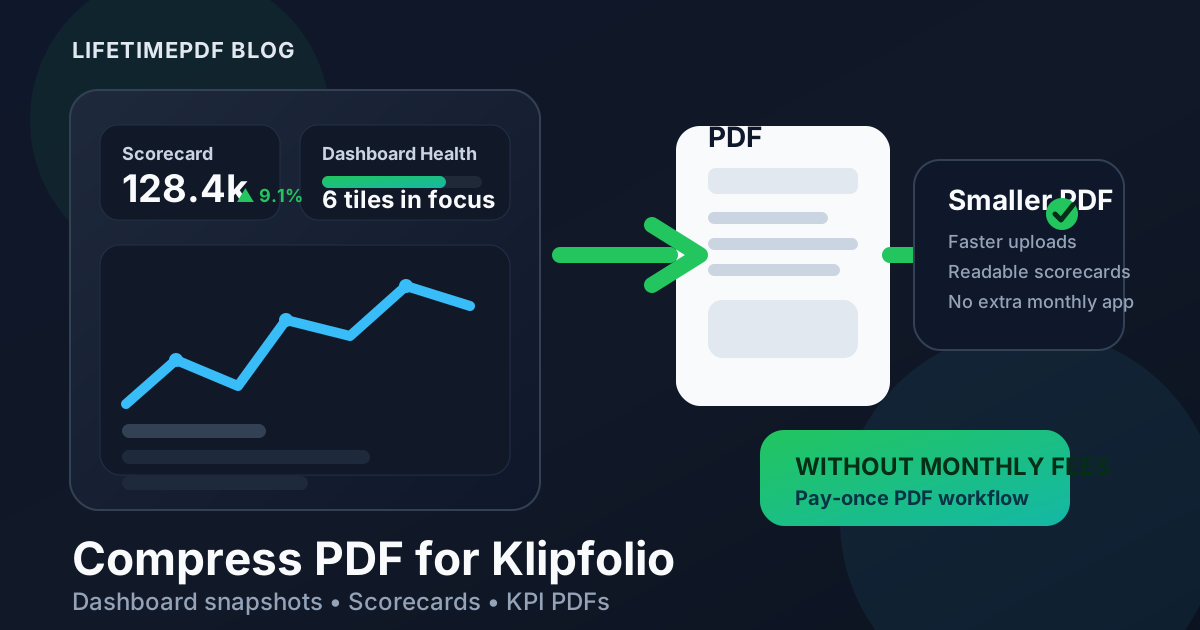
Table of contents
- Quick start: compress a Klipfolio PDF in under 2 minutes
- Why "without monthly fees" matters here
- Why smaller PDFs help in Klipfolio workflows
- What file size should a Klipfolio PDF be?
- Which compression level should you choose?
- Step-by-step: use LifetimePDF to shrink the file
- Best approach for common Klipfolio PDFs
- What to do if the PDF is still too large
- How to keep dashboard snapshots, scorecards, and KPI text readable
- Workflow habits that reduce PDF bloat
- Related LifetimePDF tools and useful reading
- FAQ (People Also Ask)
Quick start: compress a Klipfolio PDF in under 2 minutes
If your real goal is simply make this Klipfolio PDF smaller so it is easier to send, this workflow is usually enough:
- Export the Klipfolio file you actually plan to share, whether that is a dashboard snapshot, scorecard PDF, KPI report, client recap, leadership update, or appendix-backed review pack.
- Open Compress PDF.
- Upload the file and choose Medium compression first.
- Download the smaller result and compare the new size.
- Preview the details that matter most: widget titles, KPI values, chart labels, trend lines, legends, date ranges, and short summary notes.
- If the file is still bulky, use Extract Pages, Split PDF, or Delete Pages before forcing stronger compression across the whole report.
Why "without monthly fees" matters here
This is finish-line work. The dashboard already exists. The metrics are already live. Someone already decided the snapshot is worth sharing. Paying forever just to make that final PDF smaller is hard to justify.
Teams that use Klipfolio usually already pay for data sources, dashboard infrastructure, and reporting tools. Once the remaining job is simply make this PDF easier to attach, upload, or archive, another monthly bill feels like stack clutter rather than value. A pay-once workflow matches the real task because the task is narrow, repeatable, and practical.
That matters even more because many Klipfolio exports are one-time artifacts. A director needs a lighter KPI scorecard for a board packet. An account manager needs a smaller client dashboard PDF. A team lead wants a weekly snapshot that opens instantly in chat. None of those moments really needs a second subscription whose only role is shrinking the last file in the chain.
Simple logic: if Klipfolio already did the dashboard work, a pay-once PDF workflow usually fits the sharing step better than a monthly add-on.
Why smaller PDFs help in Klipfolio workflows
Klipfolio exports rarely stay inside the dashboard forever. They get attached to recap emails, posted in team chats, dropped into meeting agendas, shared with clients, saved in project folders, and archived for later comparison. Heavy PDFs slow all of that down.
The issue is not only upload limits. Large files open more slowly on laptops, feel awkward on phones, and create friction every time someone forwards the scorecard again. That friction becomes obvious when one reporting pack includes several dashboards, client sections, screenshot-heavy appendix pages, or repeated views built for different audiences.
Smaller Klipfolio PDFs help because they are easier to send, easier to store, and easier to reopen later. If the goal is quick visibility into metrics, speed matters almost as much as visual quality. The best compression workflow keeps the dashboard readable while removing some of the weight that makes reporting slower than it needs to be.
What file size should a Klipfolio PDF be?
There is no single perfect number, but practical targets help. For a one-page KPI snapshot or focused scorecard, staying under 2MB is a strong default. For broader reports with several dashboard sections, supporting notes, or appendix screenshots, 2MB to 5MB is usually a comfortable range if the details still read clearly.
What matters most is matching the file to the way it will be used. A PDF that travels through chat, email, or mobile review should usually be lighter than a file meant mainly for archive storage. If the report is still easy to read and much easier to move around, the compression choice is doing its job.
- Under 2MB: ideal for short dashboard snapshots, scorecards, and fast team updates.
- 2MB to 5MB: often right for multi-section client and leadership reporting that still needs to stay easy to send.
- Over 5MB: often a sign that the export may benefit from trimming pages, splitting sections, or removing repeated visuals before more compression.
Which compression level should you choose?
For most Klipfolio PDFs, Medium is the right first move. It usually reduces file size enough to make sharing easier while keeping widget labels, KPI totals, chart legends, and short notes readable. That balance matters because dashboard exports are often checked quickly, and tiny visual losses become annoying fast when readers rely on compact metrics.
Lighter compression can make sense when the PDF contains very small labels, dense tables, or pages people need to zoom in on. Stronger compression can work when the file is truly oversized, but it should be treated as a second pass rather than the default. In most reporting workflows, readability breaks before a team actually runs out of ways to trim the document structure.
Step-by-step: use LifetimePDF to shrink the file
The cleanest workflow is simple and repeatable:
- Export the Klipfolio dashboard or report as a PDF.
- Open LifetimePDF's Compress PDF tool.
- Upload the file and start with Medium compression.
- Download the smaller copy and compare the new file size.
- Review the smallest elements: widget titles, scorecard values, chart legends, date ranges, and any compact table columns.
- If the file still feels heavy, trim unneeded pages before trying a stronger compression pass.
That order matters. Many oversized dashboard PDFs are not oversized because compression was too weak. They are oversized because the export contains more pages, more audiences, or more repeated context than the next reader really needs. Compression works best when it is paired with a little editorial cleanup.
Start here: compress the full Klipfolio export once, then reduce the page count only if the first pass still leaves the file bulkier than the audience needs.
Best approach for common Klipfolio PDFs
Different Klipfolio exports benefit from different cleanup choices. The right goal is not always the smallest possible file. It is the smallest file that still matches the reporting context.
Dashboard snapshots for leadership
These usually work best when the file stays short and easy to skim. Medium compression is often enough. If the export includes backup pages, team-level details, or secondary charts leadership will not review, cutting those pages usually helps more than forcing a stronger compression setting.
Scorecards for weekly reviews
Team PDFs need clear numbers more than polished design. Keep KPI cards, trend lines, and date ranges readable. If the packet covers several departments or reporting segments, splitting by audience can make the file easier to use than sending one all-purpose document.
Client reporting packs
These often carry extra weight because they include branded covers, commentary pages, screenshot-heavy appendix material, and multiple dashboard views. Compress first, but be willing to extract only the pages a client actually needs. If one export is serving both archive and communication purposes, keeping one full version and sending a lighter subset is often the cleaner move.
What to do if the PDF is still too large
If the file is still too heavy after a first compression pass, do not assume stronger compression is the only answer. Very often the better fix is structural. A Klipfolio PDF can stay more readable if you remove bulk instead of pushing every page harder.
- Use Extract Pages to keep only the summary pages one audience actually needs.
- Use Split PDF when one export mixes leadership, client, and internal review sections in a single file.
- Use Delete Pages for repeated screenshots, cover pages, appendix material, or backup tabs that do not need to travel with every share.
- Keep one archive copy, but send lighter audience-specific versions day to day.
A smaller file is useful. A smaller file that is also better organized is usually even more useful.
How to keep dashboard snapshots, scorecards, and KPI text readable
The quality check for Klipfolio PDFs should be fast and specific. You do not need to review every pixel. You do need to inspect the parts people actually rely on when they skim the document.
- Zoom in on the smallest widget titles and KPI labels.
- Check whether chart legends and trend lines still separate clearly.
- Confirm short notes or explanations still read cleanly.
- Look at any compact tables or side-by-side metric cards.
- Open the PDF on a smaller screen once if the audience often reviews updates on laptops or phones.
If those details still feel easy to scan, the file is probably ready. If not, step back and trim pages or return to a lighter compression level. Klipfolio exports are meant to communicate quickly, so the readability bar should stay high.
Workflow habits that reduce PDF bloat
Better export habits reduce how much compression work you need in the first place. If a report feels bulky, the first question should not always be which compression level is strongest? Often the better question is which pages does this audience actually need?
- Export only the dashboard views that matter for the current update.
- Separate leadership summaries from client-detail pages when the audiences are different.
- Keep appendix screenshots out of everyday share files when they are only needed for archives.
- Use live dashboard links when a static PDF is not really necessary.
- Archive one full version, but send lighter audience-specific copies during normal reporting cycles.
Related LifetimePDF tools and useful reading
Once you have the file size under control, nearby tools help polish the rest of the workflow. If one export is too broad, pull out the summary pages. If the packet mixes several audiences, split it. If you want adjacent examples, the nearby dashboard-reporting guides are useful too.
- Compress PDF for the main size reduction step.
- Extract Pages when one Klipfolio file contains a few key pages worth sending separately.
- Split PDF when leadership, client, or internal audiences need different sections.
- Delete Pages if the export includes repeated appendix material, cover sheets, or pages the next reader does not need.
- Compare PDFs if you want to check that the smaller version still preserves the details that matter.
- Compress PDF for Geckoboard Without Monthly Fees, Compress PDF for TapClicks Without Monthly Fees, and Compress PDF for GoodData Without Monthly Fees for adjacent dashboard-reporting workflows.
FAQ (People Also Ask)
How do I compress a PDF for Klipfolio without monthly fees?
Open LifetimePDF's Compress PDF tool, upload the Klipfolio export, start with Medium compression, and review the smaller copy before sharing it. If the file is still too large, split or extract the pages the next reader actually needs instead of over-compressing the full report.
What is the best compression level for Klipfolio PDFs?
Medium is usually the best starting point because it often reduces file size while keeping widget labels, KPI cards, chart legends, and summary notes readable. Stronger compression can work, but it needs a closer review.
Should I split a Klipfolio report instead of compressing it harder?
Yes, often. If the PDF mixes an executive summary, several dashboard pages, client appendix screenshots, and different audience sections, splitting it usually works better than forcing heavier compression across the entire file.
Why not use another monthly app just to shrink Klipfolio PDFs?
Because the PDF task is usually just the final sharing step. If your team already pays for dashboards and reporting infrastructure, a pay-once PDF workflow is often the cleaner, more practical fit.
Ready to shrink a Klipfolio export? Compress the file first, then split or extract pages only if the packet still includes more than the next reader needs.