Compress PDF for Snyk: Share Smaller Vulnerability Reports, Compliance Exports, and Security Evidence Faster
Yes - you can compress a PDF for Snyk before sharing vulnerability reports, compliance exports, policy reviews, audit evidence, and screenshot-heavy security documentation, and Medium compression is usually the safest place to start because it reduces file size without making package names, CVEs, severity labels, remediation notes, or dashboard screenshots hard to read.
If the PDF is packed with repeated appendices, dense issue tables, or more screenshots than the next reviewer actually needs, trim the useful pages first because smaller Snyk PDFs are easier for developers, AppSec teams, auditors, and leadership reviewers to open during triage, remediation planning, and compliance review.
Snyk-related PDFs often begin as working documents and then travel much farther than expected. A report created for one vulnerability review can end up in a Jira ticket, a compliance evidence folder, a leadership recap, a customer security questionnaire response, or an engineering handoff packet. When the file carries more weight than the next person actually needs, every handoff gets slower. The goal is not to flatten every report into the tiniest possible version. The goal is to keep the useful signal, remove the extra weight, and make the document easier for the next reviewer to open and trust.
Fastest path: Use LifetimePDF's Compress PDF tool, start with Medium compression, and create a smaller Snyk-friendly PDF in seconds.
In a hurry? Jump to Quick start: compress a PDF for Snyk in under a minute.
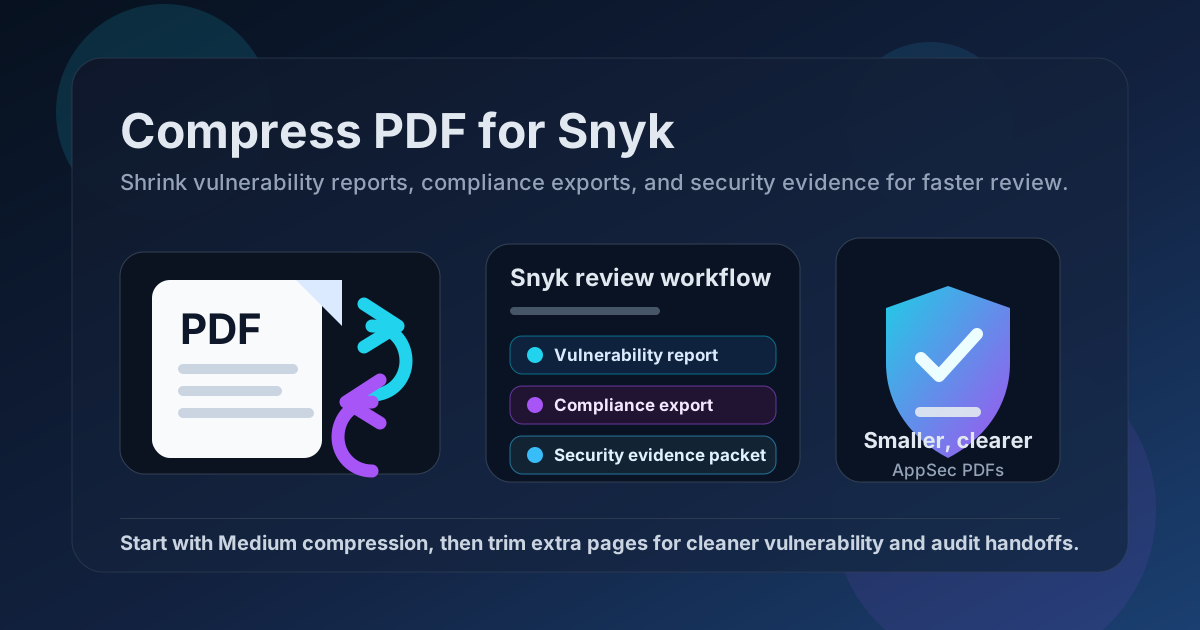
Table of contents
- Quick start: compress a PDF for Snyk in under a minute
- Why compress PDFs before using them in Snyk workflows?
- What size should a Snyk-friendly PDF be?
- Which compression level should you choose?
- Step-by-step: shrink a PDF with LifetimePDF
- Common Snyk PDFs that benefit from compression
- What if the PDF is still too large?
- How to keep Snyk documents readable
- Workflow habits that keep AppSec PDFs cleaner
- Related LifetimePDF tools and internal links
- FAQ (People Also Ask)
Quick start: compress a PDF for Snyk in under a minute
If your goal is simply make this Snyk PDF smaller so it is easier to share, reopen, and review, keep it straightforward:
- Open Compress PDF.
- Upload the vulnerability report, compliance export, policy review, executive summary, or audit evidence packet.
- Start with Medium compression.
- Download the smaller version and zoom in on the tiniest package names, version numbers, CVEs, fix recommendations, screenshots, and table cells.
- If it is still too large, use Extract Pages, Delete Pages, or Split PDF instead of repeatedly crushing the whole file.
That usually works because the biggest gains come from two moves together: reasonable compression and tighter scope. Most recipients do not need every appendix page, every duplicate screenshot, or every alternate export bundled into one oversized PDF.
Why compress PDFs before using them in Snyk workflows?
Snyk documents matter most when someone can act on them quickly. A developer may need a lighter issue summary in a ticket. An AppSec lead may need a smaller evidence packet for audit preparation. A compliance reviewer may need a PDF that opens quickly without losing the exact control language or issue counts. Smaller PDFs reduce friction in all of those moments.
- Faster sharing: lighter PDFs move more easily through tickets, chat threads, review portals, and vendor questionnaires.
- Cleaner remediation handoffs: developers can open and scan the report faster when it is not bloated with unnecessary pages.
- Smoother audit prep: evidence packets are easier to circulate when they stay focused and reasonably sized.
- Better mobile and browser review: smaller files feel less painful when someone is reviewing them away from a full desktop setup.
- Less duplication pain: once a PDF gets forwarded between teams, every extra megabyte gets paid for again and again.
This matters especially when the same report travels between engineering, security, compliance, and management. Each audience usually needs the same core findings, not every raw export that was available at the start.
What size should a Snyk-friendly PDF be?
There is no single perfect number, but practical size targets help. For most Snyk workflows, aim for a file that opens quickly and still preserves the details people use to make decisions.
| PDF type | Good practical target | What to watch closely |
|---|---|---|
| Short vulnerability review | Under 2MB | Package names, CVEs, fix versions, and severity labels |
| Normal audit or compliance packet | Under 5MB | Control mappings, evidence notes, and issue summaries |
| Screenshot-heavy review deck | 5MB to 10MB if needed | Small interface text and callouts in screenshots |
| Large export with appendices | Trim before targeting size | Repeated pages, duplicate screenshots, and irrelevant detail |
Those are not hard limits. They are useful working targets. If a file needs to be larger to stay trustworthy, keep it larger. A readable PDF that answers the right question is more useful than a tiny PDF that makes issue details hard to verify.
Which compression level should you choose?
The best compression level depends on what is inside the PDF. Some Snyk files are mostly text and tables. Others are packed with screenshots, exported dashboards, or pasted interface captures. Start in the middle, then move up or down based on the kind of PDF you actually have.
Low compression
Use Low when the PDF contains tiny package names, version strings, code snippets, CVE references, remediation instructions, dense issue tables, or screenshots where small interface text still matters. This is the safer choice for files that someone may inspect closely later.
Medium compression
Use Medium for most everyday Snyk PDFs. It usually trims enough file size to make sharing easier while preserving the details that help the next reviewer understand the findings. For vulnerability summaries, compliance exports, and policy review packets, this is the best place to begin.
High compression
Use High when the file is mostly scans, repeated screenshots, bulky appendices, or a long packet where the smallest possible size matters more than perfect sharpness. Always review the result carefully before you send it onward.
Step-by-step: shrink a PDF with LifetimePDF
Here is a simple workflow that works well for most Snyk documents:
- Open the compressor: go to LifetimePDF Compress PDF.
- Upload the file: choose the vulnerability report, audit packet, policy summary, or evidence bundle you need to share.
- Select Medium compression: this is usually the safest balance between readability and smaller file size.
- Download the result: save the smaller copy and compare it with the original.
- Zoom in on the small stuff: check CVEs, dependency names, fix recommendations, timestamps, screenshots, notes, and any tables with dense detail.
- Trim if necessary: if the file is still larger than you want, remove extra pages or split the document instead of pushing compression harder.
That last step matters more than people expect. Structural cleanup usually protects clarity better than trying to solve every size problem with stronger compression alone.
Common Snyk PDFs that benefit from compression
Not every file needs the same treatment, but these are the ones most likely to benefit:
- Vulnerability reports: often filled with issue tables, package details, screenshots, and remediation notes.
- Compliance exports: useful for audits, internal reviews, and customer security requests.
- Policy review packets: easier to circulate when findings and exceptions are packaged into a lighter file.
- Audit evidence bundles: common when security teams need to show program maturity without sending every raw export.
- Executive recaps: better when they open quickly and do not bury the key findings in excess weight.
- Screenshot-heavy remediation notes: much easier to share when duplicate pages and oversized captures are trimmed first.
If a document is meant to answer one question for one audience, it usually should not carry every extra appendix page with it. Compression works best when the scope of the file is already disciplined.
What if the PDF is still too large?
If the file is still too large after a reasonable compression pass, the next move is usually not stronger compression. It is better cleanup.
- Use Extract Pages to share only the pages a reviewer actually needs.
- Use Delete Pages to remove blank pages, duplicated screenshots, and unnecessary appendices.
- Use Split PDF to break one long packet into smaller, cleaner files.
- Use Crop PDF if scanned pages carry oversized margins or wasted space.
- Use Redact PDF if the recipient does not need every internal note or identifier.
A smaller, better-scoped PDF is easier to trust than a heavily compressed file where the important details look fuzzy.
How to keep Snyk documents readable
The main risk with compression is not that the file stops opening. It is that the content still opens, but the useful detail becomes harder to trust at a glance.
- Check the smallest text first: package names, version strings, CVEs, fix versions, policy labels, and screenshot callouts reveal quality problems quickly.
- Review any dense tables: if rows blur together, step back to a lighter compression level.
- Be careful with screenshots: dashboard captures, dependency trees, and interface exports tend to soften faster than plain text pages.
- Keep an original copy: compress the shareable version, not the only authoritative version.
- Trim before you over-compress: fewer relevant pages often beats a much stronger setting.
Workflow habits that keep AppSec PDFs cleaner
The easiest way to keep Snyk PDFs manageable is to stop unnecessary weight before it accumulates.
- Export a focused project, policy, repository, or time range instead of a broad one if the recipient only needs one slice of the story.
- Bundle one review purpose per PDF instead of mixing remediation notes, raw exports, and leadership recaps together.
- Keep supporting screenshots only when they clarify the issue or prove the result.
- Redact or trim material before distribution when external review does not require everything.
- Store the full source internally, then share a lighter working copy outward.
Those habits make later compression easier because the file starts cleaner. Compression is useful, but disciplined document scope is what keeps the workflow efficient.
Related LifetimePDF tools and internal links
Compressing a PDF for Snyk is often just one step in a broader AppSec documentation workflow. These tools pair well with it:
- Compress PDF - shrink file size for lighter sharing and faster review
- Extract Pages - share only the pages a developer, reviewer, or auditor actually needs
- Split PDF - break long evidence bundles into more manageable parts
- Delete Pages - remove blank or unnecessary pages before compression
- Crop PDF - trim empty scan margins and wasted space
- OCR PDF - make scanned audit material searchable
- Redact PDF - remove sensitive data before external sharing
- PDF Metadata Editor - clean file properties before wider distribution
- PDF Protect - add password protection to the final file
Suggested internal blog links
- Compress PDF Online
- Compress PDF for Wazuh
- Compress PDF for CrowdStrike Falcon
- Compress PDF for Splunk
- Compress PDF for IBM QRadar
- Compress PDF for Google SecOps
FAQ (People Also Ask)
1) How do I compress a PDF for Snyk?
Upload the file to a PDF compressor, choose a compression level, and download the smaller result. For most people, Medium compression is the best starting point because it keeps issue tables, package names, CVEs, screenshot text, and remediation notes readable while shrinking the file enough for smoother Snyk workflows.
2) What PDF size is best for Snyk reports?
A practical target is under 5MB for normal security and compliance work and under 2MB if you want especially fast previews and mobile-friendly sharing. If the file is still much larger than that, consider extracting only the necessary pages.
3) Should I use Low, Medium, or High compression for Snyk?
Use Low when tiny package names, version strings, code snippets, or detailed screenshots must stay sharp. Use Medium for most everyday vulnerability reports, compliance exports, policy packets, and internal security documentation. Use High for scan-heavy or image-heavy PDFs when file size matters more than perfect visual fidelity.
4) Will compression ruin Snyk screenshots or issue tables?
Usually not if you start with a moderate setting and review the result before replacing the original. The safest habit is to zoom in on the smallest CVE text, the busiest table, and any screenshot labels before you share the compressed copy.
5) What kinds of Snyk PDFs benefit most from compression?
Vulnerability reports, compliance exports, audit evidence packets, policy review PDFs, screenshot bundles, and executive recaps are all common candidates because they are often reopened, forwarded, or attached to tickets.
6) What if my PDF is still too large after compression?
Split the file into parts with Split PDF, or extract only the pages the reviewer actually needs. In many cases, sharing fewer pages works better than over-compressing the whole document.
Ready to shrink your PDF for Snyk?
Best Snyk workflow: Export -> Trim -> Compress -> Preview -> Share.
Published by LifetimePDF - Pay once. Use forever.