Compress PDF for Signal: Send Smaller Documents in Private Chats Without Losing Readability
To compress a PDF for Signal, upload the file to LifetimePDF's Compress PDF tool, start with Medium compression, and keep the smaller copy only after checking the smallest text, screenshots, signatures, and tables once.
For most Signal sharing, under 2MB feels fast on mobile, while 2MB to 5MB is usually comfortable for longer reports, forms, and scan-heavier PDFs that still need to stay readable.
Signal is often where people send the documents they care about a little more: signed forms, sensitive receipts, private records, travel paperwork, family documents, contract pages, and scans that do not belong floating around everywhere. That means the goal is not just smaller size for its own sake. The goal is a file that sends quickly, opens cleanly, and still feels trustworthy when the recipient taps it on a phone.
Fastest path: use LifetimePDF's Compress PDF tool at Medium, then extract or split the packet only if the result is still bulkier than the private chat actually needs.
Need the short version? Jump to Quick start: compress a Signal PDF in about 2 minutes.
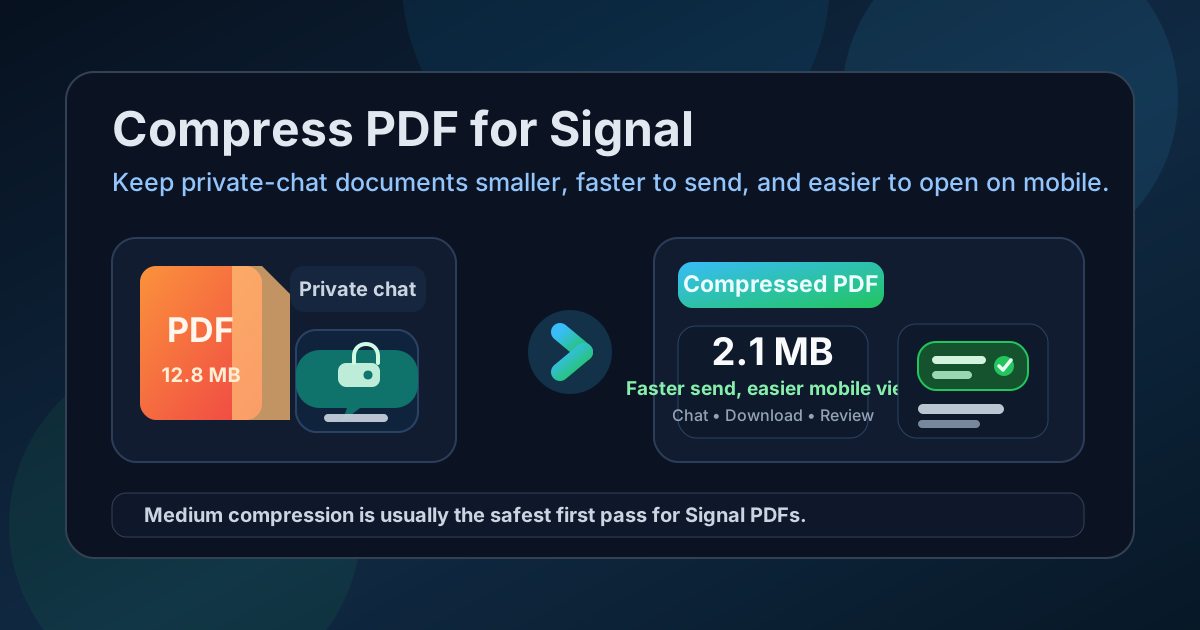
Table of contents
- Quick start: compress a Signal PDF in about 2 minutes
- Why smaller PDFs help in Signal chats
- What size should a Signal PDF be?
- Which compression level should you choose?
- Step-by-step: shrink a PDF with LifetimePDF
- Best approach for common Signal document types
- What to do if the PDF is still too large
- Privacy habits before you send the file
- Related LifetimePDF tools and useful reading
- FAQ (People Also Ask)
Quick start: compress a Signal PDF in about 2 minutes
If your real goal is simply make this PDF smaller so I can send it cleanly in Signal, this workflow is usually enough:
- Open Compress PDF.
- Upload the PDF you actually plan to send.
- Choose Medium compression first.
- Download the smaller copy and compare the new file size.
- Check the weakest details once: fine print, screenshots, signatures, form fields, totals, and the smallest useful text.
- If the packet is still bulky, use Extract Pages, Delete Pages, Split PDF, or Crop PDF before forcing stronger compression across the whole file.
Why smaller PDFs help in Signal chats
Signal sharing is often more personal and more deliberate than dropping a file into a random workspace. You may be sending a document to one person or a small group because the file is useful, sensitive, or time-critical. In those cases, file weight matters more than people expect. A bloated PDF takes longer to send, feels clumsy on mobile, and creates friction exactly when the conversation is supposed to feel simple.
Smaller PDFs help because they reduce the annoying parts without changing the purpose of the document. The right outcome is not the tiniest file possible. The right outcome is the smallest file that still preserves the details the recipient actually needs to read and trust.
Why compression usually pays off in Signal
- Faster sending: useful on mobile data, weaker Wi-Fi, or while moving between devices.
- Easier opening: the recipient is more likely to tap the file immediately if it does not feel heavy.
- Cleaner mobile review: many Signal PDFs get opened on phones first, not desktops.
- Less repeat friction: if the same file gets forwarded or resent, every unnecessary megabyte becomes repeated hassle.
- Better privacy hygiene: smaller, tighter packets encourage sending only what is necessary instead of dumping an oversized archive into chat.
What size should a Signal PDF be?
There is no single magic number for every Signal workflow, but practical target ranges keep you from over-compressing:
| Document type | Good target range | What to protect |
|---|---|---|
| Text-heavy forms, letters, receipts, invoices, and short contracts | About 0.5MB to 2MB | Names, dates, totals, signatures, footnotes, and the smallest text that still matters |
| Reports, proposals, travel packets, and mixed text-plus-image files | About 2MB to 5MB | Screenshots, tables, confirmation details, and form sections that need clear reading on mobile |
| Scanned packets, multi-page records, and image-heavy bundles | About 5MB to 10MB | Legibility, page order, and whether the whole packet really needs to travel together |
| Anything above 10MB | Usually needs cleanup first | At that size, repeated scans, huge borders, blank backs, or too much appendix material are often the real issue |
The right size depends on what the recipient must actually do with the file. If the PDF is only meant for quick reference, you can usually aim smaller. If it contains signatures, evidence, or fine print that needs careful reading, clarity deserves a little more room.
Which compression level should you choose?
Most quality problems begin when someone jumps straight to the strongest setting because the file looks larger than they want. That is how clean screenshots get mushy and small numbers become irritating to verify. In most Signal workflows, a measured approach works better:
- Low compression: useful when the PDF is already fairly clean and only needs a light trim without touching signatures, screenshots, or small text too much.
- Medium compression: the best default for most forms, receipts, records, proposals, letters, and mixed-content PDFs because it usually cuts size without hurting trust.
- High compression: best after you have already removed duplicate pages, cropped scan waste, or split an appendix and still need the file smaller.
Step-by-step: shrink a PDF with LifetimePDF
- Start with the version you will really send. Use the final file, not the draft that still includes outdated scans, blank pages, or attachments nobody needs.
- Open Compress PDF.
- Upload the file. This might be a receipt packet, signed form, travel document, private report, family record, quote, invoice, or scan bundle.
- Choose Medium compression first. It is the safest starting point for most Signal-bound PDFs.
- Download the smaller result. Check whether the file already feels easier to send and reopen.
- Preview the weak spots. Look at the smallest text, signatures, QR codes, screenshots, totals, and anything that already felt visually dense.
- Use structure fixes only if needed. If the PDF is still too heavy, remove duplicate pages, extract the useful section, split the appendix, or crop scan waste before trying a stronger setting.
Useful sequence: compress first, then clean the packet structure. In Signal workflows, oversized PDFs are often carrying too much baggage, not too little compression.
Best approach for common Signal document types
1. Receipts, invoices, and payment confirmations
These usually compress well because they are text-heavy and structurally simple. The main thing to protect is the exact information: totals, dates, merchant names, and confirmation numbers. One medium pass is often enough.
2. Signed forms, ID-related paperwork, and private records
Be a little conservative here. Signatures, stamped sections, fine print, and small form fields matter more than dramatic percentage savings. Compress once, then check the signature areas and the smallest text before sending.
3. Scan-heavy phone PDFs
These are where file size gets silly quickly. Shadows, borders, slightly crooked pages, and repeated backs of pages all add weight without adding value. A smarter workflow is usually to rotate, crop, delete, or split first, then compress the cleaned file.
4. Travel, legal, or medical packets
Ask whether the whole thing belongs in chat at once. If the recipient only needs one section, extract that portion instead of forcing an entire packet into one tiny PDF. Better document packaging often beats harsher compression.
5. Reports, screenshots, and mixed reference PDFs
These files often contain text, tables, screenshots, and visual callouts in the same packet. Compress moderately, then zoom in on the decision-carrying details: charts, totals, screenshots, and annotations.
What to do if the PDF is still too large
When a Signal PDF stays heavy after one reasonable compression pass, the issue is often structure rather than image density. Try these in order:
- Delete repeated or blank pages. This solves more than people expect.
- Extract only the pages the recipient needs. A focused packet is better than a giant archive drop in a private chat.
- Split the appendix. Keep the main document in one PDF and backup material in another.
- Crop empty borders and background. Scan waste adds size without adding value.
- Rebuild the source export. A cleaner original PDF often beats harsher compression every time.
- Only then try stronger compression. By that point, the file is usually leaner already.
Privacy habits before you send the file
Signal often gets used precisely because the document is not casual. That can include invoices, contracts, travel IDs, school records, legal paperwork, reimbursement proof, family documents, or internal notes. Compression helps with convenience, but judgment still matters.
- Share only what is necessary: use Extract Pages when the full packet would overshare context or private information.
- Redact before wider sharing: use Redact PDF if sensitive content should disappear permanently.
- Protect the final file if needed: PDF Protect can help when the document needs an extra barrier beyond the messaging layer.
- Clean metadata: remove author or document-property details with PDF Metadata Editor if privacy matters.
- Make scans searchable only when useful: if the document also needs easier review later, OCR PDF can improve usability after the size problem is handled.
Related LifetimePDF tools and useful reading
Signal document prep often turns into a few follow-on tasks. These tools usually pair well with compression:
- Compress PDF for the first size-reduction pass.
- Extract Pages when only part of the packet needs to travel.
- Delete Pages to remove duplicate or blank support pages.
- Split PDF when one file is doing two jobs at once.
- Crop PDF to trim dead scan borders.
- OCR PDF when a cleaned scan also needs searchable text.
If you want adjacent reading, these guides fit the same workflow family: Compress PDF for WhatsApp, Compress PDF for Telegram, Compress PDF for Discord, and How to Reduce PDF File Size for Email.
Bottom line: if the Signal PDF is too large, start with Medium compression, protect the details people actually need to read, and clean the packet structure before you force the file any harder.
FAQ (People Also Ask)
How do I compress a PDF for Signal?
Upload the PDF to a PDF compressor, start with Medium compression, and keep the smaller copy only after checking the smallest text, screenshots, signatures, and tables once. For most Signal sharing, Medium is the safest first move because it reduces file size without making the document feel rough.
What file size should I aim for before sending a PDF in Signal?
Under 2MB feels fast for everyday mobile sharing, while 2MB to 5MB is usually comfortable for longer reports, forms, proposals, and scan-heavier files that still need to stay readable. If the file is much larger than that, page cleanup often helps more than stronger compression alone.
Will compression make my Signal PDF blurry?
It can if you compress too aggressively, especially with phone scans, screenshots, signatures, or tiny print. That is why Medium compression is usually the best starting point and why a quick preview matters before you send the file onward.
Should I compress before or after extracting pages for Signal?
If you already know the recipient only needs part of the packet, extract those pages first and then compress the smaller PDF. If the entire packet really needs to travel together, compress once first and only restructure it if the result is still bulky.
What if my PDF is still too large after compression?
Delete repeated pages, crop scan borders, extract only the relevant section, or split one large packet into a main file plus appendix. In many Signal workflows, better document packaging solves more than harsher compression.
Published by LifetimePDF - Pay once. Use forever.