Compress PDF for ServiceNow: Keep Incident Attachments, Change Docs, and Knowledge PDFs Small Without Losing the Details
To compress a PDF for ServiceNow, upload the file to LifetimePDF's Compress PDF tool, start with Medium compression, and keep the smaller copy only if ticket numbers, screenshots, timestamps, approval notes, and tables still look clear.
For most ServiceNow workflows, under 2MB is a strong target for lightweight attachments, while incident evidence packs, change support files, and knowledge PDFs usually work best around 2MB to 5MB.
ServiceNow attachments tend to grow for boring, normal reasons. One PDF tries to serve triage, change review, knowledge reuse, audit history, and archive storage all at once. That is how a simple attachment turns into a bulky packet full of screenshots, scans, approvals, reference pages, and appendix material. The goal is not to crush everything into the tiniest possible file. The goal is to make the PDF light enough to move comfortably through ServiceNow while keeping the parts that still carry operational meaning.
Fastest path: run the ServiceNow PDF through LifetimePDF's Compress PDF tool on Medium, then do one quick readability check before you upload or replace the attachment.
Need the short version? Jump to Quick start: compress a ServiceNow PDF in under 2 minutes.
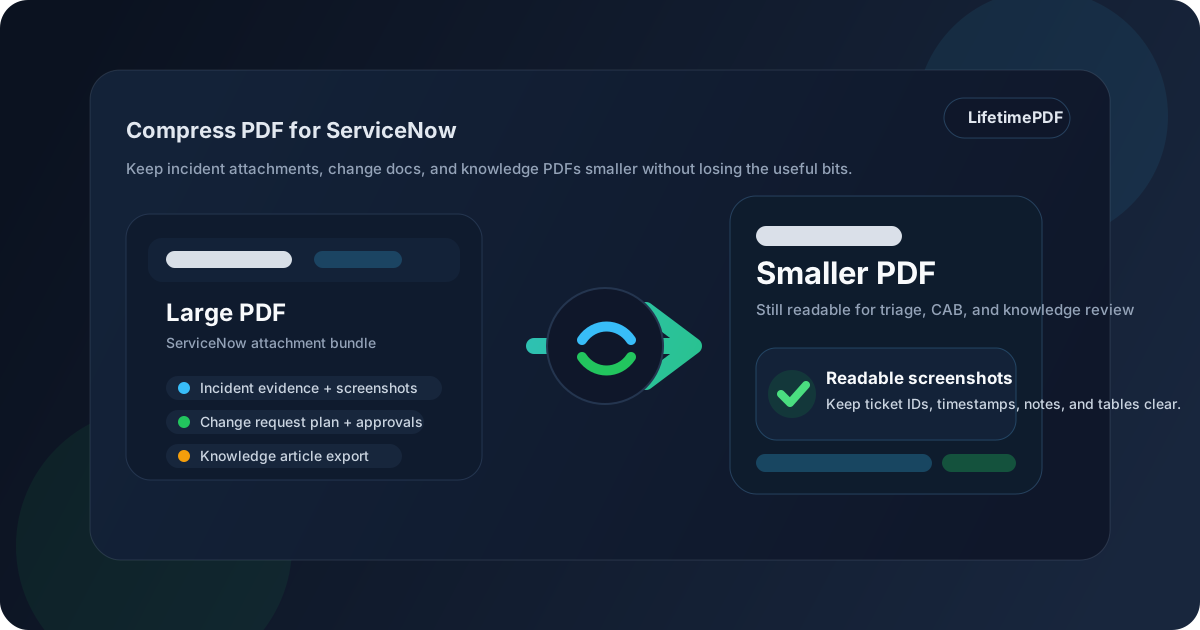
Table of contents
- Quick start: compress a ServiceNow PDF in under 2 minutes
- Why smaller PDFs matter in ServiceNow workflows
- What file size should you aim for?
- Which compression level should you choose?
- Step-by-step: shrink a ServiceNow PDF with LifetimePDF
- Best strategy for common ServiceNow PDF types
- What if the PDF is still too large?
- How to protect screenshot, table, and note readability
- Cleaner governance, privacy, and record-keeping habits
- Related LifetimePDF tools and useful reading
- FAQ (People Also Ask)
Quick start: compress a ServiceNow PDF in under 2 minutes
If your real goal is simply make this PDF smaller so it is easier to attach and review in ServiceNow, this workflow is usually enough:
- Start with the exact PDF you actually plan to attach in the incident, problem, change, request, or knowledge workflow.
- Open Compress PDF.
- Choose Medium compression first.
- Download the smaller copy and compare the size change.
- Open it once and check the weak spots: screenshot labels, timestamps, request numbers, signatures, table rows, and short comments.
- If the file is still bulkier than it should be, extract only the needed pages, crop scanner waste, or split appendix material before trying stronger compression.
Why smaller PDFs matter in ServiceNow workflows
ServiceNow records work best when the next person can understand them quickly. A PDF should help the record, not slow it down. When an attachment is larger than it needs to be, the cost is not only storage. The real cost is friction during triage, escalation, approvals, post-incident review, knowledge reuse, and audit follow-up.
That friction shows up in ordinary ways. An analyst opens the file later than they meant to because it feels heavy. A CAB reviewer skims instead of reading carefully. An on-call engineer checks the attachment from a phone and gets a clumsy experience. A knowledge export becomes less reusable because the PDF is packed with extra screenshots and stale appendix pages. Compression helps because it removes some of that drag. Cleanup helps even more because many ServiceNow PDFs are oversized for structural reasons, not just image reasons.
Why lighter ServiceNow PDFs usually work better
- Faster uploads: useful during active incidents or time-sensitive changes.
- Smoother review: approvers and stakeholders are more likely to open lighter files immediately.
- Better mobile access: smaller attachments are friendlier for on-call staff.
- Cleaner records: the attachment feels like support material, not a separate project.
- Easier re-sharing: the same PDF often moves into email, chat, audit folders, and documentation later.
What file size should you aim for?
There is no single perfect number for every ServiceNow PDF, but a few practical ranges keep you from compressing harder than necessary:
| PDF type | Good target | Why it helps |
|---|---|---|
| Short approvals, lightweight ticket attachments, and simple knowledge handouts | Under 2MB | Great for quick sharing, mobile review, and low-friction handoffs |
| Most incident evidence packs, change documents, runbooks, and knowledge exports | 2MB to 5MB | Usually the best balance between readability and convenience |
| Screenshot-heavy, scan-heavy, or appendix-heavy packets | 5MB to 8MB if needed | Still workable, but often worth splitting or trimming if several people will open it repeatedly |
| Over 8MB | Compress again or clean the structure | Often a sign the packet includes more pages or image weight than the record actually needs |
These are comfort targets, not hard rules. If the file exists mainly for quick review, lighter feels better. If it contains tiny tables, detailed architecture diagrams, or screenshot evidence that may be revisited during an audit, preserving clarity matters more than chasing the smallest number.
Which compression level should you choose?
LifetimePDF keeps the choice simple: Low, Medium, or High. For ServiceNow, the real question is not technical perfection. It is whether the attachment becomes easier to use while still keeping the information people depend on.
Low compression
- Best when tiny labels, dense tables, architecture diagrams, or signature blocks must stay especially crisp.
- Useful for formal approval documents, governance packs, and visual evidence with fine detail.
- Usually not the best first pass if the file is obviously heavier than it should be.
Medium compression
- Best starting point for most ServiceNow workflows.
- Reduces size meaningfully while keeping screenshots, notes, comments, tables, and normal scan text readable.
- Good for incidents, changes, problem records, runbooks, knowledge exports, and CAB support files.
High compression
- Useful when the file is still too heavy after cleanup.
- More likely to soften small screenshot text, scan detail, or narrow table columns.
- Best used after you have already removed blank pages, appendix material, or oversized margins.
Step-by-step: shrink a ServiceNow PDF with LifetimePDF
This workflow works well for most operational attachments:
- Open Compress PDF.
- Upload the final PDF you actually plan to attach.
- Choose Medium compression.
- Download the smaller result and compare the size reduction.
- Review the smallest useful details once at normal zoom.
- If the file is still too large, use Extract Pages, Split PDF, Delete Pages, or Crop PDF before compressing harder.
That last step matters more than it sounds. Many oversized ServiceNow PDFs do not need harsher compression as much as they need less dead weight. If half the file is old appendix content, repeated covers, or scanner waste, removing that bulk usually works better than degrading every page equally.
When compression alone is not enough: clean the file structure before you go stronger.
Best strategy for common ServiceNow PDF types
Incident evidence packs
These usually combine screenshots, exported logs turned into PDF, timeline notes, and comparison pages. Medium compression is normally the safest start. Watch the smallest labels, timestamps, and annotations because those are the details that stop being useful first when quality drops too far.
Change requests and CAB support files
These often need to feel polished while still being quick to open. Keep rollback notes, implementation steps, approval fields, and signatures readable. If one packet mixes summary pages with bulky appendix evidence, splitting it often works better than pushing compression harder.
Knowledge article exports and SOP PDFs
These are usually text-heavy with a few screenshots, which means they often compress well. Medium compression is often enough to make them lighter without hurting readability. If the document still feels heavy, the usual culprit is repeated images or exported sections people do not need.
Vendor documents, approvals, and scanned forms
These pages often behave more like images than documents. Use OCR PDF if you also want searchable text, and crop blank scanner borders before relying on stronger compression.
Problem reviews and post-incident summaries
These PDFs may be reopened weeks or months later. That makes readability important. A smaller file is useful, but the better target is a clean review copy that still makes conclusions, evidence, and action items easy to confirm without extra digging.
What if the PDF is still too large?
If one pass of compression is not enough, do not immediately jump to the harshest setting. Usually the better fix is structural:
- Extract only the useful pages: ideal when the record only depends on one section.
- Split the appendix: keep the summary light and move backup evidence into a second PDF.
- Delete repeated pages: duplicate covers, old revisions, and stale support sections add bulk fast.
- Crop scanner and screenshot waste: thick borders and empty space increase size without adding meaning.
- Redact before sharing: use Redact PDF if the smaller copy also needs safer distribution.
How to protect screenshot, table, and note readability
The file is only better if it still works. Before you replace the original, check the details most likely to break:
- screenshot labels and tiny UI text
- ticket numbers, request IDs, and timestamps
- small tables, row labels, and approval fields
- signatures, initials, and scanned handwritten notes
- annotations, callouts, and root-cause comments
- the busiest screenshot or faintest scan in the packet
A quick review at ordinary laptop zoom is usually enough. If the smallest important detail is still easy to trust, the file is probably compressed enough.
Cleaner governance, privacy, and record-keeping habits
Compressing a PDF is also a good moment to make the file cleaner and safer. Large attachments often contain more than the record actually needs: extra appendix pages, document metadata, personal details, or scanned background clutter. ServiceNow records are easier to maintain when the shared copy is intentional.
- Keep a master plus a shared copy: one file can stay fuller for archive while the lighter version handles daily review.
- Redact sensitive content first: use Redact PDF when information should be permanently removed.
- Protect sensitive attachments: use PDF Protect when the file needs a password.
- Clean document properties: use PDF Metadata Editor if hidden title, author, or keyword fields matter.
- Use OCR on scans: searchable PDFs are easier to revisit later.
Useful cleanup stack: extract the right pages, compress once, then redact, OCR, or protect only if the workflow needs it.
Related LifetimePDF tools and useful reading
If ServiceNow is part of your normal document workflow, these tools and articles pair well with this guide:
- Compress PDF for the first size reduction pass.
- Extract Pages when only part of the document matters.
- Split PDF for long packets with summaries and appendices.
- Delete Pages to remove duplicate or outdated support sections.
- Crop PDF to trim scanner or screenshot waste.
- PDF Metadata Editor for cleaner document properties.
- Compress PDF for ServiceNow: Upload Smaller Incident Attachments and Knowledge Docs Faster for the broader companion guide.
- Compress PDF for ServiceNow Without Monthly Fees if pricing model is part of the search.
- Compress PDF for Jira Service Management, Compress PDF for Slack, and Compress PDF for Adobe Workfront if the same PDF also moves through other operational tools.
- Compress PDF Online Free, How to Reduce PDF File Size for Email, and Compare PDF Versions Online for related workflows.
Bottom line: for most ServiceNow PDFs, start with Medium compression, review the smallest useful details once, and trim page weight before you use stronger compression.
FAQ (People Also Ask)
How do I compress a PDF for ServiceNow?
Upload the PDF to LifetimePDF's Compress PDF tool, start with Medium compression, download the smaller copy, and keep it only if screenshots, timestamps, approval notes, and tables still read clearly. Medium is usually the safest first pass because it reduces size without making the attachment frustrating to review.
What file size should I aim for with ServiceNow PDFs?
Under 2MB works well for lightweight attachments and quick mobile review. Incident evidence packs, change documents, knowledge exports, and CAB support files usually land best around 2MB to 5MB as long as the smallest useful details still read clearly.
Will compression make ServiceNow screenshots blurry?
It can if you compress too aggressively. That is why Medium compression is usually the best starting point. Always check screenshot labels, timestamps, table rows, signatures, and annotations before you keep the smaller file.
Should I extract pages before attaching a large PDF in ServiceNow?
Usually yes when the record only depends on one section. A tighter PDF uploads faster, is easier for analysts and approvers to review, and often protects readability better than forcing heavy compression across a long packet full of irrelevant pages.
Which LifetimePDF tools help most with ServiceNow attachments?
Compress PDF is the main starting point. Extract Pages, Split PDF, Delete Pages, Crop PDF, OCR PDF, Redact PDF, PDF Protect, and PDF Metadata Editor are especially useful when you want a smaller, cleaner, and safer attachment for ServiceNow workflows.