Compress PDF for SerpWatch Without Monthly Fees: Shrink Rank Tracking Reports, Keyword Snapshots, and Client PDFs Without Another Subscription
If you need to compress a PDF for SerpWatch without monthly fees, export the report, upload it to LifetimePDF's Compress PDF tool, start with Medium compression, and keep the smaller copy only if keyword tables, chart labels, tags, and notes still read cleanly.
For most SerpWatch workflows, that is enough to shrink rank tracking snapshots, white-label recaps, and client PDFs without adding one more recurring subscription to the SEO stack.
SerpWatch already did the expensive part: it collected the rankings, grouped the keywords, and surfaced the movement you need to discuss. The PDF step should stay practical. Usually you are not trying to buy a new reporting system. You are trying to make the report lighter so it uploads faster, opens more smoothly, and feels easier to send to a client, strategist, or founder. That is exactly why a pay-once PDF workflow fits better than renting another tool forever just to trim the final export.
Fastest path: run the SerpWatch export through LifetimePDF's Compress PDF tool at Medium, then split or extract pages only if the report still carries more file weight than the next reader actually needs.
In a hurry? Jump to Quick start: compress a SerpWatch PDF in under 2 minutes.
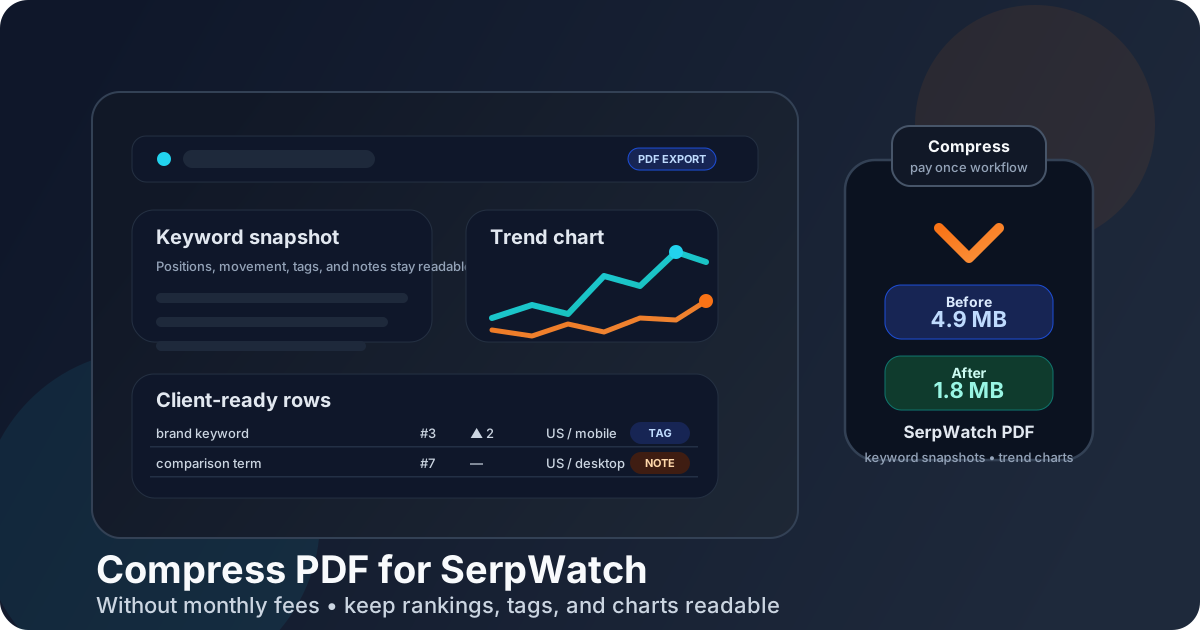
Table of contents
- Quick start: compress a SerpWatch PDF in under 2 minutes
- Why "without monthly fees" matters here
- SerpWatch vs. SERPWatcher: quick naming check
- Why smaller PDFs help in SerpWatch workflows
- What file size should a SerpWatch PDF be?
- Which compression level should you choose?
- Step-by-step: use LifetimePDF to shrink the file
- Best approach for common SerpWatch PDFs
- What to do if the PDF is still too large
- How to keep rankings, tags, and charts readable
- Related LifetimePDF tools and useful reading
- FAQ (People Also Ask)
Quick start: compress a SerpWatch PDF in under 2 minutes
If your real goal is simply make this SerpWatch PDF smaller so it is easier to send, this workflow is usually enough:
- Export the SerpWatch file you actually plan to share, whether that is a keyword snapshot, tagged ranking recap, scheduled report, white-label update, or client-ready SEO summary.
- Open Compress PDF.
- Upload the file and choose Medium compression first.
- Download the smaller result and compare the new size.
- Preview the details that matter most: keyword rows, ranking positions, movement markers, chart legends, date ranges, tags, and summary notes.
- If the report is still bulky, use Extract Pages, Split PDF, or Delete Pages before forcing stronger compression across the whole export.
Why "without monthly fees" matters here
This is finish-line work. The analysis already happened. Somebody tracked rankings, grouped keywords, compared devices or locations, and turned the result into something worth sharing. Paying forever just to make that export smaller is hard to justify.
SEO teams already pay for research tools, crawlers, content platforms, dashboards, and client communication software. When the last task is simply make this report easier to upload or email, another recurring bill usually feels like overhead instead of value. A pay-once workflow matches the job better because the job itself is small, specific, and practical.
That matters even more because many SerpWatch PDFs are one-time artifacts. A strategist needs a clean snapshot before a call. An agency needs a lighter white-label report for a client portal. A founder needs a rankings recap that opens quickly on mobile. None of those moments really calls for another subscription whose only role is shrinking the final document.
Simple logic: if the rankings are already tracked and the only remaining job is making the exported PDF easier to share, a pay-once PDF workflow usually fits better than a monthly add-on.
SerpWatch vs. SERPWatcher: quick naming check
These tool names are easy to mix up, so it is worth being explicit. This article is about SerpWatch. If you actually use SERPWatcher, that is a different product and LifetimePDF already has a dedicated guide for it.
That distinction matters because the reporting layout, the labels readers expect, and the way you package client updates can differ from tool to tool. If you came here by mistake, use Compress PDF for SERPWatcher Without Monthly Fees instead. If you are in the right place, keep going.
Why smaller PDFs help in SerpWatch workflows
SerpWatch exports rarely stay inside the dashboard. They get shared in client updates, Slack threads, executive summaries, internal SEO reviews, and archived reporting folders where somebody wants a fixed snapshot instead of a live tool. Heavy PDFs slow all of that down.
Smaller files remove friction without changing the ranking story. A lighter report is easier to upload, easier to forward, and easier to open when someone only needs the topline movement. The key is reducing file size without harming the parts that make the PDF useful in the first place.
- Faster sharing: lighter reports move more smoothly through email, client portals, and chat.
- Easier review: smaller PDFs open more quickly when a strategist or client just needs the main update.
- Cleaner archiving: compact exports are less annoying to store across monthly reporting folders.
- Less delivery friction: the easier the file is to open, the more likely the reader actually sees the ranking story on time.
The biggest file-size problems usually come from oversized white-label covers, repeated screenshots, mixed desktop-and-mobile appendices, or one bulky PDF trying to serve several audiences at once. Compression helps, but it works best when you pair it with a little cleanup.
What file size should a SerpWatch PDF be?
There is no single perfect number, but practical targets help. For short keyword snapshots, quick team updates, and focused client check-ins, under 2MB is a strong goal. For broader rank tracking recaps, white-label packs, and appendix-heavy monthly reports, 2MB to 5MB is usually more realistic as long as keyword rows, chart labels, and notes still read clearly.
| SerpWatch PDF type | Practical target | What to protect |
|---|---|---|
| Short snapshots and fast client updates | < 2MB | Keyword rows, positions, date ranges, and takeaways |
| Weekly rank recaps and tagged keyword reports | 2MB to 4MB | Trend labels, tags, device cues, and summary notes |
| White-label reporting packs and appendix-heavy exports | 3MB to 5MB | Charts, branded summary pages, and backup context people may reference later |
You do not win by chasing the tiniest file possible. You win when the next reader can open the PDF quickly and still trust what they are seeing. If positions, trend labels, or notes become annoying to read, the file is too compressed even if the size number looks impressive.
Which compression level should you choose?
For SerpWatch exports, Medium compression is usually the right first move. It often cuts enough file weight while keeping keyword tables, trend charts, tags, and notes readable.
- Low compression: useful when the report is already close to your size target and you only need a small reduction.
- Medium compression: best default for most keyword snapshots, weekly recaps, and client-ready ranking PDFs.
- High compression: only worth trying when file size matters more than polish, and only after you confirm the smallest labels still work.
In practice, people often get better results by starting at Medium and then trimming extra pages if the file is still too large. That usually beats hitting the whole report with a harsher setting right away.
Step-by-step: use LifetimePDF to shrink the file
- Export the right PDF first. Do not start with the largest report if the audience only needs the main snapshot.
- Open the compressor. Go to LifetimePDF Compress PDF.
- Upload the SerpWatch file. This might be a keyword snapshot, tagged group recap, white-label ranking update, device comparison, or scheduled report export.
- Choose Medium compression. That is the safest first pass for most SEO reporting documents.
- Download and review. Compare the old and new size, then check legibility on the smaller file.
- Trim or clean only if needed. If the file is still too large, split the appendix, extract only the summary, or remove repeated pages before trying a harsher compression setting.
The review step matters. Open the compressed file once before sending it. Look at the smallest keyword row, the chart legend with the least space, the date range, any ranking movement markers, and the short notes that explain why visibility changed. If those still feel readable at normal size, you are probably done.
Best approach for common SerpWatch PDFs
Keyword snapshots
These usually compress well. What matters most is preserving keyword rows, the current position, and any grouping or tagging that makes the snapshot usable later. Medium compression is normally enough.
Weekly or monthly rank recaps
These often carry more charts, more date context, and more commentary. Keep the core recap together, but consider splitting long appendices into a second file if the report starts feeling bloated.
White-label client reports
Client-facing files need to feel polished. That means a slightly larger file is often fine if it preserves charts, headers, and the short written takeaways that help the report feel finished.
Desktop-versus-mobile comparisons
When one PDF mixes several views, the file can grow fast. If the reader only needs one lens right now, extract the relevant pages instead of carrying extra sections everywhere.
Archive copies
Archive versions should be lighter, but still readable enough to answer questions later. Preserve the pages that explain the date range, keyword scope, and main ranking movement, then cut stale cover pages and repeated support material.
What to do if the PDF is still too large
If Medium compression does not get you where you need to be, do not jump straight to aggressive compression. Usually a better answer is removing file weight that is not helping the reader.
- Extract only the summary or decision-making pages.
- Split long report packs into a main report and a backup appendix.
- Delete duplicate screenshots, oversized cover pages, and stale sections.
- Crop wasted white space or oversized exported margins.
- Clean metadata before sending the report outside your team.
You can handle those cleanup steps with Extract Pages, Delete Pages, Split PDF, Crop PDF, and PDF Metadata Editor.
How to keep rankings, tags, and charts readable
A good compressed SerpWatch PDF still feels dependable. Before you share it, check the parts most likely to suffer:
- keyword rows and current ranking positions
- movement markers, trend labels, and chart legends
- tag names, group labels, and filter cues
- date ranges and device or location context
- short notes that explain what changed
- client-facing conclusion pages that people may quote later
If any of those become hard to read at a normal zoom level, back off. A slightly larger file is usually the better business choice than a smaller one that makes the ranking story harder to trust.
Related LifetimePDF tools and useful reading
If you want a cleaner workflow around this article, these tools and guides fit naturally:
- Compress PDF for the main size-reduction step.
- Extract Pages when the reader only needs the summary.
- Split PDF when one ranking report contains both the main story and a bulky appendix.
- Delete Pages for repeated exports, stale covers, and unnecessary support pages.
- Crop PDF for wasted margins.
- Compare PDFs when you need to verify what changed between report drafts.
- Compress PDF for SERPWatcher Without Monthly Fees if you meant the similarly named Mangools product.
- Compress PDF for AccuRanker Without Monthly Fees for another dedicated rank-tracking workflow.
- Compress PDF for RankWatch Without Monthly Fees for a close ranking-report companion.
- Compress PDF for TrueRanker Without Monthly Fees if your stack mixes several trackers.
- Compress PDF for Advanced Web Ranking Without Monthly Fees for a broader enterprise rank-tracking workflow.
Want the simplest setup? Use LifetimePDF for the compression step, then keep Split PDF, Extract Pages, and Delete Pages nearby for reporting packs that combine a client-facing summary with a bulky appendix.
FAQ (People Also Ask)
How do I compress a PDF for SerpWatch without monthly fees?
Upload the SerpWatch export to a pay-once tool like LifetimePDF, start with Medium compression, and review the smaller file before you share it. If the PDF is still too bulky, split or extract only the pages the next reader actually needs instead of over-compressing the whole export.
What file size should I aim for with SerpWatch PDFs?
Under 2MB is a strong target for short keyword snapshots and focused updates. Broader ranking recaps, white-label client packs, and appendix-heavy exports usually work better around 2MB to 5MB as long as the smallest useful labels still read clearly.
Will compression make SerpWatch charts or keyword tables blurry?
It can if you compress too aggressively. Medium compression is usually the safest first pass because it reduces file size while preserving keyword rows, chart labels, tags, date ranges, and summary notes.
Is SerpWatch the same as SERPWatcher?
No. The names are similar, but they are different products. This page is specifically about SerpWatch. If you meant SERPWatcher, use the separate LifetimePDF guide for that tool so the workflow matches the right report format.
Why look for a SerpWatch PDF workflow without monthly fees?
Because the useful SEO work already happened before the export. If you already pay for rank tracking and the rest of your SEO stack, another recurring bill just to shrink PDFs rarely feels justified.
Published by LifetimePDF - Pay once. Use forever.