Compress PDF for Scrive: Make Contracts and Signer Packets Smaller Without Hurting Readability
To compress a PDF for Scrive, upload the final contract or signer packet to LifetimePDF's Compress PDF tool, start with Medium compression, and keep the smaller copy only if names, dates, initials, signature areas, and fine print still look clean.
For most Scrive-ready text-heavy files, under 2MB is a strong target, while scan-heavy annexes and supporting PDFs usually work best around 2MB to 5MB.
Scrive workflows usually slow down when the document itself becomes the friction point. A bloated signer packet takes longer to upload, feels clumsy on mobile, and makes teams or customers wait on a file that should have been easy to review. Good compression fixes that without turning a contract, order form, or signed annex into something fuzzy, risky, or hard to trust.
Fastest path: run the Scrive file through LifetimePDF's Compress PDF tool on Medium, then do one quick readability check before you send the lighter copy.
Need the short version? Jump to Quick start: compress a Scrive PDF in under 2 minutes.
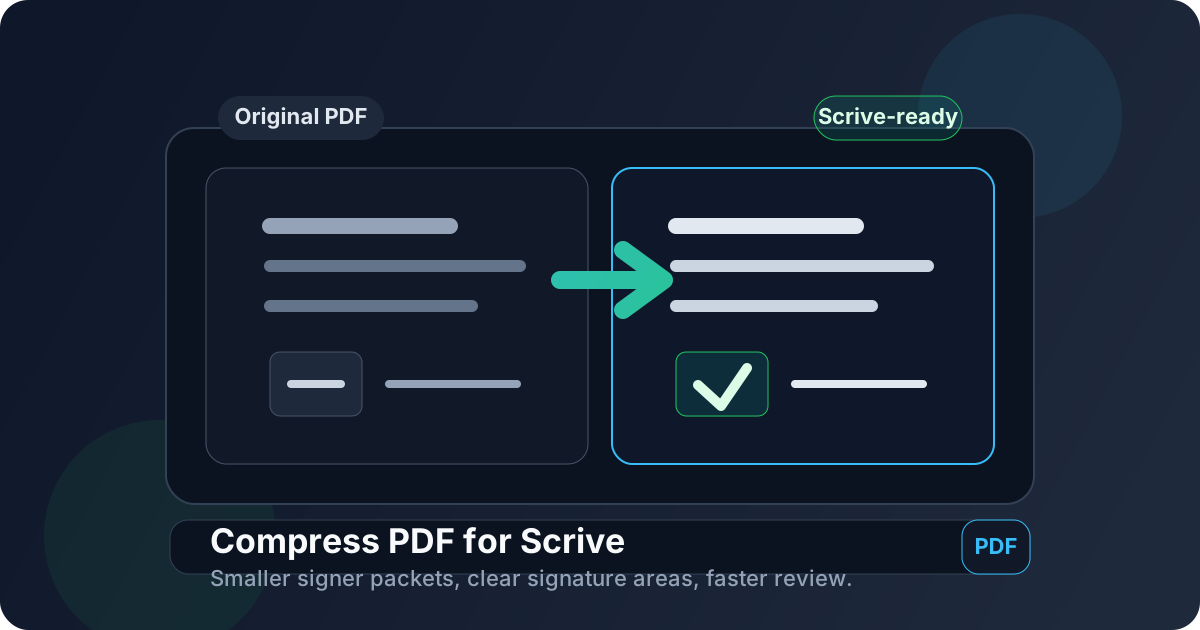
Table of contents
- Quick start: compress a Scrive PDF in under 2 minutes
- Why smaller PDFs help in Scrive workflows
- What file size should you aim for?
- Which compression level should you choose?
- Step-by-step: shrink a Scrive PDF with LifetimePDF
- Best strategy for common Scrive file types
- What if the PDF is still too large?
- How to keep signer-facing details readable
- Scrive prep habits that keep files cleaner
- Related LifetimePDF tools and useful reading
- FAQ (People Also Ask)
Quick start: compress a Scrive PDF in under 2 minutes
If your real goal is simply make this PDF smaller so it is easier to send through Scrive, this workflow is usually enough:
- Open Compress PDF.
- Upload the final contract, approval form, onboarding packet, signed annex, scanned attachment, or supporting PDF you plan to send.
- Choose Medium compression first.
- Download the smaller result and compare the new size with the original.
- Open it once and check the details that matter most: signer names, dates, initials, checkboxes, signature areas, totals, and any fine print.
- If the file is still bulkier than it should be, use Delete Pages, Extract Pages, or Crop PDF before trying stronger compression.
Why smaller PDFs help in Scrive workflows
Scrive documents are rarely casual files. They are agreements, quote approvals, consent forms, HR packets, procurement paperwork, and signer-ready bundles that people need to open quickly and trust immediately. In that kind of workflow, extra file weight rarely adds value. It usually just adds delay.
Smaller PDFs upload faster, preview more smoothly, and feel easier to handle on mobile. That matters even more when the file started as a scan, includes photo-heavy appendices, or picked up bloat after several rounds of exporting, printing, rescanning, and merging. Compression helps because it removes that drag. The trick is to cut size without making the document look soft, sloppy, or risky to sign.
Why lighter Scrive PDFs usually work better
- Faster sending: useful when you need to replace a packet or resend a corrected file quickly.
- Better mobile review: many signers first open an agreement on a phone.
- Less friction for internal review: smaller files are easier for legal, sales, HR, procurement, or operations teams to check before they go out.
- Better scan behavior: scan-heavy PDFs often carry much more image weight than they need.
- Cleaner downstream work: smaller files are easier to archive, compare, merge, split, and resend later.
What file size should you aim for?
There is no single magic number for every Scrive upload, so practical ranges are more useful than perfection. You want a file that sends cleanly, opens quickly, and still looks professional when someone is reviewing terms or adding a signature.
| Document type | Practical target | Why it works |
|---|---|---|
| Text-heavy contract, NDA, or agreement | < 1MB to 2MB | Usually enough for everyday signer packets that should upload and open fast |
| Quote approval, form, or mixed-content PDF | 1MB-3MB | Leaves room for tables, fields, and moderate visuals without feeling bulky |
| Scanned annex or image-heavy bundle | 2MB-5MB | Gives scan-heavy pages enough room while still keeping the file manageable |
| Over 5MB | Usually needs cleanup | At that point, trimming pages or fixing scan waste often works better than compressing harder |
Which compression level should you choose?
The right setting depends more on what is inside the PDF than on the platform name. Start with the gentlest option that gets the file into a practical range.
Low compression
Use Low when the PDF already looks clean and only needs a small reduction. This is a good fit for text-first agreements, short order forms, or polished exports that already read well.
Medium compression
Medium is usually the best default for Scrive. It tends to remove a meaningful amount of size while keeping names, dates, signature areas, initials, and fine print readable. For most real signer packets, this is the first setting worth trying.
High compression
High can help with bulky scans or image-heavy bundles, but it deserves a careful review afterward. If the smallest text starts to look soft or thin, it is usually better to clean the source or trim unnecessary pages than to keep pushing the file harder.
Step-by-step: shrink a Scrive PDF with LifetimePDF
- Start with the final signer-ready file. Work from the exact version you plan to send, not from an old draft or a temporary export.
- Open Compress PDF. Upload the contract, form, quote approval, onboarding packet, or supporting PDF.
- Choose Medium compression. This is the safest first pass for most Scrive workflows.
- Download the smaller copy. Compare the result with the original file size.
- Open the compressed file once. Check signer names, dates, totals, initials, checkbox areas, signature lines, and any small legal text.
- Replace the bulky original only if the result still looks trustworthy. If not, clean the file structure first instead of simply pushing harder compression.
Best strategy for common Scrive file types
Contracts, NDAs, and standard agreements
These are usually text-heavy and compress well. A clean export can often land under 2MB without any visible downside. Start with Medium and only go stronger if the original file is clearly carrying unnecessary weight.
Quote approvals, order forms, and sales paperwork
These often include tables, small totals, or signature blocks that need to stay very clear. Medium is again the safest starting point. If the PDF is oddly large, look for embedded images, duplicate pages, or repeated exports before blaming the text itself.
HR and onboarding packets
New-hire or policy documents often mix standard pages with scanned IDs, hand-signed inserts, or supporting annexes. Compress the final merged packet once, then check the pages that carry the most risk: identification details, handwritten notes, initials, and signature pages.
Scanned supporting documents
These usually carry the most bloat. Dark scan borders, crooked pages, oversized color scans, and blank backsides can all make the file heavier than it needs to be. Use Crop PDF, Delete Pages, and OCR PDF if the first compression pass is not enough.
Large multi-file signer packets
If one bundle includes the main agreement plus long appendices, background material, or reference pages that nobody needs to sign, trim it. Sending a cleaner packet usually protects readability better than forcing heavy compression across everything.
What if the PDF is still too large?
If Medium compression does not get the file into a comfortable range, the answer usually is not compress it harder until it gives up. The better move is to remove weight the signer never needed in the first place.
- Delete blank pages, duplicate scans, or outdated appendices.
- Crop dark borders and oversized margins from scanned pages.
- Extract only the pages that actually need to be signed.
- Split a very large bundle into cleaner parts when the workflow allows it.
- Run OCR PDF on scan-heavy files so the result stays easier to search and review.
How to keep signer-facing details readable
When you review the compressed file, do not just skim the first page. Open the sections that usually fail first.
- Names and dates: make sure they do not look soft or faint.
- Initials and signature areas: check that boxes, lines, and labels still look clean.
- Fine print: zoom in on the smallest useful legal text once.
- Tables and totals: confirm columns still separate clearly and numbers remain easy to read.
- Scanned pages: look for muddy backgrounds, blocked shadows, or over-smoothed text.
If those details still look dependable, the compression was probably successful. If they do not, step back and clean the source instead of pretending a weak PDF is good enough because the size number looks nicer.
Scrive prep habits that keep files cleaner
The easiest compression job is the one you barely need. A few upstream habits make Scrive files stay smaller from the start:
- Export directly from the source tool instead of printing and rescanning when possible.
- Merge only the pages that actually belong in the final signer packet.
- Remove duplicate reference pages before sending the file out.
- Keep image-heavy appendices separate unless they are truly part of the signing workflow.
- Compress the final packet once instead of repeatedly compressing every intermediate version.
Related LifetimePDF tools and useful reading
If you are cleaning a Scrive packet instead of just shrinking it, these tools usually help the most:
- Compress PDF for the main size reduction step.
- Merge PDF for building one final signer packet.
- Delete Pages and Extract Pages for trimming unnecessary content.
- Crop PDF for scan cleanup before a second compression pass.
- OCR PDF for scan-heavy files that still need to be searchable and easier to review.
Useful related reading: Compress PDF for DocuSign, Compress PDF for Dropbox Sign, Compress PDF for SignNow, Compress PDF for Yousign, and Compress PDF for Xodo Sign.
Want the fastest fix? Start with LifetimePDF's compressor, review the smaller copy once, and send the lighter Scrive-ready PDF with less friction.
FAQ (People Also Ask)
How do I compress a PDF for Scrive?
Upload the final contract or signer packet to LifetimePDF's Compress PDF tool, start with Medium compression, and keep the smaller copy only if names, dates, initials, signature areas, and fine print still look clean. Medium is usually the safest first pass because it reduces size without making the file feel careless.
What file size should I aim for before sending a Scrive document?
Under 2MB is a strong target for most text-heavy agreements, forms, and approval packets. Scan-heavy annexes, signed attachments, and mixed-content bundles often feel more realistic around 2MB to 5MB as long as the smallest useful details still read clearly.
Will compression blur signature areas or fine print in Scrive?
Usually not if you start with Medium compression and preview the result once. The bigger risk is a poor scan, a low-quality source file, or very small text that was already difficult to read before compression.
Should I merge files first or compress first for Scrive?
If you already know the final signer packet, merge first and then compress the finished PDF once. If the bundle includes duplicate scans, blank pages, or appendices nobody needs to sign, trim those before you build the final packet.
What if a scanned Scrive packet is still too large after compression?
Remove blank pages, crop dark scan borders, split very large bundles, or rerun OCR after cleaning the source. Structure cleanup usually protects readability better than repeatedly pushing stronger compression.