Compress PDF for Screpy Without Monthly Fees: Shrink SEO Audit Reports, Page Speed Snapshots, and Client PDFs Without Another Subscription
If you need to compress a PDF for Screpy without monthly fees, use a pay-once PDF tool, start with Medium compression, and keep the smaller copy only if score cards, issue lists, screenshots, and page speed details still look clear.
For most Screpy exports, that is enough to shrink technical SEO audits, page speed snapshots, and client PDFs without adding another recurring bill to your workflow.
Screpy already did the expensive part: scanning pages, flagging problems, and turning them into a report someone can act on. The PDF step should stay simple. Make the file lighter, easier to send, and easier to archive without turning routine report cleanup into one more subscription decision.
Fastest path: export the Screpy report, run it through LifetimePDF's Compress PDF tool, begin with Medium compression, and split or extract pages only if the file is still heavier than you want.
In a hurry? Jump to Quick start: compress a Screpy PDF in under 2 minutes.
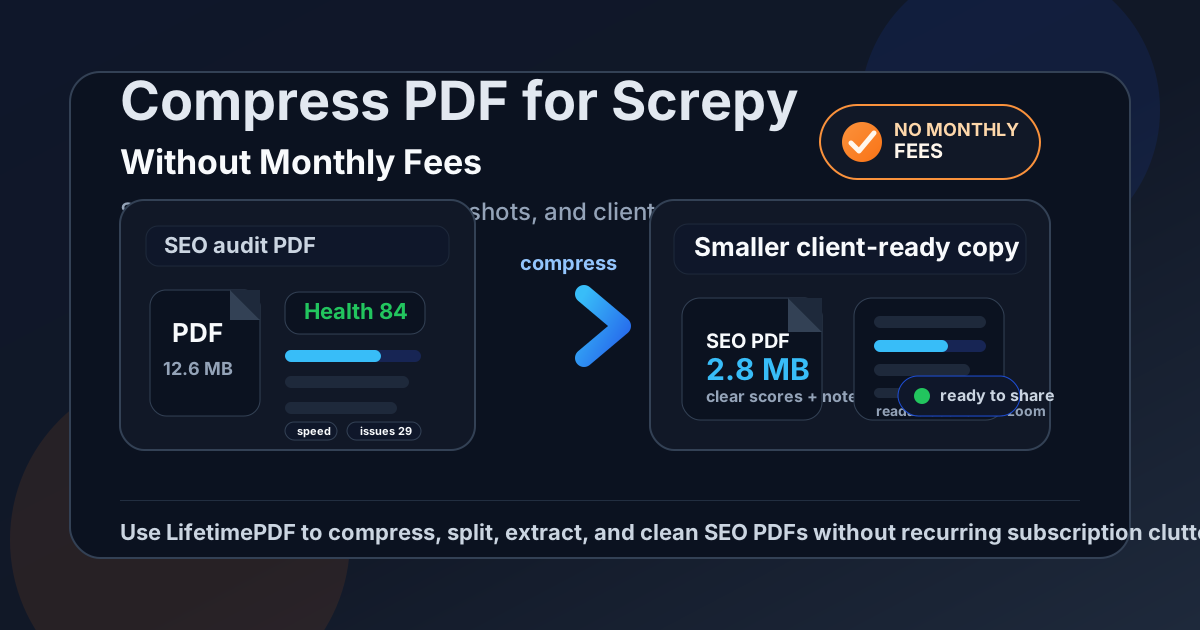
Table of contents
- Quick start: compress a Screpy PDF in under 2 minutes
- Why "without monthly fees" matters for Screpy exports
- Why smaller PDFs work better in Screpy workflows
- What size should you aim for?
- Which compression level should you choose?
- Step-by-step: use LifetimePDF to shrink the file
- Best approach for common Screpy report types
- What to do if the PDF is still too large
- How to keep scores, screenshots, and notes readable
- Workflow habits that reduce PDF bloat
- Related LifetimePDF tools and useful reading
- FAQ (People Also Ask)
Quick start: compress a Screpy PDF in under 2 minutes
If your real goal is simply make this Screpy PDF smaller so it is easier to send, this workflow is usually enough:
- Export only the Screpy report you actually need to share.
- Open Compress PDF.
- Upload the Screpy PDF.
- Choose Medium compression first.
- Download the smaller file and compare the new size.
- Preview the parts that matter most: score cards, issue labels, URL text, page speed notes, screenshots, and action items.
- If the report is still bulky, use Extract Pages, Split PDF, or Delete Pages before you try stronger compression.
Why "without monthly fees" matters for Screpy exports
The search intent here is practical. People are not looking for another all-in-one platform. They are usually at the last mile of the job: the audit is done, the report is exported, and now the PDF needs to be small enough to send without friction.
Screpy sits upstream from the PDF problem. It helps you spot technical SEO issues, document speed or quality concerns, and package findings for review. But once that work leaves the dashboard and becomes a PDF, the problem changes. Now it is about file size, readability, and whether the report feels easy to hand off.
Paying another monthly fee just to shrink the finished export is hard to justify. If you already pay for SEO software, storage, and collaboration tools, a pay-once PDF workflow usually makes more sense. Use the SEO platform for analysis, then use a simple PDF tool to make the deliverable lighter.
Why smaller PDFs work better in Screpy workflows
Screpy-style reports often mix structured findings with visual proof. That combination is useful, but it creates heavy PDFs quickly. A single file can include score cards, issue breakdowns, screenshot evidence, page-level notes, and commentary for several readers at once.
Smaller PDFs help because they reduce friction exactly when the report needs to move. That could mean emailing an audit summary, uploading a review into a client portal, dropping a speed recap into a project board, or archiving recurring checks in a cleaner way. When the file opens quickly and sends easily, the conversation stays on the findings instead of the attachment.
- Technical SEO audits are easier to forward when they are light enough for normal email and chat limits.
- Page speed snapshots are easier to review when screenshot callouts and small labels stay readable.
- Issue summaries feel more useful when someone can open them quickly during a call or stand-up.
- Client PDFs look more polished when they are compact but still trustworthy.
What size should you aim for?
There is no magic number for every file, but practical targets help:
- Under 2MB: good for focused issue summaries, quick page speed snapshots, and short internal updates.
- 2MB to 5MB: good for broader technical SEO audits, screenshot-backed client PDFs, and recurring review packs.
- Above 5MB: often a sign that the file is doing too many jobs at once and should probably be trimmed or split.
Aim for the smallest file that still feels trustworthy. If a URL, issue label, score block, or screenshot note becomes hard to read, you cut too far. Smaller is useful. Unreadable is not.
Which compression level should you choose?
Start simple:
- Low compression is safest when the PDF contains dense issue tables, tiny labels, or image details that still matter later.
- Medium compression is the best starting point for most Screpy reports and usually gives the best size-to-clarity tradeoff.
- High compression should usually come after cleanup, not before it. Use it only when you have already trimmed extra pages and the file is still bigger than it needs to be.
In practice, Medium works for most people because Screpy exports usually need clarity more than extreme reduction. Stakeholders still need to read issue names, page references, score changes, and explanation notes.
Step-by-step: use LifetimePDF to shrink the file
- Export the right version first. Do not export every appendix by default. If the audience only needs the summary and action pages, start there.
- Upload the file to Compress PDF.
- Choose Medium compression. This is usually the safest first pass for score blocks, issue tables, screenshot evidence, and short text notes.
- Download the result and review it once. Check issue labels, page speed figures, page URLs, screenshot annotations, and recommendation blocks.
- Only escalate if needed. If the file is still too large, extract the summary pages, split the appendix, or delete repeated screenshots before trying stronger compression.
Best approach for common Screpy report types
Technical SEO audits
These usually compress well because they rely on score cards, short explanations, and a manageable number of screenshots. Medium compression is normally enough. If the file still feels bulky, delete decorative cover pages and repeated evidence shots before trying stronger settings.
Page speed snapshots
These can become blurry faster because image callouts and tiny numeric labels carry the value. Start with Medium, then check the smallest metrics and labels first. If the file still feels too large, extract only the pages you actually plan to discuss instead of compressing the entire export harder.
Issue summaries and monitoring recaps
These often include trend notes plus a few screenshots. Keep the summary readable and be ruthless about extra pages. A shorter PDF focused on the issues that need action is usually more useful than a single giant recap with every supporting image attached.
Client packs
These are the most likely to need splitting. Executive summaries, tactical notes, and appendix evidence do not always need to live in the same file. One clean summary PDF and one support appendix often works better than a heavily compressed all-in-one deck.
What to do if the PDF is still too large
If Medium compression does not get you where you want, do not immediately jump to the harshest setting. Usually the better move is to remove weight that does not help the next reader.
- Use Extract Pages to send only the summary, priority fixes, or speed-review section someone actually needs.
- Use Split PDF to separate executive recap pages from the appendix.
- Use Delete Pages to remove repeated screenshots, blank separators, or stale support pages.
- Use Crop PDF when oversized margins or loose screenshot framing are adding file weight with no real value.
In other words, fix the structure before you crush the quality.
How to keep scores, screenshots, and notes readable
The fastest quality check is to open the compressed file and inspect the smallest useful details first:
- issue names and severity labels
- page URLs and tiny path segments
- score cards and small numerical changes
- page speed notes and compact metric labels
- annotation callouts and commentary notes
- screenshot arrows, boxes, or highlighted changes
If those survive, the rest of the PDF is usually fine. If those blur, the file may still be technically smaller but functionally worse.
Workflow habits that reduce PDF bloat
Good habits make compression easier before the PDF tool ever gets involved:
- Export focused checks when the audience does not need every section.
- Keep screenshots purposeful instead of dropping in several nearly identical views.
- Put detailed evidence in a separate appendix instead of bloating the summary.
- Reuse a simple report structure so people know where to find the useful pages.
- Compress after the report is final, not after every small revision.
The less unnecessary material the PDF carries, the less you need aggressive compression later.
Related LifetimePDF tools and useful reading
If Screpy exports are part of your regular workflow, these tools usually pair well together:
- Compress PDF for the first size reduction pass
- Extract Pages for summary-only handoffs
- Split PDF for appendix separation
- Delete Pages for cleanup
- Crop PDF for wasted margins and oversized screenshots
Related reading: Compress PDF for Screaming Frog Without Monthly Fees, Compress PDF for Sitebulb Without Monthly Fees, Compress PDF for Search Atlas Without Monthly Fees, and Compress PDF for SEOmator Without Monthly Fees.
Ready to clean up the file? Use LifetimePDF to shrink the report first, then split or extract pages only if the result still feels heavier than it should.
FAQ (People Also Ask)
How do I compress a PDF for Screpy without monthly fees?
Use a pay-once PDF tool like LifetimePDF, upload the Screpy export, start with Medium compression, and preview the smaller result before sending it. If the file is still too large, split or extract the pages the next reader actually needs instead of crushing the entire PDF more aggressively.
What file size should I aim for with Screpy reports?
Under 2MB is a strong target for focused summaries and short page speed snapshots. Multi-page technical SEO audits and screenshot-heavy client packs often work better around 2MB to 5MB as long as the smallest useful text still looks clear.
Will compression make Screpy screenshots or issue lists blurry?
It can if you compress too hard. Medium compression is usually the safest first pass. Check the smallest labels, URLs, metrics, screenshot callouts, and notes before keeping the compressed copy.
Why look for a Screpy PDF workflow without monthly fees?
Because PDF cleanup is usually support work after the analysis is already done. If you already pay for SEO tools, another recurring bill just to make exports smaller is rarely the best fit. A pay-once workflow is simpler and easier to justify.
What if my Screpy PDF is still too large after compression?
Extract the summary pages, split the appendix, remove duplicate screenshots, or crop wasted margins before trying stronger compression. In many cases, a smaller focused PDF works better than one oversized all-in-one report.