Compress PDF for SAP Ariba Without Monthly Fees: Shrink Supplier, Contract, and Procurement PDFs Without Another Subscription
If you need to compress a PDF for SAP Ariba without monthly fees, upload the file to LifetimePDF's Compress PDF tool, start with Medium compression, and keep the smaller copy only if supplier names, clause text, pricing tables, signatures, and approval details still look clear.
For most SAP Ariba workflows, that is enough to shrink supplier packets, sourcing attachments, contract PDFs, invoice support files, and compliance records without paying for another recurring subscription just to finish routine document cleanup.
SAP Ariba paperwork usually becomes annoying for a simple reason: the document itself is ordinary, but the attachment keeps growing every time another export, scan, screenshot, appendix, or signed page gets added. Then someone needs the file to upload cleanly, open quickly, and still look trustworthy when procurement, sourcing, legal, supplier management, or finance reviews it later. The real goal is not the tiniest PDF possible. The real goal is a smaller PDF that still holds up when somebody checks clauses, dates, line items, signatures, certificates, and approval context.
Fastest path: run the SAP Ariba file through LifetimePDF's Compress PDF tool at Medium, then use OCR, page cleanup, or split tools only if the PDF still carries more weight than the workflow actually needs.
In a hurry? Jump to Quick start: compress an SAP Ariba PDF in about 2 minutes.
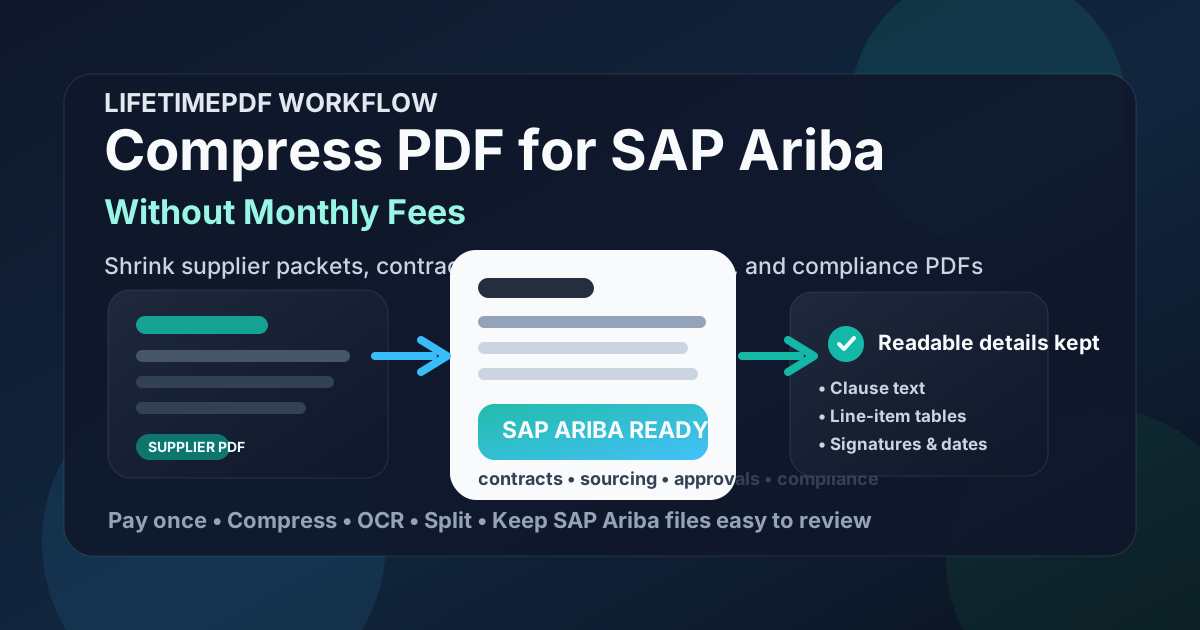
Table of contents
- Quick start: compress an SAP Ariba PDF in about 2 minutes
- Why "without monthly fees" matters here
- Why smaller PDFs help in SAP Ariba workflows
- What file size should an SAP Ariba PDF be?
- Which compression level should you choose?
- Step-by-step: use LifetimePDF to shrink the file
- Best approach for common SAP Ariba PDFs
- What to do if the PDF is still too large
- How to keep supplier and contract details readable
- Workflow habits that reduce PDF bloat
- Related LifetimePDF tools and useful reading
- FAQ (People Also Ask)
Quick start: compress an SAP Ariba PDF in about 2 minutes
If your real goal is simply make this PDF smaller so it is easier to use in SAP Ariba, this workflow is usually enough:
- Export or save the final supplier packet, sourcing attachment, contract PDF, RFx support file, invoice backup, certificate bundle, or qualification document you actually plan to keep.
- Open Compress PDF.
- Upload the file and choose Medium compression first.
- Download the smaller result and compare the new size.
- Preview the weakest details: supplier names, dates, clause text, pricing tables, tax IDs, signatures, certificate numbers, and the faintest scanned text.
- If the file is still bulky or image-heavy, run OCR PDF, crop empty scan borders, delete duplicate pages, or split the packet before trying stronger compression.
Why "without monthly fees" matters here
SAP Ariba document prep is not a one-time chore. It repeats across supplier onboarding, sourcing events, contract review, renewals, invoice support, qualification updates, and audit follow-up. That is exactly why the subscription angle matters. If the task comes back every week, paying monthly just to shrink, OCR, split, crop, and clean ordinary PDFs gets old fast.
A pay-once workflow makes more sense for this kind of admin work. You want a tool you can reach for whenever a file is oversized, messy, scan-heavy, or harder to upload than it should be. You do not want another recurring bill just to tidy a supplier packet, reduce a contract appendix, or fix one sourcing attachment before the next approval step.
- Recurring work: supplier and procurement PDF cleanup does not stop after one month.
- More than one task: compression often leads to OCR, page extraction, splitting, or scan cleanup.
- Better cost fit: a pay-once tool matches repeated document prep better than another software subscription.
- Less friction: the easier the workflow feels, the more likely people are to clean the file before upload instead of hoping it still works.
Why smaller PDFs help in SAP Ariba workflows
SAP Ariba documents often come from several directions at once. A supplier uploads onboarding paperwork. Procurement adds supporting documents. Legal attaches a contract or amendment. Sourcing includes bid responses or RFx support. Finance adds invoice backup. Somebody else drags in a scan, certificate, screenshot, or signed appendix from another system. By the time everything becomes one PDF, the file can feel heavier than the information inside it.
Smaller PDFs are easier to upload, faster to open, and less frustrating to review later. That matters when the real job is checking supplier names, clause text, line-item tables, certificate numbers, signatures, dates, and approval context rather than waiting on a bloated file. Compression is not about squeezing every page until it looks rough. It is about removing avoidable weight while keeping the record clear enough to trust.
- Faster uploads: useful when somebody is trying to move a supplier packet or contract into the next Ariba step without delay.
- Smoother reviews: lighter files open faster for procurement, sourcing, legal, supplier-management, and finance teams.
- Cleaner archives: smaller PDFs are easier to resend, store, and retrieve later during audits or renewals.
- Less scan waste: paper-origin documents, phone-camera captures, and certificate bundles often carry oversized images, blank borders, and duplicate pages.
- Better reuse: a leaner PDF is easier to split, OCR, extract pages from, or attach somewhere else when the next workflow appears.
What file size should an SAP Ariba PDF be?
There is no single magic number for every SAP Ariba workflow, so practical ranges are more useful than perfection. You want a file that uploads cleanly, opens quickly, and still looks reliable when someone is checking contract language, pricing tables, signatures, or compliance evidence.
| Document type | Practical target | Why it works |
|---|---|---|
| Text-heavy contract, supplier form, or questionnaire PDF | < 1MB to 2MB | Usually enough for files that should stay easy to upload and review |
| Contract with tables, signatures, and light image content | About 2MB to 4MB | Leaves more room for line items, initials, and scanned signature pages |
| Scan-heavy compliance packet or certificate bundle | About 3MB to 5MB | Still manageable while protecting small certificate numbers, expiry dates, or faint stamps |
| Mixed packet with unrelated appendices | Varies | Usually better solved by splitting or trimming pages, not by crushing everything harder |
If the document is mostly text and ordinary form pages, it usually should not be huge. If it is huge anyway, the extra size often comes from scans, screenshots, duplicate pages, or oversized images rather than from the real procurement content.
Which compression level should you choose?
The right setting depends less on the brand name of the portal and more on what is inside the PDF. SAP Ariba files often need to preserve small but meaningful details, so an overly aggressive first pass is usually a mistake.
| Compression level | Best for | Main risk |
|---|---|---|
| Low | Clean contracts, digitally exported supplier forms, and already small PDFs | The file may not shrink enough to be worth the step |
| Medium | Most SAP Ariba documents, including contracts, sourcing attachments, invoice support files, and ordinary supplier packets | Usually the safest option, but still deserves one quick review |
| High | Very bloated scans or oversized image-heavy packets after lighter cleanup already failed | Clause text, tables, signatures, and small compliance details can lose clarity faster |
Step-by-step: use LifetimePDF to shrink the file
Here is the straightforward workflow if you want a smaller SAP Ariba-ready PDF without adding a new subscription to the stack:
- Open Compress PDF.
- Upload the final supplier packet, contract PDF, sourcing attachment, invoice support file, qualification questionnaire, or compliance bundle.
- Choose Medium compression first.
- Download the smaller file and check how much size you saved.
- Preview the pages that matter most: names, dates, clauses, tables, signatures, and certificate details.
- If the file still feels heavier than it should, use OCR PDF, Extract Pages, or Split PDF instead of repeatedly over-compressing the same document.
Best approach for common SAP Ariba PDFs
Different SAP Ariba documents fail in different ways. The right fix depends on whether the file is text-heavy, scan-heavy, or simply carrying too many pages.
Supplier onboarding packets
These usually include forms, tax records, certificates, signatures, and contact details. Medium compression is normally enough. The main risk is making small typed fields or faint certificate text harder to read, so review the weakest page before keeping the smaller version.
Contracts, amendments, and statements of work
Contracts are often text-heavy and compress well, but clause numbers, tracked signatures, initials, and line breaks still matter. A slightly larger file is better than one that makes legal language feel uncertain. If the attachment includes extra appendices nobody needs right now, trim or split them instead of crushing the whole packet.
Sourcing attachments and RFx support files
These often mix tables, exhibits, screenshots, and supporting pages. Compression helps, but structure matters more. If the packet contains unrelated exhibits or duplicate exports, remove them before trying a stronger setting.
Invoice support and procurement backup
Invoice backup, receipt bundles, and payment support documents usually benefit from a light cleanup before compression. Blank backsides, duplicate scans, and oversized phone-camera photos add more weight than business value. After cleanup, Medium compression usually produces a cleaner result without hurting totals or reference numbers.
Compliance records, insurance certificates, and scanned evidence
This is where OCR becomes especially useful. If the file came from a scanner, making it searchable often improves the workflow more than raw compression alone. Keep an eye on expiry dates, certificate numbers, stamps, and signatures because those are usually the details people need later.
What to do if the PDF is still too large
If the first compression pass helps but the file is still bulkier than it should be, do not immediately reach for maximum compression. That is usually how readable documents turn muddy. Start by removing the weight that adds the least value.
- Run OCR if the document is scan-based and the text is not selectable.
- Split the packet when one file is carrying unrelated sections for different reviewers.
- Extract only the needed pages instead of dragging a whole appendix into every step.
- Crop scan borders and remove blank pages or duplicate backsides.
- Replace screenshots with direct exports when a cleaner source file exists.
In practice, oversized SAP Ariba files are often a packet problem rather than a compression problem. Better structure usually protects readability better than stronger settings.
How to keep supplier and contract details readable
Before you keep the smaller file, check the details that somebody will actually depend on later. One quick review is usually enough if you look at the right places.
- Supplier names and IDs: make sure proper names still look crisp, especially on scans.
- Dates and approval references: these are easy to blur when they are small or lightly printed.
- Clause text and appendices: legal language should still feel easy to read at normal zoom.
- Pricing tables and line items: totals, currencies, quantities, and row labels should stay distinct.
- Signatures and initials: they should still look deliberate rather than smudged.
- Certificate numbers and expiry dates: common weak spots in scan-heavy compliance packets.
If the faintest part of the document is still readable, you are usually in good shape. If the weak details turned muddy, go back one step. A slightly larger file is still the better file when it keeps the proof intact.
Workflow habits that reduce PDF bloat
The easiest way to avoid oversized SAP Ariba PDFs is not heroic compression. It is better habits before the file gets messy.
- Export once from the cleanest source available.
- Avoid screenshotting PDFs unless there is no better option.
- Keep only the pages the next reviewer actually needs.
- Separate unrelated appendices instead of stacking everything into one monster packet.
- Use OCR on scanned supplier and compliance files before they disappear into storage.
- Compress before the attachment becomes a repeated problem.
Small habits matter because document friction compounds. One oversized upload is annoying. A workflow full of oversized uploads becomes a time tax.
Related LifetimePDF tools and useful reading
Useful tools
Best fit
This workflow is a strong fit if you regularly clean supplier packets, sourcing attachments, contracts, invoice backup, or compliance PDFs and want a pay-once way to keep recurring procurement document prep under control.
Want the simple version? Use LifetimePDF to compress the file first, check readability once, then keep the smaller copy only if the contract, supplier, and approval details still look trustworthy.
FAQ (People Also Ask)
How do I compress a PDF for SAP Ariba without monthly fees?
Use a pay-once PDF tool like LifetimePDF, upload the SAP Ariba-ready file, start with Medium compression, and review the smaller result before you use it. If the PDF is still bulky, clean scan waste, trim duplicate pages, or split the packet instead of over-compressing everything at once.
What file size should I aim for before using a PDF in SAP Ariba?
Under 2MB is a strong target for text-heavy supplier forms, contracts, and ordinary procurement documents. Mixed files with tables, signatures, or light scans often work best around 2MB to 4MB, while scan-heavy compliance packets may still be reasonable closer to 5MB if the important details stay readable.
Will compression make clause text, pricing tables, or signatures blurry?
It can if you compress too aggressively. That is why Medium compression is usually the safest first pass. Always review clause text, supplier names, dates, line-item tables, totals, signatures, and the faintest scanned text before keeping the smaller file.
Should I run OCR on scanned supplier or compliance PDFs before storing them?
Usually yes if the file came from a scanner or phone camera and the text is not selectable. OCR makes procurement, sourcing, and supplier PDFs easier to search, review, and reuse later during approvals, renewals, and audits.
Why look for an SAP Ariba PDF workflow without monthly fees?
Because supplier onboarding, sourcing, contract review, and invoice-support cleanup happen repeatedly, but most teams do not want another subscription just to shrink, OCR, split, crop, or clean routine PDFs. A pay-once workflow fits recurring procurement document prep better.