Compress PDF for Pipeliner CRM: Keep Opportunity Files, Proposals, and Contact PDFs Easy to Open
To compress a PDF for Pipeliner CRM, upload the final proposal, quote, account brief, signed agreement, or opportunity PDF to LifetimePDF's Compress PDF tool, start with Medium compression, and keep the smaller copy only after totals, comments, signatures, screenshots, and stage notes still look clean inside the real Pipeliner CRM opportunity, account, or contact workflow where your team will reopen it.
For most Pipeliner CRM PDFs, under 2MB is a strong target for quotes, short briefs, and routine follow-up files, while multi-page proposals, signed packets, and screenshot-heavy deal documents usually work best around 2MB to 5MB after light cleanup.
Pipeliner CRM is built to keep deal movement visible. That is exactly why attachment quality matters. A heavy PDF can slow down follow-up at the worst possible moment: when someone is checking an opportunity before a call, reopening a proposal during negotiation, or reviewing a contact record from mobile. The goal is not to produce the tiniest file possible. It is to keep the lightest file that still feels dependable when a real sales decision is happening.
Fastest path: run the Pipeliner CRM PDF through LifetimePDF's Compress PDF tool on Medium, then extract key pages or split a bulky packet only if the document is still heavier than the real opportunity workflow needs.
In a hurry? Jump to Quick start: compress a Pipeliner CRM PDF in about 2 minutes.
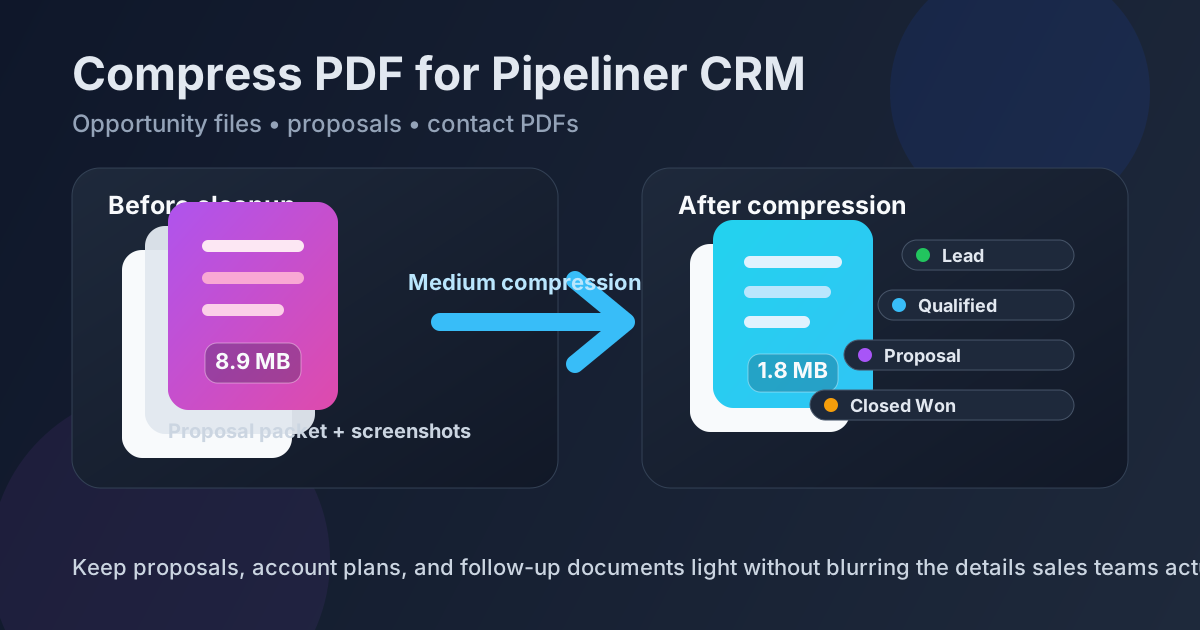
Table of contents
- Quick start: compress a Pipeliner CRM PDF in about 2 minutes
- Why Pipeliner CRM PDFs get heavy so quickly
- Where large PDFs create friction in Pipeliner CRM
- What file size should you aim for?
- Which compression level should you choose?
- Step-by-step: shrink a Pipeliner CRM PDF with LifetimePDF
- Best strategy for common Pipeliner CRM PDF types
- What if the file is still too big?
- How to keep totals, comments, and signatures readable
- Workflow habits that keep Pipeliner CRM PDFs lighter
- Related LifetimePDF tools and useful internal reading
- FAQ (People Also Ask)
Quick start: compress a Pipeliner CRM PDF in about 2 minutes
- Open Compress PDF and upload the exact file you plan to keep in Pipeliner CRM.
- Start with Medium compression. It is usually the best balance for proposals, quotes, account briefs, opportunity attachments, and signed follow-up files.
- Download the smaller PDF and reopen it where the file is really used: the opportunity, account, contact, or follow-up step.
- Check the details that matter most: pricing tables, names, dates, comments, signatures, screenshots, and the smallest line of text on the busiest page.
- If the file is still heavier than it should be, use Extract Pages or Split PDF before you try stronger compression.
That order works because many heavy CRM PDFs are not only heavy because of image quality. They are heavy because the wrong pages stayed attached. Trim the file first if needed, then compress it.
Why Pipeliner CRM PDFs get heavy so quickly
Pipeliner CRM files often gain weight in small increments. A proposal becomes a proposal plus terms. Then it becomes a proposal plus terms plus a signed approval page. Then someone adds a discovery brief, a meeting recap, screenshots from a deck, or an older version for reference. By the time the PDF sits on the opportunity, the file may carry far more than the live sales workflow actually needs.
Common causes include repeated exports, scan-heavy approvals, duplicate cover pages, long appendices, oversized screenshots, and internal notes that matter for history but not for the version people keep reopening. Compression helps, but it works best after you decide what truly belongs in the file that stays inside Pipeliner CRM.
Where large PDFs create friction in Pipeliner CRM
Heavy PDFs create drag before anyone ever says the file is too large. They slow review, make handoff clumsier, and turn simple reopen tasks into unnecessary waiting.
- Opportunity review: someone needs the current proposal or quote right away, not a bloated packet full of old baggage.
- Account follow-up: the next rep or manager should see the clean final document, not a bundle that takes forever to reopen.
- Contact history: a lighter file keeps context easier to reuse when a conversation resumes weeks later.
- Mobile sales work: big files feel worst when someone is checking a deal from a phone before a meeting or callback.
What file size should you aim for?
There is no universal number, but these practical ranges usually keep Pipeliner CRM easier to use:
- Under 2MB: ideal for quotes, short account briefs, summaries, and routine follow-up documents.
- 2MB to 5MB: usually fine for multi-page proposals, signed packets, and screenshot-heavy deal files.
- Over 5MB: worth reviewing before you keep it, especially if the document is supposed to support quick sales work.
If the PDF keeps landing above those ranges, the better fix is often splitting or trimming it instead of forcing more compression.
Which compression level should you choose?
Start with Medium almost every time. It is the safest default because it usually lowers file weight enough for CRM work without making the document feel risky.
- Low compression: best when the PDF has dense pricing tables, fine print, signatures, or detailed comments that must stay especially crisp.
- Medium compression: best default for Pipeliner CRM proposals, quotes, account briefs, and opportunity attachments.
- High compression: use only when the file is still too heavy after cleanup and the document is visually forgiving.
If High compression makes totals, dates, signatures, stage notes, or screenshot labels feel uncertain, roll back. A slightly larger file is better than one people hesitate to trust.
Step-by-step: shrink a Pipeliner CRM PDF with LifetimePDF
- Use the final version. Pick the exact PDF that belongs on the Pipeliner CRM record instead of a draft bundle or working packet.
- Compress it first. Open Compress PDF and start with Medium.
- Review the busiest page. Check the page with the smallest text, densest table, most comments, or most visual detail.
- Test the real workflow. Reopen the smaller file the same way your team will use it during opportunity review or follow-up.
- Trim only if needed. Extract the customer-facing section, delete repeated pages, or split appendices before trying a harsher setting.
This sequence matters. If you jump straight to aggressive compression, you can end up shrinking the wrong file while still carrying the wrong pages. Cleanup plus moderate compression usually beats brute force.
Best strategy for common Pipeliner CRM PDF types
Quotes and pricing sheets
Start with Medium compression and aim for under 2MB when possible. The main risk is blurring totals, line items, customer names, or terms that someone needs to verify quickly.
Opportunity proposals and account plans
These often carry screenshots, internal overview slides, and long appendices. Compress them, but also remove duplicate pages and trim obvious filler before you go stronger.
Signed agreements and approval packets
Protect signatures, initials, dates, and price sections first. If the file came from a scan, inspect the signature page closely before you replace the original.
Contact briefs and follow-up documents
These usually benefit from compression, but they also hide unnecessary weight. If the PDF includes repeated covers, outdated versions, or long internal notes that do not belong in the live workflow, remove those pages before trying stronger compression.
What if the file is still too big?
Do not keep pushing compression harder without checking the structure of the PDF. If Medium does not get the file where you need it, try one of these first:
- Use Delete Pages to remove drafts, duplicate covers, or appendix material.
- Use Extract Pages to keep only the customer-facing or decision-making section.
- Use Split PDF when the main document and backup material should not live together.
- Use Crop PDF to remove scanner borders and wasted margins.
Those steps usually remove more useful weight than switching immediately to High compression.
How to keep totals, comments, and signatures readable
The easiest mistake is checking only the first page. For Pipeliner CRM attachments, inspect the parts that make real work possible:
- customer names and account details
- pricing tables, totals, and line items
- signatures, initials, and dates
- small comments, recap notes, or approval text
- dense tables, charts, and embedded screenshots
If any of those look fuzzy, uncertain, or unpleasant to zoom into, keep the lighter compression setting or clean the file another way. Compression should remove waste, not confidence.
Workflow habits that keep Pipeliner CRM PDFs lighter
A few simple habits prevent attachment bloat from coming back:
- Attach the final customer-facing PDF, not the working packet with internal extras.
- Keep archived versions and appendices separate when they do not need to live on the same opportunity.
- Scan at sensible settings instead of maximum resolution by default.
- Replace duplicate exports instead of stacking nearly identical versions.
- Check mobile readability before deciding the file is truly finished.
These habits matter because Pipeliner CRM works best when the next useful file is easy to reopen. The cleaner the attachment discipline, the easier opportunity follow-up stays in everyday use.
Related LifetimePDF tools and useful internal reading
If Pipeliner CRM is only one part of your broader sales stack, these tools and guides pair well with this process:
- Compress PDF for the main size-reduction step.
- Extract Pages when only the core document should stay attached.
- Delete Pages to remove outdated versions or repeated exports.
- Split PDF to separate the live file from backup material.
- Crop PDF to trim wasted scan borders.
- PDF Metadata Editor for cleaner document properties.
- Compress PDF for SuiteCRM.
- Compress PDF for SugarCRM.
- Compress PDF for Zoho CRM.
- Compress PDF for Close CRM.
- Remove PDF Metadata.
- Lifetime access if PDF cleanup is a repeat part of your CRM workflow.
Bottom line: for most Pipeliner CRM PDFs, start with Medium compression, test the real workflow, and trim page weight before you use stronger compression.
FAQ (People Also Ask)
How do I compress a PDF for Pipeliner CRM?
Upload the final PDF to a compressor, start with Medium compression, download the smaller copy, and test it in the real Pipeliner CRM workflow before replacing the original. Medium is usually the safest first pass because it lowers file size without making totals, comments, signatures, or screenshots feel unreliable.
What file size should I aim for in Pipeliner CRM?
For quotes, short account briefs, and routine follow-up documents, under 2MB is a strong target. Multi-page proposals, signed packets, and screenshot-heavy opportunity files usually work best around 2MB to 5MB as long as the smallest useful detail still reads clearly.
Will PDF compression blur proposals or signatures in Pipeliner CRM?
It can if you compress too aggressively. That is why Medium compression is the best place to start. Always check pricing tables, dates, signatures, comments, and the busiest page before you keep the smaller file.
Should I split a large PDF instead of compressing it harder?
Often, yes. If one PDF combines the customer-facing document with internal notes, old versions, approvals, or a long appendix, splitting it usually creates a cleaner Pipeliner CRM workflow than forcing the whole bundle through aggressive compression.
Which LifetimePDF tools pair best with Pipeliner CRM?
Compress PDF is the main starting point. Extract Pages, Delete Pages, Split PDF, Crop PDF, PDF Metadata Editor, and OCR PDF are especially useful when you want smaller, cleaner CRM attachments without carrying extra pages, scan waste, hidden metadata, or image-only text forward.
Published by LifetimePDF - Pay once. Use forever.