Compress PDF for Page Optimizer Pro Without Monthly Fees: Shrink On-Page SEO Reports, Content Briefs, and Client PDFs Without Another Subscription
If you need to compress a PDF for Page Optimizer Pro without monthly fees, export the report, upload it to LifetimePDF's Compress PDF tool, start with Medium compression, and keep the smaller copy only if score boxes, recommendation notes, screenshots, and page-level details still look clear.
For most Page Optimizer Pro reports, content briefs, and client-ready SEO PDFs, that is enough to reduce file size without adding another recurring subscription to a workflow that already has enough software in it.
Page Optimizer Pro already does the work that matters: surfacing on-page gaps, translating them into specific changes, and turning a messy optimization task into a clear action plan. The PDF step should stay practical. Usually the real job is simply making the export light enough that a writer, strategist, or client can open it fast, understand the next move, and keep the project moving. That is exactly where a pay-once PDF workflow makes more sense than one more monthly charge.
Fastest path: run the Page Optimizer Pro PDF through LifetimePDF's Compress PDF tool at Medium, then split or extract pages only if the file is still heavier than the next reader needs.
In a hurry? Jump to Quick start: compress a Page Optimizer Pro PDF in under 2 minutes.
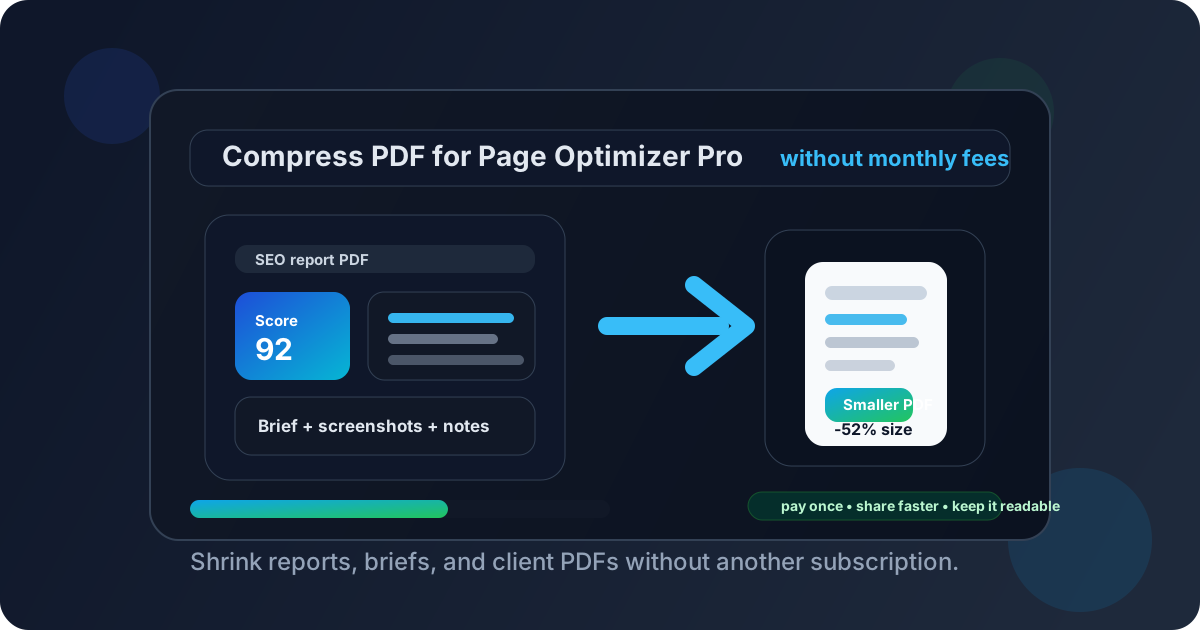
Table of contents
- Quick start: compress a Page Optimizer Pro PDF in under 2 minutes
- Why "without monthly fees" matters for Page Optimizer Pro PDFs
- Why smaller PDFs work better in Page Optimizer Pro workflows
- What size should a Page Optimizer Pro PDF be?
- Which compression level should you choose?
- Step-by-step: use LifetimePDF to shrink the file
- Best approach for common Page Optimizer Pro PDFs
- What to do if the PDF is still too large
- How to keep score boxes, notes, and screenshots readable
- Workflow habits that reduce PDF bloat
- Related LifetimePDF tools and useful reading
- FAQ (People Also Ask)
Quick start: compress a Page Optimizer Pro PDF in under 2 minutes
If your real goal is simply make this Page Optimizer Pro PDF smaller so it is easier to send, this workflow is usually enough:
- Open Compress PDF.
- Upload the Page Optimizer Pro report, content brief, recommendation pack, competitor comparison, or client-ready PDF you actually plan to share.
- Choose Medium compression first.
- Download the smaller result and compare the new size.
- Preview the details that matter most: score boxes, element recommendations, screenshot callouts, notes, and summary actions.
- If the file is still bulky, use Extract Pages, Split PDF, or Delete Pages before forcing stronger compression across the whole pack.
Why "without monthly fees" matters for Page Optimizer Pro PDFs
This query usually appears at the very end of the workflow. The optimization work is done. The recommendations are ready. Somebody just needs a lighter PDF that can be emailed, uploaded, or archived without friction. In that moment, another recurring fee just to shrink a report feels like paying twice for the easy part.
That matters even more when Page Optimizer Pro already sits inside a broader SEO stack with research, writing, reporting, and analytics tools. Compression is not the main event. It is the cleanup step that makes the handoff smoother. A pay-once workflow fits the job better because the problem is simple: make the file smaller without making the report harder to use.
There is also a practical trust issue behind this search. Plenty of PDF sites feel helpful until the file is processed and the download is suddenly locked behind a subscription prompt. Searching for a no-monthly-fee option is really a way of saying: let me finish the SEO handoff without one more surprise bill.
Page Optimizer Pro already handled the thinking. The PDF cleanup step does not need to become another recurring line item.
Why smaller PDFs work better in Page Optimizer Pro workflows
Page Optimizer Pro PDFs usually leave the platform because someone outside the live session needs the plan. Maybe it is a writer who needs a clean brief. Maybe it is an SEO lead reviewing whether the page changes are realistic. Maybe it is a client who wants the recommendation without sitting inside the tool. In every case, smaller PDFs reduce friction at the exact moment somebody needs to open the file and do something useful with it.
Heavy Page Optimizer Pro PDFs usually happen for normal reasons: full-page screenshots, repeated before-and-after captures, competitor examples, appendix pages, or one file trying to serve the strategist, writer, editor, and client all at once. Compression helps, but the goal is not the tiniest possible number. The best Page Optimizer Pro PDF is the smallest version that still lets the next reader trust the evidence, understand the recommendation, and move forward without asking for another export.
- Faster handoffs: lighter files upload and email more easily.
- Less reader friction: clients and teammates can open the report quickly instead of waiting on a bulky PDF.
- Cleaner archives: repeated optimization exports take up less space over time.
- Better mobile review: smaller PDFs behave better when somebody checks the file from a phone or tablet.
- Less rework: one good compression pass beats resending the same report because the first file felt too heavy.
What size should a Page Optimizer Pro PDF be?
There is no universal magic number because a short summary behaves differently from a screenshot-heavy recommendation pack. Still, practical targets make decisions easier.
| Use case | Practical target | Why it works |
|---|---|---|
| Single audit summaries, quick brief handoffs, focused recommendation pages | Under 2MB | Easy to email, quick to preview, and low-friction for a busy writer or client |
| Most content briefs, optimization recaps, and client-ready Page Optimizer Pro exports | 2MB to 4MB | Usually the best balance between readability and convenience |
| Appendix packs, broad competitor evidence sets, and internal archive copies | 4MB+ | Still workable internally, but often a sign the file should be split or trimmed before wider sharing |
The audience matters too. A writer may need the brief and the main page recommendations. A client often benefits from a shorter story-first summary. An internal SEO lead may still want the full evidence pack. If one file tries to do all three jobs, it often gets larger than it needs to be.
Which compression level should you choose?
Most Page Optimizer Pro PDFs should start with Medium compression. It is usually strong enough to matter but still gentle enough to protect the score boxes, notes, screenshot labels, and page-level details that make the report useful.
| Compression level | Best for | Watch out for |
|---|---|---|
| Low | Already-clean PDFs that only need a modest reduction | May not shrink enough if the real problem is too many screenshots or too many pages |
| Medium | Most audits, content briefs, optimization recaps, and client summaries | Usually the best default, but still review score boxes, notes, and screenshot callouts once |
| High | Bulky files that remain too large after cleanup and a medium pass | Can soften small labels, detailed screenshot text, and dense recommendation notes if pushed too far |
Step-by-step: use LifetimePDF to shrink the file
- Export the Page Optimizer Pro PDF you actually plan to share. Avoid compressing an outdated draft if the recommendations already changed.
- Open Compress PDF.
- Upload the file. This could be a page audit, content brief, recommendation summary, competitor comparison, or client-ready recap.
- Select Medium compression. That is the best first pass for most Page Optimizer Pro workflows.
- Download the smaller result.
- Check the high-risk areas. Review score boxes, heading notes, element suggestions, screenshot labels, and action items.
- If needed, trim scope before increasing pressure. Use Extract Pages, Split PDF, Delete Pages, or Crop PDF.
That order matters. Compress first, review once, and then decide whether the report needs page cleanup. In real workflows, that usually gets you to a better result than immediately reaching for the strongest setting.
Good workflow: compress first, then decide whether you also need splitting, extraction, page cleanup, or metadata cleanup.
Best approach for common Page Optimizer Pro PDFs
1) Audit summaries
These usually respond well to Medium compression. The main thing to check afterward is whether the score boxes, main recommendation blocks, and summary notes still feel easy to scan.
2) Content briefs
These should stay clear for a writer at normal zoom. Compress first, then make sure headings, instructions, optimization notes, and supporting examples still feel clean.
3) Competitor comparison packs
These can get heavy when they include multiple screenshots and wide page captures. Compress first, then ask whether every image and comparison page really needs to stay in the share copy.
4) Client-ready recommendation PDFs
These often benefit from trimming repeated proof. Clients usually need the direction, the reason, and a few confidence-building examples. They rarely need every working screenshot that helped produce the recommendation.
What to do if the PDF is still too large
If Medium compression helps but not enough, do not assume the next answer is always stronger compression. Large Page Optimizer Pro PDFs often stay large because they contain too much material, not because the compressor was too gentle.
- Split the main summary from the appendix.
- Extract only the pages the writer, strategist, or client actually needs.
- Delete repeated screenshots, stale covers, or outdated revision pages.
- Crop oversized margins or wasted canvas before another pass.
- Keep one archival master and send a lighter working copy to the next reader.
How to keep score boxes, notes, and screenshots readable
A smaller PDF only helps if people can still trust it. Your quality check should be quick but specific.
- Check score boxes, headings, and recommendation labels.
- Zoom in on screenshot callouts, interface labels, and side notes.
- Review optimization notes, action items, and summary recommendations.
- Confirm screenshot captions and page examples still scan comfortably at normal zoom.
- Open the file on a second device if clients or writers often review PDFs on mobile.
You do not need the PDF to look perfect at extreme magnification. You need it to feel dependable at the size people actually use. If the compressed copy still communicates the recommendation clearly, it is doing its job.
Workflow habits that reduce PDF bloat
- Export the final version: avoid compressing outdated drafts or duplicate review copies.
- Separate the brief from the evidence: one file can hold the main recommendation, another can hold extra support material.
- Use screenshots selectively: one useful example is proof; six similar ones are mostly file weight.
- Trim stale notes: old revision comments and duplicate covers add bulk without helping the next reader.
- Standardize on a medium-compression review step: it keeps delivery cleaner without much extra work.
Smaller PDFs often feel more professional because they respect the reader's time as well as their inbox. That matters just as much as the raw file size.
Related LifetimePDF tools and useful reading
If you want a cleaner Page Optimizer Pro workflow without monthly fees, these tools and related articles pair well with this task:
- Compress PDF for the main file-size reduction step.
- Extract Pages when only a few sections need to be shared.
- Split PDF when the summary and appendix should be separate files.
- Delete Pages for removing repeated screenshots or stale pages.
- Crop PDF to trim oversized margins and wasted space.
- PDF Metadata Editor to clean document properties before delivery.
- Compress PDF for Page Optimizer Pro for the broader workflow guide.
- Compress PDF for NeuronWriter Without Monthly Fees, Compress PDF for GrowthBar Without Monthly Fees, Compress PDF for Content Harmony Without Monthly Fees, and Compress PDF for Clearscope Without Monthly Fees if you are building a wider content-optimization workflow.
FAQ (People Also Ask)
How do I compress a PDF for Page Optimizer Pro without monthly fees?
Use a pay-once PDF tool like LifetimePDF Compress PDF, upload the Page Optimizer Pro export, start with Medium compression, and review the smaller result before sharing it. If the file is still bulky, extract or split the pages people actually need instead of over-compressing the entire pack.
Why look for a Page Optimizer Pro workflow without monthly fees?
Because PDF cleanup is usually finish-line work. If you already pay for Page Optimizer Pro and other SEO software, another recurring charge just to make exported PDFs smaller is hard to justify. A pay-once workflow fits the task better.
What file size is best for Page Optimizer Pro PDFs?
Under 2MB is a practical target for short audit summaries and quick brief handoffs. Broader recommendation packs, screenshot-backed exports, and client-ready recaps usually work better around 2MB to 4MB as long as the smallest useful text still looks clear.
Will compressing a Page Optimizer Pro PDF make scores or screenshots blurry?
It can if you compress too aggressively. That is why Medium compression is usually the safest first pass. Check score boxes, screenshot labels, recommendation notes, and action items before you keep the compressed copy.
Should I split a large Page Optimizer Pro report instead of compressing it harder?
Often, yes. If one PDF mixes the main recommendation, screenshot examples, competitor evidence, and appendix pages for different readers, splitting the file usually works better than forcing stronger compression across the whole document.
Best workflow for most teams: compress once -> review the result -> split or trim only if needed -> share confidently.
Published by LifetimePDF - Pay once. Use forever.