Compress PDF for OneSpan Sign: Keep Contracts, Disclosures, and Lending Packets Small Without Losing the Details
To compress a PDF for OneSpan Sign, upload the final file to LifetimePDF's Compress PDF tool, start with Medium compression, and keep the smaller copy only if signature fields, dates, names, initials, checkbox labels, and fine print still read cleanly.
For most OneSpan Sign workflows, under 2MB is a strong target for text-heavy contracts and disclosures, while scanned lending packets, approval bundles, and mixed-content files usually work best around 2MB to 5MB.
OneSpan Sign usually shows up late in the document flow. The agreement is already approved. The disclosure packet is almost ready to send. The lending file only needs a signer-facing cleanup pass before it moves. At that stage, the real job is not to chase the smallest possible file. It is to remove unnecessary weight without making the PDF feel harder to trust on desktop, tablet, or phone.
Fastest path: use LifetimePDF's Compress PDF tool at Medium, then trim duplicate pages, crop scan waste, or split bulky exhibits only if the final OneSpan Sign packet is still heavier than it needs to be.
Need the short version? Jump to Quick start: compress a OneSpan Sign PDF in about 2 minutes.
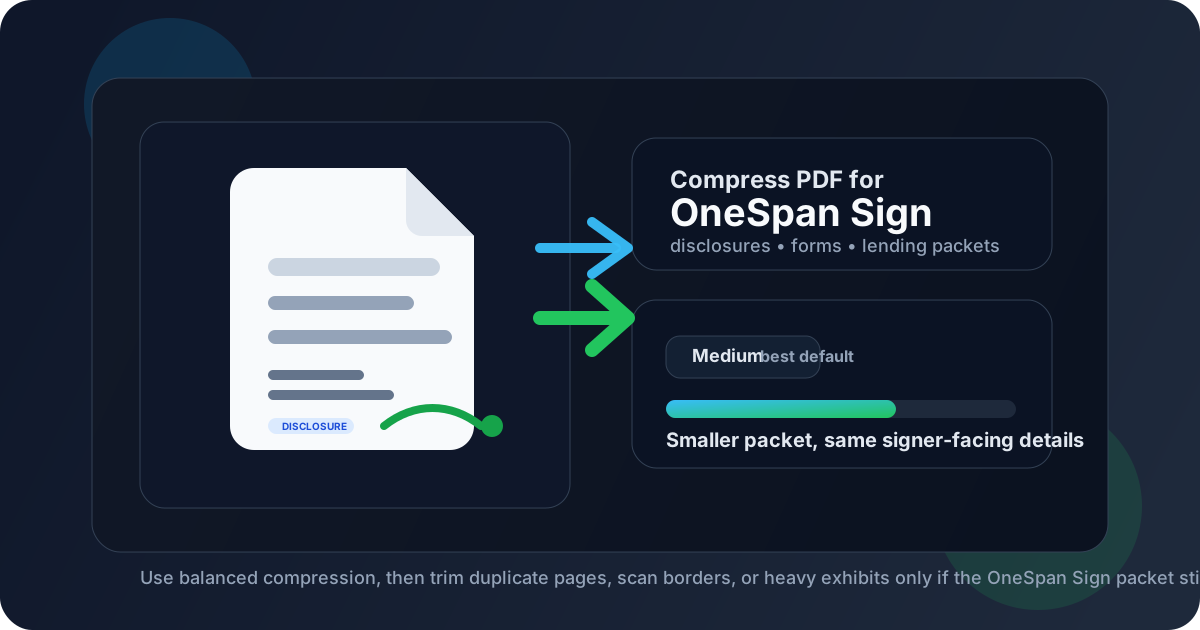
Table of contents
- Quick start: compress a OneSpan Sign PDF in about 2 minutes
- Why smaller PDFs help in OneSpan Sign workflows
- What size should a OneSpan Sign PDF be?
- Which compression level should you choose?
- Step-by-step: shrink a PDF with LifetimePDF
- Best approach for common OneSpan Sign document types
- What to do if the PDF is still too large
- How to keep signer-facing details readable
- Workflow habits that prevent PDF bloat
- Related LifetimePDF tools and useful reading
- FAQ (People Also Ask)
Quick start: compress a OneSpan Sign PDF in about 2 minutes
If your real goal is simply make this OneSpan Sign PDF smaller so it uploads cleanly and still feels professional, this workflow is usually enough:
- Start with the contract, disclosure, lending packet, onboarding form, approval packet, or signer-ready PDF you actually plan to send.
- Open Compress PDF.
- Choose Medium compression first.
- Download the smaller result and compare the new size.
- Check the fragile details once: signature fields, signer names, initials areas, dates, checkbox labels, totals, and the smallest legal or disclosure text.
- If the file is still bulky, use Delete Pages, Extract Pages, Split PDF, or Crop PDF before trying stronger compression.
Why smaller PDFs help in OneSpan Sign workflows
OneSpan Sign documents are usually high-intent files. They are contracts, disclosures, lending packets, client agreements, onboarding forms, approval packets, or supporting documents that are already close to a decision. When those PDFs are heavier than they need to be, the friction appears at exactly the wrong moment: right before review, right before signature, or right before the file needs to open smoothly on mobile.
Smaller PDFs upload faster, preview more smoothly, and are easier to resend or archive later. That matters even more when the source packet picked up scan shadows, oversized screenshots, duplicate pages, or exhibits that never really belonged in the signer-facing copy in the first place.
- Faster uploads: useful when a corrected packet needs to go out today, not after another cleanup loop.
- Better phone review: many recipients first open a signing packet on mobile.
- Cleaner handoffs: legal, lending, finance, operations, and sales all benefit from leaner files.
- Less scan waste: rescanned or photographed paperwork often carries bulk that adds no value.
- Better downstream work: smaller PDFs are easier to split, extract, crop, merge, and archive later.
What size should a OneSpan Sign PDF be?
There is no single perfect number for every OneSpan Sign workflow, so practical ranges are more useful than chasing the smallest possible file. You want a PDF that feels easy to open and professional to sign.
| Document type | Practical target | Why it works |
|---|---|---|
| Simple contract or disclosure | < 1MB to 2MB | Usually enough for text-heavy PDFs that should upload and open fast |
| Standard form or approval packet | 1MB-3MB | Leaves room for signature fields, initials boxes, and modest scans without feeling bulky |
| Lending packet or mixed-content bundle | 2MB-5MB | More realistic when multiple pages include disclosures, scans, IDs, or supporting exhibits |
| Scan-heavy or photographed paperwork | As small as possible while still readable | Readability matters more than chasing a perfect number when the source was already messy |
Those ranges are not strict rules. They are good working targets that help you avoid two common mistakes: sending a bloated packet that feels clumsy, or over-compressing a signer file until small but important details look fragile.
Which compression level should you choose?
If you are unsure where to start, Medium is usually the best default for OneSpan Sign. It often removes enough weight to help the workflow without flattening the details people still need to read.
- Low compression: best when the PDF is already fairly light and you only want a small size reduction with minimal visual change.
- Medium compression: the best first choice for most contracts, disclosures, onboarding forms, and approval packets.
- High compression: only worth trying when the file is still too heavy after cleanup and medium compression, and you are ready to inspect the smallest text carefully.
Step-by-step: shrink a PDF with LifetimePDF
- Open Compress PDF.
- Upload the final OneSpan Sign-ready PDF rather than an earlier working draft.
- Choose Medium compression and run the file through once.
- Download the smaller copy and compare the file size.
- Check the signer-facing weak spots: signature fields, initials areas, dates, names, checkbox labels, totals, and the smallest legal or disclosure text.
- If the file is still larger than it should be, remove duplicated pages or split heavy exhibits before applying stronger compression.
That one-pass workflow handles most OneSpan Sign preparation jobs well. The second pass is usually not stronger compression. It is better packet structure.
Best approach for common OneSpan Sign document types
Contracts, agreements, and ordinary forms
These are usually text-heavy and compress well. Medium compression is often enough, especially if the source file came from a normal digital export rather than a scan. Keep an eye on signature fields, names, dates, and the smallest footer text.
Disclosures and lending packets
These packets often mix text, tables, signatures, disclosure blocks, ID scans, and supporting pages. They rarely benefit from aggressive compression across every page. A better result usually comes from medium compression plus removing duplicate pages, oversized attachments, or scans the signer does not actually need in the main packet.
Approval bundles and onboarding documents
These files can accumulate repeated forms, stale appendices, and support material from earlier review cycles. Compression helps, but structure usually helps more. Split optional attachments away from the pages that genuinely need a signature whenever possible.
Scanned agreements or photographed paperwork
These are the most likely to stay bulky after one compression pass. Crop blank borders, remove empty pages, and rotate crooked pages first. A cleaner scan often beats pushing the whole document into aggressive compression.
What to do if the PDF is still too large
If a OneSpan Sign file still feels heavier than it should after Medium compression, stronger compression is only one option. In many cases, smarter cleanup gives you a better result.
- Delete duplicate pages: use Delete Pages to remove stale drafts, repeated scans, or unnecessary support pages.
- Extract only signer-facing sections: use Extract Pages when the actual signable section is only part of a larger packet.
- Split a heavy exhibit: use Split PDF when disclosures, appendices, or support material make the main packet harder to handle.
- Crop scan waste: use Crop PDF to remove oversized borders and dead space from photographed pages.
- Rebuild a messy export: if the PDF has been printed, rescanned, re-merged, and re-exported multiple times, a cleaner source export may solve the real problem faster.
How to keep signer-facing details readable
The fastest quality check is not reading every page again. It is checking the parts most likely to fail after compression.
- Signature fields and signature blocks
- Initials areas and date fields
- Names, labels, and short instructions
- Totals, rates, or approval amounts
- The smallest legal or disclosure text on the page
- Any page likely to be opened first on mobile
If those still look clean, the rest of the document usually follows. If they do not, step back and clean the packet structure before you try to squeeze more size out of every page.
Workflow habits that prevent PDF bloat
- Export once from the cleanest source you have. Repeated print-save-rescan loops usually create unnecessary weight.
- Keep signer packets focused. Do not send exhibits, backups, or internal notes unless they genuinely belong in the signing flow.
- Use scans carefully. Photographed paperwork often includes shadows, margins, and skew that add size but not value.
- Merge with intent. Combine documents only when the signer truly needs them as one packet.
- Compress near the finish line. It works best when the packet structure is already final.
These habits save time because they reduce the number of times the same document has to be repaired later for upload, sharing, archiving, or follow-up signatures.
Related LifetimePDF tools and useful reading
If you are cleaning up a OneSpan Sign packet, these tools usually help the most:
- Compress PDF for the first safe size reduction pass
- Extract Pages for signer-only sections
- Delete Pages for duplicate or irrelevant pages
- Split PDF for heavy exhibits and oversized bundles
- Crop PDF for scan borders and dead space
- PDF Form Filler when you need a cleaner fillable copy before sending
Related reading on LifetimePDF:
- Compress PDF for OneSpan Sign Without Monthly Fees
- Compress PDF for OneSpan Sign: Upload Smaller Contracts and Forms Faster
- Compress PDF for Foxit eSign
- Compress PDF for RightSignature
Want the quickest workflow? Compress the final OneSpan Sign packet first, then split or extract only if the result is still heavier than it should be.
FAQ (People Also Ask)
How do I compress a PDF for OneSpan Sign?
Upload the final OneSpan Sign-ready PDF to a PDF compressor, start with Medium compression, and keep the smaller copy only after checking signature fields, dates, initials, names, checkbox labels, and fine print. For most signing workflows, Medium is the safest first step.
What file size should I aim for before sending a OneSpan Sign PDF?
Text-heavy contracts, disclosures, and ordinary forms often work well under 2MB. Mixed packets and scan-heavier files usually work better around 2MB to 5MB if that preserves the smallest important details.
Will compression blur signature fields or fine print?
It can if you compress too aggressively. Start with Medium compression and review signature fields, initials lines, dates, names, checkbox labels, and small legal text before you keep the smaller file.
Should I compress before or after merging documents for OneSpan Sign?
If you already know the final signer packet, merge first and compress the finished PDF once. If the packet is large because it includes duplicate scans or pages the signer does not need, trim or split those sections first.
What if my OneSpan Sign PDF is still too large after compression?
Delete duplicate pages, crop scan borders, extract only the signer-facing section, split a heavy exhibit, or rebuild the source export more cleanly. Better packet structure often helps more than stronger compression.