Compress PDF for Nozzle Without Monthly Fees: Shrink Rank Tracking Reports, SERP Snapshots, and Client PDFs Without Another Subscription
If you need to compress a PDF for Nozzle without monthly fees, export the report, upload it to LifetimePDF's Compress PDF tool, start with Medium compression, and keep the smaller copy only if keyword rows, SERP screenshots, and notes still look clear.
For most Nozzle rank tracking reports, keyword group exports, and client-ready SEO PDFs, that is enough to reduce file size without adding another recurring subscription to a workflow that already has enough software in it.
Nozzle already does the hard part: tracking deep ranking data, surfacing SERP changes, and turning a messy search landscape into a report someone can act on. The PDF step should stay practical. Most people searching this exact phrase are not trying to buy yet another PDF SaaS. They just need the exported report to upload faster, open cleanly, and feel less bulky in email, Slack, client portals, or shared drives. That is where a pay-once workflow makes more sense than one more monthly charge.
Fastest path: run the Nozzle PDF through LifetimePDF's Compress PDF tool at Medium, then split or extract pages only if the result is still heavier than the next reader needs.
In a hurry? Jump to Quick start: compress a Nozzle PDF in under 2 minutes.
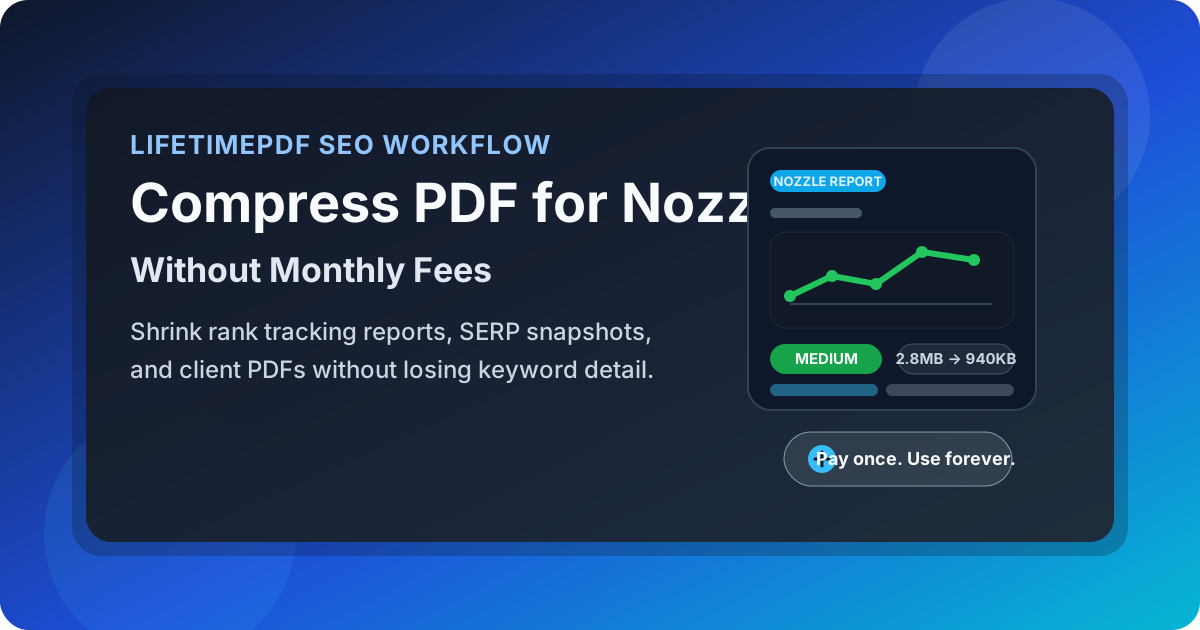
Table of contents
- Quick start: compress a Nozzle PDF in under 2 minutes
- Why "without monthly fees" matters for Nozzle exports
- Why smaller PDFs work better in Nozzle workflows
- What size should a Nozzle PDF be?
- Which compression level should you choose?
- Step-by-step: use LifetimePDF to shrink the file
- Best approach for common Nozzle PDFs
- What to do if the PDF is still too large
- How to keep rankings, screenshots, and notes readable
- Workflow habits that reduce PDF bloat
- Related LifetimePDF tools and useful reading
- FAQ (People Also Ask)
Quick start: compress a Nozzle PDF in under 2 minutes
If your real goal is simply make this Nozzle PDF smaller so it is easier to send, this workflow is usually enough:
- Open Compress PDF.
- Upload the Nozzle export you actually plan to share, whether that is a rank tracking recap, SERP snapshot, keyword group report, location breakdown, or client-ready monthly summary.
- Choose Medium compression first.
- Download the smaller result and compare the new size.
- Preview the details that matter most: keyword rows, URLs, dates, chart labels, SERP features, and recommendation notes.
- If the file is still bulky, use Extract Pages, Split PDF, or Delete Pages before forcing stronger compression across the whole report.
Why "without monthly fees" matters for Nozzle exports
Nozzle sits in the expensive, data-heavy part of the SEO workflow. By the time you are exporting a PDF, the real work is already done. You already gathered ranking movement, SERP context, segment filters, and the exact snapshot someone needs. Paying another monthly bill just to make that export smaller usually feels backwards.
A pay-once PDF workflow fits this stage better. It lets you shrink the file, trim the extra pages, and move on. That matters even more for agencies and in-house teams already juggling subscriptions for rank tracking, crawling, content tools, reporting software, and client portals. The PDF should be a packaging step, not another recurring budget line.
Why smaller PDFs work better in Nozzle workflows
Nozzle exports can get bulky fast because they often combine several things people actually care about:
- keyword rows across segments or topic groups,
- SERP screenshots or snapshot evidence,
- movement summaries over time,
- device or location comparisons, and
- commentary written for clients or stakeholders.
When that PDF is too large, it becomes annoying in all the wrong places. It uploads slower to shared drives, hits email limits sooner, opens sluggishly on mobile, and creates friction when a client or teammate just wants the answer. A smaller PDF keeps the report practical. It gets out of the way so the ranking story is easier to see.
What size should a Nozzle PDF be?
The right target depends on what the file is supposed to do:
- Under 2MB: ideal for quick SERP snapshots, short keyword updates, and fast email handoffs.
- 2MB to 5MB: realistic for multi-page rank tracking recaps, keyword group exports, and screenshot-heavy client packs.
- Over 5MB: usually a sign that the PDF includes pages not every reader needs, repeated screenshots, or a broader appendix than the next handoff requires.
In practice, readability matters more than chasing the smallest number. If the compressed file is smaller but the keyword rows, dates, and SERP details become hard to read at normal zoom, it is not a better export.
Which compression level should you choose?
Start with the lightest setting that still gives you a meaningful reduction:
- Low compression: useful when the Nozzle PDF is already fairly lean and you mainly want a small trim without touching screenshot quality much.
- Medium compression: the best starting point for most Nozzle exports because it usually reduces size while keeping keyword tables, dates, and SERP evidence readable.
- Stronger compression: only use this after you remove unnecessary pages or split the pack, because aggressive compression can blur tiny text and screenshot details.
The sweet spot for most SEO PDFs is not maximum compression. It is balanced compression plus better page selection.
Step-by-step: use LifetimePDF to shrink the file
- Export only the Nozzle report you actually need. If the file is meant for a client check-in, do not include every appendix page from the wider account archive.
- Open Compress PDF.
- Choose Medium compression first. This is usually the safest trade-off for ranking tables and SERP screenshots.
- Download the reduced copy and compare it once. Open the smaller file at normal zoom instead of assuming the size drop means success.
- Check the fragile parts. Look closely at keyword rows, page titles, dates, chart labels, and small screenshot callouts.
- Trim pages if needed. If the file is still too large, use Extract Pages, Delete Pages, or Split PDF before compressing harder.
Best approach for common Nozzle PDFs
SERP snapshots for a specific discussion
If the PDF exists to prove what the SERP looked like at a moment in time, keep the pages focused. The main risk here is blurring screenshot evidence or tiny annotations. Medium compression is usually fine, but prune duplicate snapshots before you go stronger.
Keyword group or segment recaps
These files often contain many dense rows with subtle movement markers. Compression should preserve row spacing, keyword text, positions, and dates. If the export still feels heavy after Medium compression, split the segment summary from the appendix instead of squeezing the full document harder.
Monthly client packs
Client-facing Nozzle PDFs often mix the executive summary, supporting screenshots, detailed clusters, and longer supporting sections. That is exactly where Extract Pages or Split PDF helps. The client may only need the top-level story, while the internal team keeps the full export separately.
Location or device comparison exports
These reports can become repetitive fast. If several pages repeat the same template with slightly different filters, delete obvious duplicates or break the report into cleaner smaller packs. That usually preserves clarity better than maximum compression.
What to do if the PDF is still too large
If the first compression pass does not get you where you need to be, the next step is usually document cleanup, not harsher compression.
- Extract only the pages the next reader needs.
- Split the executive summary from the appendix.
- Delete repeated screenshots or stale support pages.
- Separate different segments, locations, or devices into their own files.
This approach is especially useful for Nozzle because many exports are built for analysis first and distribution second. The version you want to keep internally is not always the version you want to send.
How to keep rankings, screenshots, and notes readable
Before you send the compressed file, do one practical quality check:
- Open the PDF at normal zoom, not just fit-to-screen.
- Scan keyword rows for fuzzy text, broken spacing, or clipped columns.
- Check dates, filters, and chart labels so the time period still makes sense.
- Zoom in on one or two SERP screenshots to make sure the evidence is still usable.
- Review any summary notes or recommendations that a client might quote back to you.
If any of those fail, go back one step. Use lighter compression or trim pages instead.
Workflow habits that reduce PDF bloat
Good export habits make compression easier:
- Export only the Nozzle filters, segments, and date ranges relevant to the handoff.
- Keep the internal archive version separate from the client version.
- Move screenshot-heavy appendices into their own PDF instead of stacking everything into one pack.
- Delete redundant pages before compression when the same evidence appears more than once.
- Name the final file clearly so people know which version to open first.
Those habits are boring in the best way. They make the handoff cleaner, and they reduce the need for aggressive compression later.
Related LifetimePDF tools and useful reading
If you work with Nozzle exports often, these are the most useful next steps:
- Compress PDF for the first file-size reduction.
- Extract Pages when only the summary or specific sections should be shared.
- Delete Pages to remove repeated screenshots or appendix clutter.
- Split PDF for executive-summary versus appendix workflows.
- Lifetime access if you want a pay-once setup instead of another recurring PDF bill.
Useful related reading: Compress PDF for Nozzle, Compress PDF for SERPWatcher Without Monthly Fees, and Compress PDF for TrueRanker Without Monthly Fees.
FAQ (People Also Ask)
How do I compress a PDF for Nozzle without monthly fees?
Use a pay-once PDF tool like LifetimePDF, upload the Nozzle export, start with Medium compression, and review the smaller result once before sharing it. If the file is still too large, split or extract only the pages the next reader actually needs instead of over-compressing the whole report.
Why look for a Nozzle PDF workflow without monthly fees?
Because PDF cleanup is usually a finish-line task after the real ranking work is already done in Nozzle. If you already pay for SEO tools, another recurring fee just to shrink exports is hard to justify. A pay-once workflow fits the job better.
What file size should I aim for with Nozzle PDFs?
Under 2MB is a strong target for short SERP snapshots and quick client updates. Broader rank tracking recaps, keyword group packs, and screenshot-heavy exports usually work better around 2MB to 5MB as long as the smallest useful text still looks clear.
Will compression make Nozzle keyword tables or screenshots blurry?
It can if you compress too aggressively. That is why Medium compression is usually the safest first pass. Review keyword rows, chart labels, dates, SERP screenshots, and comments before you keep the smaller copy.
Should I split a large Nozzle report instead of compressing it harder?
Often, yes. If one PDF mixes executive summaries, keyword clusters, location comparisons, SERP evidence, and appendix pages for different readers, splitting it usually works better than forcing stronger compression across the whole document.
Bottom line: if you need to compress a PDF for Nozzle without monthly fees, start with Medium compression, keep only the pages people actually need, and use a pay-once workflow that treats PDF cleanup as the last step instead of another subscription.