Compress PDF for Marketo: Make Landing-Page Downloads, Nurture Assets, and Follow-Up PDFs Open Faster
To compress a PDF for Marketo, upload the final file to LifetimePDF's Compress PDF tool, start with Medium compression, and keep the smaller copy only after it opens cleanly from your email program, landing page, form follow-up, or nurture flow.
For most Marketo PDFs, under 3MB is a comfortable target for one-pagers, handouts, and lead magnets, while longer guides, webinar decks, and sales-enablement PDFs usually work best around 3MB to 6MB after light cleanup.
In Marketo, the real problem is rarely whether the PDF exists somewhere in the program. It is whether the file still feels easy to open at the exact moment someone clicks from an email, a form thank-you page, or a nurture step that is supposed to keep momentum moving. The best file is not the tiniest one. It is the lightest version that still feels polished, readable, and safe to act on.
Fastest path: run the Marketo PDF through LifetimePDF's Compress PDF tool on Medium, then test the smaller file from the exact email, landing-page, or nurture path real people use.
In a hurry? Jump to Quick start: compress a Marketo PDF in about 2 minutes.
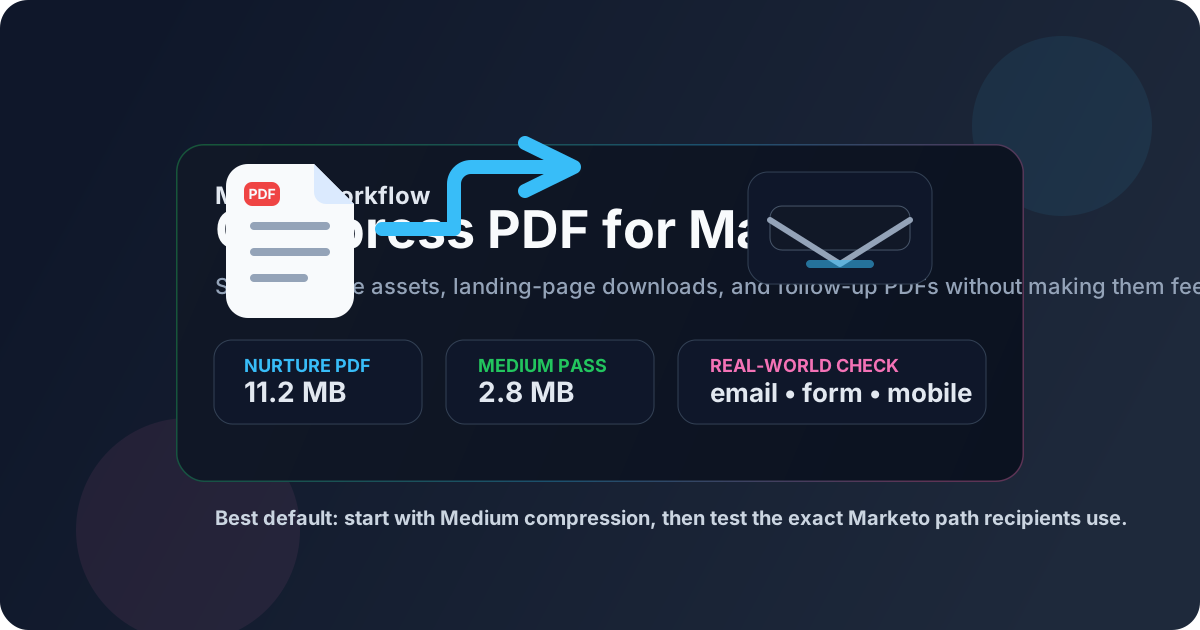
Table of contents
- Quick start: compress a Marketo PDF in about 2 minutes
- Why Marketo PDFs get heavy so quickly
- Where large PDFs create friction inside a Marketo workflow
- What file size should you aim for?
- Which compression level should you choose?
- Step-by-step: shrink a Marketo PDF with LifetimePDF
- Best strategy for common Marketo PDF types
- What if the file is still too big?
- How to keep text, charts, and CTA pages readable
- Workflow habits that keep Marketo PDFs lighter
- Related LifetimePDF tools and useful internal reading
- FAQ (People Also Ask)
Quick start: compress a Marketo PDF in about 2 minutes
If your real goal is simply make this Marketo PDF easier to open without making it look worse, this workflow is usually enough:
- Start with the exact PDF you plan to deliver, not a bloated draft or archive copy.
- Open Compress PDF.
- Choose Medium compression first.
- Download the smaller copy and compare the file size with the original.
- Open that copy from the real Marketo path: an email send, a landing-page thank-you step, a form follow-up, or a nurture email.
- Keep the new version only if the busiest page still feels trustworthy on desktop and on a phone.
Why Marketo PDFs get heavy so quickly
Marketo PDFs often get heavier than they need to be because one file keeps getting reused across several moments in the funnel. A webinar handout becomes the same PDF used in a follow-up email. That same file gets reused in a nurture stream. Then it appears on a landing page, in a sales handoff, or inside a content syndication follow-up. By the time it goes live everywhere, it is carrying appendix pages, oversized screenshots, print-quality charts, and old sections that only made sense in the internal master.
The text itself is rarely the real issue. File weight usually comes from oversized images, repeated cover pages, dense deck exports, wide margins, and one PDF trying to serve as both the polished recipient version and the internal working copy. Compression helps, but it works best when the file is already focused.
- Lead magnets get heavy when every page is visual and every screenshot is exported much larger than a subscriber needs.
- Webinar follow-up PDFs bloat when deck pages, bonus materials, and speaker appendices all stay bundled together.
- Nurture assets become clumsy when one download tries to answer every question instead of delivering the one thing promised in that step.
- Sales follow-up files feel slow when one PDF mixes the core one-pager with background materials that should be separate attachments.
Where large PDFs create friction inside a Marketo workflow
A large PDF does not just add a few seconds of waiting. It weakens the moments where intent is highest and patience is thinnest. The most common trouble spots inside a Marketo workflow are usually:
- email programs where a resource should open quickly from the inbox
- landing-page deliveries where someone expects the promised file immediately after submitting a form
- nurture streams where a slower PDF can break momentum in a multi-step sequence
- webinar and event follow-ups where deck downloads should feel easy, not bulky
- mobile opens where a technically valid PDF still feels annoying to download and read
That is why “the asset is linked” is not the same as “the asset is working.” In Marketo, delivery is only half the job. The other half is whether the PDF still feels fast and clear enough to keep the click moving.
What file size should you aim for?
There is no single perfect number for every Marketo workflow, but these ranges are a strong practical starting point:
| Marketo PDF type | Comfortable target | Why that range works |
|---|---|---|
| Lead magnet, one-pager, short follow-up file | 1MB to 3MB | Fast enough for email and landing-page delivery while keeping text and branding crisp |
| Guide, webinar handout, nurture asset | 3MB to 5MB | Leaves room for screenshots and charts without making the file feel clumsy |
| Image-heavy deck or sales-enablement PDF | 4MB to 6MB | Still reasonable if the visuals earn the weight and the smallest useful text stays readable |
| Very large bundle | Split it | If one PDF is doing too many jobs, splitting usually works better than forcing harder compression |
The smarter question is not How tiny can I make this? It is How small can I make it before the least readable but still important detail starts to feel weak?
Which compression level should you choose?
For Marketo PDFs, Medium compression is usually the safest first move. It tends to cut enough weight to matter while preserving body text, charts, screenshots, logos, QR codes, and CTA pages.
- Light compression works when the file is already fairly lean and only needs a modest reduction.
- Medium compression is the best default for most lead magnets, landing-page downloads, and nurture-linked resources.
- Strong compression is better as a fallback after cleanup, not as your first click.
If Medium still leaves the PDF too heavy, that usually means the structure needs work. Remove bonus pages, trim oversized screenshots, or split the file before you push quality harder than necessary.
Step-by-step: shrink a Marketo PDF with LifetimePDF
- Start with the final share copy. Use the exact PDF recipients will open, not the archive master.
- Open Compress PDF.
- Choose Medium compression first. That is usually the cleanest starting point for Marketo downloads.
- Download the smaller version. Check whether the size reduction is meaningful.
- Test the real delivery path. Place the file in the exact Marketo email, landing page, form flow, or nurture step you really use.
- Open the live file once on desktop and once on mobile. Look at small body text, charts, screenshots, pricing blocks, QR codes, and any page carrying the next step.
- Only then replace the original everywhere. If quality still feels trustworthy, publish the lighter copy. If not, clean up the structure and compress again.
Best practical sequence: compress first, test the real Marketo path second, trim pages third, and only then consider stronger compression.
Best strategy for common Marketo PDF types
Lead magnets
These should feel fast and rewarding. If someone just filled out a Marketo form, the promised download should not arrive feeling like a giant archive. Keep the main promise tight, aim for under 3MB when you can, and move extras into later emails if they add too much weight.
Webinar and event follow-up decks
These get heavy quickly because slide exports often carry large visuals and speaker notes turned into appendix pages. People usually care about the main slides, the action items, and maybe a linked worksheet. If the file still feels bulky after Medium compression, split the deck from bonus resources instead of forcing stronger compression across the whole bundle.
Nurture assets
A nurture PDF should match the stage of the sequence. If one file tries to be an explainer, a product brochure, a buyer guide, and a sales deck at the same time, it will feel heavier than it needs to. Lighter, more focused PDFs usually perform better than one giant all-purpose attachment.
Sales follow-up one-pagers
These need to feel polished and low-friction. Be careful with tiny charts, comparison grids, pricing callouts, proof points, and booking prompts. If those soften too much, remove appendix material before compressing harder.
Landing-page resource packs
People often open these right after a form submit while the topic is still fresh. A smaller PDF keeps that momentum intact. Medium compression is still the right starting point, but check the hardest page to preserve: instructions, tables, screenshots, and any page the reader acts on immediately.
What if the file is still too big?
If you compressed the PDF and it still feels wrong for Marketo, the problem may not be the compressor. The file may still carry too much structural bloat for compression alone to solve.
- Split the PDF if one file combines the main download, appendix pages, webinar extras, and later-stage materials.
- Delete repeated pages such as duplicate covers, stale promo pages, or archive-only sections.
- Crop wide margins when the layout wastes space without improving readability.
- Keep an archive copy and a recipient copy if the heavier master still matters internally.
- Review the mobile click path because a technically valid link can still feel too heavy from a phone inbox or landing-page handoff.
How to keep text, charts, and CTA pages readable
A smaller PDF is only better if it still works. Before you replace the original file, check the details most likely to break trust:
- small body text and footnotes
- charts, screenshots, and tiny labels
- comparison tables, pricing blocks, and proof-point slides
- CTA pages, booking links, QR codes, or next-step prompts
- form instructions or follow-up pages that people need to act on right away
- the busiest page in the whole PDF, not only the cleanest page
If the smallest useful detail still feels easy to trust at normal laptop zoom and on a phone download, the file is probably compressed enough.
Workflow habits that keep Marketo PDFs lighter
- Make a recipient copy and a master copy when the same PDF does not need to do both jobs.
- Compress after the final export so you optimize the exact file people will open.
- Keep the first promised asset focused and send bonus material later if it bloats the immediate click.
- Test the real Marketo path after replacing the file instead of judging quality only from the local folder.
- Clean metadata before publishing with PDF Metadata Editor if you want the file title and properties to look more polished.
- Move web-native content out of the PDF when a short explanation belongs in the email or on the landing page instead.
Compression works best as final polish, not as a rescue plan for a PDF that was oversized long before it reached the recipient.
Related LifetimePDF tools and useful internal reading
If Marketo is part of your email, lead-gen, or nurture workflow, these tools and articles pair well with this guide:
- Compress PDF for the first size-reduction pass.
- Split PDF for large downloads that should become smaller parts.
- Extract Pages when only the core section should be delivered.
- Delete Pages to remove stale appendix pages or repeated covers.
- Crop PDF to trim wasted margins from print-oriented layouts.
- PDF Metadata Editor for cleaner download properties.
- Compress PDF for HubSpot.
- Compress PDF for Mailchimp.
- Compress PDF for ActiveCampaign.
- Compress PDF for Customer.io.
- Lifetime access if PDF cleanup is a recurring part of your publishing workflow.
Bottom line: for most Marketo PDFs, start with Medium compression, test the real email or landing-page path, and trim page weight before you use stronger compression.
FAQ (People Also Ask)
How do I compress a PDF for Marketo?
Upload the final PDF to a compressor, start with Medium compression, download the smaller copy, and test the exact Marketo email, landing page, form follow-up, or nurture step before replacing the original. Medium is usually the safest first pass because it lowers file size without making text, charts, screenshots, or CTA pages feel unreliable.
What file size should I aim for in Marketo?
For many lead magnets, one-pagers, and short follow-up files, under 3MB is a comfortable target. Longer guides, webinar decks, and image-heavy enablement PDFs often work best around 3MB to 6MB as long as the smallest useful text still reads clearly.
Why does a Marketo PDF still feel slow after I add it to a landing page or nurture flow?
Because a PDF can be linked correctly and still feel heavy when someone opens it from a phone inbox, a form thank-you page, or a nurture email. Compression helps, but removing extra pages, wide margins, and oversized images often improves the real click experience even more.
Will PDF compression make my Marketo asset blurry?
It can if you compress too aggressively. That is why Medium compression is the best place to start. Always check body text, charts, screenshots, QR codes, and any page carrying the next action before replacing the original.
Should I split a long PDF instead of compressing it harder for Marketo?
Often, yes. If one PDF combines the core download with appendix pages, bonus material, webinar extras, and later-stage resources for different moments, splitting it usually creates a cleaner Marketo experience than forcing the whole bundle through aggressive compression.
Published by LifetimePDF - Pay once. Use forever.