Compress PDF for MarketMuse: Keep Content Briefs, Topic Models, and Strategy PDFs Small Without Losing Clarity
To compress a PDF for MarketMuse, export the brief or report, upload it to LifetimePDF's Compress PDF tool, start with Medium compression, and keep the smaller copy only if topic labels, headings, tables, notes, and screenshots still look clear.
For most MarketMuse PDFs, under 2MB is a strong target for single briefs and quick handoffs, while content plans, topic-model exports, inventory reviews, and client-ready strategy packs usually work best around 2MB to 5MB.
MarketMuse PDFs usually appear at the exact moment somebody wants the strategy to move faster. A writer needs the brief, an editor needs the plan, a strategist needs a cleaner export, or a client needs a readable summary without another login. That is why file size matters. Smaller PDFs upload more smoothly, open faster, and create less friction around the handoff. The goal is not to force every file to the tiniest possible number. The goal is to make it light enough to share while keeping the parts people actually rely on easy to trust.
Fastest path: export the MarketMuse PDF you actually plan to send, run it through Compress PDF at Medium, then do one quick readability check before you upload, email, or archive the smaller copy.
Need the short version? Jump to Quick start: compress a MarketMuse PDF in under 2 minutes.
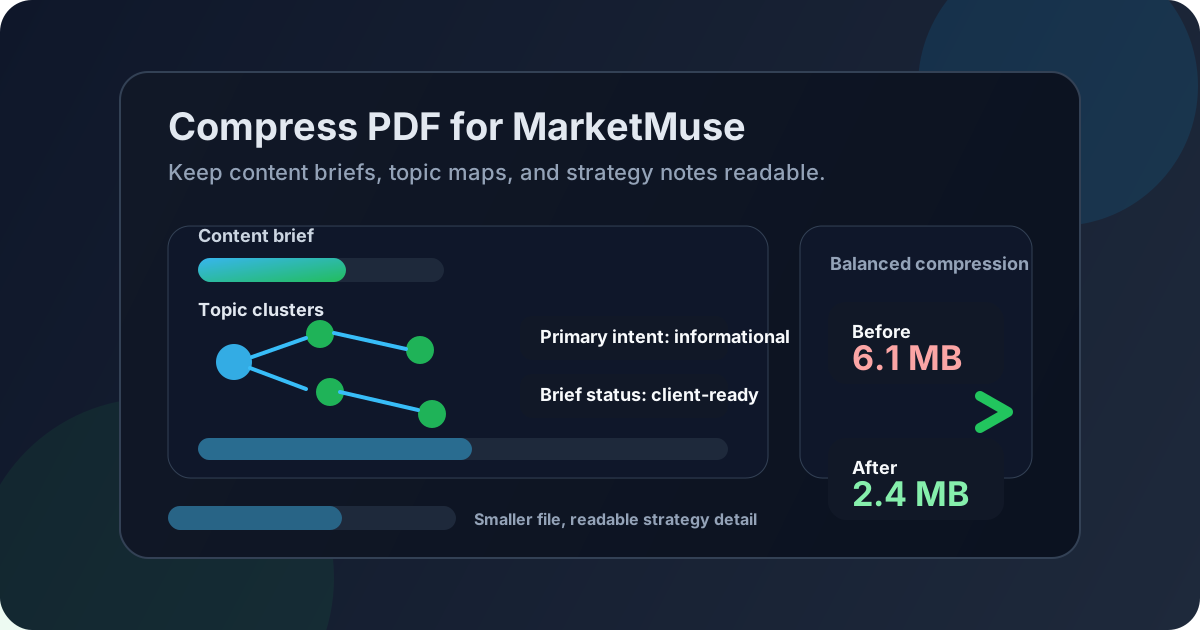
Table of contents
- Quick start: compress a MarketMuse PDF in under 2 minutes
- Why MarketMuse PDFs get heavy faster than expected
- What file size should you aim for?
- Which compression level should you choose?
- Step-by-step: shrink a MarketMuse PDF with LifetimePDF
- Best strategy for common MarketMuse PDF types
- What to remove before stronger compression
- How to keep topic maps, tables, and screenshots readable
- Workflow habits that keep MarketMuse exports cleaner
- Related LifetimePDF tools and useful reading
- FAQ (People Also Ask)
Quick start: compress a MarketMuse PDF in under 2 minutes
If your real goal is simply make this MarketMuse PDF smaller so it is easier to send and review, this workflow is usually enough:
- Open Compress PDF.
- Upload the content brief, topic-model export, content plan, inventory summary, or client-ready PDF you actually plan to share.
- Choose Medium compression first.
- Download the smaller result and compare the size difference.
- Open it once and check the weak spots: topic labels, headings, recommendation blocks, screenshots, notes, and narrow table columns.
- If the file is still bulkier than it should be, split the appendix, extract only the useful pages, or crop oversized screenshots before trying stronger compression.
Why MarketMuse PDFs get heavy faster than expected
MarketMuse PDFs often get bulky because one export is trying to do several jobs at once. The same document may be a writer brief, an editorial planning packet, a strategist backup file, a client summary, and an archive copy all in one. Compression helps, but the real size problem is often scope. Too many screenshots, too many appendix pages, too many alternate views, and too much support material for the next reader to realistically need.
Content strategy exports also mix different kinds of weight. Headings and normal text compress well. Screenshot-heavy pages, wide tables, topic maps, and captured interface views can stay heavy much longer. That is why the best result usually comes from balanced compression plus a little cleanup instead of immediately pushing the strongest setting.
What adds weight
Wide screenshots, repeated appendix pages, full backups for every audience, and exports that keep more proof than the next reader actually needs.
What must stay clear
Topic labels, headings, recommendation blocks, table columns, screenshot callouts, and the summary notes that explain what should happen next.
What helps most
Medium compression first, then page trimming or splitting if the file is still too heavy for the way you need to share it.
What file size should you aim for?
There is no single perfect target for every MarketMuse PDF, but a few practical ranges keep you from compressing harder than necessary:
| PDF type | Good target | Why it helps |
|---|---|---|
| Single content briefs and quick editorial handoffs | Under 2MB | Great for fast sharing, easier email delivery, and smoother review on normal laptops or phones |
| Most content plans, topic-model exports, and strategy summaries | 2MB to 5MB | Usually the best balance between readability and convenience |
| Client-ready packs with screenshots and appendix pages | 4MB to 6MB if needed | Still workable, but often worth splitting if several people need to open it repeatedly |
| Over 6MB | Compress again or clean the structure | Often a sign the packet carries more support material than the next reader really needs |
These are comfort targets, not hard rules. If the PDF is going to writers, editors, stakeholders, or clients, lighter usually feels better. But smaller is only better as long as the smallest useful detail still reads clearly.
Which compression level should you choose?
LifetimePDF keeps the choice simple: Low, Medium, or High. For MarketMuse, most people are not trying to squeeze every byte out of the file. They are trying to make the document easier to move around without damaging topic maps, notes, screenshots, tables, or recommendation summaries.
Low compression
- Best when the PDF is already close to the size you want.
- Useful for detail-heavy reports with small labels or fine screenshot text.
- Usually not the best first pass if the file is obviously bulkier than it should be.
Medium compression
- Best starting point for most MarketMuse workflows.
- Reduces size meaningfully while keeping headings, topic labels, notes, tables, and screenshots readable.
- Good for writer handoffs, planning packets, inventory summaries, and client-ready recaps.
High compression
- Useful when the file is still too heavy after cleanup.
- More likely to soften tiny table text, screenshot detail, or slim note columns.
- Best used after you have already removed unnecessary appendix pages or oversized captures.
Step-by-step: shrink a MarketMuse PDF with LifetimePDF
Here is the workflow that works well for most MarketMuse exports and strategy packets:
- Open Compress PDF.
- Upload the final MarketMuse PDF you actually plan to store, attach, or send.
- Choose Medium compression.
- Download the smaller result and compare the size reduction.
- Review the most fragile details once at normal zoom.
- If the file is still too large, use Extract Pages, Split PDF, Delete Pages, or Crop PDF before compressing harder.
That last step matters more than it sounds. Many oversized MarketMuse PDFs do not need harsher compression as much as they need less dead weight. If half the document is support material, repeated screenshots, or appendix pages different readers do not need, removing that bulk usually works better than degrading every page equally.
When compression alone is not enough: use a cleanup step before you try High compression.
Best strategy for common MarketMuse PDF types
Content briefs for writers
These should feel quick and easy to scan. Medium compression is usually the safest start. Watch the section headings, topic priorities, notes, and examples because those are the details that stop being useful fastest when quality drops too far.
Topic-model exports and planning packets
These often include more structure, more screenshots, and more pages than a simple brief. Compress first, then consider splitting the summary from the appendix. The person approving the strategy may not need every supporting page in the same file.
Inventory reviews and broader strategy summaries
Inventory-style PDFs can get heavy quickly because they collect tables, screenshots, notes, and broader planning context. If compression alone does not help enough, extract the decision-ready pages and keep the full archive separately.
Client-ready recommendation PDFs
This is where file bloat usually becomes obvious. One packet may contain summaries, proof screenshots, alternate exports, and appendix notes all at once. Compression helps, but the bigger win often comes from creating one cleaner main file and one backup appendix.
What to remove before stronger compression
If a MarketMuse PDF is still too large after one normal pass, the better answer is often to remove waste instead of immediately switching to a harsher setting. The usual culprits are not the strategic ideas themselves. They are the extra pages surrounding them.
- Repeated title pages or old covers
- Appendix sections that only one internal reviewer needs
- Screenshots that duplicate what the brief or summary already explains
- Full exports when a two-page summary would do
- Pages kept only because they might be useful someday
If a client needs the summary now and the appendix later, send two files. It is cleaner for them and usually better for file size than trying to make one oversized PDF satisfy every scenario.
How to keep topic maps, tables, and screenshots readable
The file is only better if it still works. Before you replace the original export, check the details most likely to break:
- topic labels and hierarchy notes
- small table columns and metric labels
- section headings and summary callouts
- screenshot text and highlighted evidence
- recommendation blocks and next-step notes
- the busiest appendix page in the packet
A quick review at ordinary laptop zoom is usually enough. If the smallest important detail is still easy to trust, the PDF is probably compressed enough.
Workflow habits that keep MarketMuse exports cleaner
The best long-term fix is not only better compression. It is fewer bloated exports entering the workflow in the first place.
- Export only what the audience needs.
- Separate shareable summaries from backup evidence when different readers need different depth.
- Avoid repeated screenshots when one good page proves the point.
- Trim duplicate revisions before archiving the final file.
- Default to Medium compression for recurring content-strategy handoffs.
- Think about the next person opening the file on a normal laptop or phone, not just a large monitor.
These habits matter because compression works best as final polish, not as the rescue plan for a strategy packet that tried to do too many jobs at once.
Related LifetimePDF tools and useful reading
If MarketMuse exports are part of your normal workflow, these tools and guides pair well with this article:
- Compress PDF for the first size-reduction pass.
- Extract Pages when only part of the strategy needs to be shared.
- Split PDF for long packets with summaries and appendices.
- Delete Pages to remove repeated covers or outdated support sections.
- Crop PDF to trim screenshot or scanner waste.
- Compare PDFs if you want a quick before-and-after review.
- PDF Metadata Editor if you want the final document properties to look clean.
- Compress PDF for MarketMuse: Share Smaller Content Briefs, Content Plans, and Client PDFs Faster for the broader companion guide.
- Compress PDF for MarketMuse Without Monthly Fees if pricing model is part of the search.
- Compress PDF for Keysearch if your keyword research workflow crosses more than one SEO tool.
Bottom line: for most MarketMuse PDFs, start with Medium compression, review the smallest useful details once, and trim page weight before you use stronger compression.
FAQ (People Also Ask)
How do I compress a PDF for MarketMuse?
Export the MarketMuse report or brief to PDF, upload it to a compressor, start with Medium compression, and keep the smaller copy only if headings, topic models, notes, tables, and screenshots still read clearly. Medium compression is usually the safest first pass because it lowers file size without making the strategy harder to use.
What file size should I aim for with MarketMuse PDFs?
Under 2MB works well for single content briefs and quick editorial handoffs. Broader content plans, topic-model exports, inventory reviews, and client-ready strategy summaries usually land best around 2MB to 5MB as long as the smallest useful details still read clearly.
Will compression make MarketMuse screenshots or topic maps blurry?
It can if you compress too aggressively. That is why Medium compression is usually the best starting point. Always review topic labels, headings, screenshot callouts, tables, and recommendation blocks before you replace the original export.
Should I split a large MarketMuse report instead of compressing it harder?
Often, yes. If one PDF combines the main brief, planning notes, backup research, screenshots, and appendix pages for different readers, splitting it usually works better than forcing stronger compression across the whole packet.
Which LifetimePDF tools pair best with MarketMuse workflows?
Compress PDF is the main starting point. Split PDF, Extract Pages, Delete Pages, Crop PDF, Compare PDFs, and PDF Metadata Editor are especially useful when you want smaller, cleaner strategy packets without dragging every backup page along.
Published by LifetimePDF - Pay once. Use forever.