Compress PDF for MarketMuse Without Monthly Fees: Shrink Content Briefs, Content Plans, and Strategy PDFs Without Another Subscription
If you need to compress a PDF for MarketMuse without monthly fees, export the brief or report, upload it to LifetimePDF's Compress PDF tool, start with Medium compression, and keep the smaller copy only if topic maps, recommendations, and screenshots still look clear.
For most MarketMuse briefs, content plans, inventory exports, and strategy PDFs, that is enough to reduce file size without adding another recurring subscription to your content workflow.
MarketMuse already handles the heavy strategic work. The PDF step should stay simple. Usually the goal is not to buy one more tool. It is to send a cleaner brief to a writer, upload a smaller plan to a client portal, or save a strategy document that opens quickly on any device. A pay-once PDF workflow makes sense because compression is usually the final polish, not the main event.
Fastest path: run the MarketMuse PDF through LifetimePDF's Compress PDF tool at Medium, then split or extract pages only if the file is still heavier than the next reader needs.
In a hurry? Jump to Quick start: compress a MarketMuse PDF in under 2 minutes.
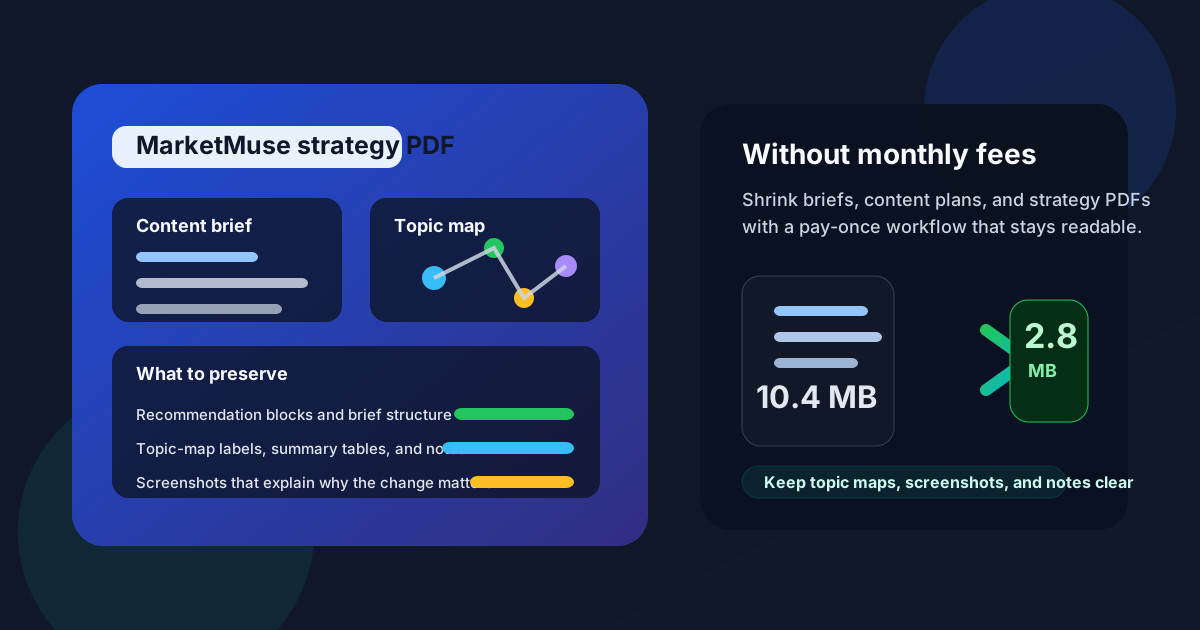
Table of contents
- Quick start: compress a MarketMuse PDF in under 2 minutes
- Why "without monthly fees" matters for MarketMuse PDFs
- Why smaller PDFs help in MarketMuse workflows
- What size should you aim for?
- Which compression level should you choose?
- Step-by-step: use LifetimePDF to shrink the file
- Best approach for common MarketMuse PDFs
- What to do if the PDF is still too large
- How to keep topic maps, notes, and screenshots readable
- Workflow habits that reduce PDF bloat
- Related LifetimePDF tools and useful reading
- FAQ (People Also Ask)
Quick start: compress a MarketMuse PDF in under 2 minutes
If your real goal is simply make this MarketMuse PDF smaller so it is easier to send, this workflow is usually enough:
- Open Compress PDF.
- Upload the MarketMuse file you actually plan to share.
- Choose Medium compression first.
- Download the smaller result and compare the new size.
- Preview the details that matter most: headings, recommendation blocks, topic maps, summary tables, screenshots, and notes.
- If the PDF is still bulky, use Extract Pages, Split PDF, or Delete Pages instead of repeatedly crushing the whole file.
Why "without monthly fees" matters for MarketMuse PDFs
People rarely search this because they want to build a new PDF stack. They search it because one document needs to get smaller right now. Maybe a writer needs the brief, a strategist needs the planning recap, or a client needs the recommendation pack in a portal with tight file limits. In that moment, another monthly fee feels backwards.
MarketMuse already sits in a paid content workflow for many teams. Adding another recurring charge just to shrink exports creates friction where there should be none. A pay-once PDF tool fits the task better because the problem is simple: make the file lighter without making the advice harder to trust.
Why smaller PDFs help in MarketMuse workflows
MarketMuse PDFs often move between different people who do not all need the same level of detail. A content strategist may want the full context, but a writer may only need the brief. A client may only need the final recommendation pages. Smaller PDFs are faster to upload, faster to open on mobile, and easier to archive in email, Slack, shared drives, or project tools.
- Writers can open the brief faster and start working sooner.
- Editors can review recommendations without waiting on a heavy attachment.
- Clients get a cleaner strategy handoff that feels easier to consume.
- Your team avoids storing several oversized copies of the same planning document.
What size should you aim for?
There is no perfect universal number, but there are practical targets that work well in most teams.
- Under 2MB: ideal for single briefs, editor handoffs, or focused recommendation summaries.
- 2MB to 5MB: realistic for content plans, inventory exports, and screenshot-heavy client strategy PDFs.
- Above 5MB: a sign that the file probably includes extra appendix pages, repeated screenshots, or more context than the next reader needs.
Which compression level should you choose?
Most MarketMuse PDFs contain a mix of text, screenshots, charts, and structured recommendations. That is why the middle setting is usually the most reliable.
| Compression level | Best for | Watch out for |
|---|---|---|
| Low | Already-clean PDFs that only need a modest size reduction | May not shrink screenshot-heavy plans or inventory exports enough |
| Medium | Most MarketMuse briefs, content plans, inventory summaries, and strategy handoffs | Usually the best balance, but still review small callouts, tables, and screenshots |
| High | Bulky PDFs that remain too large after cleanup and a medium pass | Can soften small text, topic-map labels, and screenshot detail if pushed too far |
Step-by-step: use LifetimePDF to shrink the file
- Export the MarketMuse PDF you actually plan to share. Do not compress an outdated draft if the brief or plan has already changed.
- Open Compress PDF.
- Upload the file. This could be a content brief, content plan, inventory review, cluster summary, or client-ready recommendation pack.
- Select Medium compression. That is the best first pass for most MarketMuse workflows.
- Download the smaller result.
- Check the parts readers actually use. Review headings, suggested topics, recommendation blocks, screenshots, notes, and any summary table with small text.
- Trim pages if needed. If the file still feels too large, use Delete Pages, Extract Pages, or Split PDF before trying heavier compression.
Best approach for common MarketMuse PDFs
Not every MarketMuse export behaves the same way. The smartest workflow depends on what kind of PDF you are sending.
Content briefs
Briefs are usually text-first with a few screenshots or examples. Medium compression is often enough. The main thing to check afterward is whether headings, recommended topics, internal notes, and section structure still scan comfortably.
Content plans and cluster roadmaps
These often include more structure, more context, and more pages. Compress first, then consider splitting the overview from the appendix. The people approving a plan may not need every supporting page in the same file.
Inventory exports and strategy reviews
Inventory-style documents can get heavy fast because they collect tables, screenshots, and broader planning context. If compression alone does not help enough, extract the decision-ready pages and keep the full archive separately.
Client-ready recommendation PDFs
These need to feel polished and easy to trust. A smaller file helps, but not if it blurs the exact recommendations or screenshots that explain the plan. Prioritize clarity over the tiniest possible number.
What to do if the PDF is still too large
If Medium compression helps but not enough, smarter cleanup is usually better than immediately switching to the strongest setting.
- Remove repeated screenshots or stale appendix pages.
- Split a long strategy pack into a main summary and a supporting appendix.
- Extract only the pages needed for a writer, editor, or client.
- Crop oversized margins or wasted canvas with Crop PDF.
- Keep one archival master and send a lighter working copy to the next reader.
How to keep topic maps, notes, and screenshots readable
After compression, do one quick review before you send the file. You do not need a long QA ritual. You only need to confirm that the details someone will actually use still look dependable.
- Check headings and section labels.
- Zoom in on recommendation blocks, topic maps, and small table text.
- Review screenshot callouts and any notes that explain why a change matters.
- Confirm charts, plan summaries, and inventory tables still read clearly at normal zoom.
- Open the file on a second device if the audience often reviews PDFs on mobile.
Workflow habits that reduce PDF bloat
The easiest way to get smaller PDFs is to avoid unnecessary weight before export. A few habits make a real difference.
- Keep the share version separate from the raw research archive.
- Send role-specific PDFs instead of one giant planning pack for everybody.
- Use one screenshot when one screenshot is enough.
- Drop stale revision pages before you export the final handoff copy.
- Standardize on a medium-compression review step before external sharing.
Related LifetimePDF tools and useful reading
If you want a cleaner MarketMuse workflow without monthly fees, these tools and related guides pair well with this task:
- Compress PDF for the main file-size reduction step.
- Split PDF when the main plan and appendix should be separate files.
- Extract Pages when only a few sections need to be shared.
- Delete Pages for removing repeated screenshots or stale strategy pages.
- Crop PDF to trim oversized margins and wasted space.
- Compress PDF for MarketMuse for the broader MarketMuse workflow guide.
- Compress PDF for Clearscope Without Monthly Fees for a similar content-brief workflow.
- Compress PDF for Frase Without Monthly Fees for optimization reports and writer handoffs.
- Compress PDF for Surfer SEO Without Monthly Fees for content audits and optimization briefs.
FAQ (People Also Ask)
1) How do I compress a PDF for MarketMuse without monthly fees?
Use a pay-once PDF tool like LifetimePDF, upload the MarketMuse PDF, start with Medium compression, and preview the smaller result before sharing it. If the file is still bulky, split or extract the pages people actually need instead of over-compressing the whole export.
2) What file size should I aim for with MarketMuse PDFs?
Under 2MB is a strong target for single content briefs, editor handoffs, and focused strategy summaries. Larger content plans, inventory exports, and screenshot-heavy client recaps often work better around 2MB to 5MB as long as the smallest important text still looks clear.
3) Will compression make MarketMuse topic maps or screenshots blurry?
It can if you compress too aggressively. That is why Medium compression is usually the safest first pass. Review topic maps, recommendation blocks, screenshots, summary tables, and notes before you keep the smaller copy.
4) Should I split a large MarketMuse PDF instead of compressing it harder?
Often, yes. If one PDF mixes the main brief, content-plan overview, research appendix, screenshots, and client summary for different readers, splitting it usually works better than forcing stronger compression across the whole file.
5) Why look for a MarketMuse PDF workflow without monthly fees?
Because PDF cleanup is usually a finish-line task. If you already pay for MarketMuse and the rest of your SEO stack, another recurring charge just to shrink exports is hard to justify. A pay-once workflow fits the job better.
Published by LifetimePDF - Pay once. Use forever.