Compress PDF for Long Tail Pro Without Monthly Fees: Shrink Keyword Research Exports, Competitiveness Reports, and Client PDFs Without Another Subscription
If you need to compress a PDF for Long Tail Pro without monthly fees, export the report, upload it to LifetimePDF's Compress PDF tool, start with Medium compression, and keep the smaller copy only if keyword rows, competitiveness scores, screenshots, and notes still look clean.
For most Long Tail Pro exports, that is enough to reduce file size without adding another recurring subscription just to package keyword research for sharing.
Long Tail Pro reports usually become PDFs because the research needs to leave the tool and become useful for somebody else. Maybe you are handing a shortlist to a writer, sending competitiveness findings to a strategist, or packaging a cleaner summary for a client who only needs the key opportunities. The PDF step should not require another monthly bill. Usually the job is simpler than that. You need a smaller file that opens faster, uploads more easily, and still preserves the details that make the research trustworthy. That is exactly where a pay-once workflow makes sense.
Fastest path: run the Long Tail Pro PDF through LifetimePDF's Compress PDF tool at Medium, then split or extract pages only if the file is still heavier than the next reader needs.
In a hurry? Jump to Quick start: compress a Long Tail Pro PDF in under 2 minutes.
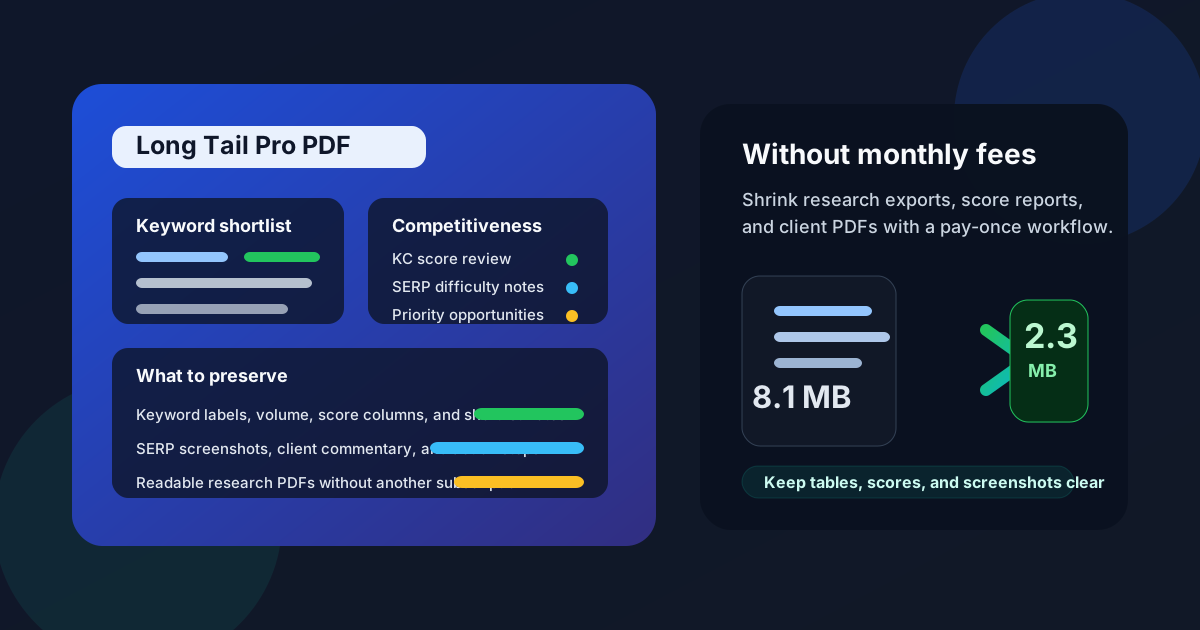
Table of contents
- Quick start: compress a Long Tail Pro PDF in under 2 minutes
- Why "without monthly fees" matters here
- Why smaller PDFs help in Long Tail Pro workflows
- What file size should you aim for?
- Which compression level should you choose?
- Step-by-step: use LifetimePDF to shrink the file
- Best approach for common Long Tail Pro PDFs
- What to do if the PDF is still too large
- How to keep keyword tables, competitiveness scores, and screenshots readable
- Workflow habits that reduce PDF bloat
- Related LifetimePDF tools and useful reading
- FAQ (People Also Ask)
Quick start: compress a Long Tail Pro PDF in under 2 minutes
If your real goal is simply make this Long Tail Pro PDF smaller so it is easier to send, this workflow is usually enough:
- Open Compress PDF.
- Upload the Long Tail Pro export, competitiveness report, shortlist handoff, screenshot-backed recap, or client-ready summary you actually plan to share.
- Choose Medium compression first.
- Download the smaller result and compare the new size.
- Preview the details that matter most: keyword rows, competitiveness scores, search volume columns, screenshots, and summary notes.
- If the file is still bulky, use Extract Pages, Split PDF, or Delete Pages instead of repeatedly crushing the whole pack.
Why "without monthly fees" matters here
People rarely search this because they want a bigger PDF stack. They search it because one export needs to get smaller right now. Maybe a writer needs a lighter keyword shortlist. Maybe a strategist needs to upload a competitiveness pack to a client portal. Maybe an account manager wants a cleaner summary that feels easier to forward. In those moments, another recurring bill feels backwards.
Long Tail Pro already sits inside a paid or time-intensive keyword workflow for many teams. Adding another monthly fee just to shrink exported PDFs creates friction at the very end of the process. A pay-once PDF workflow fits the job better because compression is usually the finish-line cleanup step, not the main event.
Simple rule: if the expensive work happened in research, the PDF cleanup step should stay quick, practical, and easy to repeat.
Why smaller PDFs help in Long Tail Pro workflows
Long Tail Pro PDFs usually exist because someone needs a fixed, shareable version of the research outside the tool itself. That might be a shortlist for a new article, a competitiveness review for content planning, a SERP evidence pack for internal debate, or a client recap that combines screenshots with recommendations. Once the file leaves the tab, size starts to matter.
Heavy PDFs are slower to upload, more annoying to email, and easier for busy people to postpone. In practice, the extra weight usually comes from wide screenshots, repeated exports, appendix pages, or one oversized PDF trying to answer every possible question at once. Good compression is not about chasing the tiniest possible number. It is about trimming waste while protecting the details people still need to trust, compare, and reuse.
- Writers get lighter handoff files that open quickly.
- Strategists can share evidence without shipping bloated appendices every time.
- Client recaps feel more polished when they are easy to open on laptop or mobile.
- Research archives stay more manageable when repeated exports are not oversized by default.
What file size should you aim for?
There is no single perfect number, but a few practical targets work well for most Long Tail Pro workflows.
| Long Tail Pro PDF type | Practical target | Why it works |
|---|---|---|
| Focused keyword lists and quick writer handoffs | < 2MB | Usually light enough for fast sharing while preserving keyword labels, competitiveness columns, and short notes |
| Competitiveness reports and SERP evidence packs | 2MB to 3MB | Leaves room for screenshots and context without making the file awkward to send |
| Client-ready research packs with screenshots and recommendations | 3MB to 4MB | More realistic when the PDF includes evidence pages, commentary, and appendix material |
| Above 4MB | Compress again or split the pack | Often means the file contains more pages or images than the next reader actually needs |
These are not hard rules. They are useful stopping points. If the PDF opens quickly, uploads easily, and still looks trustworthy when someone zooms into the smallest meaningful detail, you are probably done.
Which compression level should you choose?
For Long Tail Pro PDFs, the safest first move is usually Medium compression. It typically cuts enough weight to make sharing easier while still keeping tables, competitiveness summaries, screenshots, and notes readable.
- Low compression: best for already-clean PDFs with tiny text that should stay as sharp as possible.
- Medium compression: the strongest default for most exports because it balances size and clarity well.
- High compression: useful only after cleanup if the file still needs to be much smaller.
If stronger compression makes keyword columns, score labels, or screenshot callouts feel muddy, step back. A slightly larger file that stays readable is more useful than a tiny one that nobody trusts.
Step-by-step: use LifetimePDF to shrink the file
- Export the Long Tail Pro PDF you actually plan to share. Use the final recap, final shortlist, or final client version instead of an older draft with extra baggage.
- Open Compress PDF.
- Upload the file. This could be a keyword research export, competitiveness report, screenshot-supported recommendation pack, or a client-ready PDF.
- Select Medium compression. That is the best first pass for most Long Tail Pro workflows.
- Download the smaller result.
- Check the details readers actually use. Review keyword labels, search volume figures, competitiveness scores, screenshots, and the notes that explain what to do next.
- Trim pages if needed. If the PDF still feels too large, use Delete Pages, Extract Pages, or Split PDF before trying heavier compression.
Best approach for common Long Tail Pro PDFs
Not every Long Tail Pro export behaves the same way. The smartest cleanup workflow depends on the kind of file you are sharing.
Keyword shortlist PDFs
These are often table-heavy but fairly compact. Medium compression is usually enough. The main thing to verify afterward is that the smallest keyword rows and competitiveness values still scan comfortably at normal zoom.
Competitiveness reports
These files can become awkward quickly when wide tables, multiple screenshots, and commentary blocks sit in the same PDF. Compress first, then consider splitting the main takeaway pages from the appendix. The next reader may not need every supporting page in the same document.
Screenshot-backed SERP recaps
Screenshots are helpful because they show context and why a keyword feels realistic or crowded. They are also one of the first places where over-compression becomes obvious. If the screenshot evidence matters, it is usually better to keep a slightly larger file than to force the PDF smaller until the text becomes soft.
Client-ready summary packs
These benefit most from being light and deliberate. A smaller file feels easier to open, easier to forward, and easier to review in the few minutes a stakeholder is willing to give it. That does not mean stripping out the value. It means sending the right pages in the cleanest possible package.
What to do if the PDF is still too large
If Medium compression helps but not enough, smarter cleanup is usually better than immediately switching to the strongest setting.
- Split one giant research pack into separate files for writers, strategists, and clients.
- Extract only the pages that support the decision you are actually sharing.
- Delete duplicate appendix pages, repeated screenshots, or stale review pages.
- Crop oversized margins or wasted canvas with Crop PDF.
- Keep one archival master and send a lighter working copy to the next reader.
Good tradeoff: one clean main PDF plus a separate appendix is often more useful than one giant file that tries to serve every reader at once.
How to keep keyword tables, competitiveness scores, and screenshots readable
After compression, do one quick review before you send the file. You do not need a long QA ritual. You only need to confirm that the details someone will actually use still feel dependable.
- Check keyword labels, search volume figures, competitiveness scores, and any priority columns that matter to the handoff.
- Zoom in on the smallest notes or row labels in the table.
- Review screenshots, callouts, and commentary blocks that explain the recommendation.
- Confirm the summary still reads clearly at normal zoom.
- Open the file on a second device if the audience often reviews PDFs on mobile.
Workflow habits that reduce PDF bloat
The easiest way to get smaller PDFs is to avoid unnecessary weight before export. A few habits make a real difference.
- Keep the share version separate from the full research archive.
- Send role-specific PDFs instead of one oversized deck for everybody.
- Use one screenshot when one screenshot is enough.
- Remove stale comparison pages before exporting the final handoff copy.
- Standardize on a medium-compression review step before external sharing.
A good lightweight workflow is often: Extract or Split -> Compress -> Review -> Share. That is simple, repeatable, and much less frustrating than trying to rescue an oversized PDF at the last second.
Related LifetimePDF tools and useful reading
If you want a cleaner Long Tail Pro workflow without monthly fees, these tools and related guides pair well with this task:
- Compress PDF for the main file-size reduction step.
- Split PDF when the main summary and appendix should be separate files.
- Extract Pages when only a few sections need to be shared.
- Delete Pages for removing repeated screenshots or stale review pages.
- Crop PDF to trim oversized margins and wasted space.
- Compress PDF for Long Tail Pro for the broader workflow guide.
- Compress PDF for Keywords Everywhere Without Monthly Fees for a closely related keyword-research workflow.
- Compress PDF for LowFruits Without Monthly Fees for long-tail analysis handoffs.
- Compress PDF for KeywordTool.io Without Monthly Fees for autocomplete-heavy keyword exports.
FAQ (People Also Ask)
1) How do I compress a PDF for Long Tail Pro without monthly fees?
Use a pay-once PDF tool like LifetimePDF, upload the Long Tail Pro PDF, start with Medium compression, and preview the smaller result before sharing it. If the file is still bulky, split or extract the pages people actually need instead of over-compressing the whole export.
2) What file size should I aim for with Long Tail Pro PDFs?
Under 2MB is a strong target for focused keyword lists, brief writer handoffs, and compact competitiveness summaries. Broader research packs and screenshot-heavy client recaps often work better around 2MB to 4MB as long as the smallest important text still looks clear.
3) Will compression make Long Tail Pro keyword tables or screenshots blurry?
It can if you compress too aggressively. That is why Medium compression is usually the safest first pass. Review keyword rows, competitiveness scores, search volume columns, screenshots, and notes before you keep the smaller copy.
4) Should I split a large Long Tail Pro PDF instead of compressing it harder?
Often, yes. If one PDF mixes the main keyword shortlist, screenshots, appendix pages, and commentary for different readers, splitting it usually works better than forcing stronger compression across the whole document.
5) Why look for a Long Tail Pro PDF workflow without monthly fees?
Because PDF cleanup is usually a finish-line task. If you already pay for research and SEO tools, another recurring charge just to shrink exports is hard to justify. A pay-once workflow fits the job better.
Published by LifetimePDF - Pay once. Use forever.