Compress PDF for Lightdash: Keep Dashboard Exports, Chart Snapshots, and KPI PDFs Small Without Losing Reporting Detail
To compress a PDF for Lightdash, export the final dashboard or chart PDF, upload it to LifetimePDF's Compress PDF tool, start with Medium compression, and keep the smaller copy only if labels, legends, filters, metric values, and notes still read clearly.
For most Lightdash workflows, under 2MB is a strong target for short dashboard exports and KPI snapshots, while multi-page stakeholder packs usually work best around 2MB to 4MB after light cleanup.
Lightdash already does the hard analytics work upstream. The PDF problem usually appears at the handoff moment. A product lead wants a compact dashboard export for a meeting, a revenue team needs a smaller KPI recap for email, or an agency wants a clean chart packet that opens quickly for clients. In those situations, balanced compression plus small structural cleanup usually works better than the harshest compression setting you can find.
Fastest path: run the Lightdash export through LifetimePDF's Compress PDF tool on Medium, then do one quick readability check before you send, archive, or circulate the smaller copy.
Need the short version? Jump to Quick start: compress a Lightdash PDF in under 2 minutes.
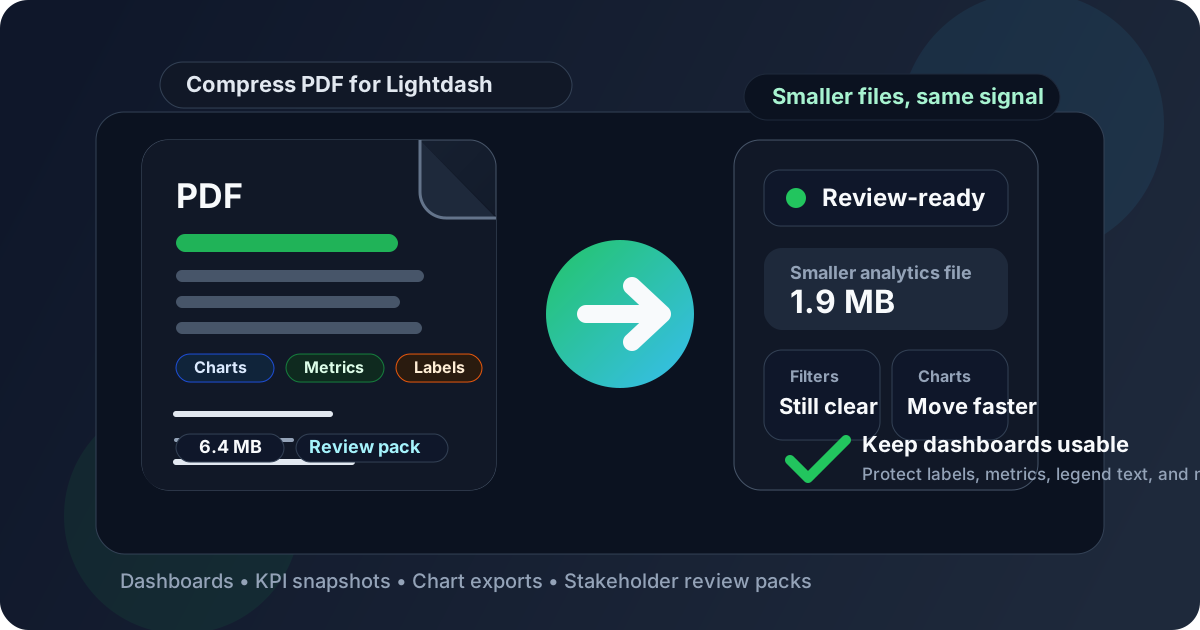
Table of contents
- Quick start: compress a Lightdash PDF in under 2 minutes
- Why smaller PDFs help in Lightdash workflows
- What file size should you aim for?
- Which compression level should you choose?
- Step-by-step: shrink a Lightdash PDF with LifetimePDF
- Best strategy for common Lightdash PDF types
- What if the PDF is still too large?
- How to keep dashboard detail readable
- Workflow habits that reduce PDF bloat
- Related LifetimePDF tools and internal links
- FAQ (People Also Ask)
Quick start: compress a Lightdash PDF in under 2 minutes
If your real goal is simply make this Lightdash PDF smaller so it is easier to send and review, this workflow is usually enough:
- Open Compress PDF.
- Upload the dashboard export, chart snapshot packet, KPI recap, stakeholder update, or browser print-to-PDF copy you want to shrink.
- Choose Medium compression first.
- Download the smaller file and compare the new size with the original.
- Open it once and check date ranges, chart labels, legend text, metric values, comments, and page headings.
- If the file is still heavier than you want, use Split PDF or Extract Pages instead of forcing stronger compression across everything.
- If the packet includes repeated screenshots, appendix pages, or browser print margins, remove that weight before you compress again.
Why smaller PDFs help in Lightdash workflows
Lightdash exports often become the fixed version people actually pass around. A live dashboard might power the discussion, but the PDF is what gets attached to a board memo, dropped into a project thread, saved to a customer folder, or forwarded to someone who does not live inside the analytics workspace. That means the PDF has to travel well.
Compression helps because it reduces friction without removing the signal that matters. A smaller file opens faster, shares more comfortably, and causes fewer problems in email, chat attachments, and archive folders. The goal is not to make every export tiny. The goal is to keep chart labels, legend text, metric values, filters, section headings, and comments clear while getting rid of the file-size drag that makes simple handoffs slower than they need to be.
Why compression usually helps
- Faster sharing: useful when dashboard snapshots need to move quickly between teams, clients, or leadership.
- Smoother review: lighter PDFs are easier to open on laptops, tablets, and slower remote connections.
- Cleaner archives: recurring KPI exports stay easier to store, resend, and retrieve later.
- Less packet drag: one heavy meeting deck becomes easier to work with when it is smaller and better structured.
- Better handoffs: a reviewed, smaller file is more useful than a bloated export people postpone opening.
What file size should you aim for?
There is no perfect number for every Lightdash PDF, but a few practical ranges keep you from compressing harder than necessary:
| PDF type | Good target | Details you should protect |
|---|---|---|
| Short dashboard export or KPI snapshot | Under 2MB | Date filters, metric values, labels, legends, and axis text |
| Stakeholder update or weekly review pack | 2MB to 4MB | Section headings, chart annotations, commentary, and summary tables |
| Quarterly review or multi-section reporting packet | 3MB to 5MB | Appendix references, screenshots, explanatory notes, and small labels |
| Scan-backed sign-off pages or screenshot-heavy support material | 4MB to 6MB if needed | Fine print, signatures, timestamps, and the smallest readable text |
Under 2MB is a strong default when the file is short and focused. Once the PDF includes several chart pages, notes, screenshots, appendix material, or browser-generated whitespace, a slightly larger target is often the smarter choice. The better question is not How small can this go? It is How small can this go while still being easy to review and explain?
Which compression level should you choose?
Most Lightdash exports do best when you begin with Medium compression. It usually cuts enough weight to make the file easier to share while preserving the dashboard details people actually need.
Use Medium compression for most workflows
- Dashboard exports with charts, filters, and a few summary tables
- Weekly KPI recaps shared across product, revenue, or operations teams
- Client or stakeholder reporting decks
- Warehouse-backed charts where readability matters more than aggressive size reduction
Use Low compression when visual polish matters most
Low compression makes sense for polished board materials, investor updates, or client-facing reviews where fine chart labels and annotation styling need to stay especially sharp. If the file is already close to the size you want, Low can be enough.
Use stronger compression only after cleanup
High compression can help if the file is still too large for the real sharing path, but it is also where quality problems usually begin. Thin chart lines soften first. Then small axis labels, legend text, comments, and table detail start to suffer. That is why stronger compression should usually come after page cleanup, not before it.
Step-by-step: shrink a Lightdash PDF with LifetimePDF
- Start with the final shareable version. Remove obvious duplicates, outdated appendix pages, or backup material before you compress anything.
- Open Compress PDF. Upload the dashboard export, chart snapshot packet, KPI recap, browser print-to-PDF copy, or review appendix.
- Choose Medium compression. That is the safest default for most Lightdash workflows.
- Download the smaller copy. Compare the size so you know whether the reduction was meaningful.
- Do a readability pass. Check date ranges, chart labels, axis markers, legends, comments, metric values, and page headings.
- Clean the structure if needed. Use Extract Pages, Delete Pages, or Crop PDF to remove weight that does not help the next reader.
- Keep the right version for the real handoff. The archive copy can stay fuller if needed; the outgoing copy should be focused and easy to open.
The common mistake is treating every exported packet like it needs every supporting page forever. Often it does not. A lighter PDF with the right charts and notes is usually more helpful than a giant file that happens to be technically smaller.
Best strategy for common Lightdash PDF types
Dashboard exports and KPI recaps
These usually compress well because they are relatively focused. Medium compression is normally enough. Pay attention to date filters, metric cards, chart labels, breakdown legends, and comparisons because those are the details that stop being useful when quality drops too far.
Stakeholder update packs
These often grow because they mix several dashboards, screenshots, commentary, and supporting appendix material into one distribution packet. Compression helps, but the bigger win often comes from removing repeated context pages or splitting the summary from the backup detail.
Chart snapshots and embedded review pages
Single-chart exports can become bulky when they carry large screenshots, browser margins, or presentation-style framing. Crop the waste before you push compression harder. That usually improves both file size and readability.
Browser print-to-PDF copies
Browser-generated PDFs often include extra white space, awkward page breaks, or repeated headers. That kind of weight does not help the reader. Clean structure first, then compress the remaining pages.
What if the PDF is still too large?
If Medium compression does not bring the file down far enough, do not jump straight to the harshest setting. Lightdash PDFs usually get smaller faster when you remove unnecessary sections and repeated visual weight first.
Try these fixes before pushing compression harder
- Split the packet: keep the executive summary in one PDF and backup detail in another.
- Extract only the pages a reader needs: many reviewers do not need the full dashboard bundle.
- Delete repeated screenshots: near-identical views add size fast without adding new insight.
- Crop wasted margins: browser print edges and slide whitespace add weight without adding meaning.
- Compare versions: use Compare PDFs if you want to confirm a trimmed copy still contains the important reporting changes.
If you still need a smaller file after that, then try a stronger compression pass. But do it on the cleaned-up version, not the original full packet. That is usually how you get a better result without sacrificing clarity.
How to keep dashboard detail readable
In Lightdash PDFs, the details that matter are often small. One label, date filter, legend key, or metric value can change the meaning of the whole story. That is why a quick readability review matters more than chasing one more percentage point of file-size reduction.
Check these before you send the compressed file
- Date ranges, filters, and comparison windows
- Chart labels, legends, and axis markers
- Metric values, summary tables, and section headings
- Comments, footnotes, and explanatory callouts
- Timestamps, signatures, and approval fields if scans are included
Workflow habits that reduce PDF bloat
The easiest file to compress is the one that was prepared with the handoff in mind. A few habits make Lightdash PDFs easier to shrink and easier to use later:
- Export only what the audience needs. A focused review pack beats a giant just-in-case bundle.
- Separate summary from backup detail. Leadership, clients, and internal analysts often need different pages.
- Avoid repeated screenshots. If one clean chart proves the point, several near-identical copies usually do not help.
- Name files clearly. Clean filenames and metadata make later retrieval easier. Use PDF Metadata Editor if needed.
- Keep a lightweight outgoing version. The archive copy can stay fuller, but the share-ready copy should be fast to open and easy to understand.
These habits matter because compression works best as the last tidy step, not as the rescue plan for an oversized export that tried to do too many jobs at once.
Related LifetimePDF tools and internal links
If you work with Lightdash PDFs regularly, these tools usually pair well with compression:
- Compress PDF for the first size-reduction pass
- Split PDF for long report packets and appendix sections
- Extract Pages for audience-specific subsets
- Delete Pages for duplicate exports and nonessential filler
- Crop PDF for browser borders and wasted margins
- Compare PDFs when you want to confirm that a trimmed packet still tells the same story
You may also find these guides useful if you want broader companion coverage around similar reporting workflows:
- Compress PDF for Lightdash: Share Smaller Dashboard Exports, Chart Snapshots, and KPI PDFs Faster
- Compress PDF for Lightdash Without Monthly Fees
- Compress PDF for Pentaho
- Compress PDF for Looker
- Compress PDF for Power BI
Bottom line: for most Lightdash PDFs, start with Medium compression, review the smallest useful details once, and trim packet weight before using stronger compression.
FAQ (People Also Ask)
How do I compress a PDF for Lightdash?
Upload the exported Lightdash PDF to a compressor, start with Medium compression, and keep the smaller copy only if labels, legends, filters, metric values, and notes still read clearly. Medium compression is usually the safest first pass because it reduces file size without making the reporting detail annoying to review.
What file size should I aim for with Lightdash PDFs?
Under 2MB works well for short dashboard exports, chart snapshots, and focused KPI summaries. Multi-page stakeholder packs and appendix-backed reporting packets usually land best around 2MB to 4MB as long as the smallest useful labels and numbers still read clearly.
Will compression make Lightdash charts blurry?
It can if you compress too aggressively. That is why Medium compression is usually the best starting point. Always review chart labels, legends, axis markers, metric values, filters, and commentary before replacing the original export.
Should I split a large Lightdash review pack instead of compressing it harder?
Often, yes. If one PDF combines an executive summary, several dashboard snapshots, repeated screenshots, appendix pages, and supporting notes, splitting it usually works better than forcing stronger compression across the entire packet.
Which LifetimePDF tools pair best with Lightdash workflows?
Compress PDF is the main starting point. Split PDF, Extract Pages, Delete Pages, Crop PDF, Compare PDFs, and PDF Metadata Editor are especially useful when you want smaller, cleaner dashboard packets without sending more pages than the next reader actually needs.