Compress PDF for Google Trends Without Monthly Fees: Share Smaller Trend Reports, Comparison Charts, and Research PDFs Without Another Subscription
If you need to compress a PDF for Google Trends without monthly fees, the simplest answer is: use a pay-once PDF compressor, start with Medium compression, and review the smaller file once before you share it.
For most Google Trends workflows, that is enough to shrink comparison charts, trend snapshots, regional breakdowns, and research decks without turning one quick cleanup step into another recurring subscription.
This should be boring in the best possible way. You export a report, make it lighter, send it, and move on. But recurring-fee PDF tools have a habit of wrapping a two-minute task in a monthly bill. That feels especially unnecessary when your real goal is simply to keep trend lines, date labels, compared keywords, and screenshot notes readable while making the file easier to email, upload, archive, or present.
Fastest path: use LifetimePDF's Compress PDF tool, start with Medium compression, and split or extract pages only if the Google Trends PDF is still heavier than you want.
In a hurry? Jump to Quick start: compress a Google Trends PDF in under 2 minutes.
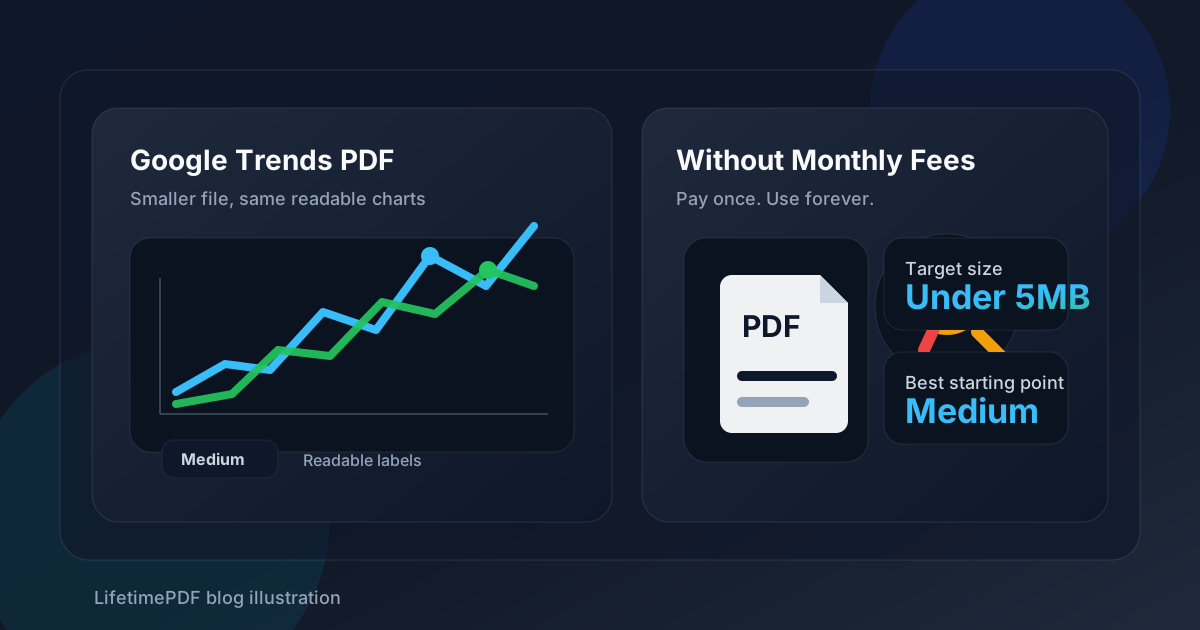
Table of contents
- Quick start: compress a Google Trends PDF in under 2 minutes
- Why "without monthly fees" matters here
- Why smaller PDFs help in Google Trends workflows
- What size should a Google Trends PDF be?
- Which compression level should you choose?
- Step-by-step: use LifetimePDF to shrink a Google Trends PDF
- Common Google Trends PDFs that benefit from compression
- What to do if the PDF is still too large
- How to keep charts, labels, and comparisons readable
- Workflow habits that keep PDFs cleaner
- Related LifetimePDF tools and internal links
- FAQ (People Also Ask)
Quick start: compress a Google Trends PDF in under 2 minutes
If your goal is simply make this Google Trends report smaller so it is easier to share, use this workflow:
- Open Compress PDF.
- Upload the Google Trends export or report deck you want to send or store.
- Choose Medium compression first.
- Download the smaller file and check the new size.
- Preview the sections that matter most: trend lines, date ranges, keyword names, chart legends, region labels, and short notes.
- If the PDF is still heavier than you want, use Extract Pages, Split PDF, or Delete Pages instead of repeatedly crushing the whole report.
Why "without monthly fees" matters here
People do not search for this because PDF compression is exciting. They search for it because the task is repetitive and recurring billing feels unnecessary. A marketer, SEO consultant, content strategist, researcher, or in-house team may already be paying for analytics tools, keyword platforms, dashboards, storage, and collaboration software. Adding another monthly tool just to make exported PDFs smaller is exactly the kind of software creep people try to avoid.
Google Trends reporting is routine work. You compare search interest, save a seasonal demand snapshot, package a topic-research deck, or create a trend summary for a client or editor. Sometimes the PDF is a bit too large. That is a document-cleanup problem, not something most people want to rent forever. A pay-once workflow fits better because it solves the real need without creating a new recurring cost for a job that usually takes only a few minutes.
There is also a trust problem. Plenty of "free" compressors stay free right up to the moment you want the finished file. Then the paywall appears. That is especially annoying when all you needed was a lighter Google Trends PDF for a meeting, a client handoff, or a clean archive copy.
Research and reporting stacks already have enough recurring costs. Your PDF cleanup workflow does not need to become one more.
Why smaller PDFs help in Google Trends workflows
Even when a Google Trends PDF technically sends fine, that does not mean it feels good to use. Heavy files create drag. They upload slower, open slower, and feel clumsier when someone needs to revisit the same report during a client call, internal review, or editorial planning session. That friction gets worse when the PDF is being forwarded by email, attached to a project card, or opened on a phone during a quick meeting.
Why smaller Google Trends PDFs feel better to work with
- Faster sharing: easier to email, upload, and attach to weekly or monthly updates.
- Cleaner review experience: teammates and clients are more likely to open a lighter file immediately.
- Better mobile access: smaller reports load more comfortably on phones and tablets.
- Smoother archives: repeating trend reports are easier to store and revisit later.
- Less resend friction: one cleaned PDF can serve email, chat, cloud folders, and meetings without extra work.
- Stronger delivery: a focused, lighter report usually feels more polished than one bloated export packed with every backup chart.
Compression is not only about file limits. It is about removing the tiny bits of friction that make ordinary reporting feel heavier than it should.
What size should a Google Trends PDF be?
There is no single magic number because a one-page keyword comparison behaves very differently from a long PDF with screenshots, regional views, commentary, and appendix pages. Still, a few realistic targets help you decide whether the file is already fine or still worth shrinking.
| Use case | Recommended target | Why it works |
|---|---|---|
| Quick trend snapshots and short keyword comparisons | Under 2MB | Great for fast email sharing, mobile review, and lightweight collaboration. |
| Most research decks and reporting packs | 2MB-5MB | Usually the best balance between readability and convenience. |
| Screenshot-heavy trend reviews or appendix files | 5MB-8MB | Still workable, but often worth trimming or splitting before broad distribution. |
| Over 8MB | Compress, extract, or split | Usually larger than necessary for normal reporting and client delivery. |
Which compression level should you choose?
You usually do not need complicated settings. You need the right tradeoff between size and readability.
Low compression
- Best when tiny labels matter a lot, such as dense comparisons or region-heavy charts.
- Useful for polished presentation files or PDFs that might be printed later.
- Often unnecessary unless the file is already close to the size you want.
Medium compression
- The best starting point for most people.
- Usually shrinks the PDF meaningfully while keeping trend lines, labels, keyword names, date comparisons, notes, and screenshots readable.
- Good for research briefs, seasonal snapshots, client packs, and editorial planning PDFs.
High compression
- Best when smaller size matters more than polished presentation.
- Useful for screenshot-heavy appendix copies or internal reference files.
- Worth previewing carefully because aggressive compression can soften fine chart labels and annotations faster than you expect.
Step-by-step: use LifetimePDF to shrink a Google Trends PDF
1) Open the Compress PDF tool
Start with Compress PDF. This solves the main problem directly: the report is heavier than it needs to be.
2) Upload the PDF you actually plan to share
Use the real final export, not an older draft. That avoids the common mistake of compressing yesterday's deck only to discover the newest version is still the oversized one.
3) Start with medium compression
For most Google Trends documents, Medium is the right first try. Text, charts, and normal dashboard-style visuals usually survive it well, and mixed files with screenshots or appendix pages often end up comfortably smaller without looking damaged.
4) Review the result once
Open the compressed file and check the parts people actually care about: compared terms, date ranges, trend lines, region names, notes, screenshot callouts, and conclusions. You do not need a deep audit. You just need confidence that the shared version still communicates clearly.
5) Trim structure before pushing compression harder
If the file is still bulky, the next best move is often not "compress harder." It is "share less PDF." Extract the summary pages, split the appendix into a separate file, or delete duplicate support pages before doing another pass.
Need the file smaller right now?
Common Google Trends PDFs that benefit from compression
Not every export behaves the same, but these are the Google Trends PDFs that most often become bulkier than necessary:
1) Keyword comparison snapshots
These are often short and visual, so they usually compress well. Watch especially for compared keyword names, date labels, and any small legend text that helps the reader understand which line belongs to which topic.
2) Seasonal demand reports
These files often include several charts across different date ranges. Compression helps, but only if the seasonality pattern stays easy to see and the month or week labels still feel obvious at a glance.
3) Regional interest decks
These reports depend on maps, country or city labels, and side notes explaining why the geography matters. If the labels get fuzzy, the report loses value quickly. A slightly larger file is often worth it here.
4) Research presentations with screenshots
Screenshot-heavy decks grow fast. If the PDF is too large, splitting backup slides or trimming duplicate screenshots usually works better than forcing heavier compression across every page.
5) Archive copies for SEO or content teams
Archive versions should still be lighter, but readable enough to answer questions later. Keep the charts, date ranges, filters, and summary pages that explain what the trend view actually meant when it was shared.
What to do if the PDF is still too large
Sometimes the right answer is not "compress harder." Sometimes the right answer is "send a tighter report." That is especially true in trend workflows, where many PDFs carry backup pages most readers never open.
Option 1: Extract only the pages people need
If the client or teammate only needs the summary pages, use Extract Pages first, then compress that smaller file. This often works better than crushing a 30-page deck into something tiny.
Option 2: Split the PDF into cleaner sections
If the report includes executive summary, multiple trend comparisons, evidence screenshots, and appendix pages for different readers, use Split PDF. Two or three focused files are often better than one oversized catch-all PDF.
Option 3: Remove obvious waste
Blank pages, repeated covers, duplicate screenshots, oversized margins, and stale backup slides all add weight without adding value. Use Delete Pages or Crop PDF before trying another compression pass.
How to keep charts, labels, and comparisons readable
The real fear behind this workflow is simple: I do not want the shared version to look bad. Fair concern. Text-first PDFs usually compress well. The risk rises when the report depends on dense charts, tiny labels, screenshot annotations, narrow tables, or packed regional views.
Usually safe to compress
- Executive summaries: mostly headings, notes, and a few charts
- Stakeholder update decks exported to PDF: medium compression usually works nicely
- Commentary-heavy research briefs: text-first documents often stay crisp
- Ordinary comparison snapshots: especially when they are not overloaded with screenshots
Preview more carefully when
- The PDF is chart-heavy
- Small labels matter
- Compared terms or date ranges must stay obvious
- Screenshot callouts carry critical detail
A useful rule is this: if people need to skim the report quickly, you can usually compress a little more aggressively. If they need to present from the file, question the comparisons, or inspect the details, be more conservative.
Workflow habits that keep PDFs cleaner
Compression helps, but cleaner reporting habits help even more. Most Google Trends PDF bloat starts before compression ever happens.
- Separate summary from appendix: most readers need the story first, not every backup chart.
- Avoid repeated covers and screenshots: polished is fine, redundant is heavy.
- Send the right report to the right audience: executives, clients, editors, and analysts often do not need the same PDF.
- Clean metadata before delivery: use PDF Metadata Editor if you want tidier document properties.
- Compare revisions when needed: use Compare PDFs if the report changed between rounds and you want a fast check.
- Keep a master plus a shared copy: one file can stay fuller for archive, while the smaller version handles delivery.
A strong workflow is often: export a focused report → compress once → review → split or trim if needed → send the cleaner version. That keeps the PDF usable without overcomplicating the process.
Related LifetimePDF tools and internal links
Compressing a PDF for Google Trends is often one step in a broader SEO, research, or stakeholder reporting workflow. These tools pair naturally with it:
- Compress PDF - shrink Google Trends exports before sharing them
- Extract Pages - send only the pages a client or teammate actually needs
- Split PDF - break one oversized report into clearer sections
- Delete Pages - remove blank or repeated appendix pages before compression
- Crop PDF - trim wasted screenshot borders and dead space
- PDF Metadata Editor - clean titles and document properties before client delivery
- Compare PDFs - useful when tracking report revisions
- Merge PDF - combine only the supporting files you actually want in the final pack
Suggested internal blog links
- Compress PDF for Google Trends
- Compress PDF for Google Search Console Without Monthly Fees
- Compress PDF for Google Analytics Without Monthly Fees
- Compress PDF for Semrush Without Monthly Fees
- Compress PDF for Similarweb Without Monthly Fees
- Compress PDF for Keywords Everywhere Without Monthly Fees
- How to Reduce PDF File Size for Email
- Browse all LifetimePDF articles
FAQ (People Also Ask)
How do I compress a PDF for Google Trends without monthly fees?
Use Compress PDF, upload the Google Trends export, start with medium compression, and download the smaller result. If it is still bulky, extract only the pages the reader actually needs instead of repeatedly over-compressing the whole report.
What file size is best for Google Trends reports?
Under 2MB is a strong target for short trend snapshots and quick comparison PDFs. Under 5MB is a practical everyday target for longer research decks, stakeholder packs, and screenshot-heavy reviews.
Will compressing a Google Trends PDF make charts blurry?
Usually not if you begin with Medium compression. The parts worth checking most carefully are small chart labels, compared terms, date-range notes, region labels, and screenshot annotations.
Why look for a Google Trends PDF compressor without monthly fees?
Because this is routine reporting work. Most people want a dependable way to shrink PDFs without adding one more recurring software bill for a task that should stay simple.
What if my Google Trends report is still too large after compression?
Split the report into sections with Split PDF, or extract the summary pages with Extract Pages. In many cases, sharing a tighter PDF works better than compressing the entire file more aggressively.
Best workflow for most teams: compress once → preview the result → split or trim only if needed → share confidently.
Published by LifetimePDF - Pay once. Use forever.