Compress PDF for Google SecOps: Keep Investigation Reports, Detection Rule Exports, and Security Evidence Small Without Losing the Details
To compress a PDF for Google SecOps, upload the investigation report, detection rule export, or evidence bundle to LifetimePDF's Compress PDF tool, start with Medium compression, and keep the smaller copy only if rule names, timestamps, screenshots, and evidence tables still look clear.
For most Google SecOps PDFs, under 2MB works well for short updates and one-page summaries, while multi-page investigation reviews, rule exports, and security evidence packs usually land best around 2MB to 5MB.
Google SecOps exports rarely stay with the person who created them. A PDF made for one investigation can end up attached to a case, dropped into a ticket, forwarded for peer review, or saved as part of audit evidence. That is why file size matters. The goal is not to smash every page into the smallest number possible. The goal is to make the PDF easier to move, open, and trust without blurring the details people still need once the live console is gone.
Fastest path: run the Google SecOps export through LifetimePDF's Compress PDF tool on Medium, then do one quick readability check before you send, archive, attach, or store the smaller copy.
Need the short version? Jump to Quick start: compress a Google SecOps PDF in about 2 minutes.
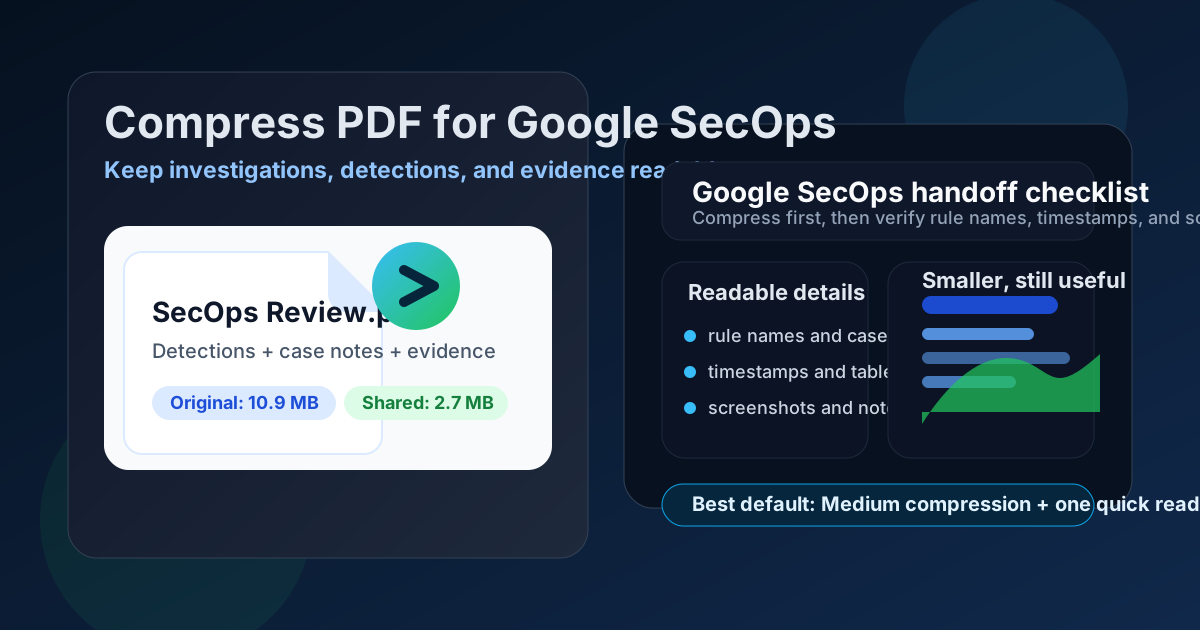
Table of contents
- Quick start: compress a Google SecOps PDF in about 2 minutes
- Why Google SecOps PDFs get heavy so quickly
- What file size should you aim for?
- Which compression level should you choose?
- Step-by-step: shrink a Google SecOps PDF with LifetimePDF
- Best strategy for common Google SecOps PDF types
- What if the PDF is still too large?
- How to protect rule, table, and screenshot readability
- Workflow habits that keep SecOps PDFs lighter
- Related LifetimePDF tools and useful reading
- FAQ (People Also Ask)
Quick start: compress a Google SecOps PDF in about 2 minutes
If your real goal is simply make this Google SecOps PDF smaller without making it annoying to review, this workflow is usually enough:
- Open Compress PDF.
- Upload the Google SecOps file you actually plan to share, such as an investigation report, detection rule export, case summary, search-results packet, executive review PDF, or audit appendix.
- Choose Medium compression first.
- Download the smaller result and compare the size difference with the original.
- Preview the weak spots once: rule names, timestamps, case IDs, usernames, hostnames, screenshot callouts, and narrow evidence-table columns.
- If the file is still heavier than it needs to be, split the appendix, extract the summary pages, or crop wasted margins before you push compression harder.
- If screenshots or scanned paperwork are doing most of the damage, clean that weight before you over-compress the whole packet.
Why Google SecOps PDFs get heavy so quickly
Google SecOps PDFs often combine exactly the kinds of content that swell fast: investigation notes, detection rule exports, screenshots, evidence tables, search results, case summaries, and sometimes scanned approvals or compliance attachments. Each item may be useful by itself. Put them together in one packet and the file can become bulky long before anyone notices.
Another common problem is that one export starts trying to do too many jobs. The same PDF might be built for an analyst handoff, then reused in a manager update, then attached to an audit response. Compression helps, but the bigger win usually comes from pairing compression with tighter scope. A smaller, cleaner packet is often more useful than a giant all-in-one archive.
Common reasons Google SecOps PDFs become bulky
- Screenshot-heavy investigations: console captures, evidence comparisons, and annotated screenshots add weight quickly.
- Dense exported tables: timestamps, detections, entities, IPs, usernames, and case fields need more precision than plain-text pages.
- Mixed audiences: one packet may try to satisfy analysts, responders, managers, auditors, and outside reviewers at the same time.
- Appendix creep: repeated support pages, stale search exports, and backup evidence quietly inflate size.
- Scanned paperwork inside a digital packet: image-based pages often weigh more than the workflow really needs.
What file size should you aim for?
There is no universal size that fits every Google SecOps workflow, but practical targets make decisions easier. A one-page case recap behaves differently from a multi-page investigation review or an evidence bundle full of screenshots and appendices.
| Use case | Recommended target | Why it works |
|---|---|---|
| Short updates and quick summaries | < 2MB | Easy to send, preview, and reopen on almost any device |
| Investigation reports, rule exports, and review packs | 2MB to 5MB | Usually keeps rule names, tables, screenshots, and notes readable without feeling heavy |
| Audit or appendix-heavy evidence bundles | 5MB+ | Often acceptable when the packet genuinely needs many pages, but still worth trimming for clarity |
Chasing the smallest possible number is rarely the real win. If getting from 3.4MB to 1.3MB makes timestamps, rule names, or screenshot annotations harder to trust, that smaller file is worse. A slightly larger PDF that opens smoothly and stays readable is usually the better security document.
Which compression level should you choose?
For Google SecOps, Medium compression is usually the best first move. You are typically trying to keep rule names, case IDs, timestamps, evidence screenshots, and narrow search-result tables readable after the export leaves the platform.
- Low compression: useful when the PDF contains tiny labels, dense tables, or screenshot evidence where every detail matters.
- Medium compression: the default choice for most Google SecOps exports because it balances size and clarity well.
- High compression: only worth testing when the file is still too large after page cleanup and the remaining pages are visually simple or scan-heavy.
Strong compression is much safer on short updates than on evidence-rich reports. A one-page status summary can survive more shrinking than a PDF packed with screenshots, search exports, rule details, and appendix evidence.
Step-by-step: shrink a Google SecOps PDF with LifetimePDF
- Export the final version. Start with the file you actually plan to share, not the largest working draft with every optional appendix still attached.
- Open Compress PDF.
- Choose Medium compression. That is the safest default for most investigation summaries, rule exports, and review files.
- Download the smaller copy. Compare the size reduction and then preview the pages that contain the smallest useful text.
- Check readability before replacing the original. Focus on rule names, detection titles, timestamps, usernames, hostnames, screenshot labels, case references, and narrow evidence tables.
- Use cleanup tools only if the file still feels bulky. Split the appendix, extract summary pages, delete duplicates, crop waste, or OCR scanned sections instead of compressing the whole packet into mush.
Useful combo: compress first, then use page-level cleanup if needed. That sequence usually beats trimming quality with a harder compression pass across the entire file.
Best strategy for common Google SecOps PDF types
1. Investigation reports for analysts, responders, or managers
These usually need clear timelines, readable notes, and evidence that survives a quick zoom during review. Medium compression is normally right. If the file is still too heavy, move backup screenshots into a separate appendix rather than squeezing the whole investigation packet harder.
2. Detection rule exports and tuning reviews
These often include rule names, condition details, screenshots, and narrow table fields. Balanced compression helps, but always check the smallest text once before sending the result to engineering, management, or audit stakeholders.
3. Search-result packets and evidence bundles
These mix tables, screenshots, notes, and support pages. That is exactly where page cleanup plus medium compression works best. Keep the story pages together, but split backup evidence if it only matters to a subset of readers.
4. Audit packets, compliance reviews, and retained evidence
Be more careful here. Small timestamps, detection IDs, usernames, or screenshot details may matter later. Medium compression is usually fine, but always preview the smallest important elements before you keep the result.
What if the PDF is still too large?
If Medium compression is not enough, the answer is usually not compress harder and hope. It is usually one or two cleanup actions that remove bulk without wrecking the pages people actually need.
- Split the appendix: send the main report separately from backup evidence and reference pages.
- Extract only the review-ready pages: if the next reader needs six pages, do not send sixteen.
- Delete repeated support material: duplicate screenshots, stale exports, and unused appendix pages add weight fast.
- Crop dead space: browser-print margins and oversized screenshot padding waste size without adding value.
- OCR scanned sections: scanned paperwork or image-based evidence can become easier to work with after OCR and cleanup.
The simplest improvement is often structural. One clean summary PDF plus one optional appendix PDF is easier to send, review, and archive than a single giant file trying to satisfy every audience.
How to protect rule, table, and screenshot readability
The most common mistake is judging the compressed file at full-page view, deciding it looks basically fine, and sending it without checking the details people will actually zoom into. With Google SecOps, that means testing the smallest useful content, not just the page as a whole.
Check these items before you keep the compressed file
- Rule names, detection titles, and case identifiers
- Timestamps, usernames, hostnames, and IP addresses
- Narrow evidence-table columns and search-result labels
- Screenshot callouts, analyst notes, and annotations
- Any appendix page carrying evidence someone may revisit later
Workflow habits that keep SecOps PDFs lighter
Better exports start before compression. If you want consistently smaller PDFs, the biggest gains often come from cleaner habits upstream.
- Export the finished audience version: avoid sending one giant master packet to everyone.
- Keep screenshot evidence selective: include screenshots that add context the live platform no longer provides, not every nearly identical view.
- Separate executive summaries from deep evidence: leadership pages and analyst appendices do not always belong in the same file.
- Trim duplicate support pages: repeated appendix material adds weight every cycle.
- Keep a summary file and a backup file: that simple split makes recurring security reporting easier to manage.
A smaller PDF is often the result of a smaller decision surface. When each reader gets the pages they actually need, the file shrinks naturally and the document becomes easier to trust.
Related LifetimePDF tools and useful reading
If you are building a cleaner Google SecOps handoff workflow, these LifetimePDF tools and related guides pair well with this exact-match page:
- Compress PDF for the first and most important size reduction pass.
- Split PDF when one report needs to become separate summary and appendix files.
- Extract Pages to keep only the review-ready or decision-ready sections.
- Crop PDF for browser-print padding and screenshot waste.
- OCR PDF if part of the packet came from scans.
- Redact PDF before wider stakeholder or customer sharing.
- PDF Metadata Editor if you want cleaner document properties before broader distribution.
You may also want the adjacent Google SecOps companion page for a slightly different search intent: share smaller investigation reports, detection rule exports, and security evidence faster.
Related workflow reading: Compress PDF for Microsoft Sentinel, Compress PDF for IBM QRadar, Compress PDF for Wazuh, Compress PDF for ArcSight, Compress PDF for Elastic Security, and Compress PDF Online Free.
FAQ (People Also Ask)
How do I compress a PDF for Google SecOps?
Export the Google SecOps file as a PDF, upload it to a PDF compressor, start with Medium compression, and keep the smaller copy only if rule names, timestamps, screenshots, findings, and evidence tables still look clear. Medium compression is usually the safest first pass because it reduces file size without making the report frustrating to review.
What file size should I aim for with Google SecOps PDFs?
Under 2MB is a strong target for short updates and one-page snapshots. Multi-page investigation reports, rule exports, and appendix-heavy evidence files usually work best around 2MB to 5MB as long as the smallest useful labels and screenshots still read clearly.
Will compression make Google SecOps screenshots or evidence tables blurry?
It can if you compress too aggressively. That is why Medium compression is usually the best starting point. Always check rule names, timestamps, screenshot callouts, and narrow table columns before you replace the original export.
Should I split a large Google SecOps evidence packet instead of compressing harder?
Often, yes. If one PDF combines the main summary, several screenshots, exported tables, appendix evidence, and sign-off pages for different audiences, splitting it usually works better than forcing stronger compression across the whole file.
Which LifetimePDF tools pair best with Google SecOps workflows?
Compress PDF is the main starting point. Split PDF, Extract Pages, Delete Pages, Crop PDF, OCR PDF, Redact PDF, and PDF Metadata Editor are especially useful when you want smaller, cleaner security handoff files without sending more evidence than the next reader actually needs.
Bottom line: the best Google SecOps PDF is not the tiniest one. It is the smallest version that still preserves the rule names, timestamps, screenshot evidence, and table context your next reader will actually use.