Compress PDF for GTmetrix Without Monthly Fees: Shrink Performance Reports, Waterfall Screenshots, and SEO Audit PDFs Without Another Subscription
If you need to compress a PDF for GTmetrix without monthly fees, upload the file to LifetimePDF's Compress PDF tool, start with Medium compression, and keep the smaller copy only if scorecards, waterfall timings, chart labels, and screenshot notes still look clear.
For most GTmetrix workflows, that is enough to shrink performance reports, waterfall screenshots, Core Web Vitals summaries, and SEO audit PDFs without paying for another recurring subscription just to finish routine report cleanup.
This is the kind of task that should stay boring. A consultant wants to email a faster-loading report. An in-house SEO lead wants a smaller audit pack in a project ticket. An agency account manager wants the client PDF to open cleanly on any laptop. None of those jobs really call for another monthly bill. They call for a reliable way to make the file smaller without wrecking the evidence that makes the report useful.
Fastest path: save the GTmetrix report as PDF, run it through LifetimePDF's Compress PDF tool at Medium, then split or extract pages only if the file still carries more weight than the reader actually needs.
In a hurry? Jump to Quick start: compress a GTmetrix PDF in about 2 minutes.
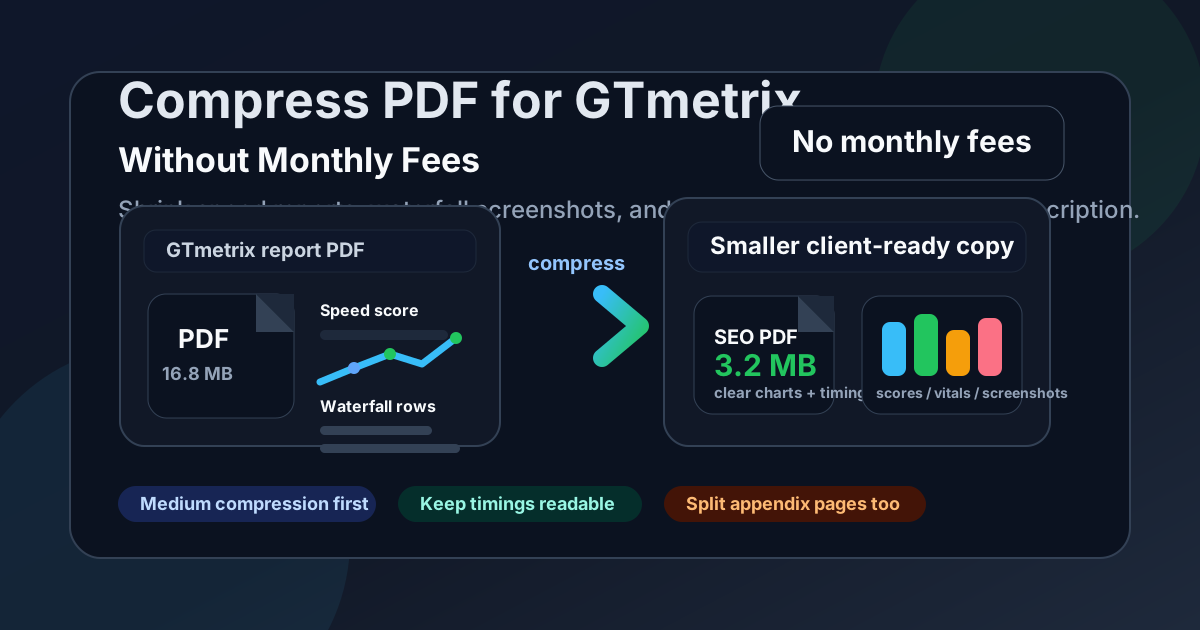
Table of contents
- Quick start: compress a GTmetrix PDF in about 2 minutes
- Why "without monthly fees" matters here
- Why smaller PDFs help in GTmetrix workflows
- What file size should a GTmetrix PDF be?
- Which compression level should you choose?
- Step-by-step: use LifetimePDF to shrink the file
- Best approach for common GTmetrix PDFs
- What to do if the PDF is still too large
- How to keep performance details readable
- Workflow habits that reduce PDF bloat
- Related LifetimePDF tools and useful reading
- FAQ (People Also Ask)
Quick start: compress a GTmetrix PDF in about 2 minutes
If your real goal is simply make this GTmetrix PDF smaller so it is easier to share, this workflow is usually enough:
- Save the final version first, whether that is a one-page recap, a screenshot appendix, a technical waterfall review, or a client-ready SEO audit deck.
- Open Compress PDF.
- Upload the GTmetrix PDF and choose Medium compression first.
- Download the smaller result and compare the new size.
- Preview the weakest details: scorecards, dates, waterfall labels, chart legends, screenshot callouts, and short recommendations.
- If the file is still bulky, use Extract Pages, Split PDF, or Delete Pages before you try stronger compression.
Why "without monthly fees" matters here
GTmetrix reporting is rarely a one-time task. It repeats across technical audits, sprint reviews, migration checks, Core Web Vitals follow-ups, launch QA, and monthly client reporting. That is why the no-subscription angle matters. If the same cleanup step keeps returning, paying another monthly fee just to shrink, split, crop, and tidy exported PDFs gets old fast.
A pay-once workflow fits this kind of work better. You want a tool you can open whenever a screenshot-heavy report is too big for email, a waterfall appendix feels bloated, or a stakeholder deck carries more pages than the audience actually needs. You do not want another recurring bill just to make a normal reporting PDF behave.
- Recurring work: performance reporting does not stop after one month.
- Multiple cleanup jobs: compression often leads to page extraction, splitting, cropping, or deleting duplicate screenshots.
- Better cost fit: a pay-once PDF workflow matches recurring SEO reporting better than subscription sprawl.
- Less friction: the easier the workflow is, the more likely someone fixes the file before sending a clumsy attachment.
Why smaller PDFs help in GTmetrix workflows
GTmetrix data becomes a PDF when somebody needs to hand the story to someone else. A consultant sends a recap. A developer gets a technical appendix. A client receives a before-and-after speed review. A marketing lead wants a clean one-page summary for a meeting. In each case, the useful part is the evidence, not the file weight.
Heavy PDFs slow down ordinary work. They feel awkward in email, slower in project tools, and more annoying to open on smaller devices. The extra weight usually comes from full-page screenshots, repeated test rounds, wide margins, duplicated cover slides, or one giant report trying to serve several audiences at once. Good compression removes that drag while keeping the proof intact.
Why compression usually helps
- Faster handoffs: lighter PDFs are easier to email, upload, and attach to tickets.
- Smoother client review: a smaller report opens faster when someone only needs the key story.
- Cleaner archives: weekly or monthly performance packs take up less space when they are not bloated.
- Better meeting flow: people can open the same file quickly instead of waiting on a heavy attachment.
- Less resend friction: you are less likely to hear "can you send a smaller version?" after the fact.
What file size should a GTmetrix PDF be?
There is no single perfect number for every GTmetrix workflow, so practical ranges are more useful than chasing one magic limit. You want a file that sends comfortably, opens quickly, and still leaves the important details readable.
| GTmetrix PDF type | Practical target | Why it works |
|---|---|---|
| Single-test recap or short client update | Under 1MB to 2MB | Usually enough for headline metrics, one or two charts, and a few screenshots |
| Technical review with waterfall detail | 2MB to 3MB | Leaves room for small labels, timing rows, and brief notes without forcing harsh compression |
| Before-and-after SEO audit deck | 2MB to 4MB | Gives screenshots, comparisons, and explanations enough room to stay clear |
| Huge appendix or developer evidence pack | Split it instead of chasing a tiny size | At that point, one oversized PDF is often the real problem |
Which compression level should you choose?
Most people should not begin with the strongest option. That is the quickest route to blurry screenshot captions or waterfall rows that technically survived but are now annoying to read. For GTmetrix PDFs, Medium is usually the right first move.
| Compression level | Best use | Main trade-off |
|---|---|---|
| Low | Waterfall-heavy reviews or screenshot pages with tiny labels | Protects clarity best but may not reduce size enough |
| Medium | Most speed summaries, SEO audit PDFs, client recaps, and stakeholder decks | Best balance of smaller size and readable detail |
| High | Only when the file is still too large after page cleanup | Highest risk of hurting small chart labels and screenshot clarity |
If the PDF started as a clean export, compression usually behaves well. If it is built from many screenshots and appendix pages, trimming the report structure often helps more than stronger compression alone.
Step-by-step: use LifetimePDF to shrink the file
- Save the final version first. Use the exact report, recap deck, or appendix you plan to share, not a draft with extra rounds and pages you already know nobody needs.
- Open Compress PDF.
- Upload the GTmetrix PDF. This can be a speed summary, waterfall appendix, Core Web Vitals review, client-ready SEO deck, or technical audit export.
- Choose Medium compression. That is the safest default in most GTmetrix reporting situations.
- Download the smaller copy. Compare the new size before moving on.
- Open the result once. Check score values, dates, waterfall rows, chart captions, screenshot callouts, and recommendation notes.
- Only do more if needed. If the PDF is still too heavy, clean the page mix instead of immediately forcing stronger compression.
Useful combo: compress first, then use Extract Pages or Split PDF if the audience only needs part of the report.
Best approach for common GTmetrix PDFs
Single-page speed recaps
These usually compress well. One score summary, a screenshot, and a short note block often shrink cleanly with Medium compression while staying easy to read.
Waterfall-heavy technical reviews
This is where caution matters more. Request rows, timing labels, and tiny annotations can get muddy if you push too hard. Start with Low or Medium compression and review the smallest text before keeping the result.
Before-and-after optimization decks
These often become bulky because they include repeated screenshots and several rounds of evidence. Compression helps, but removing repetitive pages or splitting the appendix usually makes a bigger difference.
Client-ready SEO audit PDFs
These usually mix GTmetrix evidence with narrative slides and action points. Medium compression is a strong default because it keeps the deck lighter without making the visuals feel cheap or risky to share.
What to do if the PDF is still too large
If Medium compression still leaves the file larger than you want, the next move is usually structural cleanup, not panic. Many oversized GTmetrix PDFs have extra weight that can be removed without damaging the useful content.
- Split the summary from the appendix: keep the headline story separate from raw evidence pages.
- Delete duplicate screenshots: repeated captures add weight quickly.
- Extract only the pages the next reader needs: send the summary and one useful waterfall view instead of the whole pack.
- Crop wide margins: whitespace around screenshots often wastes space.
- Trim stale test rounds: not every historical comparison needs to travel with the current update.
How to keep performance details readable
Before you share the smaller file, check the details somebody else may need to trust later. In GTmetrix workflows, that usually means:
- score values, grades, and test dates
- waterfall request rows and timing labels
- chart legends, axis labels, and comparison notes
- Core Web Vitals summaries and recommendation snippets
- screenshot callouts, annotations, and highlighted problem areas
- any footers or tiny text on client-facing slides
If the faintest or smallest section is still readable, you are usually in good shape. If the weak details turned fuzzy, go back one step. A slightly larger file is still the better file when it keeps the evidence intact.
Workflow habits that reduce PDF bloat
The easiest way to avoid oversized GTmetrix PDFs is not heroic compression. It is better report hygiene before the file gets messy.
- Export only what the next reader needs.
- Separate proof from presentation.
- Keep appendix pages outside the main recap when possible.
- Use screenshots selectively instead of capturing nearly identical views.
- Trim old tests and duplicate slides before the final PDF is created.
- Reuse a simple finishing workflow: trim, compress, review, send.
That last point matters. The best PDF workflow is rarely the fanciest one. It is the one your team can repeat quickly without turning a small reporting task into a whole side project.
Related LifetimePDF tools and useful reading
Useful tools
Best fit
This workflow is a strong fit if you regularly share speed summaries, audit evidence, screenshot appendices, or client-ready performance PDFs and want a pay-once way to keep recurring report cleanup under control.
Want the short version? Use LifetimePDF to compress the GTmetrix PDF first, check readability once, then split or extract pages only if the audience does not need the full report.
FAQ (People Also Ask)
How do I compress a PDF for GTmetrix without monthly fees?
Use a pay-once PDF tool like LifetimePDF, upload the GTmetrix PDF, start with Medium compression, and review the smaller result before you send it. If the file is still bulky, split the appendix, extract the summary pages, or remove duplicate screenshots instead of over-compressing everything at once.
What file size should I aim for with GTmetrix PDFs?
Under 2MB is a strong target for short speed recaps, client summaries, and single-test updates. Waterfall-heavy reviews, before-and-after decks, and screenshot-rich audit PDFs often work better around 2MB to 4MB as long as the smallest useful labels and notes still look clear.
Will compression make GTmetrix waterfall details blurry?
It can if you compress too aggressively. That is why Medium compression is usually the safest first pass. Always review request labels, timings, scorecards, chart captions, and screenshot callouts before keeping the smaller file.
Why look for a GTmetrix PDF workflow without monthly fees?
Because shrinking exported speed reports is recurring operations work, not something most teams want another subscription for. A pay-once workflow fits better when the real need is reliable compression, cleanup, and easier sharing around reports you already create.
What if my GTmetrix PDF is still too large after compression?
Delete duplicate screenshots, crop wide margins, split the technical appendix from the summary, and extract only the pages the next reader needs before trying stronger compression. In many GTmetrix workflows, sharing less PDF works better than compressing the whole pack more aggressively.