Compress PDF for Fireflies.ai: Keep Meeting Recaps, Call Notes, and Follow-Up PDFs Easy to Open
To compress a PDF for Fireflies.ai, upload the final meeting recap, call-notes summary, transcript excerpt packet, or follow-up PDF to LifetimePDF's Compress PDF tool, start with Medium compression, and keep the smaller copy only after speaker labels, action items, timestamps, screenshots, and next-step notes still look clear in the real Fireflies.ai workflow, post-call summary, or team handoff where the file gets reopened.
For most Fireflies.ai PDFs, under 2MB is a strong target for one-page recaps and short follow-up briefs, while screenshot-heavy transcript packets, client-ready summary decks, and multi-page handoff docs usually work best around 2MB to 5MB after light cleanup.
Fireflies.ai is supposed to make the useful parts of a meeting easier to reuse. The PDF should not become the awkward part of the workflow. When a recap file gets too heavy, people stop reopening it on mobile, skip the screenshot that explains the decision, or miss the one action item that actually mattered. The real goal is not the tiniest file. It is the lightest file that still keeps the recap trustworthy.
Fastest path: run the Fireflies.ai PDF through LifetimePDF's Compress PDF tool on Medium, then extract the pages that matter or split appendix material only if the file is still heavier than the real meeting-follow-up, client recap, or internal handoff needs.
In a hurry? Jump to Quick start: compress a Fireflies.ai PDF in about 2 minutes.
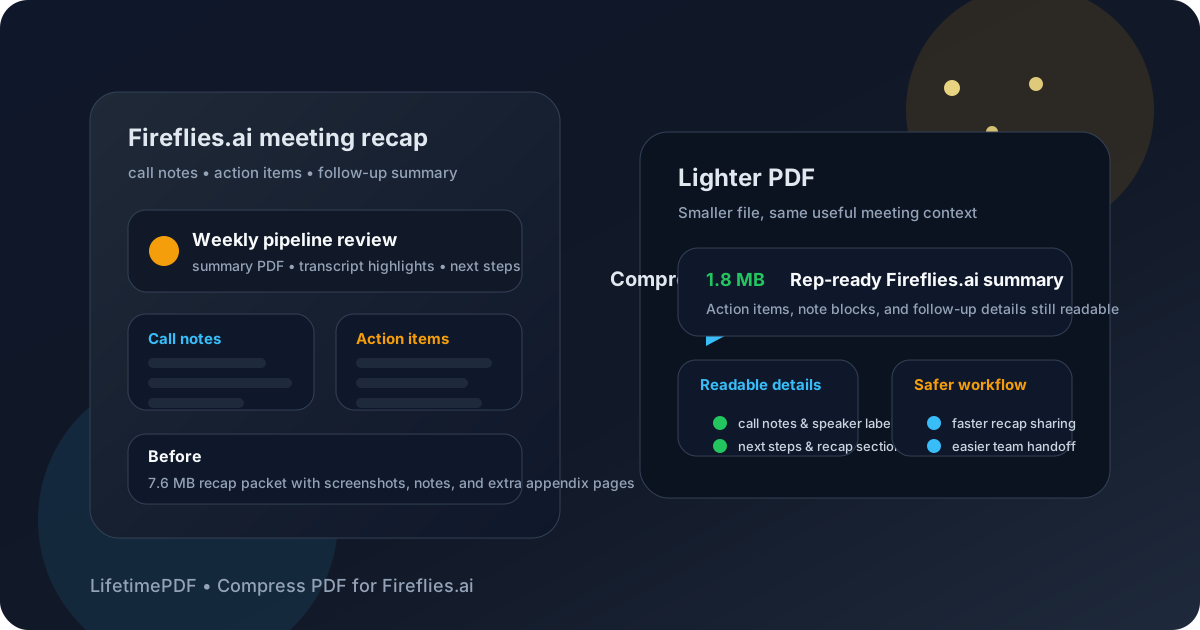
Table of contents
- Quick start: compress a Fireflies.ai PDF in about 2 minutes
- Why Fireflies.ai PDFs get heavy so quickly
- Where large PDFs create friction in Fireflies.ai workflows
- What file size should you aim for?
- Which compression level should you choose?
- Step-by-step: shrink a Fireflies.ai PDF with LifetimePDF
- Best strategy for common Fireflies.ai PDF types
- What if the file is still too big?
- How to keep speaker labels, screenshots, and next-step details readable
- Workflow habits that keep Fireflies.ai PDFs lighter
- Related LifetimePDF tools and useful internal reading
- FAQ (People Also Ask)
Quick start: compress a Fireflies.ai PDF in about 2 minutes
- Open Compress PDF.
- Upload the final Fireflies.ai recap PDF, transcript summary, action-item brief, or follow-up packet.
- Start with Medium compression.
- Download the smaller copy and reopen it from the real post-call recap, client summary, or team handoff workflow where it will actually be used.
- If the file is still too big, extract the pages that matter or split appendix material instead of forcing the whole packet through stronger compression.
That solves most cases. Fireflies.ai PDFs usually do not need aggressive compression. They need a realistic size target, one honest readability check, and a cleaner packet structure when the file is carrying more backup than the next reader actually needs.
Why Fireflies.ai PDFs get heavy so quickly
Fireflies.ai PDFs often become bulky because one useful recap turns into a mixed packet. Teams combine meeting summaries, transcript excerpts, screenshots, action-item lists, client notes, and internal appendix pages into one export. That may help the archive, but it is rarely the best format for the next person who just needs the useful part now.
Another common issue is role overlap. One PDF tries to be a client recap, an internal handoff, a manager summary, and a meeting archive all at once. Compression helps, but the bigger win usually comes from separating the action-ready summary from the extra backup that only a smaller group actually needs.
Where large PDFs create friction in Fireflies.ai workflows
Heavy PDFs create drag exactly where speed matters:
- Client follow-up: the recipient should be able to reopen the recap quickly without fighting a bloated attachment.
- Internal handoffs: lighter PDFs make it easier for sales, success, or RevOps teammates to scan the action items and meeting context fast.
- Meeting review: a focused packet is easier to audit than a giant export full of duplicate screenshots and transcript backup.
- Slack and email sharing: a quick summary loses value when the attachment is slow to open or annoying to forward.
Smaller files remove that friction without changing the meaning of the document. Done well, compression makes the PDF easier to reuse without making the recap feel weaker or less trustworthy.
What file size should you aim for?
There is no single perfect number, but these ranges work well for most Fireflies.ai workflows:
| Document type | Practical target | Why it works |
|---|---|---|
| One-page recaps and short follow-up briefs | < 1MB to 2MB | Fast to open while keeping speaker names, action items, and next steps readable |
| Transcript summaries and screenshot-heavy recaps | 2MB to 3MB | Leaves room for supporting visuals without making the PDF feel clumsy |
| Client-ready recap decks or multi-page handoff docs | 3MB to 5MB | Usually enough space for screenshots, notes, and proof material if the packet is still structured well |
| Large bundles with appendix material | Split instead of chasing one target | Separate the shareable recap from backup pages instead of over-compressing everything |
If someone only needs the decision-ready pages, optimize for that file first. The archive version can stay larger. The shared version should feel quick, focused, and easy to reopen from a phone or laptop.
Which compression level should you choose?
| Compression level | Best use in Fireflies.ai | Main tradeoff |
|---|---|---|
| Low | Text-heavy recaps that are only slightly too large | Small size reduction with almost no readability risk |
| Medium | Default choice for most meeting recaps, call summaries, and follow-up PDFs | Best balance of size reduction and readable screenshots, labels, timestamps, and notes |
| High | Only when image detail matters less than getting under a strict upload limit | Higher risk of blurry screenshots, softer speaker labels, or harder-to-read notes |
In practice, Medium is the right starting point almost every time. If the file is still too large after that, structural cleanup usually beats jumping straight to aggressive compression.
Step-by-step: shrink a Fireflies.ai PDF with LifetimePDF
- Start with the final shareable PDF. Do not compress an older export if the live recap version now has different notes, screenshots, or action-item wording.
- Run it through Compress PDF. Begin with Medium compression first.
- Check the busiest page. Open the page with the smallest labels, densest notes, or most detailed screenshot. If that page still looks good, the rest usually will too.
- Remove pages nobody needs. Use Delete Pages if the packet includes duplicate exports, stale screenshots, or backup pages that are not part of the real handoff.
- Split or extract when the packet has mixed jobs. Use Extract Pages or Split PDF to separate the shareable summary from internal appendix material.
- Test the real workflow once. Reopen the smaller copy where it will actually be used: a follow-up email, internal handoff, recap review, or client note packet.
That last step matters. A PDF can look fine in isolation and still fail in the real workflow because a screenshot is softer than it should be, a timestamp becomes annoying to read, or the next-step note gets harder to scan.
Best strategy for common Fireflies.ai PDF types
1. Meeting recap for client follow-up
Keep these short. The goal is to preserve the useful summary, the decisions, the action items, and the next step. If the PDF includes several backup screenshots or transcript pages, extract the one or two pages that actually support the follow-up and leave the rest behind.
2. Internal call-notes handoff
These can be slightly larger because they often include screenshots, timestamps, and owner notes. Medium compression is usually enough. If the file still feels heavy, cut repetition first. One clear screenshot beats three nearly identical ones.
3. Transcript summary packet
This is where files often become too big. A better structure is to keep a short decision-ready summary in one PDF and put long transcript excerpts or backup notes in a second file. That makes the main recap easier to share and faster to reopen later.
4. Multi-page team handoff bundle
These packets should feel crisp, not stuffed. Keep the pages that explain the decision or prove the context, crop dead screenshot space, and remove internal-only backup before compressing. The final file should help someone act, not just prove that more material exists upstream.
What if the file is still too big?
If Medium compression does not get the file where you need it, work through this order:
- Delete duplicate or outdated pages.
- Shorten long exports if older pages are only backup.
- Crop wasted white space or oversized screenshots with Crop PDF.
- Extract the shareable section and split the appendix.
- Only then try stronger compression if a hard upload limit still exists.
This approach usually produces a better result than forcing the whole document through High compression. Structural cleanup keeps the useful detail intact while reducing the amount of material the PDF has to carry.
How to keep speaker labels, screenshots, and next-step details readable
When you review the compressed copy, do not just glance at page one. Check the details people actually rely on:
- Speaker labels and timestamps should stay crisp, especially in small summary tables or screenshot callouts.
- Action items and decisions should still scan quickly during follow-up.
- Screenshots should keep the callout or highlight you wanted the next person to notice.
- Next-step notes should remain easy to trust in Slack, email, or shared handoff folders.
- The busiest page should still feel readable without constant zooming.
If one of those elements softens too much, back off the compression level or remove nonessential pages instead. The real win is a smaller PDF that still supports a confident next step.
Workflow habits that keep Fireflies.ai PDFs lighter
- Share the recap, not the whole working packet. The archive can stay big. The live PDF should stay fast.
- Keep backup transcript material separate. Raw notes, transcript dumps, and earlier drafts do not always need to travel with the summary.
- Avoid screenshot repetition. If two pages show the same point, keep the clearer one.
- Use one purpose per file. Client recap, internal handoff, and appendix packet do not have to be the same PDF.
- Trim hidden baggage. Metadata, duplicate exports, and backup pages quietly add weight without helping the next reader.
These habits reduce file size before compression even starts, which makes the final result cleaner and more predictable.
Related LifetimePDF tools and useful internal reading
If you work with Fireflies.ai PDFs often, these tools usually help more than compression alone:
- Compress PDF for the first pass.
- Extract Pages when only the shareable section matters.
- Split PDF for separating summaries from appendix material.
- Delete Pages to remove duplicate or stale exports.
- PDF Metadata Editor if you want cleaner file details before wider sharing.
Useful related reading on LifetimePDF:
- Compress PDF for Gong Engage
- Compress PDF for Chili Piper
- Compress PDF for Common Room
- Compress PDF for Outreach
- Compress PDF for Salesloft
Want the shortest version? For most Fireflies.ai workflows, Medium compression plus one cleanup pass is enough. If the PDF is still bulky, split the appendix instead of blurring the useful pages.
FAQ (People Also Ask)
How do I compress a PDF for Fireflies.ai?
Upload the final PDF to a compressor, start with Medium compression, download the smaller copy, and test it in the real Fireflies.ai workflow before replacing the original. Medium is usually the safest first pass because it lowers file size without making speaker labels, screenshots, action items, or next-step notes harder to trust.
What file size should I aim for in Fireflies.ai?
For one-page meeting summaries and short follow-up briefs, under 2MB is a strong target. Screenshot-heavy recap decks, transcript excerpt packets, and multi-page handoff documents usually work best around 2MB to 5MB as long as the smallest useful detail still reads clearly.
Will PDF compression blur timestamps, screenshots, or action items in Fireflies.ai documents?
It can if you compress too aggressively. That is why Medium compression is the best place to start. Always check speaker labels, timestamps, screenshots, action items, and the busiest page before you keep the smaller file.
Should I split a large transcript summary instead of compressing it harder for Fireflies.ai?
Often, yes. If one PDF combines the shareable meeting recap with internal notes, transcript backups, screenshots, or appendix material, splitting it usually creates a cleaner Fireflies.ai workflow than forcing the whole bundle through aggressive compression.
Which LifetimePDF tools pair best with Fireflies.ai?
Compress PDF is the main starting point. Extract Pages, Delete Pages, Split PDF, Crop PDF, PDF Metadata Editor, and OCR PDF are especially useful when you want smaller, cleaner Fireflies.ai documents without carrying extra pages, screenshot waste, hidden metadata, or image-only text forward.
Published by LifetimePDF - Pay once. Use forever.