Compress PDF for Devo: Share Smaller Investigation Reports, Search Exports, and Security Evidence Faster
Yes - you can compress a PDF for Devo before sharing investigation reports, search exports, alert summaries, evidence bundles, and internal security documentation, and Medium compression is usually the safest place to start because it reduces file size without making timestamps, usernames, IP addresses, query details, or screenshots hard to read.
If the PDF is screenshot-heavy, packed with wide tables, or longer than the next reviewer actually needs, trim the useful pages first because smaller Devo PDFs are easier for analysts, responders, managers, auditors, and customers to open during triage, escalation, and post-incident review.
Devo-related PDFs often begin as internal working artifacts and then end up in much broader circulation. A report exported for one investigation can become part of a case handoff, a detection review, an audit package, or a leadership recap. When the shared copy is heavier than it needs to be, every handoff slows down. The goal is not to flatten every file into the smallest possible version. The goal is to keep the meaningful signal, remove the extra weight, and make the document easier for the next person to open and trust.
Fastest path: Use LifetimePDF's Compress PDF tool, start with Medium compression, and create a smaller Devo-friendly PDF in seconds.
In a hurry? Jump to Quick start: compress a PDF for Devo in under a minute.
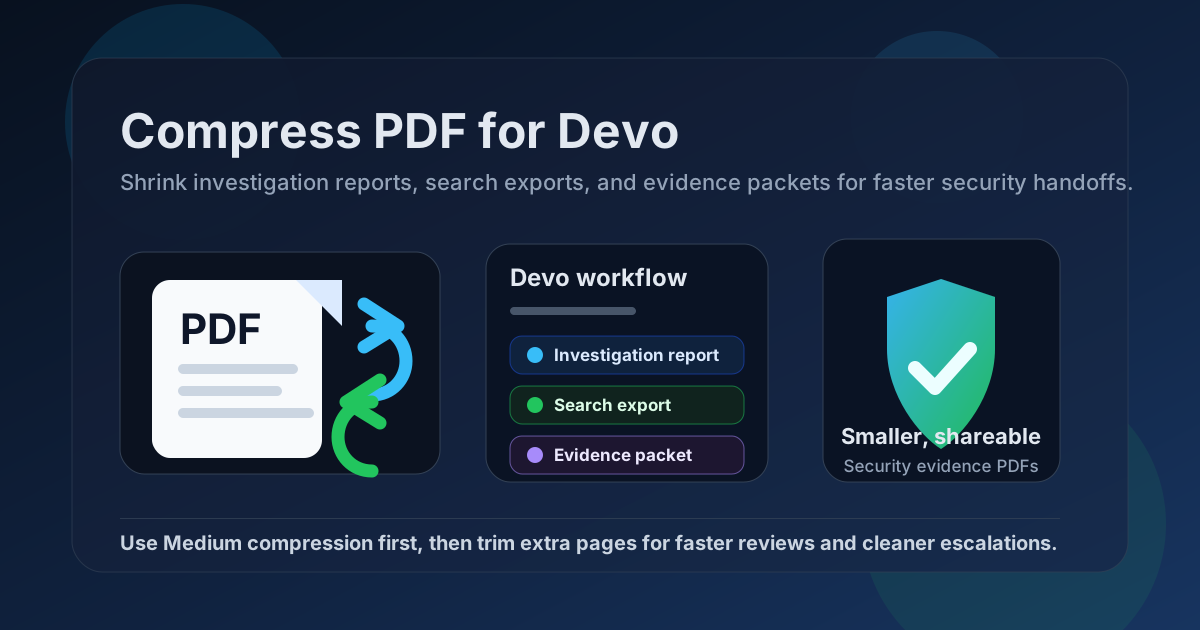
Table of contents
- Quick start: compress a PDF for Devo in under a minute
- Why compress PDFs before using them in Devo workflows?
- What size should a Devo-friendly PDF be?
- Which compression level should you choose?
- Step-by-step: shrink a PDF with LifetimePDF
- Common Devo PDFs that benefit from compression
- What if the PDF is still too large?
- How to keep Devo documents readable
- Workflow habits that keep security PDFs cleaner
- Related LifetimePDF tools and internal links
- FAQ (People Also Ask)
Quick start: compress a PDF for Devo in under a minute
If your goal is simply make this Devo PDF smaller so it is easier to share, reopen, and review, keep it straightforward:
- Open Compress PDF.
- Upload the investigation report, search export, alert summary, evidence bundle, or analyst handoff packet.
- Start with Medium compression.
- Download the smaller version and zoom in on the tiniest timestamps, usernames, IP addresses, query tables, screenshots, and note fields.
- If it is still too large, use Extract Pages, Delete Pages, or Split PDF instead of repeatedly crushing the whole file.
That usually works because the biggest gains come from two moves together: reasonable compression and tighter scope. Most recipients do not need every appendix page, every duplicate screenshot, or every alternate export bundled into one oversized PDF.
Why compress PDFs before using them in Devo workflows?
Devo PDFs usually matter when someone needs clear context quickly. A security analyst may need to reopen a report during triage. An incident responder may need a lighter handoff packet during escalation. A manager, auditor, legal reviewer, or customer contact may need a cleaner evidence bundle without wrestling with oversized attachments. Smaller PDFs reduce friction in each of those moments.
- Faster review: lighter PDFs open more smoothly when teams need findings, screenshots, search output, and notes right away.
- Cleaner handoffs: SOC, IR, IT, compliance, leadership, and outside stakeholders can work from the same file with less attachment pain.
- Better mobile and remote access: smaller PDFs are less frustrating over VPNs, travel connections, and slower links.
- Easier evidence sharing: concise files travel better when Devo output becomes part of an escalation, audit review, executive recap, or post-incident summary.
- Less repeat friction: if the same report gets reopened several times in one week, shrinking it once saves time every time.
Compression is not about forcing every file to become tiny. It is about making the shared copy easier to use while preserving the details that still carry operational meaning.
What size should a Devo-friendly PDF be?
There is no single perfect number because a one-page leadership recap behaves differently from a screenshot-heavy investigation packet, a long search export, an alert summary, or a scanned evidence appendix. Still, practical targets make decisions easier.
| Use case | Recommended target | Why it works |
|---|---|---|
| Very lightweight sharing | < 2MB | Best for quick previews, chat attachments, mobile review, and fast case updates. |
| Most Devo investigation PDFs | 2MB to 5MB | Usually small enough for smooth sharing while keeping screenshots, table output, notes, and labels readable. |
| Larger evidence or audit bundles | 5MB to 10MB | Reasonable when the PDF contains many screenshots, appendices, or scans that still need to stay legible. |
If you can get under 5MB without hurting readability, that is usually a strong result. Under 2MB feels especially good for quick previews. Just do not force every file into the same target when the content clearly needs more detail.
Which compression level should you choose?
Start in the middle, then move up or down based on the kind of Devo PDF you actually have.
Low compression
Use Low when the PDF contains tiny timestamps, dense evidence tables, usernames, IP addresses, query output, or screenshots where small interface text still matters. This is the safer choice for files that someone may inspect closely later.
Medium compression
Use Medium for most everyday Devo PDFs. It usually trims enough file size to make sharing easier while preserving the details that help the next reviewer understand what happened. For investigation reports, search exports, and analyst handoff notes, this is the best place to begin.
High compression
Use High when the file is mostly scans, repeated screenshots, or bulky appendices and the smallest possible size matters more than perfect sharpness. Always review the result carefully before you send it onward.
Step-by-step: shrink a PDF with LifetimePDF
Here is a simple workflow that works well for most Devo documents:
- Open the compressor: go to LifetimePDF Compress PDF.
- Upload the file: choose the investigation report, search export, alert summary, or evidence bundle you need to share.
- Select Medium compression: this is usually the safest balance between readability and smaller file size.
- Download the result: save the smaller copy and compare it with the original.
- Zoom in on the small stuff: check timestamps, query tables, usernames, IP addresses, screenshots, notes, and any table rows with dense detail.
- Trim if necessary: if the file is still larger than you want, remove extra pages or split the document instead of pushing compression harder.
That last step matters more than people expect. Structural cleanup usually protects clarity better than trying to solve every size problem with stronger compression alone.
Common Devo PDFs that benefit from compression
Not every file needs the same treatment, but these are the ones most likely to benefit:
- Investigation reports: often filled with screenshots, narrative notes, and appended evidence.
- Search exports: easier to share when query output and commentary are packaged into a lighter file.
- Alert summaries: helpful for escalations, review meetings, and post-incident documentation.
- Case handoff packets: smaller packets move faster between analysts and responders.
- Evidence bundles: one of the biggest sources of bloated PDFs in security workflows.
- Audit or leadership recaps: better when they open quickly and do not bury the important findings in excess weight.
If a document is meant to answer one question for one audience, it usually should not carry every extra appendix page with it. Compression works best when the scope of the file is already disciplined.
What if the PDF is still too large?
If the file is still too large after a reasonable compression pass, the next move is usually not stronger compression. It is better cleanup.
- Use Extract Pages to share only the pages a reviewer actually needs.
- Use Delete Pages to remove blank pages, duplicated screenshots, and unnecessary appendices.
- Use Split PDF to break one long packet into smaller, cleaner files.
- Use Crop PDF if scanned pages carry oversized margins or wasted space.
A smaller, better-scoped PDF is easier to trust than a heavily compressed file where the important details look fuzzy.
How to keep Devo documents readable
The main risk with compression is not that the file stops opening. It is that the content still opens, but the useful detail becomes harder to trust at a glance.
- Check the smallest text first: timestamps, usernames, IP addresses, query labels, and screenshot callouts reveal quality problems quickly.
- Review any dense tables: if rows blur together, step back to a lighter compression level.
- Be careful with screenshots: dashboards, search views, evidence panels, and analyst notes tend to soften faster than plain text pages.
- Keep an original copy: compress the shareable version, not the only authoritative version.
- Trim before you over-compress: fewer relevant pages often beats a much stronger setting.
Workflow habits that keep security PDFs cleaner
The easiest way to keep Devo PDFs manageable is to stop unnecessary weight before it accumulates.
- Export or assemble a focused time range or case scope instead of a broad one if the recipient only needs a specific alert, user, host, or investigation story.
- Bundle one investigation story per PDF instead of mixing multiple cases and side notes together.
- Keep supporting screenshots only when they clarify the evidence.
- Redact or trim material before distribution when external review does not require everything.
- Store the full source internally, then share a lighter working copy outward.
Those habits make later compression easier because the file starts cleaner. Compression is useful, but disciplined document scope is what keeps the workflow efficient.
Related LifetimePDF tools and internal links
Compressing a PDF for Devo is often just one step in a broader documentation workflow. These tools pair well with it:
- Compress PDF - shrink file size for lighter sharing and faster review
- Extract Pages - share only the pages an analyst, auditor, or stakeholder actually needs
- Split PDF - break long evidence bundles into more manageable parts
- Delete Pages - remove blank or unnecessary pages before compression
- Crop PDF - trim empty scan margins and shadows
- OCR PDF - make scanned evidence searchable
- Redact PDF - remove sensitive data before external sharing
- PDF Metadata Editor - clean file properties before wider distribution
- PDF Protect - add password protection to the final file
Suggested internal blog links
- Compress PDF Online
- Compress PDF for Microsoft Sentinel
- Compress PDF for Splunk
- Compress PDF for IBM QRadar
- Compress PDF for Google SecOps
FAQ (People Also Ask)
1) How do I compress a PDF for Devo?
Upload the file to a PDF compressor, choose a compression level, and download the smaller result. For most people, Medium compression is the best starting point because it keeps timestamps, screenshot text, table output, and evidence notes readable while shrinking the file enough for smoother Devo workflows.
2) What PDF size is best for Devo reports?
A practical target is under 5MB for normal security and IT work and under 2MB if you want especially fast previews and mobile-friendly sharing. If the file is still much larger than that, consider extracting only the necessary pages.
3) Should I use Low, Medium, or High compression for Devo?
Use Low when tiny timestamps, dense tables, IP addresses, or detailed screenshots must stay sharp. Use Medium for most everyday investigation reports, search exports, alert summaries, and internal security documentation. Use High for scan-heavy or image-heavy PDFs when file size matters more than perfect visual fidelity.
4) Will compression ruin Devo screenshots or exported tables?
Usually not if you start with a moderate setting and review the result before replacing the original. The safest habit is to zoom in on the smallest timestamps, the busiest table, and any screenshot text before you share the compressed copy.
5) What kinds of Devo PDFs benefit most from compression?
Investigation reports, search exports, alert summaries, case handoff packets, evidence bundles, and audit documents are all common candidates because they are often reopened, forwarded, or attached to tickets.
6) What if my PDF is still too large after compression?
Split the file into parts with Split PDF, or extract only the pages the reviewer actually needs. In many cases, sharing fewer pages works better than over-compressing the whole document.
Ready to shrink your PDF for Devo?
Best Devo workflow: Export -> Trim -> Compress -> Preview -> Share.
Published by LifetimePDF - Pay once. Use forever.