Compress PDF for ContentShake AI Without Monthly Fees: Shrink SEO Briefs, Draft Review PDFs, and Content Approval Packs Without Another Subscription
If you need to compress PDF for ContentShake AI without monthly fees, the practical move is to export the finished file, run it through LifetimePDF's Compress PDF tool at Medium, and keep the smaller copy only if headings, optimization notes, screenshots, and comments still read clearly.
For most ContentShake AI workflows, that is enough to shrink SEO briefs, draft review PDFs, and approval packs without turning a quick cleanup task into another recurring subscription.
ContentShake AI already handles the expensive part of the workflow: helping shape the brief, outline, draft, or review package. The PDF step is usually just the last mile. Most people are not looking for a whole new category of software at that point. They simply need a lighter file that is easier to email, attach, archive, and reopen later without losing the sections that actually matter.
Fastest path: run the ContentShake AI PDF through LifetimePDF's Compress PDF tool at Medium, then split or extract pages only if the file is still heavier than the next reader needs.
In a hurry? Jump to Quick start: compress a ContentShake AI PDF in under 2 minutes.
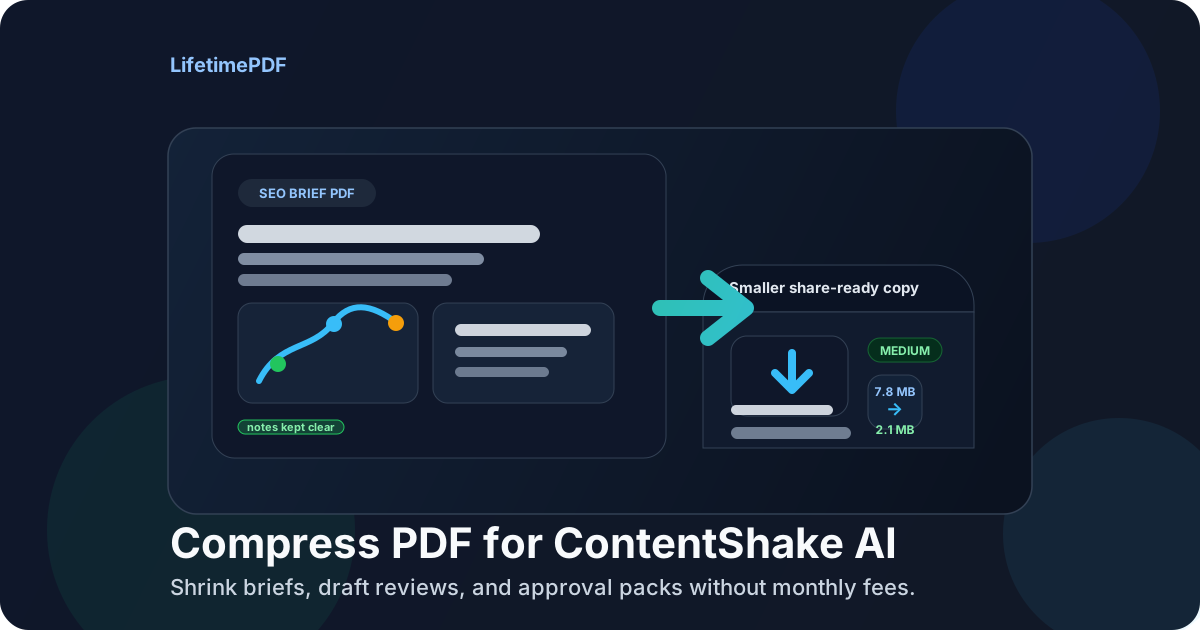
Table of contents
- Quick start: compress a ContentShake AI PDF in under 2 minutes
- Why “without monthly fees” matters here
- Why smaller PDFs help in ContentShake AI workflows
- What size should a ContentShake AI PDF be?
- Which compression level should you choose?
- Step-by-step: use LifetimePDF to shrink the file
- Common ContentShake AI PDFs that benefit from compression
- What to do if the PDF is still too large
- How to keep headings, notes, and screenshots readable
- Workflow habits that reduce PDF bloat
- Related LifetimePDF tools and internal links
- FAQ (People Also Ask)
Quick start: compress a ContentShake AI PDF in under 2 minutes
If your real goal is simply make this ContentShake AI PDF smaller so it is easier to send, this workflow is usually enough:
- Export the final PDF you actually plan to share, whether it is a brief, content outline, draft review pack, approval version, or screenshot-backed recap.
- Open Compress PDF.
- Upload the file and start with Medium compression.
- Download the smaller copy and compare the new size.
- Preview the parts that matter most: title sections, headings, notes, examples, screenshots, and reviewer comments.
- If the file is still bulky, use Extract Pages, Split PDF, or Delete Pages before forcing stronger compression.
Why “without monthly fees” matters here
This is obvious finish-line work. The draft already exists. The brief already exists. The review notes already exist. The remaining problem is just that the exported PDF is heavier than it needs to be. Paying forever to solve that tiny last step is hard to justify.
Content teams already pay for enough. There is budget tied up in research tools, writing workflows, optimization platforms, storage, collaboration software, and client reporting. Once the real question becomes How do I make this PDF easier to send?, a pay-once workflow usually matches the need better than another monthly charge.
Simple rule: if the strategic work already happened inside ContentShake AI, the PDF cleanup step should stay lightweight too.
Why smaller PDFs help in ContentShake AI workflows
ContentShake AI PDFs usually leave the platform because somebody else needs a fixed version of the work. Maybe a writer needs the brief. Maybe an editor needs the outline and notes. Maybe a client needs a clean PDF for review. Maybe an internal approver wants a stable copy that can be saved to a folder or dropped into a project thread. That is where file size starts to matter.
Heavy PDFs create friction for no good reason. They open slower, upload slower, and get more annoying every time someone has to resend them through email, chat, or a client portal. That friction gets worse when one file tries to carry the main brief, screenshots, supporting examples, approval notes, and appendix pages all at once. Good compression helps because it trims waste while protecting the parts people still rely on.
- Faster writer handoffs: lighter briefs are easier to send and easier to open immediately.
- Smoother editorial review: editors can focus on the structure and recommendations instead of waiting on a bloated file.
- Cleaner client delivery: smaller review packs feel easier to forward and less annoying to reopen later.
- Better archives: teams storing dozens of PDFs avoid building a library full of oversized copies.
- Less rework: one cleaner PDF often survives email, chat, and uploads without another round of “this file is too big.”
Compression is not only about a number on the file. It is about removing little moments of friction from a workflow that already has enough moving parts.
What size should a ContentShake AI PDF be?
There is no universal magic number because a short brief behaves differently from a screenshot-heavy approval pack. Still, practical size targets make the decision easier.
| ContentShake AI PDF type | Practical target | Why it works |
|---|---|---|
| Single brief, outline summary, or short draft review | Under 2MB | Easy to email, preview on mobile, and attach to project tools |
| Most content review packs and client-ready recaps | 2MB to 5MB | Usually the best balance between readability and convenience |
| Screenshot-heavy appendix packs | 5MB+ | Often workable internally, but usually a sign the PDF should be split or trimmed before wider sharing |
Which compression level should you choose?
Most people do not need complicated settings. They need a reliable balance between size and readability.
Low compression
- Best when image sharpness matters more than aggressive reduction.
- Useful for screenshot-heavy review PDFs or documents with small note callouts.
- Often enough when the file is already close to the size you want.
Medium compression
- The best starting point for most ContentShake AI exports.
- Usually shrinks the PDF meaningfully while keeping headings, notes, screenshots, and examples readable.
- Good for briefs, outline reviews, editorial handoffs, and approval copies.
High compression
- Best when smaller size matters more than polished presentation.
- Useful for long appendix copies or internal reference files that remain bulky after cleanup.
- Worth reviewing carefully because aggressive compression can soften screenshot annotations and smaller text quickly.
Step-by-step: use LifetimePDF to shrink the file
1) Export the version you actually plan to share
Start with the finished brief or review copy, not an earlier draft with extra baggage. That avoids compressing the wrong version and then having to repeat the whole process.
2) Open the Compress PDF tool
Go straight to Compress PDF. This solves the real problem directly: the file is heavier than it needs to be.
3) Begin with Medium compression
For most ContentShake AI PDFs, Medium is the right first try. Text-heavy documents survive it well, and mixed files with screenshots, notes, and headings usually end up comfortably smaller without feeling damaged.
4) Review the result once
Open the compressed file and check the parts people actually rely on: headings, content sections, optimization notes, screenshot callouts, examples, and comments. You do not need a forensic review. You just need confidence that the shared version still communicates clearly.
5) Reduce page count before pushing compression harder
If the file is still bulky, the next best move is usually not “compress harder.” It is “share less PDF.” Extract the main brief pages, split the appendix into a second file, or delete repeated screenshots before trying another pass.
Need the file smaller right now?
Common ContentShake AI PDFs that benefit from compression
Not every export behaves the same, but these are the files that most often become bulkier than necessary:
SEO briefs
Briefs are usually text-first with a few screenshots or examples. Medium compression is often enough. The main thing to check afterward is whether the heading structure, must-cover points, and notes still scan comfortably.
Draft review packs
These often include the main draft plus screenshots, comments, and supporting notes. If the reviewer does not need every appendix page, splitting the pack usually works better than forcing stronger compression across the whole document.
Approval PDFs
These can grow quickly because they collect examples, screenshots, revision notes, and signoff context. If compression alone does not help enough, extract the decision-ready pages and keep the full archive separately.
Client-ready recap PDFs
These need to feel polished and easy to trust. A smaller file helps, but not if it blurs the screenshots or notes that explain the recommendation. Prioritize clarity over the tiniest possible number.
What to do if the PDF is still too large
Sometimes the right answer is not “compress harder.” Sometimes the right answer is “send a tighter document.” That is especially true in content workflows, where many PDFs carry appendix material most readers never touch.
Option 1: Extract only the pages people need
If the teammate or client only needs the summary pages, use Extract Pages first, then compress that shorter file. This usually works better than crushing a long pack into something tiny.
Option 2: Split the PDF into cleaner sections
If the document includes the main brief, screenshots, supporting examples, and appendix notes for different audiences, use Split PDF. Two focused files are often more useful than one oversized catch-all PDF.
Option 3: Remove obvious waste
Blank pages, repeated screenshots, stale examples, and oversized margins all add weight without adding value. Use Delete Pages or Crop PDF before trying another compression pass.
How to keep headings, notes, and screenshots readable
The real worry behind this workflow is simple: I do not want the shared version to look bad. Fair concern. Text-heavy PDFs usually compress well. The risk rises when the file depends on tiny screenshot labels, dense notes, wide example captures, or small comment callouts.
Usually safe to compress
- Short briefs: mostly text, usually shrink cleanly.
- Outline-driven documents: these often survive Medium compression very well.
- Summary pages: top-line recommendations and next steps usually stay clear.
Preview more carefully when
- The PDF is screenshot-heavy
- Small optimization notes matter
- The document may be presented live on screen
- The appendix contains dense examples or annotations
- The reader depends on visual proof, not only the summary
A useful rule is this: if people need to skim the brief quickly, you can usually compress a little more aggressively. If they need to inspect evidence, discuss examples, or present from the file, be more conservative.
Workflow habits that reduce PDF bloat
Compression helps, but cleaner file habits help more. Most PDF bloat starts before compression ever happens.
- Separate summary from appendix: most readers need the story first, not every supporting page.
- Send the right version to the right audience: writers, editors, and clients often do not need the same PDF.
- Trim repeated visuals: one useful screenshot is evidence, five similar ones are weight.
- Keep a master plus a shared copy: one file can stay fuller for archive while the smaller version handles delivery.
- Use comparison when revisions matter: a comparison pass can prevent approval confusion later.
A strong workflow is often: export a focused PDF -> compress once -> review -> split or trim if needed -> share the cleaner version. That keeps the file useful without turning one small task into a document-management project.
Related LifetimePDF tools and internal links
Compressing a PDF for ContentShake AI without monthly fees is usually one step in a broader content workflow. These tools pair naturally with it:
- Compress PDF - shrink briefs and review packs before sharing them.
- Extract Pages - send only the pages a teammate or client actually needs.
- Split PDF - break one oversized pack into clearer sections.
- Delete Pages - remove duplicate or stale appendix pages before compression.
- Crop PDF - trim wasted screenshot borders and dead space.
- Compare PDFs - useful when checking revisions between review rounds.
- Lifetime Access - use a pay-once workflow instead of adding another monthly PDF subscription.
Suggested related reading
- Compress PDF for Content Harmony Without Monthly Fees
- Compress PDF for Frase Without Monthly Fees
- Compress PDF for Dashword Without Monthly Fees
- Compress PDF for MarketMuse Without Monthly Fees
- Compress PDF for Surfer SEO Without Monthly Fees
- Compress PDF for Semrush Without Monthly Fees
- Browse all LifetimePDF articles
FAQ (People Also Ask)
How do I compress a PDF for ContentShake AI without monthly fees?
Use Compress PDF, upload the ContentShake AI PDF, start with medium compression, and download the smaller result. If it is still bulky, extract only the pages the reader actually needs instead of repeatedly over-compressing the whole file.
Why look for a no-monthly-fee PDF workflow for ContentShake AI?
Because this is routine finish-line work. Most teams want a dependable way to shrink exported PDFs without adding one more recurring software bill for a task that should stay simple.
What file size is best for ContentShake AI briefs and review packs?
Under 2MB is a strong target for single briefs, outline summaries, and short draft reviews. 2MB to 5MB is a practical everyday range for longer recaps and screenshot-backed approval packs.
Will compressing a ContentShake AI PDF make screenshots or notes blurry?
Usually not if you begin with Medium compression. The parts worth checking most carefully are small screenshot labels, heading notes, short examples, and annotation-heavy appendix pages.
What if my ContentShake AI PDF is still too large after compression?
Split the pack into sections with Split PDF, or extract the main brief pages with Extract Pages. In many cases, sharing a tighter PDF works better than compressing the entire pack more aggressively.
Best workflow for most teams: compress once -> preview the result -> split or trim only if needed -> share confidently.
Published by LifetimePDF - Pay once. Use forever.