Compress PDF for BuzzSumo: Shrink Content Research Reports, Trend Snapshots, and Competitor PDFs Without Losing the Story
To compress a PDF for BuzzSumo, export the report, upload it to Compress PDF, start with Medium compression, and keep the smaller copy only if headline tables, trend charts, engagement numbers, and screenshots still read clearly.
For most BuzzSumo PDFs, under 2MB works well for focused research recaps, while broader competitor exports, trend snapshots, and client strategy decks usually land best around 2MB to 5MB.
BuzzSumo PDFs get heavy because they are usually proof documents, not decoration. They often include headline tables, top-content screenshots, domain comparisons, trend charts, notes for clients, and appendix pages that someone will revisit later to justify a decision. Good compression helps when it removes weight without flattening the evidence that made the report worth sharing.
Fastest path: use LifetimePDF's Compress PDF tool, begin with Medium compression, then do one quick readability check before you email, upload, archive, or present the smaller BuzzSumo file.
Short on time? Jump to Quick start: compress a BuzzSumo PDF in under 2 minutes.
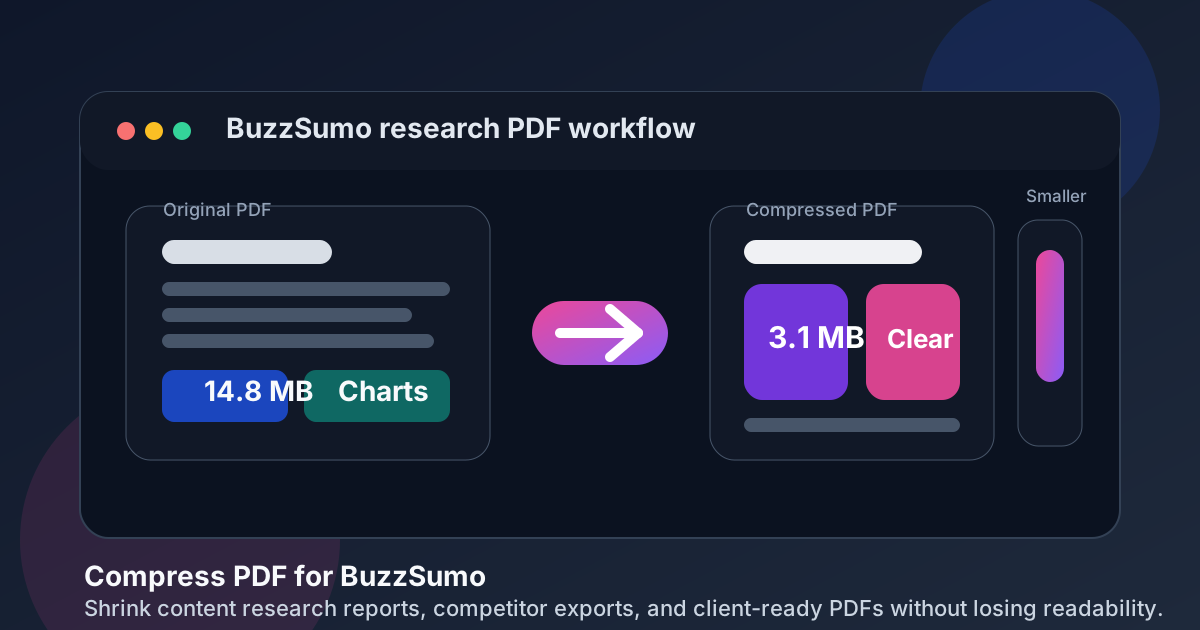
Table of contents
- Quick start: compress a BuzzSumo PDF in under 2 minutes
- Why smaller PDFs help in BuzzSumo workflows
- What file size should you aim for?
- Which compression level should you choose?
- Step-by-step: shrink a BuzzSumo PDF with LifetimePDF
- Best approach for common BuzzSumo PDF types
- What if the PDF is still too large?
- How to keep charts, tables, and screenshots readable
- Workflow habits that reduce PDF bloat
- Related LifetimePDF tools and useful reading
- FAQ (People Also Ask)
Quick start: compress a BuzzSumo PDF in under 2 minutes
If your real goal is simply make this BuzzSumo PDF smaller so it is easier to send, review, and store, this workflow is usually enough:
- Open Compress PDF.
- Upload the BuzzSumo PDF you actually plan to share, such as a content research recap, trend snapshot, competitor export, top-performing content appendix, or client-ready strategy deck.
- Choose Medium compression first.
- Download the smaller copy and compare the size reduction.
- Check the weakest details once: headlines, domains, engagement numbers, chart labels, screenshot notes, and any page where the recommendation depends on tiny text.
- If the file is still bulky, use Extract Pages, Split PDF, or Delete Pages before forcing stronger compression across the whole report.
Why smaller PDFs help in BuzzSumo workflows
BuzzSumo is often where content ideas get turned into something portable. The research may happen inside the platform, but the PDF is what gets sent to a client, attached to a content brief, added to a strategy deck, uploaded to a project tool, or archived for later comparison. That handoff file needs to feel light enough to move easily and sharp enough to support the story.
File size becomes a problem when one PDF tries to do too many jobs at once. A short recommendation turns into headline tables, trend charts, screenshots, domain comparisons, notes, and backup pages that only one person may actually need. Compression matters because it reduces that friction. The trick is stopping before you flatten the proof that made the report useful in the first place.
Why compression usually helps
- Faster handoffs: smaller PDFs are easier to email, upload, and attach in project tools.
- Smoother review: lighter files open faster when someone only needs the main finding.
- Cleaner archives: recurring BuzzSumo exports are easier to store without unnecessary weight.
- Less presentation friction: meetings go more smoothly when everyone can open the same file quickly.
- Fewer resend headaches: compressing once is usually easier than rebuilding and resending an oversized report later.
What file size should you aim for?
There is no perfect number for every BuzzSumo export, but practical ranges help you avoid compressing harder than necessary:
| Document type | Good target range | Why that range works |
|---|---|---|
| Short content research recap | 0.5MB to 1.5MB | Usually enough for a few charts, a short headline table, and one or two supporting screenshots. |
| Competitor export with notes | 1MB to 3MB | Leaves room for headline examples, domain comparisons, and action notes without making the file awkward to send. |
| Trend snapshot or top-content appendix | 2MB to 4MB | Works well when you need more evidence pages, screenshots, and commentary, but not a bloated master archive. |
| Client-ready content strategy deck | 3MB to 6MB | Large enough to keep narrative context and proof while still avoiding unnecessary weight. |
The right target depends on what the next reader needs. If they only need the conclusion, stay near the lower end. If they need proof and examples, allow a little more space. The goal is not the smallest number possible. The goal is a file that is easy to use.
Which compression level should you choose?
For most BuzzSumo PDFs, the safest order is:
- Medium first: best default for balancing file size and readability.
- Low if the report is already light: useful when you only need a modest reduction and want minimal visual change.
- High only when necessary: use it when upload limits are strict and you have already removed unnecessary pages.
What to inspect after compression
- Headline rows, domains, and content examples
- Chart labels, axes, and date ranges
- Engagement numbers and comparison tables
- Screenshot notes and highlighted takeaways
- Any slide or page where the recommendation depends on tiny text
Step-by-step: shrink a BuzzSumo PDF with LifetimePDF
- Use the final PDF you actually plan to share. Compressing a draft too early often leads to repeated exports and avoidable rework.
- Open Compress PDF.
- Upload the file. This might be a content research report, competitor comparison, trend snapshot, outreach appendix, or client-ready strategy presentation.
- Start with Medium compression. That is usually enough for BuzzSumo files with charts and screenshots.
- Download the result. Compare the new size with the original so you know whether the reduction was worth it.
- Preview the compressed copy once. Open the pages that contain the smallest text or most important proof points.
- Trim instead of over-compressing. If the file is still too large, extract summary pages or split the appendix before you force a higher compression level.
Need the shortest route? Compress first, then split or extract pages only if the file is still heavier than the upload limit or more awkward than you want.
Best approach for common BuzzSumo PDF types
1. Content research recaps
These usually compress well because the file is driven by headline tables, summary charts, and a manageable number of screenshots. Medium compression is often enough. Just check that titles, domains, dates, and engagement summaries still read cleanly.
2. Competitor exports with examples
These can become dense fast because they rely on comparisons, screenshots, and notes that explain why a topic or headline pattern matters. If the file still feels bulky after compression, split the appendix instead of forcing all pages through a stronger setting.
3. Trend snapshot proof packs
These matter because they help you prove the recommendation, not just state it. Do not compress so hard that chart labels become fuzzy or headline examples turn into a guessing game. Keep the proof pages sharp, then move extra reference pages into a second file if needed.
4. Client or leadership decks
One deck often tries to satisfy several audiences at once. That is usually where bloat begins. A lighter summary PDF plus a separate appendix often works better than one oversized document for everyone.
What if the PDF is still too large?
If compression alone does not get the file where you want it, the real problem is often structure, not the compression setting. Try these fixes in order:
- Extract summary pages: keep only the pages the next reader truly needs.
- Split the appendix: move backup evidence, raw exports, or extra screenshots into a second file.
- Delete repeats: remove duplicate screenshots, cover slides, or stale comparison pages.
- Crop wasted margins: oversized whitespace can make image-heavy pages heavier than they need to be.
- Only then try stronger compression: once the file is cleaner, a higher level is less likely to damage useful detail.
How to keep charts, tables, and screenshots readable
The real mistake is not making the PDF small. It is making it small enough that the evidence no longer feels trustworthy. After compression, give the file one fast but intentional review.
Readability checklist
- Can you read the smallest headline rows without zooming aggressively?
- Do chart legends, labels, and date ranges still look sharp?
- Are domains, engagement numbers, and notes easy to scan?
- Do highlighted screenshots still prove the point you wanted them to prove?
- Would someone who did not build the report still trust it at first glance?
If the answer to any of those questions is no, back up. Use a lighter compression setting or trim the file instead of pushing visual quality down further.
Workflow habits that reduce PDF bloat
The cleanest compressed PDF usually starts with a cleaner source file. A few habits make a noticeable difference:
- Build one shareable version on purpose: do not rely on a raw export to serve every audience.
- Keep proof selective: use screenshots and evidence where they help, not on every page.
- Separate appendix content early: backup detail can live in its own PDF.
- Archive the master separately: keep the full original, then share a smaller copy built for the next reader.
- Compress once near the end: repeated export and recompress cycles often waste time and create inconsistent results.
Related LifetimePDF tools and useful reading
If you work with BuzzSumo PDFs regularly, these tools and guides are worth keeping nearby:
- Compress PDF for the fastest size-reduction pass.
- Extract Pages when only the summary or proof pages need to be shared.
- Split PDF for separating the executive summary from the appendix.
- Delete Pages to remove duplicate screenshots, stale sections, or repeated covers.
- Compress PDF for Semrush for broader SEO reporting packs.
- Compress PDF for Ahrefs if you also package backlink and keyword research PDFs.
- Compress PDF for BuzzSumo Without Monthly Fees if cost control is part of the decision too.
FAQ
How do I compress a PDF for BuzzSumo?
Export the BuzzSumo report as PDF, upload it to a PDF compressor, start with Medium compression, and review the smaller result before you send it. For most BuzzSumo files, Medium is the safest default because it cuts file size while keeping headline tables, engagement charts, screenshot proof, and notes readable.
What file size should I aim for with BuzzSumo exports?
Under 2MB works well for short content research recaps and focused summaries. Larger competitor exports, trend snapshots, and client strategy decks usually sit best around 2MB to 5MB as long as the smallest useful details still look clean.
Will compression make BuzzSumo charts or headline tables blurry?
It can if you compress too aggressively. That is why Medium compression is the best starting point for most BuzzSumo PDFs. Always check headline rows, chart labels, engagement numbers, domains, and screenshot callouts before keeping the smaller file.
Is it better to split a long BuzzSumo appendix instead of compressing harder?
Often, yes. If one PDF combines the executive summary, trend charts, screenshot evidence, competitor tables, and backup notes for different audiences, splitting it usually works better than forcing stronger compression across every page.
What should I do if the BuzzSumo PDF is still too large after compression?
Extract only the pages the reader truly needs, split the appendix, delete repeated screenshots, crop large empty margins, and only then try stronger compression. In many BuzzSumo workflows, the real problem is over-packed reporting, not the PDF tool itself.
Ready to shrink the file? Use the compressor first, then trim or split only if the report still feels heavier than it should.