Compress PDF for Box Sign Without Monthly Fees: Upload Smaller Contracts and Forms Without Another Subscription
If you need to compress a PDF for Box Sign without monthly fees, upload the final contract, form, or signer-ready packet to LifetimePDF's Compress PDF tool, start with Medium compression, and keep the smaller copy only if signature blocks, signer names, dates, initials, and fine print still look clear.
For most Box Sign workflows, that is enough to shrink agreements, approval forms, onboarding packets, and supporting PDFs without paying for another recurring PDF subscription just to finish the upload step.
Box Sign usually shows up at the point where the document already matters. The file is approved, the packet is assembled, and the next job is to get it signed without friction. That is exactly why the "without monthly fees" angle makes sense here. If you already keep files in Box and route approvals through an e-sign workflow, another monthly bill just to make one PDF smaller feels like overhead, not progress. A pay-once PDF workflow fits better: trim the weight, keep the document trustworthy, and move on.
Fastest path: run the Box Sign file through LifetimePDF's Compress PDF tool at Medium, then extract, split, crop, or delete pages only if the signer packet still carries more weight than the next reader actually needs.
In a hurry? Jump to Quick start: compress a Box Sign PDF in under 2 minutes.
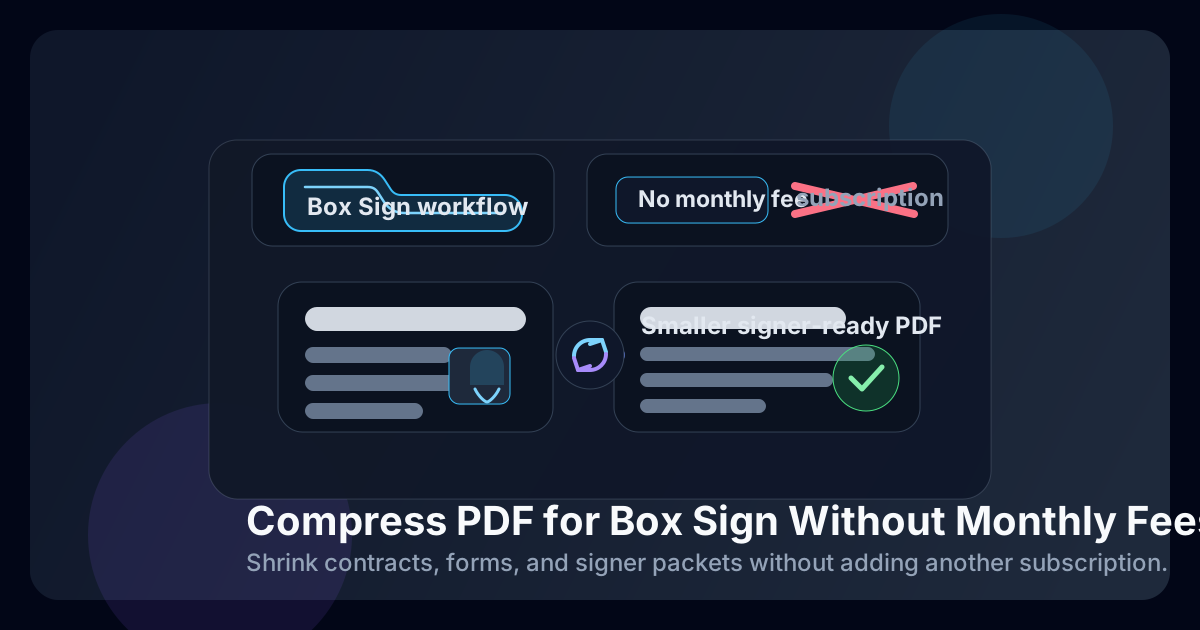
Table of contents
- Quick start: compress a Box Sign PDF in under 2 minutes
- Why "without monthly fees" matters here
- Why smaller PDFs help in Box Sign workflows
- What file size should a Box Sign PDF be?
- Which compression level should you choose?
- Step-by-step: use LifetimePDF to shrink the file
- Best approach for common Box Sign PDFs
- What to do if the PDF is still too large
- How to keep signer-facing details readable
- Workflow habits that reduce PDF bloat
- Related LifetimePDF tools and useful reading
- FAQ (People Also Ask)
Quick start: compress a Box Sign PDF in under 2 minutes
If your real goal is simply make this Box Sign PDF smaller so it is easier to upload, review, and sign, this workflow is usually enough:
- Export the final agreement, approval form, onboarding packet, or signer-ready PDF you actually plan to send.
- Open Compress PDF.
- Upload the file and choose Medium compression first.
- Download the smaller result and compare the new size.
- Preview the details that matter most: signer names, dates, signature blocks, initials areas, checkbox labels, and the smallest legal text.
- If the packet is still bulky, use Extract Pages, Split PDF, or Delete Pages before trying stronger compression across the whole file.
Why "without monthly fees" matters here
This keyword is really about cost discipline at the end of a workflow. By the time a PDF reaches Box Sign, the expensive part is already done. The agreement was drafted, reviewed, approved, and prepared for signature. The remaining job is humble but important: make the file light enough to move cleanly without making it look cheap.
That is why a pay-once tool makes sense. Shrinking the final PDF is not a whole department. It is finish-line work. If your stack already includes storage, collaboration, contract review, or signing tools, another monthly charge just to compress a file is hard to justify. A straightforward workflow that lets you reduce the size, review the result once, and send it on is usually the better fit.
There is also a practical trust issue. A lot of "free" PDF tools look convenient until the actual download is locked behind an account wall, watermarked trial, or limited usage cap. That is annoying when all you wanted was a signer-ready PDF that uploads cleanly and opens quickly for the next person.
Why smaller PDFs help in Box Sign workflows
Box Sign documents are often shared under time pressure. A sales agreement may need same-day approval. An HR packet might be opened on a phone. A vendor contract could be reviewed from a shared folder while several people are waiting on the final signature. In those moments, file size stops being a technical detail and becomes a friction problem.
- Faster uploads: smaller files move into the signing flow with less waiting.
- Smoother previewing: lighter PDFs are easier to open from shared folders, desktops, tablets, and phones.
- Cleaner handoffs: compact files are easier to resend, archive, or attach to internal approvals.
- Less signer friction: a leaner packet feels intentional instead of bloated.
In practice, the weight usually comes from scans, duplicate pages, appended exhibits, large screenshots, or one giant packet trying to answer every question for every audience. Compression helps, but it works best when it is paired with a little editing judgment.
What file size should a Box Sign PDF be?
There is no single perfect number, but practical ranges are better than guesswork:
- Under 2MB: a strong target for text-heavy contracts, approval forms, policy signoffs, and ordinary signer packets.
- 2MB to 5MB: a realistic range for scan-heavy onboarding files, mixed-content packets, or image-heavy exhibits that still need to stay readable.
- Above 5MB: usually a sign the PDF includes appendix weight, duplicate scans, or pages the signer does not actually need right now.
The real rule is simple: the smallest useful text still has to read clearly. If the file is lighter but the dates, clause text, signature boxes, or checkbox labels become harder to trust, it is not the right result.
Which compression level should you choose?
Start conservative and only push harder if the file stays too large after one reasonable pass.
- Low compression: best when the PDF is already fairly clean or contains delicate text, detailed tables, or faint scan content that cannot afford much softening.
- Medium compression: the best default for most Box Sign PDFs because it balances size reduction and signer readability.
- High compression: useful for image-heavy support material or very bloated packets, but it should always be followed by a real quality check.
Step-by-step: use LifetimePDF to shrink the file
- Export the final Box Sign PDF you actually intend to send. Start with the version the next person really needs, not a giant master packet with every backup page still attached.
- Open LifetimePDF Compress PDF. This is the quickest way to reduce file weight before upload.
- Upload the file and start with Medium. For most agreements and signer packets, that is the safest first pass.
- Download the smaller copy and compare the size change. You want a lighter file, not a damaged one.
- Review the parts that fail first. Check signature areas, signer names, dates, small tables, checkbox labels, and dense legal text.
- Trim pages only if needed. If the packet is still too heavy, extract the signable section, split appendices, crop scan borders, or delete duplicate support pages before forcing stronger compression across the whole file.
That order matters. A lot of oversized signer packets do not need harsher compression. They need fewer pages or less wasted image area.
Need the shortest version? Compress once, review once, then trim page weight only if the packet still feels larger than it should.
Best approach for common Box Sign PDFs
Contracts and NDAs
These are usually text-heavy and compress well. Medium compression is often enough, and many files can drop nicely below 2MB while staying sharp and professional.
Approval forms and policy signoffs
These typically need very clear labels, dates, and signature blocks. Keep compression sensible and review the smallest text once before routing the file.
Onboarding packets
This is where extra weight sneaks in. A packet may include acknowledgements, IDs, instructions, and appendices that not every reader needs at the same moment. Splitting or extracting the signable core often works better than crushing the whole thing harder.
Scan-heavy exhibits and supporting paperwork
Be more careful here. Phone scans, photocopies, borders, and gray backgrounds can go soft quickly. Medium compression plus crop or delete-page cleanup usually works better than an aggressive all-at-once squeeze.
What to do if the PDF is still too large
If compression helped but not enough, the next step is usually cleanup rather than brute force.
- Use Extract Pages for the actual signable section.
- Use Split PDF to separate appendices, exhibits, or backup materials.
- Use Delete Pages for duplicate covers, blank separators, old drafts, or repeated support pages.
- Use Crop PDF if scans or exports carry oversized borders and wasted white space.
In many Box Sign workflows, those page-level fixes remove more weight than a harsher compression setting ever would.
How to keep signer-facing details readable
Before you send the smaller copy, inspect the places that usually fail first:
- signature lines and initials areas
- checkbox labels and form instructions
- names, dates, and page references
- dense clauses, footnotes, and annex labels
- scan-heavy attachments with faint text
- small tables, totals, or pricing blocks inside agreement packets
A useful habit is to zoom in on the weakest page instead of the prettiest one. If the smallest signature field and the densest paragraph still look dependable, the rest of the file is usually fine.
Workflow habits that reduce PDF bloat
- Export for the real audience: do not send one giant master packet when a signer only needs the actual agreement.
- Separate signable and reference material: keep support pages outside the main file when possible.
- Trim scan waste: borders, crooked pages, and blank backs add weight fast.
- Delete duplicates early: repeated covers, draft pages, and extra separators create bulk without adding value.
- Check once before routing: a 20-second review beats a resend after someone says the PDF is blurry.
A practical workflow is usually: Export clean PDF → Compress → Review → Upload to Box Sign. Add page trimming or packet splitting only when the file actually needs it.
Related LifetimePDF tools and useful reading
If your Box Sign document still needs cleanup after the first compression pass, these tools and guides usually help:
- Compress PDF for the main size-reduction step.
- Extract Pages for signable sections only.
- Split PDF for appendix-heavy signer packets.
- Delete Pages for duplicate or dead-weight pages.
- Crop PDF for scan borders and oversized margins.
- Merge PDF when the final packet really should stay together.
- Compress PDF for Box Sign for the broader workflow guide.
- Compress PDF for Box for the storage and sharing angle.
- Compress PDF for Foxit eSign Without Monthly Fees for a close e-sign companion workflow.
- Compress PDF for SignNow Without Monthly Fees for another signer-packet use case.
- Compress PDF for Dropbox Sign Without Monthly Fees for another contract-sharing workflow.
- Compress PDF for DocuSign Without Monthly Fees for another upload workflow.
Need the shortest version? Export the final Box Sign PDF, run it through Compress PDF at Medium, review the weakest page once, and then split or trim only if the packet is still too large.
FAQ (People Also Ask)
How do I compress a PDF for Box Sign without monthly fees?
Use a pay-once PDF tool like LifetimePDF, upload the Box Sign document, start with Medium compression, and review the smaller result before you send it. If the file is still too large, extract or split the pages the signer actually needs instead of over-compressing the whole packet.
What file size should I aim for with Box Sign PDFs?
Under 2MB is a strong target for text-heavy contracts, forms, approval sheets, and ordinary signer packets. Scan-heavy attachments, image-heavy exhibits, and mixed onboarding bundles often work better around 2MB to 5MB as long as signature blocks, labels, and fine print still read clearly.
Will compression make Box Sign documents blurry?
It can if you compress too aggressively. That is why Medium compression is usually the safest first pass. Review the smallest legal text, signature boxes, checkbox labels, dates, and initials areas before you keep the compressed file.
Should I split a large signer packet instead of compressing it harder?
Often, yes. If one PDF mixes the actual agreement with appendices, duplicate scans, old drafts, and support pages, splitting it usually works better than pushing stronger compression across the whole file.
Why look for a Box Sign PDF workflow without monthly fees?
Because shrinking the final signer-ready PDF is finish-line work. If your team already pays for Box, storage, or the signing workflow around it, another recurring bill just to reduce file size is hard to justify. A pay-once workflow fits the job better.
Published by LifetimePDF - Pay once. Use forever.