How to Split PDF in Vivaldi: Separate Pages from Downloads, Workspaces, and Cloud Files Without Mixing Up Versions
To split a PDF in Vivaldi, open a browser-based Split PDF tool in Vivaldi, choose the file from Downloads, a Workspace tab, Google Drive, Dropbox, or a local folder, set the page ranges or sections you need, and download the smaller PDFs.
Vivaldi can preview PDFs well, but it does not split them into separate files by itself, so the clean workflow is to use Vivaldi as the workspace and a dedicated split tool for the actual export.
That is the short answer. The part that actually saves time in Vivaldi is avoiding the wrong Workspace tab, duplicate downloads, stale cloud previews, and tab-stack clutter that makes one quick split feel more complicated than it should.
Fastest path: confirm the exact source PDF first, open LifetimePDF's Split PDF tool in Vivaldi, create only the sections you really need, then rename the outputs before you upload, email, archive, or share them anywhere else.
In a hurry? Jump to Quick start: split PDF in Vivaldi in a few minutes.
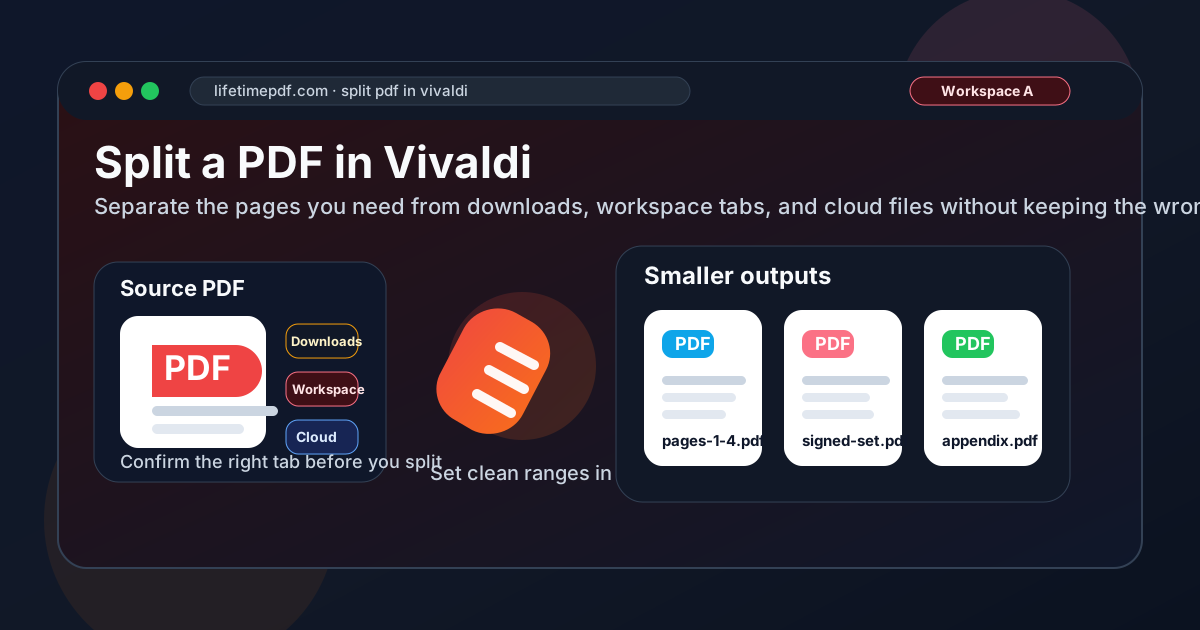
Table of contents
- Quick start: split PDF in Vivaldi in a few minutes
- Why Vivaldi is a good PDF workspace but not the split tool itself
- Step-by-step: split a PDF in Vivaldi without confusion
- Split PDF vs Extract Pages vs Delete Pages in Vivaldi
- Working with PDFs from Downloads, Workspaces, cloud storage, and local folders
- Common Vivaldi mistakes and how to avoid them
- How to keep the new smaller PDFs organized across tabs and folders
- Related LifetimePDF tools and guides
- FAQ
Quick start: split PDF in Vivaldi in a few minutes
If you already know roughly how the PDF should be divided, this is the cleanest Vivaldi workflow for most people:
- Open Split PDF in Vivaldi.
- Choose the source file from Downloads, a saved file from a Workspace, Google Drive, Dropbox, or another local folder.
- Decide whether the document should become a few meaningful sections, several single-page files, or one extracted range instead of a full split.
- Create the smaller PDFs and save them with names that describe the contents, not just the page numbers.
- Open each output once in Vivaldi before you email, upload, print, or archive it.
Why Vivaldi is a good PDF workspace but not the split tool itself
Vivaldi is the kind of browser people use when they like control. Workspaces, tab stacks, side panels, pinned tabs, and Downloads all make it easy to keep a lot of documents in motion at once. That is great for research, admin work, school packets, contracts, reports, and approval bundles.
The limit is simple: opening a PDF is not the same thing as splitting it into separate files. Vivaldi's built-in viewer is useful for checking the document, confirming the page count, and making sure you grabbed the right file. It does not create several smaller PDFs on its own.
The cleaner workflow is usually this:
- Use Vivaldi to review the file and confirm the real source.
- Use Split PDF when one document needs to become several separate files.
- Use Extract Pages when you only need one selected section as one new PDF.
- Use Delete Pages when you want one cleaned-up copy instead of several outputs.
- Use Organize PDF first if the page order is messy or you need to inspect sections before splitting.
| Method | Best for | Where it struggles |
|---|---|---|
| Vivaldi PDF viewer only | Opening the file, checking page count, and confirming you have the right source | Creating several smaller PDF files from one larger document |
| Workspace tabs and cloud previews | Fast visual checks before deciding which file you actually need | Easy to confuse with an older tab, duplicate download, or wrong cloud revision |
| Vivaldi + Split PDF | Turning one large PDF into several clear smaller outputs | You still need to name and review the outputs sensibly |
| Vivaldi + Extract Pages | Keeping one selected section as one new file | Not ideal if you need several separate outputs from the same document |
In other words, Vivaldi is the workspace. The actual split should still happen in a tool built for producing clean smaller PDFs.
Step-by-step: split a PDF in Vivaldi without confusion
If you want a repeatable browser workflow that works for contracts, reports, school forms, invoices, exhibits, onboarding packets, appendices, or project handoffs, use this routine:
- Start from the exact PDF you intend to break apart. Do not assume the open browser tab is the right file. Confirm whether the real source is the downloaded copy, the file open in a Workspace tab, the Drive version, the Dropbox version, or a local folder export.
- Open the split workflow. Launch Split PDF in Vivaldi.
- Decide what the outputs should mean. Think in terms of sections another person would understand, such as signatures, appendices, receipts, exhibits, chapters, or supporting documents.
- Create only the outputs you need. If one section is all you need, use Extract Pages instead of turning one PDF into a pile of parts.
- Check Vivaldi's blocker only if a trusted tool stalls. If uploads or downloads do not complete on a site you trust, relax the blocking for that tab and try again instead of repeating the same broken attempt.
- Rename the results immediately. Names like signed-pages.pdf or report-appendix.pdf are much easier to trust later than part-1.pdf and part-2.pdf.
- Review each new file once. Open the beginning and end of every output before you share it anywhere.
Useful rule: label outputs based on purpose, not just page numbers. A file called client-exhibits.pdf is safer than pages-14-22.pdf when you come back to it later.
If the page order is already confusing, use Organize PDF first. It is usually easier to preview and fix the flow before you split than to repair several wrong outputs afterward.
Split PDF vs Extract Pages vs Delete Pages in Vivaldi
These tasks sound similar, but they solve different problems.
Split PDF is for when one large document should become several new files. Maybe you have one project packet and want the summary, appendix, and signatures as separate PDFs. Maybe you have one application bundle and want one file for forms and another for supporting documents. That is a split workflow.
Extract Pages is cleaner when you only want one result. If the only thing you need is pages 8 through 12 from a longer report, use Extract Pages. It gives you one smaller PDF without creating several files you did not ask for.
Delete Pages is best when the final document should still mostly look like the original, just without certain pages. That is useful when a packet includes duplicate covers, notes, blank pages, or sections that should not stay in the version you plan to share.
- Need several outputs? Use Split PDF.
- Need one smaller output? Use Extract Pages.
- Need one edited version of the original? Use Delete Pages.
Making that choice first keeps Vivaldi workflows tidy and saves you from cleaning up a folder full of unnecessary exports.
Working with PDFs from Downloads, Workspaces, cloud storage, and local folders
The split step itself is usually easy. Source confusion is the real Vivaldi problem. One file is open in a Workspace tab. Another sits in Google Drive. A third version is already in Downloads. A fourth may be inside a tab stack next to several related files. If you split the wrong source, the outputs will be wrong no matter how neat the tool is.
The safest habit is simple: confirm one real source file first, then split from that copy. That gives you a clear starting point and makes the outputs easier to name, store, and compare later.
- Downloads: check whether you are opening document.pdf, document (1).pdf, or an older copy with a similar name.
- Workspace tabs: make sure the open tab belongs to the exact file you want, not a preview from earlier research or a different project workspace.
- Google Drive or Dropbox: confirm you have the right version before splitting, especially if other people also edit or replace the file.
- Local folders: keep the source and the new smaller outputs in a location that makes sense, especially for work, school, legal, or deadline-driven documents.
- Tab stacks: if several PDFs look similar in one stack, rename the outputs right away so they do not blur together the next time you reopen them.
Clear filenames are not just a nice habit here. They are what stop you from uploading the full confidential packet when you only meant to share one smaller section.
Common Vivaldi mistakes and how to avoid them
Most problems with splitting PDFs in Vivaldi come from browser habits, not from the split itself.
1. Splitting the wrong tab
Vivaldi makes it easy to juggle Workspace tabs, tab stacks, a cloud preview, and a downloaded copy at the same time. Confirm the real source file before you split anything.
2. Creating too many output files
If you only need one smaller section, do not split the whole PDF into ten parts. Use Extract Pages instead.
3. Letting Vivaldi's blocker interrupt a trusted workflow
If a trusted split tool will not upload, preview, or download correctly, check whether Vivaldi's blocker or privacy settings are getting in the way. Fixing that once is better than generating multiple failed attempts and duplicate files.
4. Naming outputs too vaguely
Files called part-1, part-2, and part-3 are easy to mis-send later. Name them based on their purpose or content.
5. Forgetting to review the outputs
It only takes a few seconds to open the first and last page of each new PDF. That quick check catches reversed sections, missing pages, and wrong ranges before somebody else sees the mistake.
How to keep the new smaller PDFs organized across tabs and folders
Once the split is finished, a few small habits make the outputs much easier to trust:
- Check the first and last page of each output so you know the right range landed in the right file.
- Rename the files immediately before Downloads fills with another round of copies.
- Compress only if needed after the page ranges are already correct.
- Protect a sensitive output if one smaller file still contains private information that should not travel unprotected.
- Keep the original until you are done so you can recover quickly if you realize a section was missing.
| If this happens | What to do next |
|---|---|
| The new smaller PDFs are still too large for email or an upload portal | Use Compress PDF after splitting |
| You only needed one selected range after all | Use Extract Pages instead of keeping several extra outputs |
| The page order looked messy before splitting | Go back and use Organize PDF first |
| The source was a scan and you need the final files searchable | Use OCR PDF after the split so the new files are easier to search |
Resist the urge to keep splitting the same file over and over unless something is actually wrong. One clean set of clearly named outputs is easier to trust than five almost-identical attempts scattered through Vivaldi tabs and Downloads.
Related LifetimePDF tools and guides
Splitting often overlaps with one or two other PDF tasks. These are the most useful companions in Vivaldi workflows:
- Split PDF — turn one large file into several smaller PDFs.
- Extract Pages — keep one selected range as one new PDF.
- Delete Pages — remove unwanted pages while keeping one cleaned-up copy.
- Organize PDF — preview, reorder, and prepare the file before splitting.
- Compress PDF — shrink the final smaller files if upload limits still complain.
Related reading on LifetimePDF: How to Split PDF on Chromebook, How to Split PDF on Windows, How to Merge PDFs in Vivaldi, How to Edit a PDF in Vivaldi, and How to Compare PDFs in Vivaldi.
Vivaldi shortcut: confirm the real source file, split only what you actually need, name the outputs clearly, and review them once before they leave your browser or your downloads folder.
FAQ: How to split PDF in Vivaldi
Can Vivaldi split PDF files by itself?
Vivaldi can preview PDFs very well, but its built-in viewer does not create separate PDF files by itself. Use a browser-based Split PDF tool inside Vivaldi for the actual split.
What is the best way to split a PDF from Downloads or a Workspace tab in Vivaldi?
Confirm which file is the real source first, then split that copy in Vivaldi. That prevents you from creating outputs from an older preview, the wrong Workspace tab, or a duplicate download.
When should I use Extract Pages instead of Split PDF in Vivaldi?
Use Extract Pages when you only want one smaller output from a larger PDF. Use Split PDF when one document needs to become several separate files.
Why is the PDF upload or download stalling in Vivaldi?
Vivaldi's blocker, privacy settings, or aggressive tab handling can sometimes interrupt a trusted PDF workflow. If the site is trustworthy and the job stalls, relax the blocking for that tab and retry.
Will splitting a PDF in Vivaldi reduce quality?
Usually no. Splitting normally keeps the original text, layout, and page quality because you are reorganizing pages into smaller PDFs rather than turning them into screenshots.
Published by LifetimePDF — Pay once. Use forever.