How to Sign a PDF on Android: Add Your Signature and Send It Back Fast
To sign a PDF on Android, open the file in Chrome with a browser-based Sign PDF tool, add your signature, place it on the correct page, then download the signed copy to Files or Downloads and send it back.
If the PDF also needs typed answers first, fill the form before signing so the final document stays clean and easy to review.
That is the short answer. The useful part is knowing which Android workflow wastes the least time, what to do when the PDF arrives through Gmail or Google Drive, and how to avoid the classic mobile problems: oversized signatures, awkward markup exports, and last-minute back-and-forth because the file was saved sloppily.
Fastest path: open LifetimePDF's Sign PDF tool in Chrome, upload the document from Files, Gmail, Drive, or Downloads, place your signature neatly, and save the signed PDF back to your Android device.
In a hurry? Jump to Quick start: sign a PDF on Android in 3 minutes.
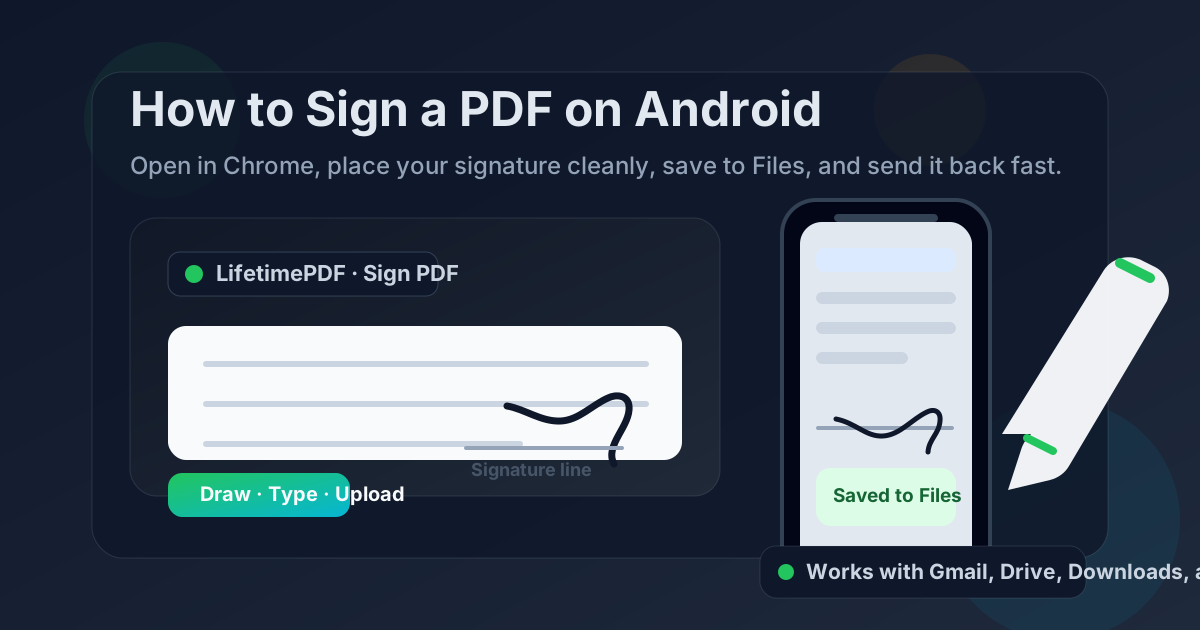
Table of contents
- Quick start: sign a PDF on Android in 3 minutes
- The easiest Android workflow for signing PDFs
- Step-by-step: sign a PDF in Chrome on Android
- Android Markup vs a dedicated signing tool
- How to sign scanned or flattened PDFs on Android
- What to do if the document also needs typed fields
- How to keep the signature clean on a small screen
- How to save and send the final file
- Related LifetimePDF tools for smoother Android workflows
- FAQ (People Also Ask)
Quick start: sign a PDF on Android in 3 minutes
If you just need a contract, permission slip, rental form, or approval PDF signed and sent back quickly, use this workflow:
- Open Sign PDF in Chrome on your Android phone or tablet.
- Choose the file from Files, Downloads, Gmail, Google Drive, or another app.
- Create your signature by drawing it, typing it, or uploading an existing signature image.
- Place the signature on the correct page and zoom in to check alignment.
- Download the signed PDF and open it once from Files before you send it back.
The easiest Android workflow for signing PDFs
Android users usually bounce between three options: opening the PDF in Files, using built-in markup, or moving to a dedicated web tool in Chrome. All three can work, but they are not equally pleasant.
For quick, reliable signing, the browser-based route is usually the least frustrating. You keep the document digital, you avoid printing and rescanning, and you get more control over placement than a rushed markup session normally gives you.
| Method | Best for | Where it struggles |
|---|---|---|
| Files / built-in viewer | Opening and reviewing PDFs | Limited control when the document needs cleaner signature placement |
| Android Markup | One quick signature on a simple document | Multiple pages, better placement, repeated signing, or mixed form-and-sign workflows |
| LifetimePDF Sign PDF in Chrome | Clean placement, draw/type/upload options, easier save-and-send workflow | You still need one review pass before sending |
That is why Chrome is usually the sweet spot. The document can start in Gmail, Drive, Files, or Downloads, move into a proper signing view, then go right back to your Android device as a finished PDF.
Step-by-step: sign a PDF in Chrome on Android
Here is the practical workflow most people actually need.
Step 1: Open the PDF from where it already lives
Most PDFs arrive through Gmail, Google Drive, Messages, a download link, or your Files app. You do not need to reorganize everything first. Just remember where the document is, then open Sign PDF in Chrome.
Step 2: Upload the document from your Android device
Tap the upload button and choose the file from the Android picker. On some devices that means Files. On others it might say My Files, Downloads, or Drive. If the file came from Gmail, saving it once to Files can make the final save-and-send step easier, but it is not required.
Step 3: Choose how you want to create the signature
On Android, the right method depends on speed and how formal you want the final page to look:
- Draw: best when you want a more handwritten look using your finger or stylus.
- Type: best when you want the fastest route and a tidy, consistent look.
- Upload: best when you already keep a clean signature image and want the same result every time.
Step 4: Place the signature carefully
Move the signature into the right spot, then zoom in before you settle on the final position. A small phone screen can hide subtle placement problems, especially around date lines, initials, checkboxes, and narrow form fields.
Step 5: Review once before saving
Take ten extra seconds to check that the signature is not floating off the line, covering nearby text, or sitting on the wrong page. That tiny review pass prevents most of the annoying “please re-sign and resend” messages people get later.
Need the shortest possible route? Open the PDF in Chrome, sign it, save it to Files, then send the reviewed copy back from your Android device.
Android Markup vs a dedicated signing tool
Android Markup is useful, but it is not always the cleanest answer. If you only need to scribble a signature onto a simple one-page document, Markup is fine. If the document is important, multi-page, or needs repeatable clean placement, a dedicated signing tool is usually easier.
When Markup is enough
- a single-page permission slip
- a quick approval that only needs your signature
- a document you are not especially worried about formatting perfectly
When a dedicated tool is better
- you want draw, type, and upload options
- the signature must sit neatly on a specific line or box
- the PDF has multiple pages or multiple places to review
- you also need to fill fields before signing
- you want a smoother save-and-send workflow from Chrome and Files
In other words, Markup is fine for “good enough.” A dedicated Sign PDF tool is better when the document needs to look deliberate and finished.
How to sign scanned or flattened PDFs on Android
Many PDFs are not truly interactive. They are just scans or flattened exports that behave like images. That is why you tap and nothing happens.
The good news is that signing still works. You simply place the signature on top of the page rather than typing into a built-in field. The same applies to initials or short handwritten acknowledgments.
Common signs the PDF is scanned or flattened
- you cannot tap into any field
- the page looks like a photo of a form rather than a real digital form
- text is not selectable
- the layout feels fixed even when you try to interact with it
If the document only needs a signature, you can sign it directly. If it also needs typed answers, use a form filler first so the final file stays readable and organized.
What to do if the document also needs typed fields
A lot of Android signing tasks are really two tasks mixed together: fill the form, then sign it. People often try to do both at once and end up with messy placement.
The cleaner workflow is:
- Open PDF Form Filler.
- Enter the typed information first.
- Save or continue with the form once the answers are aligned properly.
- Then open Sign PDF and place the signature last.
How to keep the signature clean on a small screen
Signing on Android is easy. Signing neatly on Android is the part that takes a little care.
Use zoom before final placement
The most common mobile mistake is accepting a signature placement while still zoomed out too far. Zoom in enough to see the signature line clearly before you confirm the position.
Do not oversize the signature
Bigger does not look more official. It usually just makes the file look clumsy. Aim for a signature that fits the line naturally and leaves nearby dates, labels, and text unobstructed.
Pick the right signature style for the document
A typed signature may be perfect for a fast internal approval. A drawn or uploaded signature often looks better for contracts, school forms, rental paperwork, and client-facing documents.
Review the signed area at full size
Before sending, check the exact area around the signature. Make sure the line is visible, the signature is not cut off, and nothing important is hiding underneath it.
How to save and send the final file
After signing, download the PDF and save it somewhere predictable, usually Files or Downloads. Then open the saved copy once more before you send it back.
That extra open-check matters because it confirms three practical things:
- the file saved correctly
- the signature still looks right outside the editing view
- you are sending the finished version rather than the original unsigned PDF
From there, you can attach it in Gmail, upload it through a portal, save it to Drive, or share it directly from Files. If the PDF is unusually large because it contains scans or photos, run it through Compress PDF before sending.
Related LifetimePDF tools for smoother Android workflows
Signing is often just one step in the larger document workflow. These tools help when the file is not quite ready yet:
- PDF Form Filler for forms that need typed fields before signing.
- Compress PDF when scan-heavy files are too large to send comfortably.
- Unlock PDF if you have permission to edit a document that is blocked by a password.
- OCR PDF when a scan needs searchable text for a cleaner workflow afterward.
- How to Fill Out a PDF Form on Android if the document needs form work before you sign it.
Ready to sign from your Android device without printing?
Open the PDF in Chrome, place your signature cleanly, save the finished file, and send it back in minutes.
FAQ (People Also Ask)
How do I sign a PDF on Android without printing it?
Open a browser-based signing tool in Chrome, upload the PDF from Files, Gmail, or Drive, create your signature, place it on the page, download the signed file, and send it back directly from your Android device.
Can I sign a scanned PDF on Android?
Yes. Scanned PDFs usually work like images, so you place the signature on top of the page instead of tapping into built-in fields. If the document also needs typed answers, fill those first and sign afterward.
Is Android Markup enough for signing PDFs?
It can be enough for a quick one-off signature, but a dedicated Sign PDF tool is usually cleaner when you need better placement, multiple signature methods, or a smoother workflow from Gmail, Drive, Files, and upload portals.
What if the PDF also needs text fields filled in?
Use PDF Form Filler first, then sign the document afterward. That keeps the layout cleaner and reduces the chance of covering a field with your signature.
How do I save and send the signed PDF from Android?
Download the finished file to Files or Downloads, open it once to confirm the signature looks right, then share it from Files, Gmail, Drive, or the target upload page. If the document is too large, compress it before sending.