How to Extract Pages from PDF on Windows: Use Edge, File Explorer & Save a Smaller Copy
To extract pages from PDF on Windows, open a browser-based Extract Pages tool in Edge or Chrome, choose the file from File Explorer, Outlook, or OneDrive, enter the pages you want to keep, and save the new smaller PDF.
If you only need a signature page, invoice range, court exhibit, appendix, or a few slides from a longer packet, that is usually faster and cleaner than keeping the whole file and deleting everything else later.
That is the short answer. The useful part is knowing which Windows workflow wastes the least time, how to avoid version mix-ups in Downloads and Outlook, and when to use Extract Pages, Split PDF, or Delete Pages so you do not send the wrong document. On a desktop or laptop, a little file-handling discipline matters just as much as the actual extraction step.
Fastest path: save the original PDF somewhere easy to find, open LifetimePDF's Extract Pages tool in Edge, keep only the pages you need, and rename the result clearly before sharing it.
In a hurry? Jump to Quick start: extract PDF pages on Windows in 3 minutes.
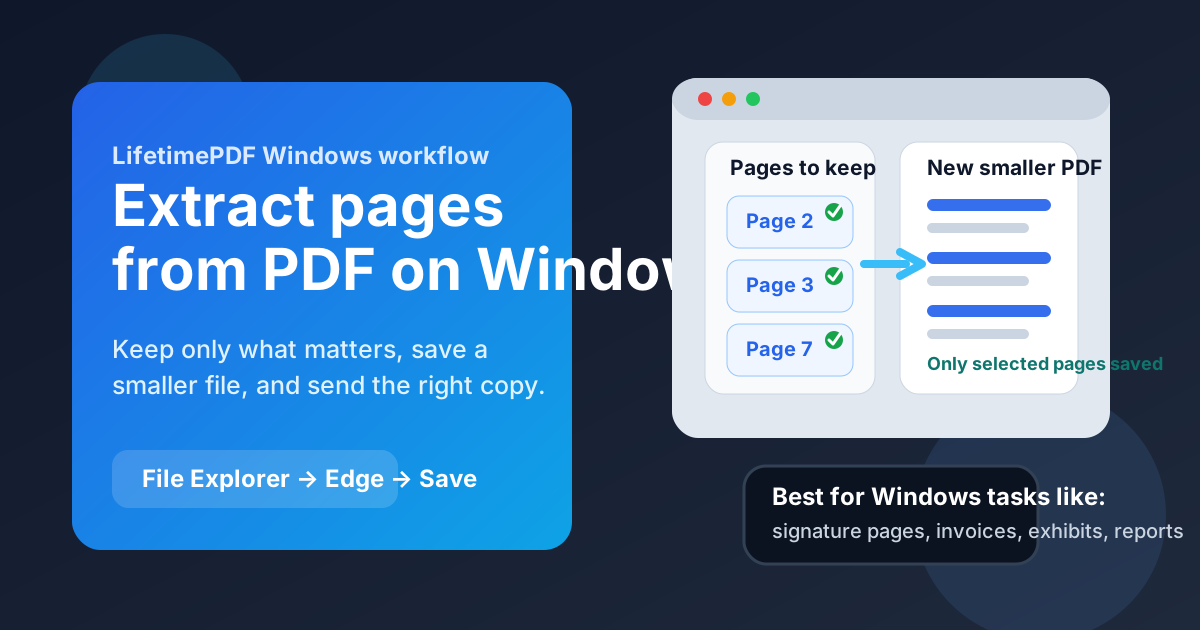
Table of contents
- Quick start: extract PDF pages on Windows in 3 minutes
- The easiest Windows workflow for extracting pages
- Step-by-step: keep only the pages you need
- Extract pages vs split PDF vs delete pages on Windows
- Working with PDFs from Outlook, Teams, OneDrive, and Downloads
- Best Windows use cases for selected-page PDFs
- Common Windows problems and quick fixes
- Quality, privacy, and file-handling tips
- Related LifetimePDF tools and guides
- FAQ (People Also Ask)
Quick start: extract PDF pages on Windows in 3 minutes
If you already know which pages matter, this is the fastest practical workflow:
- Open Extract Pages in Edge or Chrome.
- Choose the PDF from Downloads, Desktop, Documents, OneDrive, File Explorer, or a saved Outlook attachment.
- Enter the page numbers or ranges you want to keep, such as 2-4 or 1,3,7-9.
- Download the new PDF and save it with a name that makes the result obvious, such as contract-signature-pages.pdf.
- Open the new file once and confirm the right pages were kept before you email, upload, print, or share it.
If you do not know the page numbers yet, skip straight to Split PDF first so you can work more visually. On Windows, that is often easier than guessing ranges from memory.
The easiest Windows workflow for extracting pages
The best Windows workflow is usually simple:
- Save the source PDF locally first instead of working from an email preview.
- Open the extraction step in Edge or Chrome.
- Keep only the pages you need.
- Save the output with a new filename instead of overwriting the original.
- Open the new file once before sharing it.
That sounds obvious, but most Windows mistakes happen before or after extraction, not during it. People grab the wrong Outlook attachment, save the finished file into a cluttered Downloads folder, or send the original full packet by accident because both files look almost identical at a glance.
A clean Windows habit is to create a quick working copy or use a clear suffix such as -selected-pages, -signature-only, or -exhibit-a. That one step saves more time than any fancy PDF trick.
Step-by-step: keep only the pages you need
1) Save the original somewhere easy to find
If the PDF came from Outlook, Teams, Slack, a browser download, or OneDrive, save it first. File Explorer is your friend here. Working from a saved file is safer than bouncing between browser previews and temporary attachments.
Good folders for quick Windows PDF work include:
- Downloads if this is a one-off task you will finish immediately
- Documents if you need to keep the source and result organized
- OneDrive if you want the smaller extracted PDF available on multiple devices afterward
2) Open Extract Pages in Edge or Chrome
Open LifetimePDF Extract Pages in your browser. On Windows, Edge is perfectly fine for this kind of job, and Chrome works just as well. You do not need to turn the PDF into screenshots or print it into a new file just to keep a few pages.
3) Enter only the pages you want to keep
This is the key difference between extracting and trimming. You are not telling the tool what to remove. You are telling it what to preserve in the new document.
Common examples:
- 5 for one signature page
- 2-6 for a continuous section
- 1,4,8-10 for scattered pages from a long report
If you are unsure about page numbering because the document has a cover page, appendix tabs, or Roman numerals in the footer, check the PDF carefully before you run the extraction. Windows makes that easy because you can keep the original open in another window while you work.
4) Save the result with a clearer name than the original
Avoid vague names like document-final-new.pdf. Use names that tell you what changed, such as:
- invoice-pages-2-3.pdf
- proposal-appendix-only.pdf
- lease-signature-page.pdf
- report-exhibit-b.pdf
5) Open the new PDF once before sending it
This last check matters. Make sure the pages are correct, the order still makes sense, and you did not accidentally send the original full file instead. On Windows, that quick review in Edge often catches the small mistakes that cause the biggest embarrassment later.
Extract pages vs split PDF vs delete pages on Windows
These tools sound similar, but they solve different problems:
- Extract Pages is best when you want one new smaller PDF made from selected pages.
- Split PDF is best when you want multiple output files or need a more visual page-selection workflow.
- Delete Pages is best when you want to keep most of the file and remove only a few unwanted pages.
On Windows, Extract Pages is usually the cleanest choice when the result should be a concise, shareable subset. Split PDF is the better choice if you need to inspect page thumbnails, especially in large reports, court filings, training manuals, or scanned packets where page numbers are harder to track. Delete Pages makes more sense when the original is mostly correct and you just want to drop a cover sheet, a blank page, or one confidential insert.
Rule of thumb: if you can describe the result as “keep these pages,” use Extract Pages. If you can describe it as “remove those pages,” use Delete Pages.
Working with PDFs from Outlook, Teams, OneDrive, and Downloads
Outlook attachments
Save the attachment first instead of working from a preview pane. Preview mode is fine for checking content, but it is not where you want to manage final filenames and edited versions. Save the original, create the extracted copy, and then attach the smaller file to your reply.
Teams or browser downloads
Teams, CRM systems, portals, and vendor dashboards often push files into Downloads. If you are doing several PDF tasks in a row, move the source into a temporary working folder before you start. Windows feels messy fast when every file is named download.pdf or document (3).pdf.
OneDrive
OneDrive is useful if the extracted PDF needs to appear on another computer or phone later. Just make sure the new smaller file has a distinct name so you do not confuse it with the synced original. If other people share the folder, clarity matters even more.
File Explorer habits that save time
- Sort by Date modified when you just created a new PDF.
- Use Details view if filenames are similar.
- Add a short suffix like -kept-pages or -short-copy.
- Store the source and result in the same folder only if the names are clearly different.
Best Windows use cases for selected-page PDFs
Extracting pages on Windows is especially useful when you need to create a lighter, more focused file without rebuilding the whole document.
Common examples include:
- Sending only the signature page from a long agreement
- Keeping just the invoice pages from a full accounting packet
- Pulling one exhibit from a court filing bundle
- Sending only the appendix or summary pages from a report
- Creating a smaller client-facing excerpt from a longer internal PDF
- Separating selected slides or handout pages from a course packet
In all of those cases, the point is not only to reduce file size. It is to reduce confusion. A smaller targeted PDF is easier for the other person to understand, easier to upload, and less likely to expose pages that did not need to be shared at all.
Common Windows problems and quick fixes
I extracted the wrong pages
This usually happens because the visible page number in the footer does not match the PDF page count in the viewer. Reopen the original, verify the actual page position, and run the extraction again.
I cannot find the new file
Check Downloads first, then sort by Date modified in File Explorer. If this happens often, save the output into a dedicated folder before you start the task.
I sent the original full PDF instead of the smaller one
This is the most common desktop mistake. Rename the extracted file immediately after saving it, then attach only the renamed copy. If you work from Outlook, attach the file from File Explorer instead of relying on recent-file suggestions.
The document is too confusing to select by page number
Use Split PDF or preview the original first. Large scanned packets, records, and court exhibits are often easier to handle visually than numerically.
I actually need to remove pages from a nearly finished file
Use Delete Pages instead. Extraction is for creating a new subset. Deletion is for trimming an almost-correct full document.
Quality, privacy, and file-handling tips
Extracting pages usually preserves the original page quality, which is one reason it is better than using screenshots. If the source PDF is sharp, the smaller extracted copy is usually sharp too.
On the privacy side, extracting selected pages is also a simple way to share less. If someone only needs three pages, do not send thirty. That reduces clutter and lowers the chance that extra names, addresses, pricing, notes, or attachments leave your machine unnecessarily.
If the pages you are keeping still contain sensitive information, extraction is not the same thing as redaction. In that case, redact first, then create the final smaller copy if needed.
Related secure workflow: if the finished PDF still contains confidential content but should be shared, protect the final version after extraction.
Related LifetimePDF tools and guides
If extracting pages is only one part of the job, these tools and guides usually pair well with the workflow:
- Extract Pages for keeping only the pages you need
- Split PDF for visual page selection or multiple output files
- Delete Pages for trimming a near-finished file
- Merge PDF if you later need to recombine selected pages with another file
- Scan to PDF on Windows if you are starting with paper pages rather than an existing PDF
- How to Password Protect a PDF on Windows if the final smaller PDF should be locked before sending
If you do this kind of task often, the real win is building a repeatable habit: save the source, extract only what matters, name the result clearly, and send the smaller copy instead of the full packet. That is the desktop workflow that stays fast even when the documents get messy.
FAQ (People Also Ask)
How do I extract pages from PDF on Windows without installing an app?
Open a browser-based Extract Pages tool in Edge or Chrome, choose the PDF from File Explorer or another saved location, enter the pages you want to keep, download the new PDF, and save it with a clear name. That is usually the fastest no-install workflow on Windows.
Can I extract non-consecutive PDF pages on Windows?
Yes. Most page-range workflows let you keep scattered pages such as 1,4,7-9 in one smaller PDF. That is useful when the important content is spread across a long report or packet.
What is the difference between extract pages and delete pages on Windows?
Extract pages creates a new PDF that contains only the pages you choose. Delete pages removes unwanted pages from a copy of the original and keeps everything else. If your goal is “keep these pages,” extraction is usually the cleaner choice.
Will extracting pages reduce PDF quality on Windows?
Usually no. Extraction generally preserves the original page quality because the selected pages are copied into a new PDF instead of being turned into screenshots or re-created manually.
Can I extract pages from a PDF that came from Outlook or OneDrive on Windows?
Yes. Save the original file first, run the extraction in Edge or Chrome, then save the finished smaller PDF with a name that clearly distinguishes it from the original attachment or synced file.
Ready to keep only the pages that matter? Use LifetimePDF to create a smaller, cleaner PDF before you upload, print, or send it.