How to Add Text to a PDF on Mac: Type on Forms, Scans & Documents Without Reformatting
To add text to a PDF on Mac, open LifetimePDF's PDF Field Editor in Safari or Google Chrome, choose the file from Finder, Mail, iCloud Drive, or Downloads, then place a text box exactly where you need it and save the updated copy.
If the PDF is a scan, a flattened page, or a form that does not behave cleanly, run OCR first or switch to a form-filling workflow so the typed text stays readable and aligned.
That is the short answer. The useful part is knowing when Mac can handle the job with a simple browser workflow, when a text box is the right tool, when you actually need form filling or OCR instead, and how to avoid the classic desktop mess of crooked text, duplicate exports, and ugly overlays that looked fine until you reopened the saved PDF.
Fastest path: open PDF Field Editor in Safari or Chrome, upload the file from Finder or Mail, add the text where it belongs, then save the updated PDF with a clear new filename.
In a hurry? Jump to Quick start: add text to a PDF on Mac in 3 minutes.
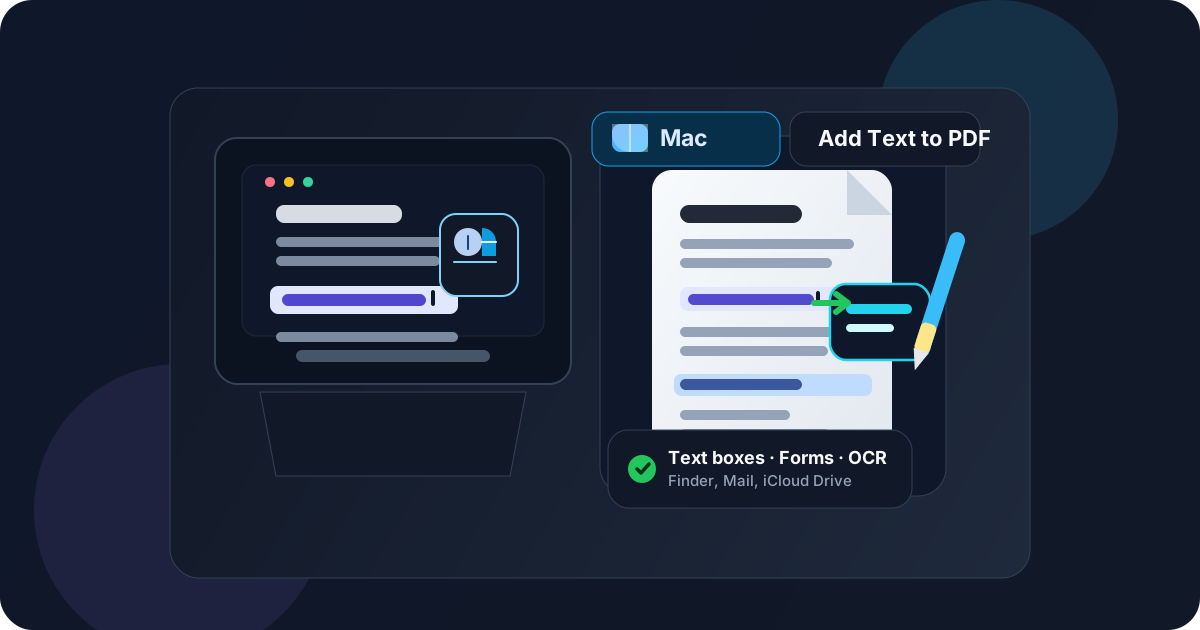
Table of contents
- Quick start: add text to a PDF on Mac in 3 minutes
- The best Mac workflow for typing on PDFs
- Text boxes vs form filling vs annotations
- Step-by-step: add text from Finder, Mail, iCloud Drive, or Downloads
- Preview vs a dedicated PDF text workflow
- Scanned PDFs, OCR, and image-only pages on Mac
- How to save, share, and keep the file readable
- Common Mac text-placement problems and quick fixes
- Related LifetimePDF tools and guides
- FAQ
Quick start: add text to a PDF on Mac in 3 minutes
If the PDF is already on your Mac and you just need to type on it cleanly, this is the workflow most people actually want:
- Open PDF Field Editor in Safari or Chrome.
- Choose the file from Downloads, Desktop, Documents, iCloud Drive, or a saved Mail attachment.
- Add a text box where the wording should appear and size it so it looks natural on the page.
- If the file is really a form, use PDF Form Filler instead of scattering free text boxes around the page.
- If the page is a scan and placement feels awkward, run OCR PDF first.
- Download the updated PDF, reopen it once, and confirm the text lands where you intended before you send it on.
The best Mac workflow for typing on PDFs
On Mac, adding text to a PDF goes smoothly when you separate three jobs that people often blur together:
- Adding visible text: placing words directly on the page for labels, answers, dates, or short corrections.
- Filling fields: typing into a form in a way that stays aligned and looks intentional.
- Reviewing or marking up: leaving feedback, highlights, arrows, or notes instead of pretending to edit the document itself.
Mac makes it easy to open PDFs in Preview, but opening a file is not the same thing as finishing it cleanly. If you are working with a school packet, job application, contract, invoice, intake form, or scanned document from Mail, the real goal is not just typing on the page. It is producing a final PDF that still looks trustworthy when someone else opens it.
The cleanest setup is simple: start with the exact source file, add only the text you actually need, use form filling or OCR when the PDF calls for it, then save a separate updated copy before the file goes back to Mail, Messages, a portal, or an iCloud Drive folder.
Text boxes vs form filling vs annotations
A lot of frustration disappears when you choose the right kind of change before you type anything.
| What you need | Best option | Why it works |
|---|---|---|
| Add a visible label, date, note, or short answer | Text box | Best when you need a few words to appear directly on the page without rebuilding the entire file. |
| Fill boxes on a real form | PDF form filling | Keeps answers aligned, cleaner, and easier to read than loose overlay text. |
| Leave feedback or review notes | Annotations | Better for comments, highlights, arrows, and markup when you are discussing the document rather than changing it. |
| Rewrite paragraphs or document structure | Convert and edit properly | Far more reliable than stacking fake text on top of old wording. |
In plain English: a text box is great for visible additions, not for pretending you fully edited a paragraph. If the PDF is a real form, fill fields. If you are reviewing the file, annotate it. If you need a true rewrite, use a conversion workflow instead of forcing Mac PDF overlays to do too much.
Step-by-step: add text from Finder, Mail, iCloud Drive, or Downloads
1) Start with the exact file you plan to update
Before you add a single word, make sure you are working on the real source PDF. On Mac, it is surprisingly easy to open one copy from Mail, another from Downloads, and a third from iCloud Drive, then wonder why the finished text did not end up where you expected.
If the file came by email, save it somewhere obvious first. A named folder in Finder is better than trusting Recents or a cluttered Downloads folder.
2) Open PDF Field Editor in Safari or Chrome
Open PDF Field Editor in Safari or Google Chrome. It gives you a cleaner browser-based text workflow on Mac and avoids the usual friction of installing a heavyweight desktop editor just to type a few clean additions.
Upload the PDF from the folder where you deliberately saved it. If you are working from iCloud Drive, let sync settle before you reopen or resend the updated version.
3) Add only the text the page actually needs
Good PDF text placement is not about covering the page with boxes. It is about making the new wording readable and obviously intentional. Keep text short, place it close to the field or location it belongs to, and resize it so it feels like part of the document instead of a sticker floating on top.
If you are filling a line item, date, or brief note, a text box works well. If you are trying to answer dozens of fields, switch to a proper form-filling workflow instead of fighting the page one overlay at a time.
4) Zoom in before placing final text
Mac desktop screens give you room to be precise. Use that advantage. Zoom in before placing text on contracts, invoices, application packets, medical forms, or PDFs with narrow boxes. A text box that lands neatly on the line is much easier to trust than one that drifts high, low, or half a character too far left.
5) Reopen the file once before sending it
After downloading the edited PDF, open it once at normal zoom and read it like the recipient will. That catches the most common Mac mistakes: text that looked aligned in the editor but feels off in the saved file, answers that sit too close to borders, and filenames that still do not tell you which copy is final.
Preview vs a dedicated PDF text workflow
Preview deserves credit for convenience. It opens fast, is built into macOS, and is good enough for quick reading or light one-off tasks.
The limits show up when the PDF becomes even slightly annoying. If the text needs precise placement, the document came from Mail, the page is scanned, the fields are awkward, or you need a smoother save-and-share path, a dedicated PDF text workflow usually feels much less brittle.
- Use Preview for quick viewing and simple checks.
- Use a dedicated PDF workflow when the final file is going back to a teacher, recruiter, client, vendor, or portal and needs to look clean.
In other words, Preview is fine for convenience. A dedicated tool is better when the output matters to someone besides you.
Scanned PDFs, OCR, and image-only pages on Mac
If the page behaves like a picture instead of a document, the PDF is probably scan-based. That is common with printed forms, camera-made pages, copied receipts, old contracts, and school packets that were scanned back into PDF.
In that case, run the file through OCR PDF first. OCR makes the text searchable and often makes your placement choices easier because the file stops behaving like one flat image.
Even when you technically can drop a text box onto a scan, OCR usually makes the whole workflow feel less sloppy. The page is easier to inspect, search, and work with later.
How to save, share, and keep the file readable
Save the updated PDF with a new name
Keep the original untouched whenever possible. Save the edited version with a filename that signals what changed, such as offer-letter-filled.pdf, timesheet-updated.pdf, or claim-form-completed.pdf.
Compress the file if it grew too large
If the PDF started large because of scans, images, or bloated exports, use Compress PDF before attaching it to email or uploading it to a portal.
Sign it after the text is final
Some workflows end with a signature rather than another edit pass. If that is your case, move from typed text into Sign PDF after the wording is complete.
Flatten or protect the final copy when needed
If the document includes private information, add a password with PDF Protect before you send it onward. If the final file is going to a client, school, or portal, do one last open-check in Preview so you know the text still looks clean outside the editor.
Common Mac text-placement problems and quick fixes
The text looks fine in the editor but awkward in the saved PDF
Reopen the file at normal zoom after download. The saved output is what matters, not how the temporary editing view looked a few seconds earlier.
The PDF is really a form and my text boxes look messy
Switch to PDF Form Filler. A proper form workflow usually looks much cleaner than placing loose text over every blank.
I cannot get the text to sit neatly on a scanned page
Run OCR first. Scanned files often behave like images, and OCR usually makes them much easier to work with.
I keep opening the wrong copy from Mail or Downloads
Save the attachment to one named folder in Finder before you start. Do not rely on Mail temp paths or generic Downloads clutter if the file actually matters.
The file is too large to upload after I finish
Compress it before sending. Large PDFs are especially common when the document includes scans, photos, or exported presentation pages.
I need to actually rewrite the document, not just place new words on top
Do not fake major edits with text boxes. Use a conversion workflow such as PDF to Word, make the real content changes, then convert back to PDF when you are done.
Related LifetimePDF tools and guides
Adding text to a PDF on Mac often turns into one or two extra cleanup steps. These are the most useful companions:
- PDF Field Editor — add visible text and handle light field-level edits.
- PDF Form Filler — better for structured forms and answer boxes.
- OCR PDF — make scanned PDFs searchable before you place text.
- Sign PDF — add a signature after the typed content is final.
- Compress PDF — shrink large updated files for email or portal limits.
- PDF Protect — add a password before sharing sensitive files.
Related reading on LifetimePDF: How to Annotate a PDF on Mac, How to Fill Out a PDF Form on Mac, How to OCR a PDF on Mac, How to Sign a PDF on Mac, and Edit PDF Text Online Free.
Mac shortcut: if you only need a few words on the page, start with PDF Field Editor. If it is really a form, fill it properly. If it is really a scan, OCR it first.
FAQ: How to add text to a PDF on Mac
How do I add text to a PDF on Mac without Adobe Acrobat?
Open a browser-based PDF editor in Safari or Chrome on your Mac, upload the file from Finder or Mail, place a text box exactly where you need it, then save the updated copy back to your computer.
Can I add text to a scanned PDF on Mac?
Yes, but the workflow is usually cleaner after OCR. If the PDF behaves like an image, make it searchable first so your added text is easier to position and review.
What if the PDF is a form with boxes I need to fill in?
If the file is really a form, use PDF Form Filler instead of placing loose text boxes all over the page. The final result is usually much cleaner and easier to read.
Is Preview enough to type on a PDF on Mac?
Preview is fine for quick viewing and some light tasks, but a dedicated PDF text workflow is usually better when you need precise placement, scanned-file handling, or a polished result you plan to send to someone else.
How do I save the updated PDF on Mac without overwriting the original?
Download the edited file with a clear new filename such as contract-filled.pdf or invoice-updated.pdf, then keep the original untouched in Finder so you always know which version is the source.
Published by LifetimePDF — Pay once. Use forever.