How to Add Page Numbers to a PDF on iPad: Use Safari, Start on Page 2 & Save a Clean Copy
To add page numbers to a PDF on iPad, open a browser-based PDF Page Numbers tool in Safari, choose the file from Files or another app, set the number position and style, then save the numbered copy back to Files.
If the cover should stay blank, start numbering on page 2 and set the visible starting number to 1.
The short answer is easy. The part that actually saves time is knowing when to use Safari instead of Markup, how to keep Files organized so you do not create four almost-identical copies, and how to finish with one clean numbered PDF that still looks intentional on a tablet screen.
Fastest path: open LifetimePDF's PDF Page Numbers tool in Safari, choose the PDF from Files, set the start page and numbering style, then review the finished copy once before you send it anywhere.
In a hurry? Jump to Quick start: add page numbers on iPad in 3 minutes.
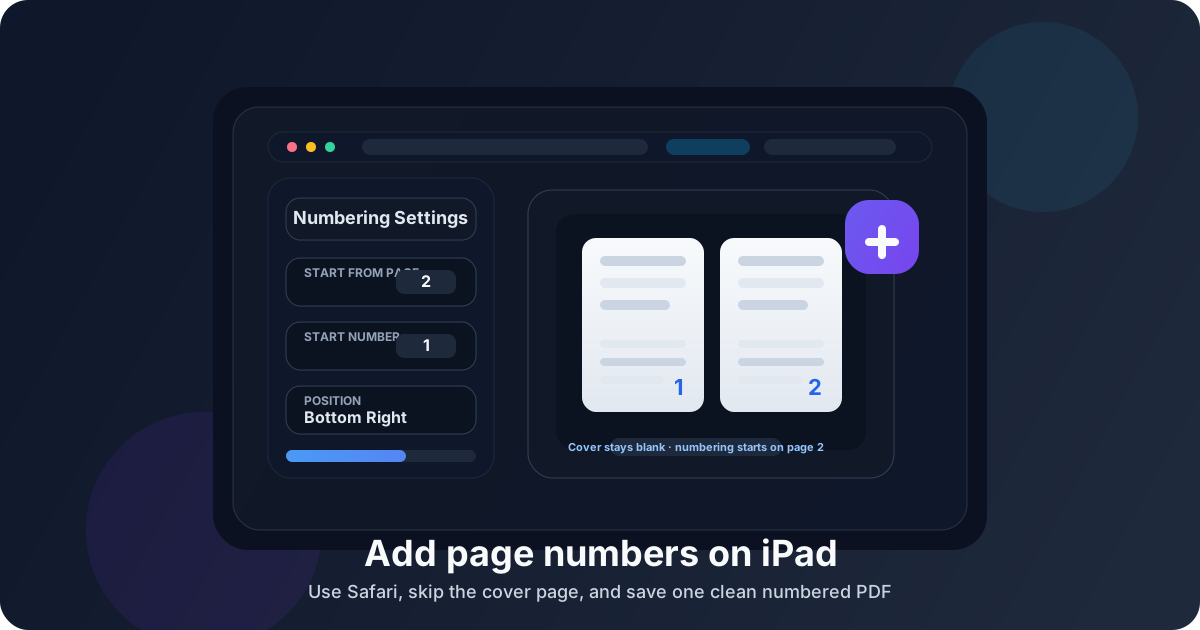
Table of contents
- Quick start: add page numbers on iPad in 3 minutes
- The easiest iPad workflow for numbering PDFs
- Step-by-step: use Safari and Files together
- How to start on page 2 and skip the cover
- Markup vs a dedicated page numbering tool on iPad
- Working with Files, Mail, Drive, and classroom-style app handoff
- Common iPad problems and quick fixes
- Related LifetimePDF tools for smoother tablet PDF work
- FAQ (People Also Ask)
Quick start: add page numbers on iPad in 3 minutes
If the PDF is already final and you just need clean numbering, this is the simplest route:
- Open PDF Page Numbers in Safari on your iPad.
- Choose the file from Files, a saved attachment, Google Drive, or another app through the file picker.
- Pick the page number position that fits the layout.
- Select the numbering style, such as standard digits or roman numerals.
- Set Start from Page and Start Number.
- If the cover page should stay blank, use Start from Page = 2 and Start Number = 1.
- Download the finished PDF, save it back to Files with a clear name, and open it once to confirm the numbering looks right.
The easiest iPad workflow for numbering PDFs
iPad is actually a comfortable place to do this job because the screen is large enough to review the result properly, but it still rewards a simple workflow. The fastest setup is usually not trying to do everything inside one app. It is letting each piece of the process do what it does best.
- Mail, Messages, Classroom, Drive, or another app is often where the PDF first arrives.
- Files is the safest place to store the original and the final numbered copy.
- Safari is usually the cleanest way to apply repeated page numbers without manual tapping on every page.
This matters because people searching for how to add page numbers to a PDF on iPad often start with whatever is already open. That usually means Markup, a preview pane, or a cloud app viewer. Those routes are fine for quick notes or signatures. They are a poor fit when you need numbering that looks consistent across a real document.
| Method | Best for | Where it struggles |
|---|---|---|
| Markup on iPad | Quick notes, signatures, one-off edits | Slow for repeated page numbering, harder to align across many pages, easy to make inconsistent |
| Browser-based PDF Page Numbers | Consistent numbering, cover-page control, cleaner finished copies | Still needs one quick final review before sharing |
| Print or screenshot workarounds | Emergency improvisation only | Can create blurry files, duplicate versions, or awkward number placement |
For most iPad users, the browser workflow wins because it keeps the task clean: open, number, save, check, send. That sounds basic, but it is the difference between one intentional output and a folder full of nearly-the-same drafts.
Step-by-step: use Safari and Files together
A tidy iPad workflow starts before you touch the numbering settings. The real goal is to keep the original safe, create one clear final version, and avoid losing track of which file is which.
1) Save the PDF somewhere obvious
If the document came from Mail, Messages, Classroom, or another app, save it to Files first. A simple location like Downloads, On My iPad, or a dedicated iCloud Drive folder is enough. This avoids the common tablet problem where the source lives inside one app preview and the finished file lands somewhere else entirely.
2) Open the page numbering workflow in Safari
Go to PDF Page Numbers in Safari. Choose the saved PDF from Files. If the file is large, give it a moment rather than bouncing between apps. iPad multitasking is useful, but constant switching can make a simple job feel busier than it is.
3) Choose where the numbers should appear
Put the page numbers where they will not fight the layout. Bottom-right is common for reports. Bottom-center can work well for handouts. Top placement may be better if the footer is already crowded with dates, signatures, or labels. The right choice depends on the page design, not a fixed rule.
4) Pick the numbering style
Most people just need regular digits. Some packets look better with roman numerals in the front matter or a different style for an appendix. If the document is formal, decide that before export so you do not have to redo the file later.
5) Set the start page and visible start number
This is the setting that prevents the most frustration. If the PDF has a title page, proposal cover, assignment cover sheet, or divider page that should stay clean, do not number page 1. Start on the first page where readers actually need visible navigation.
6) Export once and name the file clearly
Save the finished copy with a name that tells the truth, such as report-numbered.pdf, packet-paginated.pdf, or proposal-final-numbered.pdf.
Clear naming sounds boring until you are staring at three nearly identical iPad downloads a minute later.
7) Open the final PDF once before sharing
Do one fast review in Files. Check the first numbered page, one page in the middle, and the last page. That quick pass catches most mistakes: wrong start page, footer collisions, numbers too close to the edge, or simply exporting the wrong version.
How to start on page 2 and skip the cover
This is one of the most common real-world needs on iPad. The PDF might have a title page, proposal cover, intake form front sheet, lesson pack cover, or court filing cover page that should remain visually clean. You still want the next page to display page 1.
The clean setup is usually:
- Physical start page: 2
- Visible starting number: 1
That means the second sheet of the PDF becomes the first page readers see numbered. It is simple, but it makes packets and reports feel much more polished.
| Situation | Useful setup | Why it works |
|---|---|---|
| Cover page stays blank | Start from page 2, start number 1 | Keeps the front page clean while the document still reads naturally |
| Already-numbered appendix | Number only the main section or split the file first | Avoids double numbering or mixed layouts that look accidental |
| Front matter needs roman numerals | Number sections separately, then merge | Gives cleaner control than trying to force one style across everything |
If the document needs multiple numbering styles, the easiest route is often to split the PDF into sections, number each part separately, and combine them again afterward. That sounds more involved than it is, and it usually produces a cleaner result.
Markup vs a dedicated page numbering tool on iPad
Markup on iPad is useful. It is just not the right tool for everything.
If you only need to circle a detail, add a signature, or make one note with Apple Pencil, Markup is fine. Repeated page numbering is different. You need consistent placement across every page, a reliable starting point, and a cleaner way to export the result. Doing that manually gets tedious even on a bigger screen.
- Use Markup when you are adding a quick note or signature to one page.
- Use PDF Page Numbers when the document needs systematic numbering that looks intentional.
The main advantage of a dedicated workflow is not only speed. It is consistency. The numbering is applied as a document task, not as a series of manual placements you have to repeat and trust yourself not to misalign.
Working with Files, Mail, Drive, and classroom-style app handoff
Most iPad PDF friction is really file-location friction. The numbering itself is easy. The annoying part is remembering where the source came from and where the finished copy ended up.
If the PDF came from Mail or Messages
Save it to Files first. Then run the numbering workflow from that saved copy. This reduces the chance of numbering one version and later sending another.
If the PDF already lives in iCloud Drive or Google Drive
That is usually fine. Open the numbering tool in Safari, choose the file through the picker, then save the finished version back with a clear name. The important part is not which cloud folder you use. It is keeping one clear source and one clear final output.
If the PDF came from a school or work app
Many classroom, LMS, and document apps show PDFs in their own viewer first. If you need page numbers, move the file into Files before you start. Doing the job from a temporary preview is how people accidentally lose track of the final copy.
If the PDF is a scan
Numbering will still work, but you may want to rotate crooked pages or clean the margins first if the footer area is messy. A scan with dark edges, skewed pages, or too much white space makes page placement harder than it needs to be.
-numbered or -final-numbered. It makes tablet sharing far less error-prone.
Common iPad problems and quick fixes
The page numbers overlap the footer
Move them to another position, reduce the size, or clean the page layout first. If the footer is crowded, bottom-center may look worse than top-right. There is no prize for forcing the same placement onto every document.
The first visible number is wrong
Recheck the difference between where numbering starts and which number appears first. A cover-page workflow usually means start on physical page 2 but display the number 1 there.
The PDF is too messy to number cleanly
Fix the structure first. Delete blank pages, rotate sideways scans, crop oversized margins, or split the document into cleaner sections. Numbering should finish the job, not rescue a chaotic file.
I ended up with too many duplicate versions
Go back to one source file and one final export. On iPad, confusion multiplies when several apps each keep their own copy. Save to Files once, run the task once, review once, then share the finished version.
I need different numbering for different sections
Split the PDF, number each section separately, then merge the parts back together. That approach is usually cleaner than trying to force one numbering rule across a document with covers, appendices, or front matter.
Related LifetimePDF tools for smoother tablet PDF work
If the document needs more than numbering, these tools pair well with an iPad workflow:
- Delete Pages if the PDF has blanks or unwanted sheets before numbering.
- Rotate PDF if a scan arrived sideways and the numbers would otherwise look awkward.
- Split PDF if different sections need different numbering logic.
- Merge PDF if you numbered separate sections and need one final packet again.
- Add Page Numbers Starting on Page 2 if the cover-page setup is your main concern.
If you want nearby reading for other devices, these guides fit the same workflow family: How to Add Page Numbers to a PDF on iPhone, How to Add Page Numbers to a PDF on Mac, How to Add Page Numbers to a PDF on Windows, and How to Add Page Numbers to a PDF on Chromebook.
Need the cleanest tablet workflow? Do the structural edits first, then add page numbers near the end.
Published by LifetimePDF - Pay once. Use forever.
FAQ (People Also Ask)
How do I add page numbers to a PDF on iPad without installing an app?
Open a browser-based PDF page numbering tool in Safari on your iPad, choose the PDF from Files or another app, set the number position and style, export the numbered copy, and save it back to Files. That is usually faster and cleaner than placing every number manually in Markup.
Can I start page numbers on page 2 on iPad?
Yes. Set the physical start page to 2 and the visible starting number to 1 if you want the cover page left blank while the next page shows page 1.
Is Markup on iPad the best way to number a long PDF?
Usually no. Markup is useful for notes and signatures, but it becomes tedious for repeated numbering across many pages. A dedicated numbering workflow is usually more consistent and easier to review afterward.
Can I add page numbers to a PDF from Files or Google Drive on iPad?
Yes. The cleanest route is usually to open the numbering tool in Safari, pick the PDF through the iPad file picker, and then save the finished copy back to Files or your cloud folder with a clear name.
What should I do if the page numbers overlap existing text?
Move them to another position, reduce the size, or clean the PDF first by rotating pages, deleting blanks, or cropping oversized margins. Then export the file again and check the result once before sharing.